Birmingham is one of the United Kingdom’s most historically significant cities. Known as the workshop of the Industrial Revolution, it developed from a medieval market settlement into a global manufacturing centre. Today, visitors can explore centuries of history, architecture, culture, and public heritage without spending money. The city’s public squares, museums, canals, religious buildings, and civic institutions preserve evidence of Birmingham’s transformation across multiple eras, including the medieval period, the Industrial Revolution, and the modern urban regeneration era.
- Why is Birmingham one of the best UK cities for free cultural experiences?
- What can visitors learn from Birmingham Museum and Art Gallery for free?
- How do Birmingham’s canals reveal the city’s industrial history?
- Why is the Library of Birmingham considered a modern cultural landmark?
- What historical significance does Victoria Square hold?
- How does St Philip’s Cathedral preserve Birmingham’s religious heritage?
- What makes the Jewellery Quarter an important heritage district?
- How can visitors explore Birmingham’s public art and memorials for free?
- Why is Birmingham’s street market tradition historically important?
- How does Birmingham preserve its industrial heritage for future generations?
- What makes free heritage exploration in Birmingham valuable today?
For history enthusiasts, cultural tourists, educators, students, and heritage researchers, Birmingham offers a substantial collection of free attractions that reveal the city’s social, economic, and architectural development. Many of these sites are protected heritage assets, while others serve as living examples of Birmingham’s continuing role in British cultural life.
Why is Birmingham one of the best UK cities for free cultural experiences?
Birmingham combines industrial heritage, public museums, historic architecture, civic spaces, and cultural institutions that provide free access to significant collections and landmarks. This concentration of accessible heritage allows visitors to explore more than 1,000 years of local history without paying admission fees.
The city developed at the crossroads of major trade routes in the English Midlands. Historical records identify Birmingham as a market town by the twelfth century. Its strategic location supported growth in metalworking industries that later became central to Britain’s Industrial Revolution.
Today, many institutions preserve this heritage through publicly funded collections and educational programmes. Museums, galleries, libraries, churches, and public spaces collectively form a free cultural network that attracts millions of visitors annually.
Birmingham’s commitment to public access reflects broader heritage preservation efforts across the city. Civic authorities, charitable trusts, universities, and cultural organisations maintain historic sites for educational and community purposes.
To experience this historic city in person today, consult our comprehensive How to Explore Birmingham on a Budget Without Missing Attractions for itineraries and visiting parameters.
What can visitors learn from Birmingham Museum and Art Gallery for free?
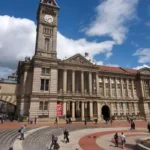
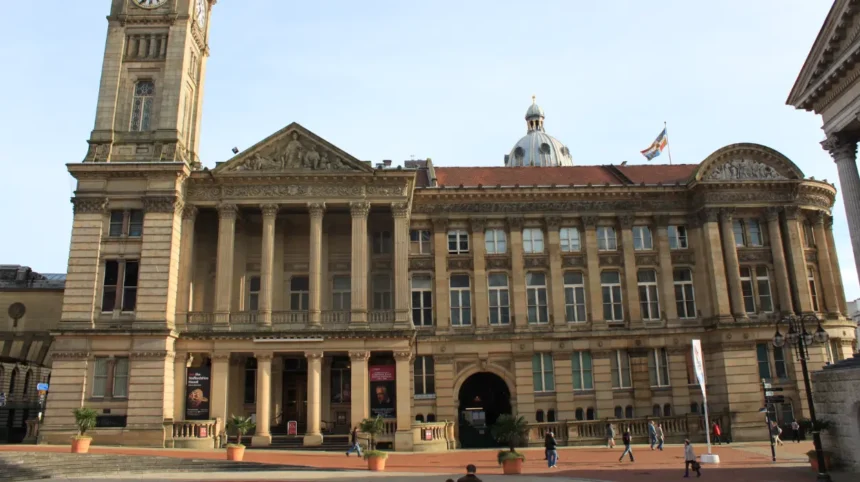
Birmingham Museum and Art Gallery provides free access to collections covering archaeology, fine art, local history, industrial development, and global cultures. Its exhibits document Birmingham’s evolution from a medieval market town to an international manufacturing centre.
Founded in 1885, Birmingham Museum and Art Gallery occupies a landmark Victorian building adjacent to the city centre. The institution was created during a period when Birmingham’s municipal leaders invested heavily in public education and cultural infrastructure.
The museum contains artefacts spanning thousands of years. Archaeological collections include Roman-period examples, medieval examples, and early industrial examples. These collections help researchers understand regional development across different historical periods.
One of the institution’s most significant holdings is the collection of Pre-Raphaelite artworks. The Pre-Raphaelite Brotherhood was an influential nineteenth-century artistic movement founded in 1848. Works by artists such as Dante Gabriel Rossetti, Edward Burne-Jones, and William Holman Hunt demonstrate Birmingham’s historical connection to Victorian art and design.
Industrial exhibits explain how Birmingham became a global centre for metalworking, jewellery production, and engineering innovation. Historical manufacturing tools, machinery, and commercial records illustrate the city’s contribution to British industrial expansion.
The museum remains an important educational resource for schools, universities, and independent researchers.
How do Birmingham’s canals reveal the city’s industrial history?
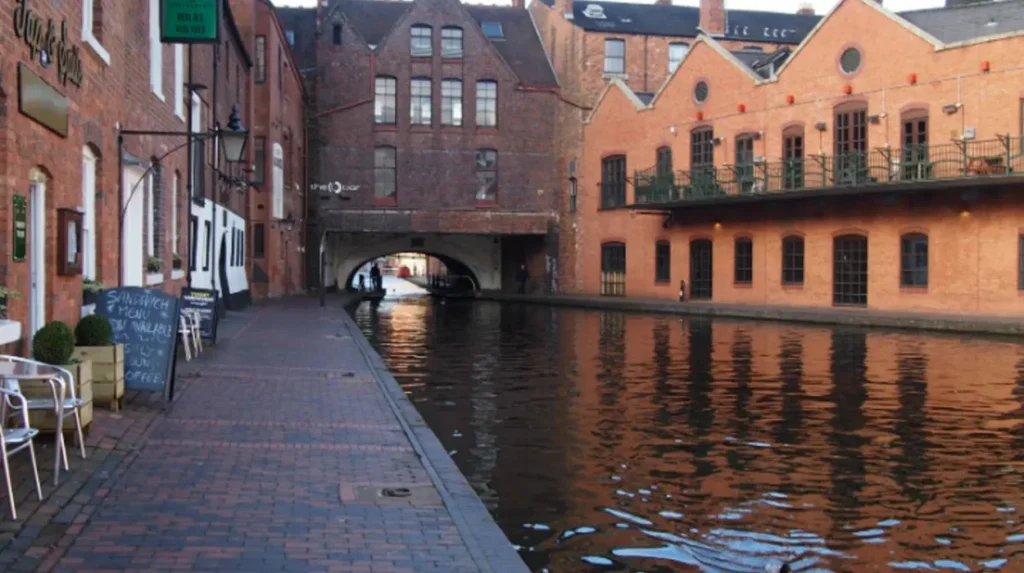
Birmingham’s canal network preserves physical evidence of eighteenth-century and nineteenth-century industrial transport systems. The waterways enabled large-scale movement of raw materials and manufactured goods, supporting the city’s rapid economic expansion during the Industrial Revolution.
Many visitors are surprised to learn that Birmingham possesses more miles of canals than central London. Construction accelerated during the late eighteenth century as industrial output increased across the Midlands.
Canals connected factories, workshops, warehouses, and markets. Coal from regional mines supplied steam-powered industries. Manufactured goods travelled efficiently to national and international markets.
The canal system represents a major engineering achievement. Builders constructed locks, aqueducts, tunnels, and wharves to overcome geographical obstacles. These structures demonstrate the technical capabilities of early industrial engineers.
Walking routes along the waterways provide opportunities to observe surviving industrial architecture. Historic warehouses, former factory buildings, and restored bridges illustrate how transportation infrastructure shaped urban development.
Areas such as Gas Street Basin and Brindleyplace showcase successful preservation and regeneration efforts. Former industrial landscapes now support leisure, education, and tourism while retaining historical character.
Why is the Library of Birmingham considered a modern cultural landmark?
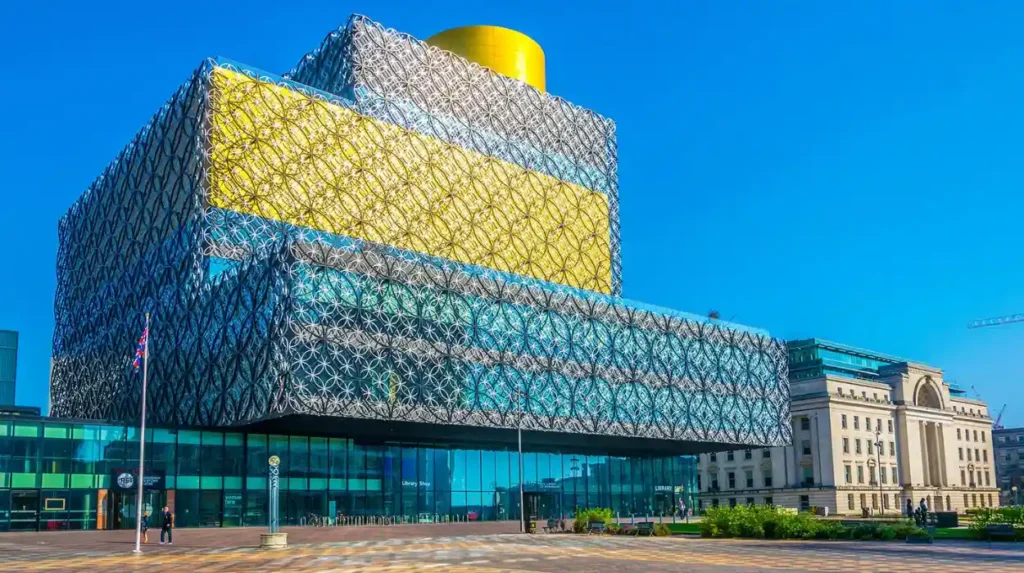
The Library of Birmingham combines public education, architectural innovation, and historical preservation. It houses extensive archives, rare documents, and local history collections that help researchers understand Birmingham’s development across multiple centuries.
Opened in 2013, the Library of Birmingham replaced earlier municipal library facilities and became one of Europe’s largest public libraries.
The building’s design reflects Birmingham’s commitment to cultural investment and urban regeneration. Its architecture incorporates geometric patterns inspired by the city’s industrial and manufacturing heritage.
The library contains millions of items, including books, manuscripts, photographs, maps, and archival records. These resources support academic research, genealogy projects, and historical investigation.
Researchers tracing family histories often consult census records, parish documents, and local government archives preserved within the library. These materials provide valuable insights into migration patterns, employment trends, and demographic changes.
Visitors can also access exhibitions that highlight Birmingham’s social and industrial history. Public galleries and rooftop gardens provide free opportunities to explore both cultural collections and city views.
The institution serves as a modern continuation of Birmingham’s nineteenth-century tradition of expanding educational access.
What historical significance does Victoria Square hold?
Victoria Square functions as Birmingham’s principal civic space and contains monuments commemorating political leaders, social reformers, and major moments in local history. The square reflects Birmingham’s emergence as a powerful municipal centre during the nineteenth century.
Named after Queen Victoria, the square occupies a central position within Birmingham’s civic district.
The surrounding buildings demonstrate Victorian confidence and municipal ambition. During the nineteenth century, local authorities invested in public institutions designed to showcase Birmingham’s economic success and civic identity.
Prominent sculptures within the square commemorate individuals associated with political reform and public service. These monuments provide visual records of changing civic values and historical memory.
The square also serves as a venue for public events, cultural celebrations, and community gatherings. This continuing public function mirrors its historical role as a focal point for civic life.
Architectural landmarks surrounding the square include the historic Birmingham Town Hall and the Council House. Together, these structures illustrate the city’s nineteenth-century urban planning priorities.
How does St Philip’s Cathedral preserve Birmingham’s religious heritage?
St Philip’s Cathedral preserves early eighteenth-century religious architecture and reflects Birmingham’s transition from a market town into a growing urban centre. The cathedral remains one of the city’s most important historic buildings.
Construction began in 1709 and was completed in 1715. The building originally served as a parish church before becoming a cathedral in 1905.
Designed by Thomas Archer, the structure represents English Baroque architecture. Its design differs significantly from medieval Gothic cathedrals found elsewhere in Britain.
The cathedral contains stained-glass windows created by Edward Burne-Jones. These artworks are regarded among the finest examples of Victorian ecclesiastical design.
The surrounding churchyard functions as a green public space within Birmingham’s urban core. Historic memorials and monuments provide evidence of earlier generations who shaped local society.
Religious institutions such as St Philip’s played significant roles in education, charity, and community organisation throughout Birmingham’s development.
What makes the Jewellery Quarter an important heritage district?
The Jewellery Quarter preserves one of the world’s most significant concentrations of historic jewellery workshops. The district demonstrates how specialised manufacturing industries shaped Birmingham’s economy and international reputation.
The Jewellery Quarter developed during the eighteenth century and expanded rapidly throughout the nineteenth century.
By the early twentieth century, Birmingham produced a substantial proportion of Britain’s jewellery. Thousands of skilled workers were employed in workshops specialising in metalworking, engraving, gemstone setting, and precious metal production.
Today, many historic buildings remain intact. Walking through the district reveals former factories, workshops, cemeteries, and institutional buildings associated with industrial life.
Public streets and heritage trails allow visitors to examine preserved industrial architecture without charge. Information panels explain manufacturing processes and local economic history.
The district also illustrates broader themes of urban development, labour history, and technological innovation. These themes remain important for researchers studying Britain’s industrial transformation.
Conservation efforts have protected numerous structures from redevelopment, ensuring that the area’s historical character remains visible.
How can visitors explore Birmingham’s public art and memorials for free?
Birmingham’s public art collection documents cultural values, political history, and civic identity through sculptures, memorials, and contemporary installations located throughout the city centre and surrounding districts.
Public monuments serve as historical records. They commemorate individuals, events, and achievements considered important by successive generations.
Several sculptures celebrate Birmingham’s industrial heritage. Others recognise contributions made by political leaders, scientists, artists, and social reformers.
Walking routes through the city centre reveal examples from multiple eras, including Victorian examples, Edwardian examples, and contemporary examples.
These works contribute to public understanding of local history while enhancing urban spaces. Educational institutions frequently use public art as a teaching resource.
Modern installations complement historic monuments, demonstrating how cultural expression continues to evolve while maintaining connections to the past.
Public accessibility ensures that historical interpretation remains available to residents and visitors regardless of economic circumstances.
Why is Birmingham’s street market tradition historically important?
Birmingham’s market tradition reflects centuries of commercial activity that supported urban growth, regional trade, and industrial development. Modern markets continue practices established during the medieval period.
Historical records indicate that Birmingham received market privileges during the twelfth century. Market activity attracted merchants, artisans, farmers, and consumers from surrounding areas.
Trade encouraged population growth and economic diversification. Over time, specialist industries emerged alongside traditional commercial activities.
Today, visitors can freely explore market districts and observe commercial traditions that connect modern Birmingham with its medieval origins.
Markets historically served social functions as well as economic ones. They provided opportunities for information exchange, community interaction, and civic engagement.
The continuity of market culture demonstrates how historical institutions adapt to changing economic conditions while preserving core functions.
Researchers studying urban history frequently examine market records because they provide evidence of population trends, consumer behaviour, and regional trade networks.
How does Birmingham preserve its industrial heritage for future generations?
Birmingham preserves industrial heritage through conservation programmes, museum collections, protected districts, archival projects, and adaptive reuse initiatives. These efforts ensure that physical evidence of industrial development remains accessible for education and research.
Industrial heritage preservation became increasingly important during the late twentieth century as manufacturing activity declined across many British cities.
Conservation organisations identified historically significant factories, workshops, canals, warehouses, and civic buildings. Protection measures helped prevent the loss of important heritage assets.
Adaptive reuse projects transformed former industrial structures into cultural venues, offices, educational facilities, and residential developments. These projects preserve architectural character while supporting contemporary urban needs.
Academic researchers continue documenting industrial landscapes through archaeological surveys, historical studies, and digital archives.
The city’s museums preserve artefacts associated with manufacturing industries, including metalworking examples, engineering examples, and jewellery production examples.
These preservation efforts support public understanding of how industrialisation influenced Birmingham, Britain, and the wider world.
What makes free heritage exploration in Birmingham valuable today?
Free heritage exploration provides public access to Birmingham’s history, architecture, culture, and industrial legacy. These experiences support education, tourism, historical research, and community engagement while preserving connections between past and present generations.
Birmingham’s free attractions collectively present a comprehensive narrative of urban development. Visitors can examine evidence from medieval commerce, industrial expansion, Victorian civic investment, and modern regeneration within a single city.
Museums preserve artefacts. Libraries protect documentary records. Religious buildings maintain architectural traditions. Canals demonstrate engineering innovation. Public squares commemorate civic achievements.
Together, these resources create an accessible educational landscape. Students gain historical context. Tourists discover cultural significance. Researchers access primary sources. Residents develop stronger connections to local heritage.
The preservation of Birmingham’s historical environment ensures that future generations can continue learning from the physical and documentary evidence of the city’s past.
As one of Britain’s most important industrial and cultural centres, Birmingham demonstrates how free public heritage can support historical understanding while enriching contemporary urban life. The city’s museums, canals, libraries, cathedrals, markets, and heritage districts remain enduring reminders of the forces that shaped modern Britain.
What are the best free things to do in Birmingham?
Some of the best free attractions include Birmingham Museum and Art Gallery, Library of Birmingham, the canal network, Victoria Square, St Philip’s Cathedral, and the historic Jewellery Quarter.