Birmingham is England’s second-largest city and one of the United Kingdom’s most historically significant urban centres. Located in the West Midlands, Birmingham developed from a medieval market town into a global manufacturing powerhouse during the Industrial Revolution. Today, the city combines industrial heritage, cultural institutions, public parks, historic architecture, and modern attractions that can be explored without significant expense.
- Why is Birmingham an ideal destination for budget travellers?
- What historical background helps visitors understand Birmingham today?
- Which free attractions offer the best introduction to Birmingham?
- How can visitors explore Birmingham’s famous canal network affordably?
- What museums and cultural institutions can be visited at little or no cost?
- Which historic neighbourhoods reveal Birmingham’s heritage most effectively?
- How do Birmingham’s parks and public spaces contribute to a budget-friendly visit?
- What architectural landmarks can visitors appreciate without spending money?
- How can travellers reduce transportation costs while exploring Birmingham?
- What lasting historical significance makes Birmingham worth visiting today?
Budget-conscious travellers often assume that experiencing a major British city requires high spending. Birmingham demonstrates the opposite. The city contains extensive free museums, public heritage sites, historic canals, civic landmarks, religious buildings, and cultural districts that provide access to centuries of history and urban development at little or no cost.
Understanding how to navigate Birmingham efficiently allows visitors to experience its major attractions while maintaining a modest travel budget. The city’s compact centre, extensive public transportation network, and concentration of cultural institutions make affordable exploration practical throughout the year.
Why is Birmingham an ideal destination for budget travellers?
Birmingham combines free cultural institutions, accessible public heritage sites, extensive canal networks, affordable transportation, and centrally located attractions. Visitors can explore centuries of industrial, architectural, and cultural history without paying substantial entrance fees while still experiencing the city’s most important landmarks.
Birmingham occupies a unique position in British history. The city became a centre of innovation during the eighteenth and nineteenth centuries, contributing significantly to manufacturing, engineering, transportation, and commerce.
Unlike many European destinations where major attractions require costly admission tickets, Birmingham’s civic development created a tradition of public cultural access. Museums, libraries, galleries, parks, and public squares were established to serve residents and visitors alike.
The uk/local/city-centre/">city centre concentrates numerous attractions within walking distance. This geographic advantage reduces transportation costs and allows visitors to experience multiple landmarks during a single day.
Birmingham also benefits from a strong heritage preservation framework. Historic districts remain accessible, enabling visitors to observe industrial architecture, Victorian civic buildings, and canal infrastructure without purchasing specialised tours.
Modern Birmingham welcomes millions of visitors annually. Tourism data from regional authorities consistently identify cultural tourism, heritage exploration, and city-break travel as major contributors to the local economy.
What historical background helps visitors understand Birmingham today?
Birmingham evolved from a medieval market settlement into a major industrial city between the eighteenth and nineteenth centuries. Manufacturing innovation, canal construction, railway expansion, and civic investment shaped the modern city and created many attractions visitors can explore today.
The earliest documented reference to Birmingham appears in the Domesday Book of 1086. At that time, it existed as a relatively small settlement within the Kingdom of England.
The town’s growth accelerated during the medieval period because of market privileges granted by local landowners. These privileges encouraged commerce and craft production.
During the seventeenth century, Birmingham became known for metalworking industries. Skilled artisans produced tools, weapons, household goods, and decorative items.
The Industrial Revolution transformed Birmingham dramatically. Between approximately 1760 and 1840, technological innovation increased manufacturing capacity and attracted workers from surrounding regions.
Canal construction became particularly important. The city’s waterways connected factories to national markets, enabling efficient transportation of raw materials and finished products.
Railway expansion during the nineteenth century further accelerated growth. Birmingham emerged as one of Britain’s most important industrial centres and earned international recognition for engineering excellence.
Many surviving attractions reflect this historical evolution. Historic buildings, canal networks, industrial districts, and civic institutions remain visible throughout the city.
To experience this historic urban transformation in person today, consult our comprehensive Top Free Things to Do in Birmingham Without Spending Money for itineraries and visiting parameters.
Which free attractions offer the best introduction to Birmingham?
Several free attractions introduce visitors to Birmingham’s history, culture, and architecture. Museums, civic institutions, public squares, and historic waterways provide comprehensive insight into the city’s development while remaining accessible without admission charges.
The most significant starting point is the Birmingham Museum and Art Gallery. Established in 1885, the institution houses collections documenting local history, archaeology, fine art, and industrial development.
The museum’s exhibits explain Birmingham’s role in manufacturing, trade, and technological innovation. Visitors gain historical context that enhances understanding of other attractions throughout the city.
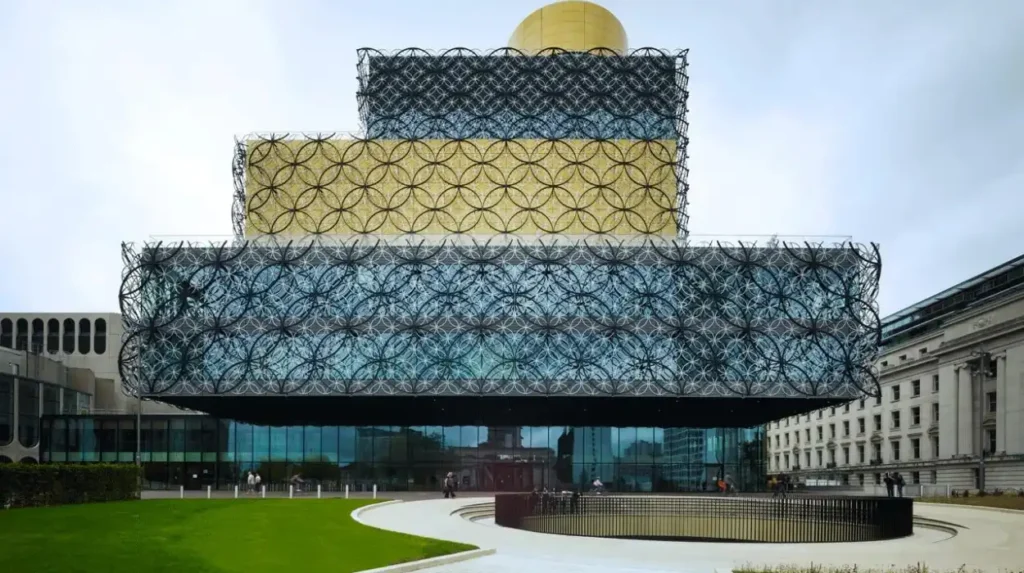
The Library of Birmingham represents another major destination. Opened in 2013, it ranks among Europe’s largest public libraries. Beyond its collections, the building itself functions as a modern architectural landmark.
Public viewing terraces provide panoramic perspectives of the city skyline. These observation areas allow visitors to appreciate Birmingham’s urban layout without purchasing observation deck tickets.
Victoria Square serves as Birmingham’s civic heart. Historic buildings surrounding the square illustrate Victorian municipal development and public investment.
Centenary Square showcases Birmingham’s contemporary identity while preserving connections to historical civic planning. Public art installations and open spaces create an accessible cultural environment.
Together, these locations provide an overview of Birmingham’s evolution from industrial city to modern metropolitan centre.
How can visitors explore Birmingham’s famous canal network affordably?
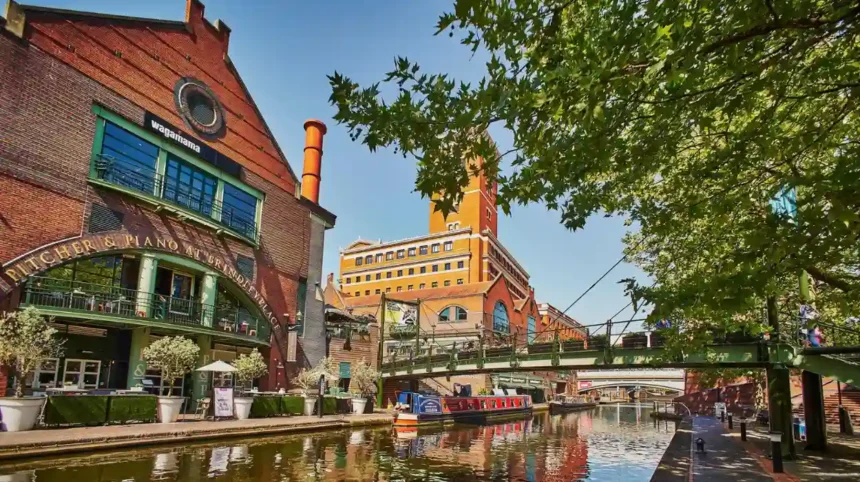
Birmingham’s canal system offers one of the city’s most valuable free experiences. Extensive towpaths, preserved industrial infrastructure, historic warehouses, and waterside districts allow visitors to understand the city’s industrial heritage without purchasing guided excursions or boat tickets.
Birmingham possesses more canal mileage than Venice. While the comparison is frequently repeated in tourism literature, the city’s waterways serve a fundamentally different historical purpose.
The canal network expanded significantly during the eighteenth and nineteenth centuries. Engineers constructed waterways to transport coal, iron, manufactured goods, and industrial supplies.
Today, former industrial corridors function as pedestrian routes connecting major districts.
The Gas Street Basin area illustrates how historic transportation infrastructure supported economic growth. Warehouses, bridges, and canal-side buildings remain visible examples of industrial-era engineering.
Walking along canal towpaths enables visitors to observe preserved industrial architecture directly. These routes also connect several important neighbourhoods.
Brindleyplace demonstrates successful urban regeneration. Former industrial spaces were adapted into mixed-use developments while retaining historical character.
Canal walks provide educational value alongside recreational benefits. Visitors gain insight into transportation systems that helped make Birmingham a global manufacturing centre.
Because towpaths remain publicly accessible, canal exploration represents one of the highest-value experiences available to budget travellers.
What museums and cultural institutions can be visited at little or no cost?
Birmingham maintains a strong tradition of accessible culture through museums, galleries, libraries, and educational institutions. Many major cultural venues offer free entry, allowing visitors to experience art, history, archaeology, and local heritage without substantial expenditure.
The Birmingham Museum and Art Gallery remains the city’s flagship cultural institution.
Collections include archaeological artefacts, decorative arts, industrial exhibits, and works associated with nineteenth-century artistic movements.
The city’s museum sector also documents Birmingham’s contribution to science, engineering, and manufacturing.
The Library of Birmingham functions as both an educational resource and cultural attraction. Archives, exhibitions, and public programmes contribute to the institution’s significance.
Several university-related venues provide opportunities for educational exploration. Academic collections often present exhibitions related to archaeology, regional history, and scientific research.
Religious buildings also serve cultural purposes. Historic churches preserve architectural features, memorials, and historical records connected to Birmingham’s development.
Many temporary exhibitions remain free to visitors. These programmes ensure that cultural experiences evolve throughout the year.
Budget-conscious travellers therefore gain access to a substantial amount of educational content without purchasing expensive attraction passes.
Which historic neighbourhoods reveal Birmingham’s heritage most effectively?
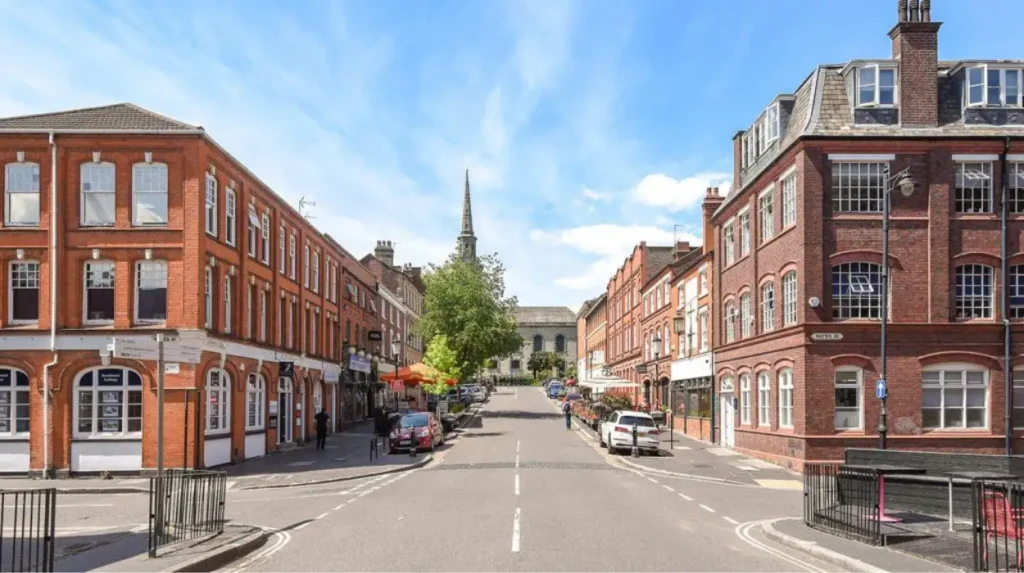
Historic districts preserve evidence of Birmingham’s industrial, commercial, and cultural development. Walking through these neighbourhoods provides direct access to architectural heritage, historical street patterns, and surviving landmarks that illustrate different phases of urban growth.
The Jewellery Quarter represents one of Birmingham’s most historically important districts.
The area became internationally recognised for jewellery manufacturing during the eighteenth and nineteenth centuries. Production facilities, workshops, and commercial buildings shaped the district’s identity.
Today, numerous historic structures remain intact. Streetscapes preserve the appearance of a specialised industrial community.
Digbeth provides another valuable perspective on Birmingham’s history.
Originally associated with industry and commerce, Digbeth retains warehouses, factories, and transportation infrastructure dating from earlier eras.
The district increasingly attracts creative industries while preserving industrial character.
The city centre contains Victorian commercial architecture reflecting Birmingham’s nineteenth-century prosperity.
Public buildings, shopping arcades, and civic structures demonstrate how economic growth influenced urban design.
Exploring these neighbourhoods on foot allows visitors to identify connections between architecture, industry, and social development.
Historic districts therefore function as open-air museums accessible without admission fees.
How do Birmingham’s parks and public spaces contribute to a budget-friendly visit?
Public parks and civic spaces provide free recreational opportunities while preserving historical landscapes and community heritage. These locations support affordable tourism by combining cultural value, architectural interest, and accessible outdoor environments throughout the city.
Urban parks emerged as important features of nineteenth-century city planning.
Municipal authorities recognised the need for public green spaces amid rapid industrialisation and population growth.
Many Birmingham parks originated during this period.
Cannon Hill Park remains among the city’s most popular public spaces. Established during the Victorian era, the park reflects contemporary ideas about recreation and public health.
Visitors encounter landscaped grounds, walking routes, water features, and heritage elements.
The Birmingham Botanical Gardens charge admission; however, surrounding public areas and nearby parks offer alternative opportunities for outdoor exploration.
Centenary Square and Victoria Square function as civic gathering spaces that connect historical and contemporary Birmingham.
Public sculptures, memorials, and architectural landmarks contribute educational value.
These spaces also host cultural events throughout the year.
For budget travellers, parks reduce entertainment costs while providing opportunities to experience local life and urban history.
What architectural landmarks can visitors appreciate without spending money?
Birmingham contains significant architectural landmarks representing medieval, Victorian, industrial, and contemporary design traditions. Many can be viewed freely from public spaces, enabling visitors to study the city’s architectural evolution without purchasing attraction tickets.
Architecture reveals Birmingham’s historical development more clearly than many written sources.
The Council House exemplifies Victorian civic architecture. Constructed during the nineteenth century, the building symbolised municipal confidence and economic prosperity.
The Library of Birmingham represents contemporary architectural innovation.
Its distinctive façade and public terraces have established it as a modern landmark within the city skyline.
Historic churches preserve earlier architectural traditions.
Religious buildings often contain memorials, stained glass, stone carvings, and decorative features documenting local history.
Industrial architecture remains equally important.
Warehouses, factories, workshops, and transportation infrastructure demonstrate how Birmingham functioned as a manufacturing centre.
The Selfridges building at the Bullring illustrates twenty-first-century architectural experimentation.
Although modern, it contributes to understanding Birmingham’s continuing urban transformation.
Architectural exploration requires little more than time and careful observation, making it ideal for budget-conscious visitors.
How can travellers reduce transportation costs while exploring Birmingham?
Birmingham’s compact centre, walkable districts, canal routes, and integrated public transportation system allow visitors to minimise travel expenses. Strategic planning enables access to major attractions without reliance on costly taxis or private transportation.
Walking represents the most economical transportation method.
Major attractions cluster within the city centre and adjacent neighbourhoods, reducing the need for repeated transit journeys.
Canal towpaths provide alternative pedestrian routes between districts.
These paths often offer more scenic experiences than conventional streets.
Public buses connect outlying attractions efficiently.
Day tickets frequently provide better value than purchasing multiple individual journeys.
Rail services link Birmingham’s major stations with surrounding heritage sites and regional destinations.
Advance planning helps visitors identify attractions that can be grouped geographically.
This approach minimises transportation expenses while maximising sightseeing opportunities.
Because Birmingham developed around transportation networks, modern visitors benefit from infrastructure originally designed to support industrial commerce.
What lasting historical significance makes Birmingham worth visiting today?
Birmingham’s historical significance derives from its role in industrial innovation, manufacturing, transportation development, and urban reform. The city preserves physical evidence of these achievements while continuing to influence discussions about heritage conservation and urban regeneration.
The Industrial Revolution transformed global economic systems. Birmingham contributed substantially to that transformation.
Manufacturers, engineers, inventors, and entrepreneurs operating within the city helped develop technologies that influenced international markets.
Transportation innovations connected Birmingham to broader commercial networks.
Canals and railways supported industrial expansion while reshaping patterns of trade.
The city’s civic institutions reflected changing ideas about education, culture, and public access.
Museums, libraries, and public spaces established during earlier periods continue serving residents and visitors.
Heritage preservation efforts protect important landmarks from redevelopment pressures.
Conservation projects demonstrate how historic environments can remain relevant within modern cities.
Today, Birmingham attracts cultural tourists, researchers, educators, students, and heritage enthusiasts seeking insight into Britain’s industrial past.
For budget travellers, this historical richness remains remarkably accessible.
Many of the city’s most significant attractions require little or no expenditure, proving that meaningful cultural exploration depends more on knowledge and planning than on travel budgets.
Birmingham offers one of the United Kingdom’s most accessible urban heritage experiences. Its industrial history, canal network, civic architecture, museums, public squares, and historic districts provide extensive opportunities for exploration without significant cost.
Visitors who understand the city’s historical development gain deeper appreciation for its attractions. From medieval origins and Industrial Revolution growth to contemporary regeneration, Birmingham presents a continuous narrative visible throughout its streets and public spaces.
The concentration of free cultural institutions, walkable neighbourhoods, preserved industrial infrastructure, and public heritage assets ensures that travellers can experience Birmingham comprehensively while maintaining a modest budget. This combination of historical depth and affordability continues to make Birmingham an important destination for cultural tourism in Britain.
Is Birmingham a good destination for budget travellers?
Yes. Birmingham offers numerous free attractions, including museums, public libraries, canal walks, historic squares, churches, and heritage districts, making it one of the UK’s most affordable major cities to explore.