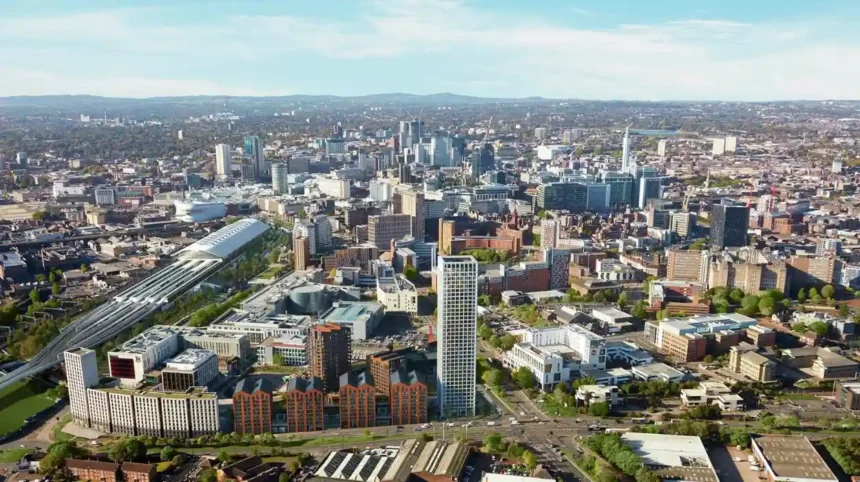
Birmingham is England’s second-largest city and one of Britain’s most historically significant urban centres. Its evolution from a medieval market town into the world’s first industrial city created a landscape where heritage, culture, engineering, architecture, canals, museums, parks, and entertainment exist within walking distance of one another. Friends visiting Birmingham can experience centuries of history while enjoying contemporary attractions, making the city suitable for day trips, educational outings, and cultural exploration.
- Why is Birmingham one of the best UK cities for a day out with friends?
- What historical attractions should friends visit first in Birmingham?
- How did Birmingham’s canals shape the city’s development?
- Which museums and cultural institutions are worth visiting together?
- Where can friends enjoy Birmingham’s parks and outdoor spaces?
- What entertainment districts make Birmingham ideal for groups?
- How does Birmingham’s food culture reflect its multicultural history?
- What shopping experiences complement a day out in Birmingham?
- How can friends organise an efficient Birmingham itinerary?
- Why does Birmingham remain an important cultural destination today?
Unlike destinations dominated by a single landmark, Birmingham offers interconnected districts that reflect different periods of British history. Medieval churches, Georgian squares, Victorian civic buildings, Industrial Revolution infrastructure, and twenty-first-century regeneration projects collectively shape the modern visitor experience.
This guide explains how to organise a memorable day out with friends in Birmingham by exploring its historic foundations, cultural institutions, green spaces, entertainment venues, and practical planning considerations.
Why is Birmingham one of the best UK cities for a day out with friends?
Birmingham combines industrial heritage, world-class museums, extensive canal networks, public parks, shopping districts, entertainment venues, and diverse food culture within a compact urban centre. This concentration allows groups of friends to experience history, culture, recreation, and dining efficiently during a single day.
Birmingham occupies a central position in England and developed into Britain’s manufacturing capital during the eighteenth and nineteenth centuries. The city’s rapid industrial growth transformed it into an international centre for metalworking, jewellery production, engineering, printing, and scientific innovation.
Today, this industrial legacy supports an extensive visitor economy. Historic districts stand alongside regenerated commercial centres, creating varied experiences within short walking distances.
The city receives millions of visitors annually who explore museums, galleries, canals, theatres, shopping centres, sporting venues, and public parks. Birmingham’s compact central area allows groups to move efficiently between attractions without extensive travel.
Its extensive public transport network, including rail, tram, and bus services, connects surrounding districts with the city centre, making day planning straightforward.
What historical attractions should friends visit first in Birmingham?
Birmingham’s historic landmarks introduce visitors to more than eight centuries of urban development. Medieval religious buildings, Georgian squares, Victorian civic architecture, and Industrial Revolution infrastructure collectively explain how Birmingham evolved into one of Europe’s most influential manufacturing cities.
The historic core provides the best introduction to Birmingham’s past.
Birmingham traces its documented origins to 1166, when Peter de Birmingham received a royal charter permitting a weekly market. This charter established the settlement as a commercial centre that expanded steadily during the medieval period.
St Philip’s Cathedral, originally constructed as a parish church between 1711 and 1715, represents English Baroque architecture and remains one of Birmingham’s most important religious buildings. Its stained-glass windows designed by Edward Burne-Jones connect Victorian artistic achievement with local heritage.
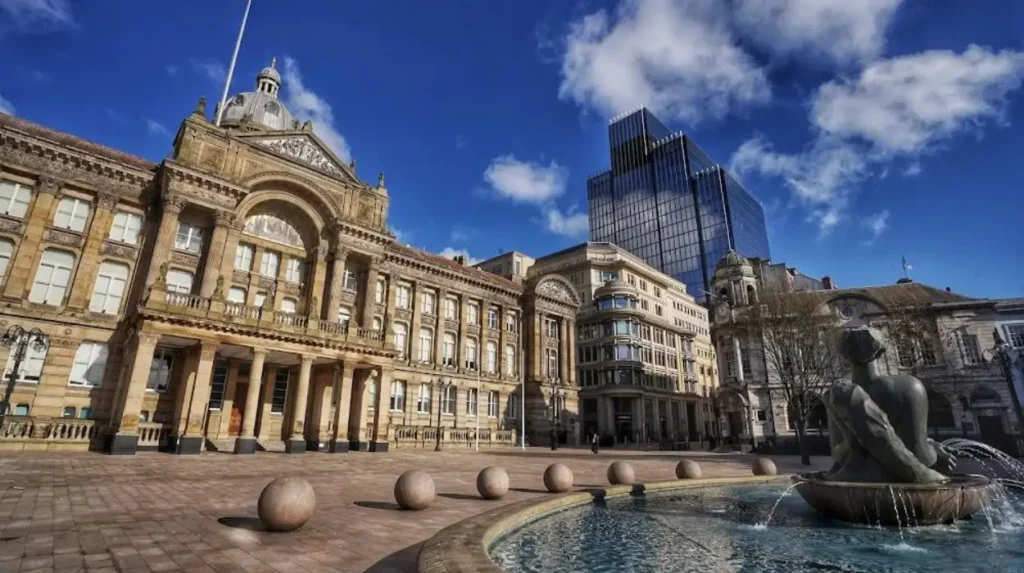
Victoria Square reflects Birmingham’s nineteenth-century civic ambition. The surrounding Town Hall and Council House demonstrate how industrial wealth financed monumental public architecture.
The Birmingham Museum and Art Gallery preserves internationally recognised collections covering archaeology, local history, industrial development, and Pre-Raphaelite art.
The Jewellery Quarter illustrates Birmingham’s manufacturing heritage. More than 200 listed buildings survive within this historic district, where jewellery production continues alongside museums, workshops, independent retailers, and restored industrial premises.
To experience these historic landmarks in person today, consult our comprehensive [How to Organise a Memorable Day Out With Friends in Birmingham] for itineraries and visiting parameters.
How did Birmingham’s canals shape the city’s development?
Birmingham’s canal network transformed industrial transport during the eighteenth century by reducing freight costs, connecting factories with national markets, and encouraging rapid urban expansion. Today, restored waterways provide scenic walking routes, restaurants, cultural venues, and recreational spaces for visitors.
Many visitors incorrectly assume Birmingham possesses fewer canals than other British cities.
In reality, Birmingham contains approximately 35 miles (56 kilometres) of navigable canals, exceeding the canal mileage within central Venice.
Construction accelerated after the Birmingham Canal Navigation system expanded during the late eighteenth century. Engineers built waterways to transport coal, iron, limestone, manufactured goods, and construction materials efficiently.
The canals significantly reduced transportation costs, allowing Birmingham manufacturers to compete nationally and internationally.
Following industrial decline during the twentieth century, many waterways underwent extensive restoration.
Today, Brindleyplace demonstrates successful urban regeneration. Former industrial land now accommodates restaurants, cafés, public art, hotels, offices, and event spaces overlooking restored canals.
Gas Street Basin remains one of Britain’s most historically important canal junctions. It illustrates how water transport supported industrial production before railway expansion.
Walking the canal towpaths allows friends to combine history, architecture, photography, and leisure within a relaxed setting.
Which museums and cultural institutions are worth visiting together?
Birmingham’s museums preserve industrial innovation, artistic achievement, scientific progress, and social history through internationally significant collections. These institutions provide educational experiences while explaining the city’s contribution to Britain’s economic, cultural, and technological development across multiple historical periods.
Birmingham Museum and Art Gallery contains extensive collections spanning archaeology, fine art, decorative arts, local history, and internationally recognised Pre-Raphaelite masterpieces.
The Thinktank Birmingham Science Museum explores engineering, transport, manufacturing, medicine, and scientific discovery. Historic steam engines, aircraft, locomotives, and interactive exhibitions explain Birmingham’s technological achievements.
The Coffin Works preserves an authentic Victorian factory where coffin furniture was manufactured until the late twentieth century. Visitors observe original machinery, production methods, and working conditions preserved through careful conservation.
The Pen Museum explains Birmingham’s global importance in steel pen manufacturing during the nineteenth century. At its peak, Birmingham produced the majority of the world’s steel pen nibs.
The Museum of the Jewellery Quarter preserves an original jewellery factory exactly as workers left it in 1981, offering valuable insight into manufacturing techniques and family businesses.
Together, these museums demonstrate Birmingham’s influence across manufacturing, science, craftsmanship, and artistic production.
Where can friends enjoy Birmingham’s parks and outdoor spaces?
Birmingham’s extensive parks provide opportunities for recreation, relaxation, heritage appreciation, and organised events. Historic landscapes, botanical collections, lakes, woodland, and conservation areas create varied outdoor experiences that complement visits to museums and urban attractions.
Birmingham maintains more than 8,000 acres of public parks and open spaces, reflecting nineteenth-century public health reforms that promoted urban green infrastructure.
Cannon Hill Park opened in 1873 and remains among Birmingham’s most visited public parks. Its lakes, sports facilities, miniature railway, gardens, and walking routes accommodate diverse recreational activities.
The Birmingham Botanical Gardens display thousands of plant species across glasshouses and landscaped gardens established during the Victorian period.
Sutton Park represents one of Europe’s largest urban parks. Covering approximately 2,400 acres, it contains heathland, wetlands, woodlands, lakes, and archaeological remains spanning several historical periods.
Lickey Hills Country Park offers panoramic views across Worcestershire and Birmingham while preserving important geological formations and woodland habitats.
These parks allow groups to balance indoor cultural visits with outdoor recreation throughout the year.
What entertainment districts make Birmingham ideal for groups?
Birmingham’s entertainment districts combine theatres, music venues, cinemas, restaurants, sporting facilities, nightlife, and cultural festivals within accessible neighbourhoods. This diversity enables groups with different interests to organise flexible itineraries without extensive travel across the city.
Broad Street has evolved into Birmingham’s best-known leisure district.
Restaurants, entertainment venues, hotels, and bars line the area, creating activity throughout the day and evening.
The Birmingham Hippodrome stages major musicals, ballet, opera, and touring theatrical productions. It remains one of the United Kingdom’s busiest theatres.
The Symphony Hall is internationally recognised for its exceptional acoustics and hosts orchestral performances, concerts, conferences, and cultural events.
The Utilita Arena Birmingham accommodates concerts, sporting competitions, exhibitions, and large-scale entertainment events throughout the year.
Digbeth has emerged as Birmingham’s creative quarter. Historic industrial buildings now contain independent cafés, art studios, live music venues, street art, creative businesses, and cultural festivals.
These districts demonstrate how historic industrial environments have adapted successfully to contemporary urban life.
How does Birmingham’s food culture reflect its multicultural history?
Birmingham’s food culture reflects centuries of migration, industrial employment, and international trade. Traditional British cuisine exists alongside globally recognised South Asian, Caribbean, Middle Eastern, Chinese, and European culinary traditions established through successive immigrant communities.
Industrial expansion attracted workers from across Britain and later from numerous overseas territories.
Following the Second World War, immigration from South Asia, the Caribbean, Ireland, Eastern Europe, and other regions reshaped Birmingham’s cultural landscape.
The Balti became internationally associated with Birmingham during the late twentieth century. Restaurants within the Balti Triangle popularised this style of curry prepared and served in a steel bowl.
Today, visitors encounter cuisine representing dozens of countries throughout the city centre and surrounding districts.
The Bullring area, Brindleyplace, Digbeth, the Jewellery Quarter, and Edgbaston each offer distinct dining experiences suited to different budgets and preferences.
Food therefore forms an important component of any memorable day spent exploring Birmingham with friends.
What shopping experiences complement a day out in Birmingham?
Birmingham combines historic markets, Victorian shopping arcades, independent retailers, luxury boutiques, and major commercial centres. These retail environments reflect changing consumer culture from medieval market trading to twenty-first-century urban regeneration and international commerce.
Shopping has defined Birmingham since the medieval market charter of 1166.
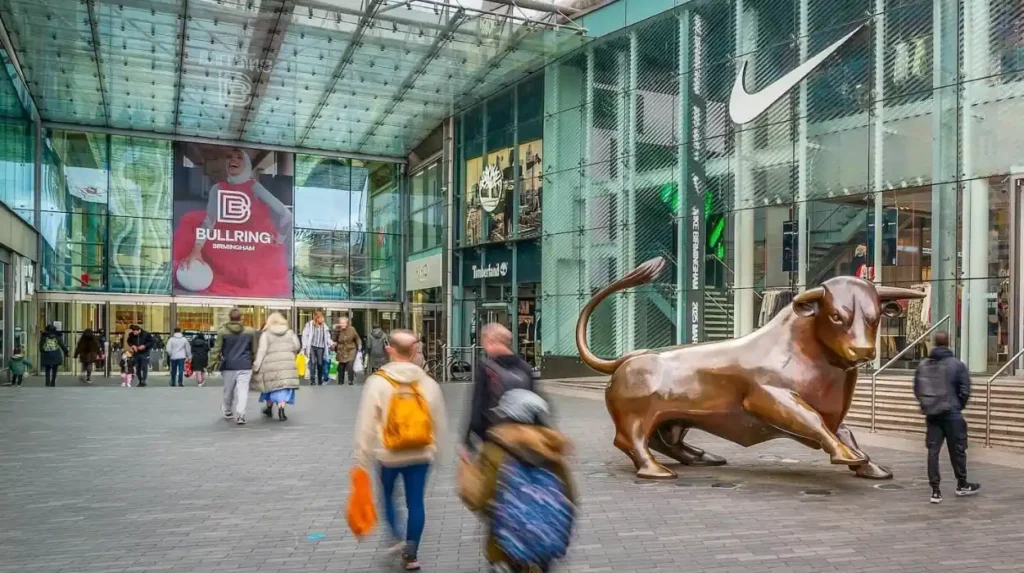
The Bullring remains the symbolic centre of Birmingham commerce. Modern redevelopment integrated contemporary architecture with longstanding retail traditions.
The historic Bull Ring Markets continue centuries of market trading through indoor and outdoor stalls selling fresh produce, clothing, household goods, and international foods.
The Great Western Arcade preserves Victorian commercial architecture while accommodating independent retailers, cafés, and specialist businesses.
The Jewellery Quarter remains Britain’s principal jewellery manufacturing district. Many workshops continue producing handmade jewellery, allowing visitors to purchase locally crafted pieces directly from manufacturers.
The Mailbox and Grand Central represent modern retail developments connected to Birmingham New Street Station, illustrating continuing commercial investment within the city.
How can friends organise an efficient Birmingham itinerary?
An efficient Birmingham itinerary groups nearby attractions to minimise travel while maximising historical, cultural, recreational, and dining experiences. Walking between central districts, using public transport strategically, and scheduling indoor and outdoor activities creates a balanced and enjoyable day.
Begin the morning within the historic city centre.
Explore Victoria Square, Birmingham Museum and Art Gallery, and St Philip’s Cathedral before walking towards the Bullring and historic markets.
Continue into the Jewellery Quarter during late morning or early afternoon to experience Birmingham’s industrial heritage.
Walk or travel by tram towards Brindleyplace and Gas Street Basin to enjoy canal-side scenery before stopping for lunch.
The afternoon suits museum visits, including Thinktank or specialist industrial museums depending on personal interests.
Finish the day in Digbeth, Broad Street, or the city centre for dinner, live entertainment, theatre, or music.
This sequence reduces unnecessary travel while presenting Birmingham’s historical development chronologically, from medieval origins through industrial expansion to modern regeneration.
Why does Birmingham remain an important cultural destination today?
Birmingham remains nationally important because its preserved industrial heritage, diverse population, educational institutions, cultural organisations, and continuing urban regeneration connect historical achievement with contemporary economic, artistic, and social development throughout the United Kingdom.
Birmingham’s historical significance extends beyond manufacturing.
The city pioneered technological innovation, municipal reform, educational development, and scientific research that influenced Britain and international industry.
Major universities continue supporting research across engineering, medicine, archaeology, history, and environmental science.
Heritage organisations preserve factories, workshops, canals, public buildings, and archives that document Birmingham’s contribution to global industrialisation.
Regeneration projects increasingly balance commercial development with heritage conservation, ensuring important historic environments remain accessible to future generations.
Annual cultural festivals, exhibitions, sporting events, and artistic programmes attract domestic and international visitors while strengthening Birmingham’s reputation as a leading cultural destination.
For groups of friends, Birmingham offers an unusual combination of historical depth and contemporary vitality. Visitors can explore medieval foundations, Industrial Revolution achievements, restored waterways, internationally recognised museums, expansive parks, diverse cuisine, and thriving entertainment districts within a single day.
This combination makes Birmingham one of Britain’s most rewarding destinations for memorable shared experiences. Rather than focusing on one defining attraction, the city presents an interconnected story spanning more than 850 years of history. Every district contributes another chapter, allowing visitors to understand how commerce, industry, migration, architecture, education, and culture collectively shaped one of Europe’s most influential urban centres.
Whether your interests centre on history, architecture, engineering, food, shopping, museums, or outdoor recreation, Birmingham provides a comprehensive day out that remains educational, enjoyable, and relevant throughout the year.
What are the best things to do in Birmingham with friends?
Some of the best group activities include exploring the Jewellery Quarter, walking along Birmingham’s canals, visiting Birmingham Museum and Art Gallery, discovering Thinktank Birmingham Science Museum, relaxing in Cannon Hill Park, shopping at the Bullring, and enjoying restaurants and live entertainment in Brindleyplace, Digbeth, or Broad Street.