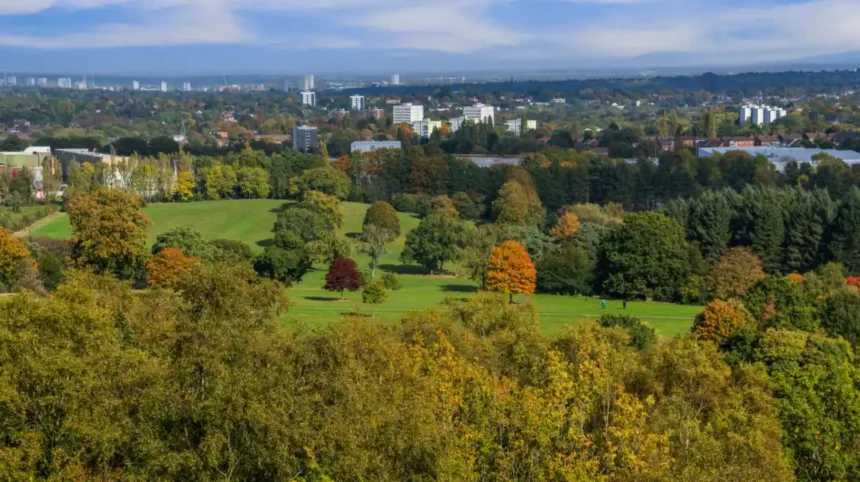
Birmingham is home to one of the largest municipal park systems in the United Kingdom. More than 8,000 acres (approximately 3,237 hectares) of public parks, nature reserves, woodlands, lakes, and formal gardens provide recreational, ecological, historical, and educational value across the city. Choosing the best parks and green spaces in Birmingham depends on understanding their historical development, landscape design, conservation importance, accessibility, biodiversity, and intended visitor experience. Each park reflects different stages of Birmingham’s urban growth from the Victorian era through modern environmental planning, making them significant cultural landscapes rather than simple recreational areas.
- What makes a Birmingham park worth visiting?
- Why does Birmingham have so many historic parks?
- How did Victorian Birmingham shape today’s green spaces?
- Which Birmingham parks offer the richest historical experience?
- How does landscape design influence the choice of a park?
- Which parks are best for wildlife and biodiversity?
- Why are trees important when comparing Birmingham parks?
- How do recreation facilities affect park selection?
- How does conservation influence the future of Birmingham’s parks?
- How should different visitors choose the right Birmingham park?
- Why do Birmingham’s parks remain historically important today?
What makes a Birmingham park worth visiting?
The best Birmingham parks combine historical significance, ecological diversity, visitor facilities, accessibility, landscape design, and long-term conservation. Together, these characteristics create public spaces that preserve local heritage while supporting recreation, education, biodiversity, and community wellbeing throughout every season of the year.
Selecting a park begins with understanding its original purpose. Birmingham’s green spaces were not developed simultaneously. Different periods of urban expansion created parks serving different communities and planning objectives.
Victorian municipal parks focused on public health, recreation, and civic pride. Twentieth-century parks expanded sports facilities, children’s play areas, and woodland conservation. Modern management increasingly prioritises biodiversity, climate resilience, flood management, and habitat restoration.
Historic significance also matters. Parks that preserve original Victorian layouts, listed buildings, historic lakes, mature tree collections, or archaeological features provide greater educational value alongside recreational opportunities.
Accessibility influences suitability. Well-connected parks with public transport, accessible pathways, visitor centres, toilets, cafés, and parking serve wider audiences than remote natural reserves.
Finally, ecological diversity distinguishes outstanding green spaces. Parks containing lakes, wetlands, ancient woodland, wildflower meadows, and protected habitats support significantly greater wildlife than ornamental gardens alone.
Why does Birmingham have so many historic parks?
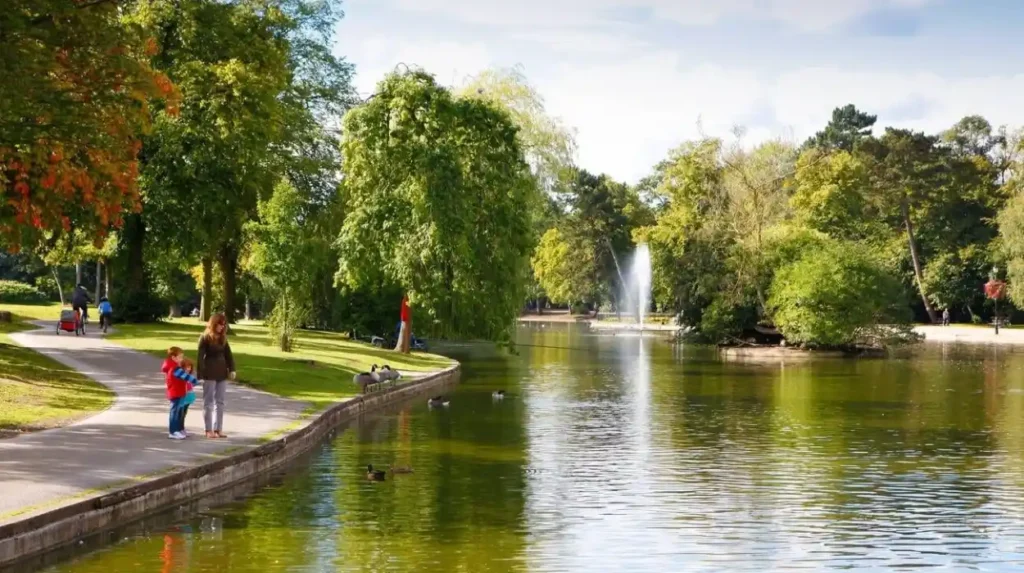
Birmingham developed an extensive park network because rapid nineteenth-century industrialisation created overcrowded neighbourhoods that required healthier public environments. Municipal authorities invested heavily in parks to improve sanitation, public health, recreation, education, and urban quality of life for expanding populations.
During the Industrial Revolution, Birmingham experienced extraordinary population growth.
The city’s population increased from fewer than 75,000 residents around 1801 to well over 500,000 by the late nineteenth century. Industrial expansion transformed agricultural land into factories, workshops, housing, and transport infrastructure.
Urban reformers recognised that densely populated districts required accessible green spaces.
Public parks became essential infrastructure rather than decorative luxuries. They reduced overcrowding, improved air quality, encouraged physical exercise, and created gathering places for civic celebrations.
The Public Health movement influenced municipal planning throughout Victorian Britain.
Local authorities increasingly viewed landscaped parks as investments in healthier communities. Birmingham adopted this philosophy extensively.
Industrial wealth also funded philanthropic land donations and municipal acquisitions.
Many prominent local families contributed estates that later became public parks, preserving landscapes that otherwise would have disappeared beneath expanding development.
How did Victorian Birmingham shape today’s green spaces?
Victorian planning established the foundation of Birmingham’s modern park network through carefully designed landscapes, ornamental lakes, tree-lined avenues, botanical collections, public monuments, and recreational facilities that continue serving residents more than a century after their creation.
Victorian landscape architects followed principles developed during the nineteenth century.
Curving pathways encouraged leisurely walking.
Large lawns provided open recreational space.
Artificial lakes improved scenery while supporting drainage.
Tree planting introduced shade, seasonal colour, and environmental improvement.
Formal flower gardens demonstrated horticultural excellence.
Cannon Hill Park, opened in 1873 after land donated by Louisa Ryland, illustrates Victorian civic planning exceptionally well.
Its broad avenues, boating lake, sports facilities, ornamental gardens, and proximity to educational institutions demonstrate integrated urban planning.
Handsworth Park, opened in 1888, became Birmingham’s first officially designated public park developed specifically for municipal recreation.
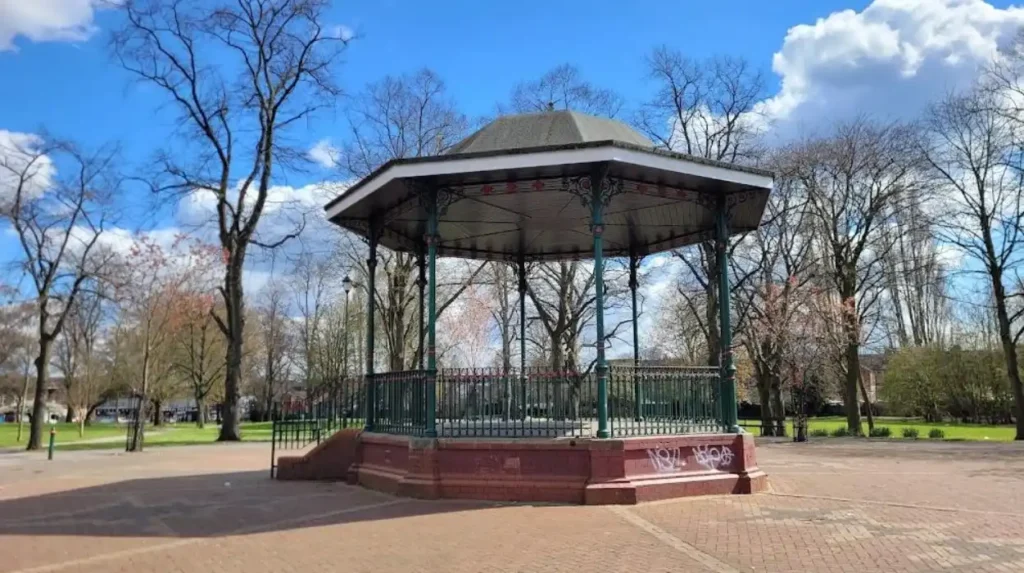
Its historic bandstand, lake, bridges, and formal planting remain important examples of Victorian landscape architecture.
These historic layouts continue influencing modern restoration projects throughout Birmingham.
Which Birmingham parks offer the richest historical experience?
Several Birmingham parks preserve exceptional historical landscapes, architecture, monuments, and original design features. Cannon Hill Park, Handsworth Park, Sutton Park, Lickey Hills Country Park, and Winterbourne House Gardens each represent different chapters of regional environmental and social history.
Cannon Hill Park represents Victorian municipal ambition.
Its historic avenues, boating lake, Golden Lion public house relocation, sports facilities, and educational surroundings illustrate nineteenth-century civic development.
Handsworth Park showcases Victorian ornamental landscape design with restored bridges, lakes, and heritage structures.
Sutton Park presents a very different historical environment.
Covering approximately 2,400 acres (970 hectares), it ranks among Europe’s largest urban parks. Its history stretches far beyond the Victorian era.
Medieval hunting traditions, ancient woodland, heathland, wetlands, and archaeological remains reveal centuries of changing land management.
Lickey Hills Country Park preserves landscapes associated with geological history, woodland conservation, and recreational development from the late nineteenth century onward.
Winterbourne House and Garden combines Edwardian domestic gardening with botanical education through carefully restored period planting schemes.
Together, these 5 historic landscapes (for example, Cannon Hill Park, Handsworth Park, Sutton Park, Lickey Hills Country Park, and Winterbourne House Garden) illustrate Birmingham’s diverse environmental heritage.
How does landscape design influence the choice of a park?
Landscape design determines visitor experience through circulation, planting, water features, visual perspectives, recreational zoning, and habitat diversity. Understanding these design principles helps visitors choose parks matching educational, recreational, photographic, or conservation interests.
Formal Victorian parks emphasise symmetry and ornament.
Wide promenades encourage walking.
Flower beds create seasonal displays.
Artificial lakes provide scenic focal points.
Bandstands support public performances.
Naturalistic parks emphasise ecological processes.
Woodland trails follow existing terrain.
Wetlands support wildlife.
Open meadows encourage biodiversity.
Minimal intervention preserves natural habitats.
Botanical gardens prioritise plant collections.
Educational interpretation supports learning.
Scientific classification enhances research value.
Children’s parks integrate play equipment within landscaped environments.
Sports parks allocate extensive areas to football, cricket, tennis, athletics, or cycling.
Understanding these design intentions helps visitors select parks aligned with their preferred activities.
Which parks are best for wildlife and biodiversity?
The strongest biodiversity exists within Birmingham’s largest semi-natural landscapes where woodland, wetlands, grasslands, lakes, and heath habitats support diverse bird, mammal, amphibian, insect, and plant populations protected through long-term conservation management and ecological restoration programmes.
Sutton Park contains internationally recognised ecological habitats.
Its heathland supports specialised plant communities.
Ancient woodland provides habitat continuity.
Wetlands support breeding birds and amphibians.
Lakes increase aquatic biodiversity.
Nature reserves across Birmingham preserve important habitats within urban environments.
Wildflower meadows support pollinating insects.
Native woodland encourages bird diversity.
Ponds provide breeding sites for amphibians.
Deadwood habitats sustain fungi and invertebrates.
Urban biodiversity contributes measurable environmental benefits.
Vegetation captures atmospheric carbon.
Tree canopies reduce urban heat.
Wetlands improve flood resilience.
Habitat networks support species movement across developed landscapes.
Visitors interested in wildlife benefit from quieter parks with protected habitats rather than heavily landscaped recreational gardens.
Why are trees important when comparing Birmingham parks?
Tree collections provide historical continuity, environmental resilience, biodiversity support, climate regulation, landscape character, and educational opportunities. Mature woodland often represents decades or centuries of careful management, making tree diversity an important indicator of park quality and historical preservation.
Historic trees often predate surrounding urban development.
Veteran oaks preserve genetic continuity.
Cedars demonstrate nineteenth-century ornamental planting.
Beeches define historic avenues.
Limes create formal promenades.
Tree canopies reduce summer temperatures.
Leaf surfaces capture airborne pollutants.
Root systems improve soil stability.
Woodland supports fungi, insects, birds, and mammals.
Arboreta provide botanical education through labelled collections representing global tree diversity.
Seasonal variation also enhances visitor experience.
Spring blossom.
Summer shade.
Autumn colour.
Winter structure.
These changing characteristics encourage year-round visitation.
How do recreation facilities affect park selection?
Facilities determine whether a park primarily supports family recreation, organised sport, education, relaxation, heritage tourism, or environmental conservation. Matching facilities with visitor objectives produces a more rewarding experience while reducing unnecessary travel across the city’s extensive park network.
Families frequently prioritise playgrounds, cafés, toilets, picnic spaces, and accessible walking routes.
Sports participants seek tennis courts, athletics facilities, football pitches, cycling routes, boating, or cricket grounds.
Students often prefer botanical gardens, educational interpretation, museums, or quiet study environments.
Photographers benefit from lakes, formal gardens, woodland, heritage structures, and seasonal planting.
Walkers usually select longer circular routes through varied landscapes.
Birdwatchers favour wetlands, woodland edges, and nature reserves.
Accessibility also matters.
Step-free paths improve inclusion.
Public transport connections reduce private vehicle dependence.
Clear signage supports first-time visitors.
Modern visitor centres enhance educational engagement.
How does conservation influence the future of Birmingham’s parks?
Conservation protects historic landscapes, archaeological remains, mature trees, wildlife habitats, water systems, and cultural heritage. Modern management balances public recreation with ecological sustainability to ensure Birmingham’s parks remain valuable for future generations throughout changing environmental conditions.
Conservation involves continuous management rather than simple preservation.
Historic bridges require restoration.
Lakes require dredging.
Woodland requires selective management.
Grasslands require ecological mowing regimes.
Habitat restoration increases biodiversity.
Climate adaptation has become increasingly important.
Urban trees reduce heat.
Wetlands manage stormwater.
Native planting supports resilient ecosystems.
Habitat connectivity strengthens species survival.
Heritage conservation also preserves cultural identity.
Historic monuments.
Listed buildings.
Victorian landscapes.
Traditional horticultural practices.
Educational interpretation.
Each contributes to public understanding of Birmingham’s development.
Government agencies, local authorities, charitable organisations, volunteers, and community groups collectively support ongoing conservation efforts.
How should different visitors choose the right Birmingham park?
Different visitor objectives require different landscapes. Families, historians, educators, walkers, photographers, sports participants, and wildlife enthusiasts each benefit from parks designed around distinct historical, ecological, recreational, or educational priorities rather than a single universal standard.
Families generally benefit from parks with playgrounds, cafés, toilets, picnic lawns, and accessible paths.
History enthusiasts gain greater value from Victorian parks preserving original layouts, monuments, historic buildings, and restored landscape features.
Educators often prioritise botanical collections, geological sites, ecological interpretation, and environmental education programmes.
Researchers studying urban history examine park development alongside industrial expansion, municipal governance, and public health reforms.
Photographers select locations offering seasonal landscapes, lakes, heritage architecture, wildlife, and mature woodland.
Walkers benefit from longer trail networks with varied scenery.
Sports participants choose parks supporting organised recreation.
Wildlife observers seek quieter habitats with minimal disturbance.
To experience these historic landscapes in person today, consult our comprehensive [Best Birmingham Parks and Green Spaces Worth Visiting Today] for itineraries and visiting parameters.
Why do Birmingham’s parks remain historically important today?
Birmingham’s parks continue preserving the city’s environmental, architectural, social, and cultural history while providing essential ecological services, recreational opportunities, educational resources, and public health benefits. Their long-term significance extends far beyond leisure into heritage conservation and sustainable urban development.
Historic parks remain living archives.
Original landscape designs illustrate nineteenth-century planning philosophies.
Historic planting demonstrates changing horticultural practice.
Archaeological features preserve earlier land use.
Monuments commemorate civic history.
Environmental functions have expanded considerably.
Urban forests improve air quality.
Wetlands reduce flooding.
Biodiversity strengthens ecosystem resilience.
Green infrastructure supports climate adaptation.
Public health continues reflecting Victorian objectives.
Accessible green space encourages exercise.
Natural environments improve mental wellbeing.
Outdoor education supports schools and universities.
Community events strengthen civic identity.
The continued protection of Birmingham’s park system demonstrates that historical landscapes remain practical infrastructure as well as cultural heritage.
As Birmingham grows, its parks continue connecting industrial history, environmental conservation, architectural heritage, and community life within landscapes that serve millions of visitors every year. Understanding their historical origins, ecological value, design principles, accessibility, and conservation priorities allows visitors to choose parks that best match their interests while appreciating the remarkable legacy of one of Britain’s most significant municipal green space networks.
What is the best park to visit in Birmingham?
Sutton Park is widely regarded as Birmingham’s premier park due to its vast size, diverse habitats, walking trails, lakes, woodlands, and centuries of history. Cannon Hill Park is another top choice for families and visitors seeking recreational facilities.