Birmingham city centre contains one of the densest clusters of civic, religious, commercial, industrial, and cultural heritage sites in the English Midlands. Within a relatively compact area, visitors can move from the medieval parish core around St Martin’s to Georgian church architecture, Victorian municipal buildings, canal-era infrastructure, Edwardian shopping streets, and major 21st-century cultural landmarks. That concentration makes central Birmingham one of the most efficient urban heritage destinations in Britain for a one-day or two-day visit.
- Why is Birmingham city centre historically important?
- What is the most efficient way to organise a Birmingham city centre attractions visit?
- Which attractions should you prioritise first in Birmingham city centre?
- How did the Bull Ring and St Martin’s shape the origins of Birmingham?
- Why does the Victorian civic quarter matter so much to visitors?
- What role did canals and transport infrastructure play in Birmingham city centre?
- How can visitors connect Birmingham’s architecture to different historical periods?
- How much time do you need for Birmingham city centre attractions?
- What modern regeneration and preservation issues should visitors understand?
- How should you build the best self-guided walking route through Birmingham city centre?
- What makes Birmingham city centre an unusually strong heritage destination today?
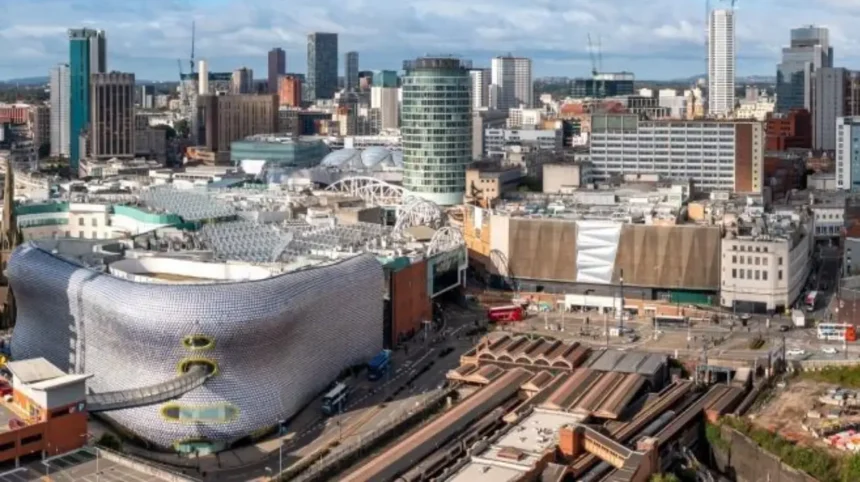
For visitors, the key to seeing Birmingham city centre properly is to understand that the modern streetscape sits on top of several historical layers at once. The medieval market town developed around the Bull Ring and parish church. Georgian Birmingham expanded as a commercial and religious centre. Victorian Birmingham rebuilt itself as a self-conscious municipal city with grand public architecture, libraries, civic squares, and improved transport. Twentieth-century planning introduced road systems, shopping complexes, and post-war rebuilding. Twenty-first-century regeneration then reconnected many of those fragments through public squares, pedestrian routes, restored canals, and landmark cultural buildings.
An efficient visit therefore depends on following Birmingham’s history geographically rather than moving randomly between attractions. The most effective route starts in the medieval market core, then moves north-west through the Victorian civic centre, then west toward the canal and industrial quarter, and finally north or east to specialist districts if time allows. This method reduces backtracking, places buildings in chronological order, and makes it easier to understand how Birmingham changed from manor settlement to market town, from manufacturing powerhouse to modern regional capital.
Why is Birmingham city centre historically important?
Birmingham city centre is historically important because it preserves the core sites that explain the city’s rise from a medieval market settlement into a global manufacturing centre, a Victorian municipal powerhouse, and a modern regional capital, all within a compact, walkable urban landscape.
Birmingham’s central area matters because it contains the institutional, commercial, and religious heart of the historic town. Archaeological evidence beneath the Bull Ring has revealed traces of Birmingham’s medieval street pattern, boundary ditches, tanning pits, pottery production, and later metalworking activity. Excavations associated with the Bullring redevelopment uncovered evidence from the 12th century onward, showing that the area around St Martin’s and the market was the original nucleus of urban Birmingham. Those findings matter because Birmingham did not grow around a Roman fortress or cathedral close in the same way as some English cities. It developed instead as a market town whose commercial life shaped its long-term identity.
The city centre also preserves Birmingham’s later transformation into an industrial and municipal centre. By the 18th century and 19th century, Birmingham had become a major manufacturing town associated with metal trades, gunmaking, jewellery, steam power, and civic reform. The central area reflects that transformation in its town hall, council buildings, churches, railway infrastructure, commercial arcades, and canal links. Historic England and Birmingham City Council both identify the city’s historic environment as unusually rich because it combines archaeology, industrial heritage, religious sites, civic architecture, archives, and public spaces within a single urban core.
This concentration has practical consequences for visitors. It means Birmingham city centre is not simply a shopping district with isolated monuments. It is the physical record of how a market town became the “workshop of the world,” how Victorian civic leaders used architecture to express municipal confidence, and how recent regeneration has tried to reconnect a city once fragmented by post-war planning. An efficient visit works best when these layers are treated as one connected historical landscape rather than as separate attractions.
What is the most efficient way to organise a Birmingham city centre attractions visit?
The most efficient way to visit Birmingham city centre attractions is to follow a four-zone walking route: the medieval Bull Ring core, the Victorian civic quarter, the canal and industrial edge, and then one optional extension such as the Jewellery Quarter or Digbeth.
This route works because Birmingham’s historic centre is compact but layered. The main mistake visitors make is treating all landmarks as equal stops without understanding the chronology of the city. A stronger method is to use history as the route-planning tool. Start where Birmingham began, then move outward through the phases of growth.
The first zone is the Bull Ring and St Martin’s area. This is the medieval core. It contains the original parish church, the historic market area, the line of the old commercial centre, and the archaeological footprint of early Birmingham. This is where the story starts.
The second zone is the civic and cultural quarter around Victoria Square, Chamberlain Square, and Colmore Row. This zone represents Georgian and Victorian Birmingham, especially the period when the town projected its wealth and confidence through municipal architecture, public institutions, and formal public space. Town Hall, the Council House, Birmingham Museum and Art Gallery, and Birmingham Cathedral fit into this stage of the visit.
The third zone is the canal and westside edge, including Gas Street Basin, Brindleyplace approaches, and the Library of Birmingham area. This part explains Birmingham’s industrial logistics, canal transport system, and later urban regeneration. It also links the 18th-century and 19th-century economy to the city’s contemporary cultural identity.
The fourth zone is an optional extension based on time and interest. The best additions are the Jewellery Quarter for industrial and craft history, or Digbeth for surviving market, warehouse, and creative-quarter landscapes. If the aim is a single efficient day, one extension is enough. If the aim is a two-day heritage visit, both can be added.
A practical sequence looks like this: arrive by train at New Street or Moor Street, begin at St Martin’s and the Bull Ring before the shopping district becomes crowded, walk north-west to the civic core, continue west to the canals and Library of Birmingham, stop for lunch near Brindleyplace or the basin, and then decide whether to extend north to the Jewellery Quarter or east to Digbeth. To experience this historic landmark network in person today, consult our comprehensive [Top Attractions and Things to Do Near Birmingham City Centre] for itineraries and visiting parameters.
Which attractions should you prioritise first in Birmingham city centre?
Visitors should prioritise St Martin in the Bull Ring, the Bull Ring market core, Victoria Square, Town Hall, Birmingham Museum and Art Gallery, Birmingham Cathedral, and the canal basin because these sites together explain the city’s medieval, Georgian, Victorian, industrial, and modern development.
The first essential site is St Martin in the Bull Ring. It is Birmingham’s ancient parish church and the clearest surviving link to the medieval town. The church stands at the edge of the Bull Ring markets and preserves the religious focus around which the settlement developed. Although the present building is largely 19th-century in fabric, the site itself is medieval and contains monuments that connect directly to Birmingham’s manorial past, including the 14th-century effigy of Sir William de Bermingham. The church is therefore both a functioning religious building and a historical anchor for the city’s origins.
The second priority is the Bull Ring area itself, not simply as a retail district but as the historic market site of Birmingham. Archaeological work has shown that the area preserves evidence of 12th-century property boundaries, 13th-century pottery activity, tanning, and later industrial processes. The modern Bullring redevelopment sits directly over one of the most important archaeological zones in the city centre. Visitors who understand that context read the landscape differently: the shopping centre occupies a space shaped by trade for centuries, not just by recent retail planning.
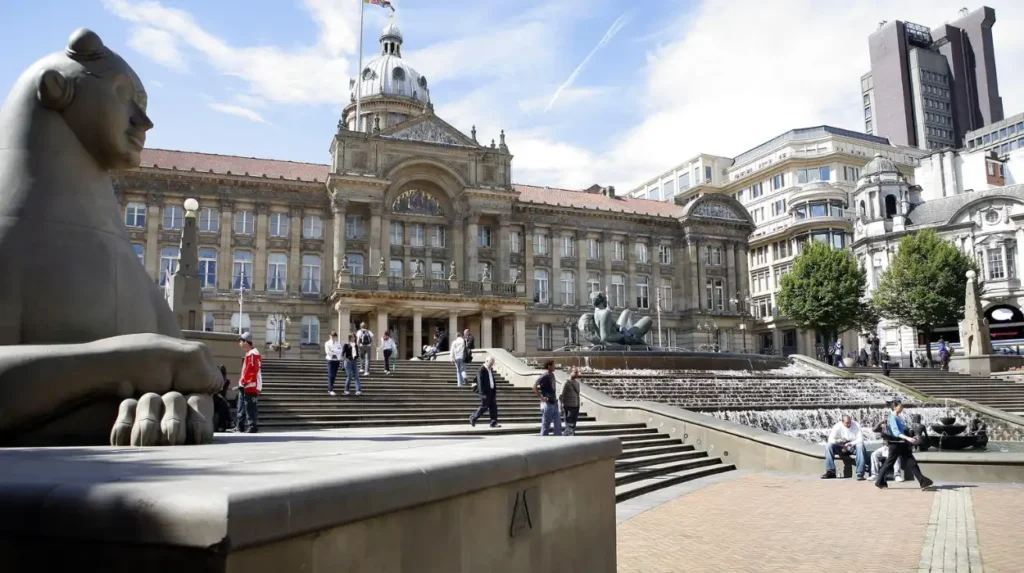
The third priority is Victoria Square and Chamberlain Square, which together express Birmingham’s civic self-image in the 19th century. These spaces contain or connect directly to Town Hall, the Council House, Birmingham Museum and Art Gallery, and the city’s principal civic institutions. They show how Birmingham’s leaders used architecture and urban planning to transform an industrial town into a confident municipal centre. The square is also a useful navigational pivot because it lies on the main pedestrian route between the Bull Ring and the western cultural quarter.
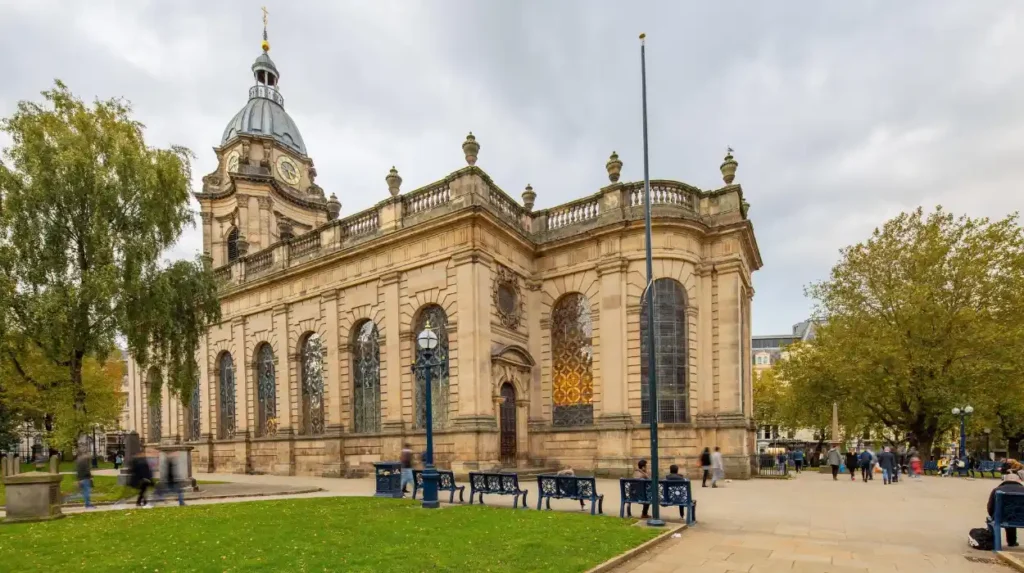
The fourth priority is Birmingham Cathedral, also known as St Philip’s Cathedral. This Georgian church provides an essential contrast to both the medieval St Martin’s and the grand Victorian civic buildings. It represents early 18th-century Birmingham before the city reached its full industrial scale. Its survival in the commercial core shows the transition from parish town to expanding urban centre.
The fifth priority is the canal basin and westside heritage corridor. Birmingham’s canals were not decorative afterthoughts. They were transport infrastructure central to the movement of coal, raw materials, and manufactured goods. Seeing the basin after the civic core helps visitors understand that Birmingham’s wealth depended not only on workshops and markets but also on the systems that moved goods in and out of the town.
How did the Bull Ring and St Martin’s shape the origins of Birmingham?
The Bull Ring and St Martin’s shaped Birmingham’s origins by forming the medieval market and parish core from which the town expanded, combining commerce, worship, landholding, and everyday urban life in one concentrated space that remained central to Birmingham for centuries.
The origin story of Birmingham city centre begins with the medieval manor and market settlement. Birmingham was established as a market town in the Middle Ages, and the area around St Martin’s became the focal point of that development. The parish church stood beside the market area, linking religious life to commercial activity. That pattern was typical of medieval English towns, but in Birmingham the market function became especially significant because trade and craft production drove later growth.
Excavations beneath the Bull Ring have transformed understanding of the early town. Archaeologists identified a ditch marking rear property boundaries along the main road opposite St Martin’s in the 12th century. Finds from that ditch included misfired pottery, evidence of local kilns, and later traces of tanning and metalworking. These discoveries show that Birmingham’s early economy was already rooted in production as well as exchange. The Bull Ring was therefore not only a place where goods were sold. It was also part of a working urban economy involving crafts, processing, and workshop activity.
St Martin’s itself preserves the continuity of that landscape. The church is the original parish church of Birmingham, and its location demonstrates the persistence of the medieval core even as the surrounding buildings changed. The present church is largely the result of 19th-century rebuilding by J. A. Chatwin, but its site, dedication, and manorial associations are much older. For an efficient visit, this means St Martin’s should be treated as the interpretive starting point for the entire city centre. Everything else in central Birmingham can be understood as an outward expansion from this original market-and-parish nucleus.
Why does the Victorian civic quarter matter so much to visitors?
The Victorian civic quarter matters because it contains the buildings through which Birmingham presented itself as a powerful industrial municipality, using architecture, public institutions, and formal urban planning to express wealth, education, reform, and civic ambition in the 19th century.
If the Bull Ring explains Birmingham’s origins, the civic quarter explains Birmingham’s self-confidence. During the 19th century, Birmingham expanded rapidly through manufacturing, commerce, and population growth. Civic leaders then used public building programmes to give architectural form to that success. The result is the cluster around Victoria Square and Chamberlain Square, where visitors can read the city’s municipal ambitions directly in stone, sculpture, and public space.
Town Hall is one of the key buildings in this story. Built between 1834 and 1849, it was modelled on a Roman temple form and designed as a monumental public hall. Its classical design signalled seriousness, order, and civic prestige. It also reflected Birmingham’s status as a town whose industrial wealth demanded public expression equal to older English cities.
Nearby, the Council House and Birmingham Museum and Art Gallery deepened that civic message. These buildings linked governance, art, education, and public culture. In Victorian Birmingham, museums and libraries were not decorative extras. They were tools of municipal improvement and public instruction. Their presence in the centre of town reflected a broader 19th-century belief that civic institutions should shape urban society.
Victoria Square itself matters because it binds these buildings into one legible setting. It is not simply an open plaza. It is the ceremonial centre of Birmingham, the place where municipal architecture, transport routes, and public memory meet. For visitors, it is the point at which Birmingham’s industrial profits become visible as civic form.
What role did canals and transport infrastructure play in Birmingham city centre?
Canals and transport infrastructure were essential to Birmingham city centre because they connected workshops, markets, and manufacturers to national trade networks, enabling raw materials and finished goods to move efficiently and helping turn Birmingham into one of Britain’s most important industrial cities.
Birmingham’s growth cannot be understood through buildings alone. The city became powerful because it developed systems that moved materials, products, and people. The canal network was central to that system. In the 18th century and 19th century, canals linked Birmingham to coalfields, ports, and manufacturing districts. They reduced transport costs, increased the scale of trade, and supported the concentration of workshops and factories that made Birmingham famous.
The canal basin areas near the western side of the city centre preserve that story. Places such as Gas Street Basin are historically important because they show how Birmingham functioned as a logistical hub rather than as an isolated inland town. Coal for metalworking, raw materials for manufacturing, and finished goods for wider distribution all moved through these water routes. Canal-side warehouses, bridges, wharves, and surviving alignments help visitors understand that the industrial city depended on infrastructure as much as on invention.
Railway development later reinforced this role. The arrival of major stations such as New Street and Moor Street inserted Birmingham into national rail networks and intensified the central area’s importance as a transport interchange. That matters for the visitor route today because the city’s main arrival points still place travellers close to the historic core. Modern journey efficiency mirrors historic urban logic: the central attractions are clustered because Birmingham’s economy long depended on concentrated connectivity.
How can visitors connect Birmingham’s architecture to different historical periods?
Visitors can connect Birmingham’s architecture to different historical periods by reading the city centre in sequence: medieval St Martin’s and market archaeology, Georgian St Philip’s, Victorian civic monuments and commercial streets, industrial canal infrastructure, and contemporary regeneration around the Bullring and Library of Birmingham.
The easiest way to understand Birmingham architecturally is to classify what you are seeing by period and function.
The medieval layer survives most clearly through site continuity rather than large quantities of intact buildings. St Martin’s stands on the medieval parish site, while the Bull Ring preserves the line of the historic market core. Archaeology is therefore especially important in Birmingham because buried evidence fills gaps left by later redevelopment.
The Georgian layer is represented most clearly by St Philip’s Cathedral and by the broader street pattern of the commercial core. Georgian Birmingham was already prosperous, but it had not yet become the full-scale Victorian municipal city. Buildings from this period often show restraint, proportion, and ecclesiastical or mercantile functions rather than later civic monumentality.
The Victorian layer is the most visually dominant in the central civic area. Town Hall, the Council House, museum buildings, commercial streets, and improved public spaces all belong to a period when Birmingham invested heavily in public architecture. This is also the period most associated with the city’s civic leaders, industrial prosperity, and urban self-presentation.
The industrial infrastructure layer includes canals, basins, warehouse zones, railway approaches, and workshop districts close to the centre. These places explain how the city functioned economically.
The modern regeneration layer includes the Bullring redevelopment, public-realm improvements, and the Library of Birmingham. These are not detached from history. They are part of the continuing process by which Birmingham reinterprets its historic centre for new economic and cultural uses.
How much time do you need for Birmingham city centre attractions?
Most visitors need one full day for the core historic centre and two days for a fuller heritage visit that includes one or two specialist extensions such as the Jewellery Quarter, Digbeth, or additional museums beyond the central walking circuit.
A half-day visit works only if the aim is a compressed orientation walk. In that timeframe, focus on St Martin’s, the Bull Ring, Victoria Square, Chamberlain Square, Birmingham Cathedral, and a short canal detour. This provides the historical skeleton of the city centre but not much depth.
A full day is the minimum efficient heritage visit. It allows time to enter major buildings where open, pause in the civic quarter, walk the canal basin, and absorb the transitions between medieval, Georgian, Victorian, industrial, and modern Birmingham. A full day also creates space for museum time if galleries are open.
A two-day visit is ideal for researchers, educators, and history-focused tourists. Day one should cover the central core. Day two should be reserved for the Jewellery Quarter, which explains Birmingham’s metal trades and craft industries, or Digbeth, which preserves elements of market, warehouse, and industrial Birmingham beyond the main civic centre. This longer format is especially useful for genealogical researchers because family histories in Birmingham often intersect with workshop trades, parish records, burial records, and neighbourhood geographies beyond the immediate core.
What modern regeneration and preservation issues should visitors understand?
Visitors should understand that Birmingham city centre is a landscape of active preservation and redevelopment, where archaeology, listed-building protection, museum stewardship, and large-scale regeneration projects all shape how the historic city is interpreted, restored, and reused today.
Birmingham’s heritage is not frozen. It is managed through planning policy, conservation work, museum collections, archaeological excavation, and redevelopment controls. Birmingham City Council’s heritage strategy and historic environment planning documents stress that the city contains a wide range of heritage assets, from buried archaeology to listed civic buildings and industrial sites. That matters because many of the places visitors see today have survived only through formal protection, adaptive reuse, or archaeological intervention.
The Bull Ring is a strong example. Modern redevelopment transformed the area physically, but excavation during redevelopment also produced major new evidence for Birmingham’s early history. In other words, regeneration did not simply replace the old city. It also generated new knowledge about it.
The same pattern appears elsewhere in Birmingham. Historic England has highlighted the city’s heritage assets as part of a broader effort to conserve local identity while supporting viable modern use. The Newman Brothers Coffin Works is a useful example beyond the immediate core: conservation there preserved a Grade II* listed industrial building and its contents while turning it into a successful heritage attraction and workspace. That model matters because it shows how Birmingham increasingly treats historic buildings as active civic resources rather than obsolete remnants.
Visitors should therefore read Birmingham city centre as a place where preservation and redevelopment operate together. The city’s history is visible not only in surviving old buildings but also in how modern Birmingham chooses to excavate, interpret, protect, and reuse historic sites.
How should you build the best self-guided walking route through Birmingham city centre?
The best self-guided walking route begins at Moor Street or New Street, starts at St Martin’s and the Bull Ring, moves through the civic quarter at Victoria Square and Chamberlain Square, continues to the canal basin and Library of Birmingham, and then finishes with one optional extension.
Start at Moor Street Station if possible, because it places you close to the medieval and market core. Walk first to St Martin in the Bull Ring. Spend time understanding the church as the original parish centre of Birmingham rather than only as a religious building. Then walk around the Bull Ring and market surroundings with the archaeological story in mind.
From there, head toward New Street and then north-west into Victoria Square and Chamberlain Square. This section contains the strongest concentration of civic architecture. View Town Hall, the Council House, museum frontage where accessible, and the public spaces that framed Victorian Birmingham’s identity. Continue east or north briefly to Birmingham Cathedral if it is not already on your line of travel.
Next, walk west toward Centenary Square, the Library of Birmingham, and the canal approaches. This is the point where Birmingham’s industrial and modern stories converge. Continue down to Gas Street Basin or nearby canal edges to understand the city’s transport infrastructure.
If time remains, choose one extension only. Go north to the Jewellery Quarter for craft and industrial history, or east to Digbeth for market, warehouse, and regeneration landscapes. This final decision should be based on the visitor’s purpose. Choose the Jewellery Quarter for industrial production history and cemetery research. Choose Digbeth for urban change, market history, and the transition from industry to creative reuse.
What makes Birmingham city centre an unusually strong heritage destination today?
Birmingham city centre is an unusually strong heritage destination because it combines archaeological depth, intact civic architecture, industrial infrastructure, religious continuity, and active regeneration within a short walking radius that allows visitors to understand nearly nine centuries of urban development efficiently.
Many British cities contain impressive monuments. Birmingham’s distinction lies in concentration and interpretive range. The city centre allows visitors to move from medieval market origins to Georgian religion, from Victorian civic power to canal infrastructure, from post-war redevelopment to 21st-century cultural regeneration without needing a car or a complicated transport plan. That density makes it particularly useful for educators, students, and cultural tourists who want a legible urban history in a manageable area.
It also matters that Birmingham’s story is nationally important. The city was central to the history of manufacturing, civic reform, industrial transport, public culture, and urban reinvention. Its heritage is not limited to a single cathedral, castle, or palace. It lies in the interaction between parish church, market, workshop, canal, museum, council chamber, and redevelopment zone. That complexity is precisely what makes the city centre rewarding.
For the efficient visitor, the lesson is simple. Start where Birmingham began, follow the chronology through the streets, and treat the city centre as one connected historical document. When visited in that order, Birmingham becomes easier to navigate and much easier to understand.
What are the best historic attractions to visit in Birmingham city centre?
The best historic attractions in Birmingham city centre include St Martin in the Bull Ring, Birmingham Cathedral, Victoria Square, Town Hall, Birmingham Museum and Art Gallery, Chamberlain Square, and Gas Street Basin. Together, these sites cover Birmingham’s medieval, Georgian, Victorian, industrial, and modern heritage.