Birmingham is England’s second-largest city and one of the United Kingdom’s most historically significant urban centres. While many visitors focus on well-known attractions such as the Bullring, the Library of Birmingham, and Cadbury World, the city contains a much deeper historical landscape shaped by industrial innovation, religious diversity, migration, craftsmanship, and urban transformation. Understanding Birmingham’s lesser-known places provides a more complete picture of how the city developed from a medieval market settlement into a global industrial powerhouse.
- Why does Birmingham contain so many hidden historical gems?
- What historical areas reveal Birmingham’s industrial heritage most clearly?
- How do Birmingham’s canals reveal overlooked aspects of local history?
- Which hidden religious sites help explain Birmingham’s cultural development?
- What can Birmingham’s historic cemeteries teach visitors?
- How do independent museums preserve overlooked stories?
- Which architectural details often go unnoticed by visitors?
- How did migration shape Birmingham’s hidden cultural landscape?
- What archaeological discoveries reveal Birmingham’s deeper past?
- Why are Birmingham’s hidden gems important for future generations?
- How can visitors responsibly explore Birmingham’s hidden heritage today?
Exploring Birmingham’s hidden gems reveals historic districts, overlooked canals, preserved industrial sites, forgotten cemeteries, independent museums, and community heritage spaces that document centuries of social and economic change. These locations often preserve original historical character more effectively than heavily visited tourist destinations.
Why does Birmingham contain so many hidden historical gems?
Birmingham developed through centuries of industrial expansion, migration, and urban growth. This process created numerous historically significant sites outside major tourist routes. Many surviving locations preserve authentic evidence of the city’s manufacturing, cultural, religious, and social development across multiple eras.
The origins of Birmingham can be traced to a market charter granted in 1166. Unlike many English cities, Birmingham did not become wealthy through royal patronage or maritime trade. Instead, it grew through manufacturing, metalworking, and entrepreneurship.
By the eighteenth century, Birmingham became a centre of innovation during the Industrial Revolution. Thousands of workshops, factories, religious institutions, residential districts, and transportation networks emerged across the city. Many of these locations remain visible today but receive far fewer visitors than famous attractions.
The city’s rapid growth also produced distinct neighbourhood identities. Areas such as Jewellery Quarter, Digbeth, Balsall Heath, and Aston developed unique architectural and cultural characteristics. Hidden gems often survive within these historic districts because redevelopment occurred unevenly across the city.
Birmingham’s extensive canal system also contributed to the preservation of lesser-known heritage sites. The city possesses more miles of canals than Venice, creating industrial corridors where warehouses, bridges, workshops, and transport infrastructure remain visible.
What historical areas reveal Birmingham’s industrial heritage most clearly?
Several lesser-known districts preserve Birmingham’s industrial past through original buildings, workshops, canals, and manufacturing infrastructure. These areas demonstrate how production, trade, and technological innovation shaped the city from the eighteenth century through the twentieth century.
The Jewellery Quarter
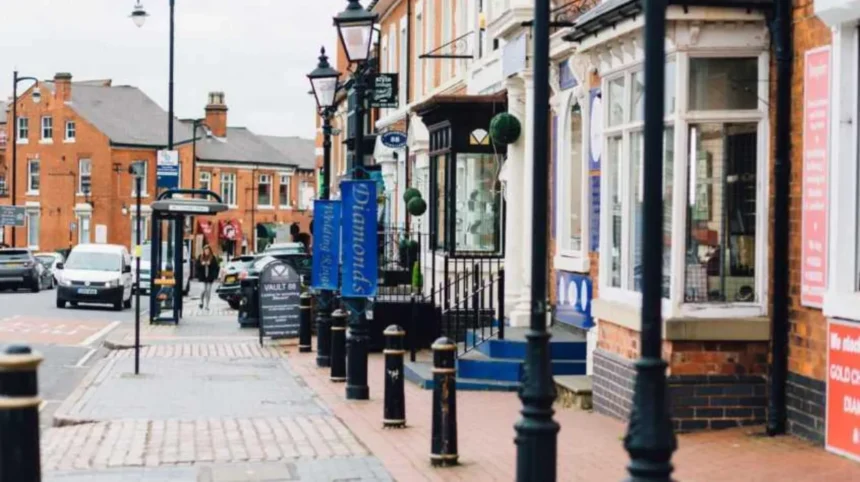
The Jewellery Quarter represents one of Europe’s best-preserved industrial districts. Established during the eighteenth century, it became the centre of Birmingham’s jewellery production.
More than 200 listed buildings remain within the district. Historic workshops, manufacturers’ premises, and Victorian commercial buildings continue to define the streetscape.
Approximately 40 percent of Britain’s jewellery has historically been produced in this area. The district demonstrates how small-scale manufacturing clusters contributed to Birmingham’s economic success.
Digbeth
Digbeth predates much of modern Birmingham and contains some of the city’s oldest surviving urban fabric.
Industrial warehouses, former factories, railway infrastructure, and commercial buildings from the nineteenth century remain visible throughout the area. Digbeth illustrates Birmingham’s transition from a market town to an industrial metropolis.
Its preserved architecture provides evidence of manufacturing activities that once included metalworking, food production, and transportation services.
Soho and Industrial Innovation
The Soho area preserves connections to pioneering industrialist Matthew Boulton. Boulton’s manufacturing operations transformed production methods during the eighteenth century.
The nearby Soho House offers insight into the entrepreneurial networks that helped establish Birmingham as a centre of innovation during the Industrial Revolution.
How do Birmingham’s canals reveal overlooked aspects of local history?
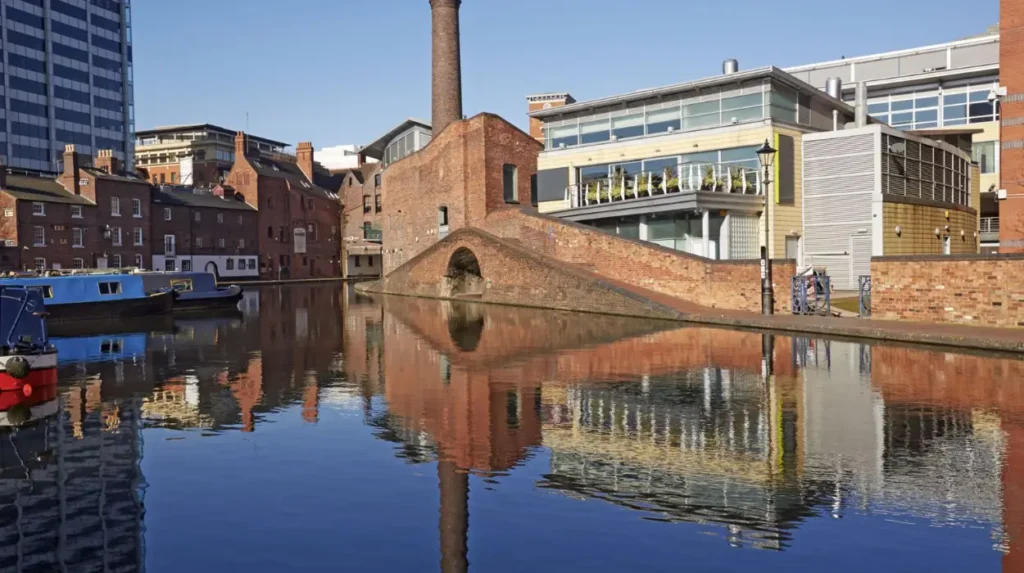
Birmingham’s canal network preserves evidence of transportation, commerce, and industrial development. These waterways connected factories, warehouses, and markets, enabling economic growth while creating historic landscapes that remain largely unchanged compared with modern city streets.
Canal construction accelerated during the late eighteenth century. Waterways reduced transportation costs and improved access to raw materials.
The Birmingham Canal Navigations eventually formed one of Britain’s most important inland transport systems. Coal, iron, manufactured goods, and building materials moved through the city via canal boats.
Many visitors focus on the regenerated waterfront around Brindleyplace. However, quieter sections reveal a more authentic industrial landscape.
Historic lock systems remain visible throughout the canal network. Warehouses constructed during the nineteenth century continue to line many stretches of waterway.
Old towpaths provide opportunities to observe surviving industrial infrastructure, including bridges, loading points, and engineering works that supported Birmingham’s manufacturing economy.
To experience these historic waterways in person today, consult our comprehensive [Hidden Gems and Unique Things to Do Around Birmingham] for itineraries and visiting parameters.
Which hidden religious sites help explain Birmingham’s cultural development?
Birmingham’s lesser-known churches, chapels, synagogues, and cemeteries document centuries of religious diversity and migration. These sites reveal how different communities contributed to the city’s social fabric and economic growth throughout its history.
Religious diversity has long been a defining characteristic of Birmingham.
St Martin’s Historical Context
Although St Martin’s Church is relatively well known, its history extends far beyond modern tourism. The site predates Birmingham’s medieval market development and provides evidence of early settlement patterns.
Archaeological investigations have revealed traces of earlier religious activity associated with the area.
Nonconformist Heritage
Birmingham became an important centre for religious dissent during the seventeenth and eighteenth centuries.
Various Nonconformist congregations established chapels throughout the city. These institutions often supported educational reform, political activism, and social improvement initiatives.
Jewish Heritage
Jewish communities have contributed to Birmingham’s development since the eighteenth century.
Historic synagogues and burial grounds preserve records of migration, commerce, and community organisation. These sites help researchers understand changing demographic patterns across the city.
What can Birmingham’s historic cemeteries teach visitors?
Historic cemeteries preserve valuable records of Birmingham’s population growth, industrialisation, migration, and public health history. They contain monuments, inscriptions, and burial landscapes that document social conditions across several centuries of urban development.
Victorian cemeteries emerged partly in response to overcrowded burial grounds and public health concerns.
Key Hill Cemetery
Established in 1836, Key Hill Cemetery became one of Birmingham’s earliest garden cemeteries.
Many prominent industrialists, reformers, politicians, and community leaders are buried there. The site offers insight into the social hierarchy and civic leadership of nineteenth-century Birmingham.
Warstone Lane Cemetery
Warstone Lane Cemetery opened in 1848 and contains significant funerary architecture.
Monuments, catacombs, and memorials illustrate Victorian attitudes toward death, remembrance, and social status.
Together, these cemeteries serve as important resources for genealogical researchers studying family histories connected to Birmingham.
How do independent museums preserve overlooked stories?
Independent museums safeguard specialised collections that document Birmingham’s industrial, social, and cultural history. Their focused exhibits often preserve narratives excluded from larger institutions, creating a more comprehensive understanding of the city’s historical development.
Large museums necessarily prioritise broad historical themes. Smaller institutions often preserve highly specific local stories.
Museum of the Jewellery Quarter
This museum occupies a former jewellery manufacturing workshop.
The site preserves original machinery, workspaces, tools, and production methods. Visitors can observe how jewellery was produced before modern automation transformed manufacturing processes.
Pen Museum
Birmingham once dominated global steel pen production.
The Pen Museum documents this important industry through machinery, archival materials, and manufacturing demonstrations. During the nineteenth century, Birmingham produced millions of steel pen nibs exported around the world.
Community Heritage Centres
Several community-run heritage organisations collect oral histories, photographs, and local records.
These collections preserve evidence of migration, neighbourhood change, and cultural diversity that traditional archives sometimes overlook.
Which architectural details often go unnoticed by visitors?
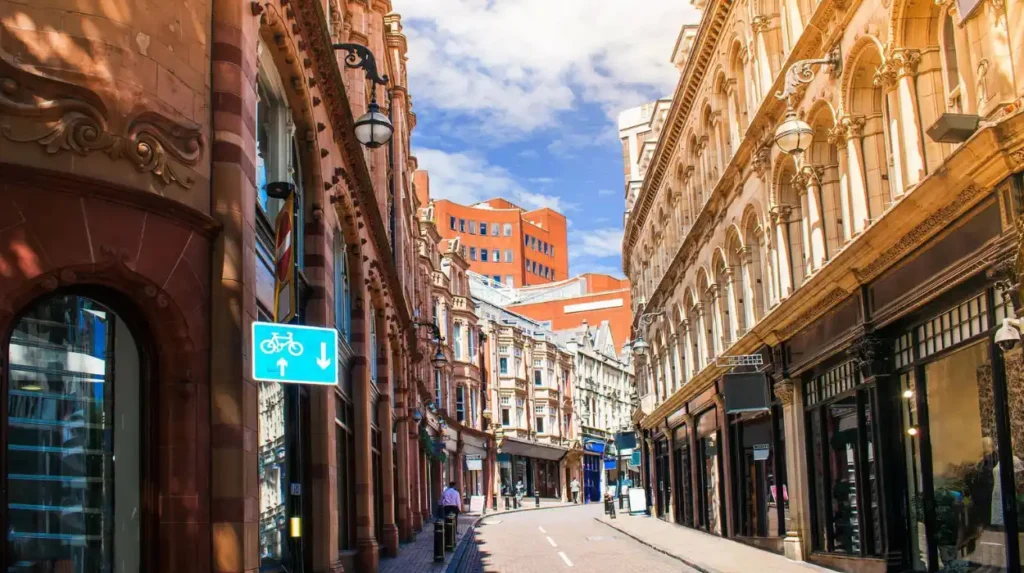
Many of Birmingham’s most significant historical features exist within ordinary streets, buildings, and public spaces. Architectural details reveal changing construction methods, economic priorities, and cultural influences across successive periods of urban development.
Architectural history extends beyond landmark buildings.
Victorian terraced housing provides evidence of industrial-era population growth. Decorative brickwork, original street layouts, and surviving shopfronts reveal local construction practices.
Edwardian civic architecture reflects Birmingham’s expanding municipal ambitions during the early twentieth century.
Industrial buildings demonstrate evolving engineering techniques. Iron framing, warehouse design, and factory layouts illustrate technological developments associated with manufacturing expansion.
Public art, memorials, and commemorative plaques also preserve historical information. These features often identify important individuals, events, and institutions connected to Birmingham’s development.
How did migration shape Birmingham’s hidden cultural landscape?
Migration transformed Birmingham’s economy, neighbourhoods, and cultural identity. Successive communities introduced new traditions, businesses, religious institutions, and social networks that became permanent elements of the city’s historical development.
Migration has influenced Birmingham for centuries.
Irish migration increased significantly during the nineteenth century, particularly following the Great Famine of the 1840s.
Communities from South Asia, the Caribbean, Eastern Europe, and other regions contributed to Birmingham’s post-war growth.
Historic neighbourhoods preserve evidence of these demographic changes through religious buildings, cultural institutions, businesses, and community centres.
The city’s diverse heritage demonstrates how migration supported economic development while reshaping social and cultural life.
Researchers studying urban history frequently use Birmingham as a case study for examining multicultural development in modern Britain.
What archaeological discoveries reveal Birmingham’s deeper past?
Archaeological investigations have uncovered evidence of prehistoric activity, medieval settlement, industrial expansion, and urban redevelopment. These findings provide physical proof of historical change beyond surviving buildings and written records.
Archaeology continues to enhance understanding of Birmingham’s history.
Excavations have identified prehistoric artefacts in areas surrounding the modern city.
Medieval remains discovered during redevelopment projects have revealed information about early settlement patterns, agriculture, and commerce.
Industrial archaeology has documented manufacturing sites, transportation infrastructure, and workshop complexes associated with Birmingham’s economic growth.
Archaeological evidence often confirms, refines, or challenges information found in historical documents.
Universities, local authorities, and heritage organisations continue to conduct research that expands knowledge of the city’s past.
Why are Birmingham’s hidden gems important for future generations?
Hidden historical sites preserve evidence of Birmingham’s social, industrial, architectural, and cultural evolution. Their conservation supports education, research, community identity, and heritage tourism while protecting irreplaceable records of the city’s historical development.
Urban redevelopment places constant pressure on historic environments.
Preservation initiatives help safeguard buildings, archives, landscapes, and archaeological resources that document Birmingham’s evolution.
Heritage organisations work to protect structures associated with industrial production, religious communities, transportation systems, and neighbourhood history.
Educational institutions use these sites to teach local, national, and global historical themes.
Hidden gems often contain information unavailable elsewhere. Their survival allows future historians, educators, genealogists, and cultural researchers to continue studying Birmingham’s development.
The long-term significance of these places extends beyond tourism. They preserve evidence of how ordinary people lived, worked, worshipped, travelled, and contributed to one of Britain’s most influential cities.
How can visitors responsibly explore Birmingham’s hidden heritage today?
Responsible exploration involves respecting historic sites, supporting preservation organisations, following access guidelines, and engaging with local historical resources. Thoughtful visitation helps protect heritage assets while encouraging continued investment in conservation and public education.
Many hidden gems remain active places of worship, working communities, or protected heritage environments.
Visitors should follow site regulations, respect conservation measures, and support organisations involved in preservation work.
Local archives, museums, heritage trails, and historical societies provide valuable interpretive resources that enhance understanding of Birmingham’s past.
Exploring beyond tourist hotspots reveals the complexity of the city’s development. Hidden canals, industrial workshops, cemeteries, religious institutions, and historic neighbourhoods collectively demonstrate how Birmingham evolved across centuries of economic, social, and cultural change.
These locations form a living historical record. Together, they provide a richer and more accurate understanding of Birmingham than any single landmark can offer. For historians, educators, students, genealogists, and cultural tourists, Birmingham’s hidden gems remain essential gateways into the city’s enduring heritage.
What are some hidden gems in Birmingham worth visiting?
Some of Birmingham’s most notable hidden gems include the Jewellery Quarter, Digbeth’s historic industrial streets, Key Hill Cemetery, Warstone Lane Cemetery, Sarehole Mill, the Pen Museum, and lesser-known sections of the Birmingham Canal Navigations. These locations provide insight into the city’s industrial, cultural, and architectural history.