Birmingham is one of the United Kingdom’s most historically significant and culturally diverse cities. Its industrial heritage, extensive museum collections, Victorian architecture, and modern entertainment venues provide numerous indoor attractions that remain accessible throughout the year. Rainy weather frequently affects the West Midlands region, making indoor activities an important part of Birmingham’s tourism and leisure landscape.
- Why is Birmingham an excellent city for indoor activities during rainy weather?
- What can visitors discover inside Birmingham Museum and Art Gallery?
- How does Thinktank Birmingham Science Museum explain the city’s industrial heritage?
- Why is the Library of Birmingham considered a major cultural landmark?
- What historical insights can be gained from visiting the Jewellery Quarter Museum?
- How does the Birmingham Back to Backs preserve everyday urban history?
- What makes Birmingham’s theatres important cultural attractions?
- Why is the National SEA LIFE Centre Birmingham popular during rainy days?
- What can visitors learn from Birmingham’s historic churches and indoor heritage sites?
- How do Birmingham’s shopping destinations reflect the city’s economic evolution?
- What role do indoor cultural attractions play in preserving Birmingham’s heritage?
The city developed into a major manufacturing centre during the Industrial Revolution and today contains nationally important museums, libraries, galleries, theatres, and historic buildings. These attractions preserve Birmingham’s history while offering educational and recreational experiences for residents and visitors alike.
Whether exploring centuries of industrial innovation, examining archaeological artefacts, viewing world-class art collections, or attending cultural performances, Birmingham offers a wide range of indoor destinations suitable for rainy days.
Why is Birmingham an excellent city for indoor activities during rainy weather?
Birmingham combines nationally significant museums, historic buildings, cultural institutions, entertainment venues, and educational attractions within a compact urban area. This concentration of indoor destinations allows visitors to explore the city’s heritage, arts, and innovation regardless of weather conditions throughout the year.
The city’s development as an industrial powerhouse created substantial civic wealth during the eighteenth and nineteenth centuries. Municipal leaders invested heavily in public institutions, museums, libraries, theatres, and educational facilities.
Many of these historic institutions continue operating today. Their collections document over 1,000 years of regional history, from medieval settlements to modern technological innovation.
Birmingham’s central location within England also contributed to its growth as a commercial and cultural centre. This position encouraged the establishment of major museums, performance venues, and educational institutions that now form the backbone of the city’s indoor tourism sector.
Modern investment has expanded these offerings. New cultural facilities complement Victorian landmarks, creating a diverse indoor visitor experience that appeals to multiple audiences.
What can visitors discover inside Birmingham Museum and Art Gallery?
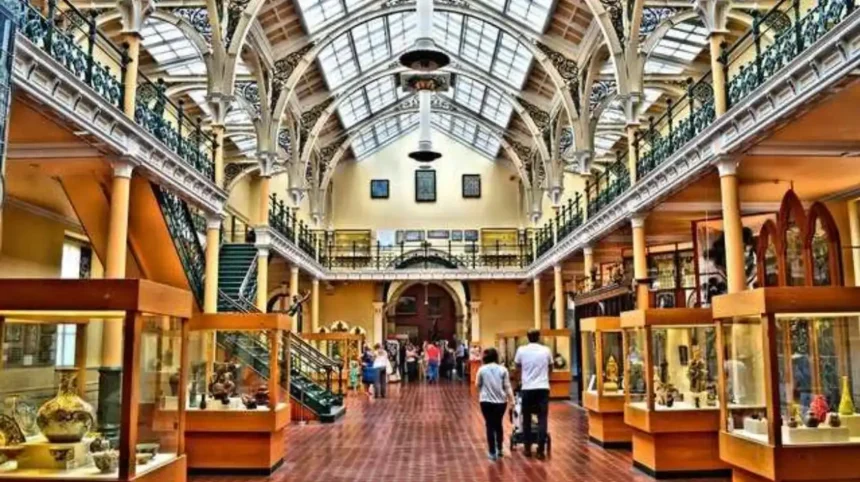
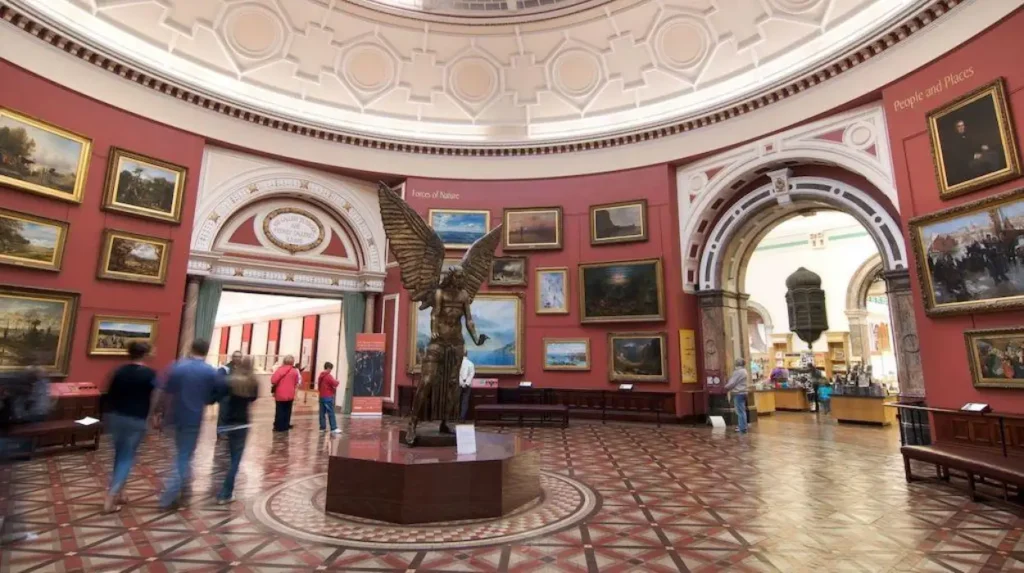
Birmingham Museum and Art Gallery houses internationally recognised art collections, archaeological artefacts, industrial heritage exhibits, and historical archives. Established in 1885, it preserves important evidence of Birmingham’s development while presenting significant artistic and cultural collections from Britain and beyond.
The museum represents one of Birmingham’s most important cultural institutions. It was created during a period when civic leaders sought to promote education and public access to knowledge.
Its collections contain millions of objects spanning numerous historical periods. Archaeological exhibits document early settlements in the region, while social history displays illustrate daily life across different centuries.
The museum is particularly famous for its collection of Pre-Raphaelite art. The Pre-Raphaelite Brotherhood emerged in 1848 and influenced British artistic development through detailed realism and historical themes.
Industrial collections explain Birmingham’s role in metalworking, manufacturing, and engineering. These displays help visitors understand how the city became known as the “Workshop of the World.”
Historical records, paintings, sculptures, and decorative arts provide insight into Birmingham’s transformation from a market town into a global industrial centre.
How does Thinktank Birmingham Science Museum explain the city’s industrial heritage?
Thinktank Birmingham Science Museum presents Birmingham’s scientific, engineering, and industrial achievements through interactive exhibitions and historical artefacts. Its collections demonstrate how innovation shaped the city’s economy and contributed to national industrial development over several centuries.
Birmingham played a central role in the Industrial Revolution. Inventors, engineers, and manufacturers established businesses that transformed production methods throughout Britain.
Thinktank preserves many examples of this technological history. Exhibits explain developments in steam power, transportation, manufacturing, and communication.
The museum includes the Birmingham Science Collection, which contains thousands of historical objects linked to scientific progress and industrial innovation.
Visitors can examine historic machinery, engineering tools, and transportation technology. These artefacts illustrate how industrial processes evolved from the eighteenth century onward.
Educational displays explain the relationship between scientific discovery and economic growth. They also demonstrate how Birmingham’s industries influenced international trade networks.
The museum’s historical interpretation helps modern audiences understand the technological foundations of contemporary society.
Why is the Library of Birmingham considered a major cultural landmark?
The Library of Birmingham combines modern architecture with extensive historical collections, archives, and research resources. Opened in 2013, it continues Birmingham’s long tradition of public education while preserving valuable documents that record regional and national history.
The library stands on a site associated with Birmingham’s civic and educational development. It replaced earlier library facilities while expanding public access to information.
Its archive collections preserve important records relating to local government, industry, literature, and community history.
Researchers use these collections to study Birmingham’s development across different historical periods. Genealogists also consult archival records when tracing family histories connected to the city and surrounding regions.
The library contains rare books, manuscripts, photographs, and maps that document social and economic change.
Architecturally, the building represents twenty-first-century civic design. Its distinctive structure has become one of Birmingham’s most recognisable landmarks.
The institution demonstrates how modern cities can combine contemporary facilities with the preservation of historical knowledge.
What historical insights can be gained from visiting the Jewellery Quarter Museum?
The Jewellery Quarter Museum preserves original workshops, machinery, and production spaces associated with Birmingham’s jewellery industry. It documents manufacturing methods, labour practices, and economic development within one of Europe’s most important jewellery-producing districts.
The Jewellery Quarter emerged during the eighteenth century and expanded significantly throughout the nineteenth century.
By the late Victorian era, Birmingham produced a substantial proportion of Britain’s jewellery. The district became internationally recognised for craftsmanship and manufacturing expertise.
The museum occupies a preserved factory environment. Original workspaces demonstrate how artisans and skilled workers created jewellery using traditional techniques.
Historical machinery remains in place, providing evidence of manufacturing processes used before widespread automation.
Exhibits explain the social history of the district, including working conditions, apprenticeship systems, and commercial networks.
Today, the Jewellery Quarter remains an active business district while preserving important examples of industrial heritage.
To experience this historic district in person today, consult our comprehensive [How to Enjoy Birmingham When the Weather Ruins Your Plans] for itineraries and visiting parameters.
How does the Birmingham Back to Backs preserve everyday urban history?
The Birmingham Back to Backs conserve nineteenth-century working-class housing and provide detailed insight into urban living conditions. These restored properties reveal how ordinary residents experienced industrial Birmingham across multiple generations and historical periods.
Back-to-back housing became common during rapid urban expansion in the nineteenth century.
Industrial growth attracted thousands of workers to Birmingham. Housing demand increased dramatically, leading developers to construct densely arranged residential properties.
The surviving Back to Backs represent rare examples of this housing type. Many similar buildings were demolished during twentieth-century redevelopment programmes.
Restoration projects have preserved interiors reflecting different periods of occupancy. These spaces illustrate changing domestic technologies, employment patterns, and family structures.
Historical research associated with the site incorporates census records, municipal archives, and personal histories.
The properties provide valuable evidence regarding public health, urban planning, and social conditions during Britain’s industrial era.
What makes Birmingham’s theatres important cultural attractions?
Birmingham’s theatres preserve a long tradition of performing arts, public entertainment, and cultural expression. Historic and modern venues contribute to the city’s artistic identity while supporting education, tourism, and creative industries throughout the region.
The city’s theatrical tradition developed alongside its economic growth during the eighteenth and nineteenth centuries.
Increasing prosperity created demand for cultural entertainment. Theatre buildings became important civic institutions serving diverse audiences.
Modern venues continue this legacy. Productions include drama, music, dance, opera, and educational performances.
Theatres also contribute to heritage preservation by maintaining historic buildings and supporting artistic traditions.
Performing arts institutions attract local audiences and international visitors, strengthening Birmingham’s cultural economy.
These venues demonstrate how cultural investment remains an important component of urban development.
Why is the National SEA LIFE Centre Birmingham popular during rainy days?
The National SEA LIFE Centre Birmingham provides educational exhibits focused on marine ecosystems, aquatic biodiversity, and environmental conservation. Its indoor design allows year-round exploration while promoting public understanding of ocean environments and ecological sustainability.
Although primarily an educational attraction rather than a historical site, the centre contributes to Birmingham’s broader cultural and learning landscape.
Interactive exhibits introduce visitors to marine species from different global habitats.
Educational programmes explain ecological relationships, conservation challenges, and biodiversity protection efforts.
The attraction supports environmental awareness through displays designed for children, students, and adult visitors.
Its location within Birmingham’s central visitor district makes it a convenient option during periods of poor weather.
The centre illustrates the city’s ongoing commitment to educational tourism and public engagement.
What can visitors learn from Birmingham’s historic churches and indoor heritage sites?
Birmingham’s historic churches preserve architectural styles, religious history, and community records spanning several centuries. These buildings contain valuable evidence regarding urban development, social change, and local heritage within the city and surrounding region.
Religious institutions played an important role in Birmingham’s historical development.
Church buildings often served as centres of education, charity, administration, and community organisation.
Architectural features reveal changing design trends across different eras. Examples include Georgian architecture, Victorian Gothic Revival design, and later restoration projects.
Many churches preserve memorials, inscriptions, and parish records. These materials provide important information for historians and genealogical researchers.
Historic interiors contain stained glass, sculptures, woodwork, and decorative features reflecting artistic traditions from multiple centuries.
These sites remain valuable resources for understanding Birmingham’s cultural and social history.
How do Birmingham’s shopping destinations reflect the city’s economic evolution?
Birmingham’s indoor shopping centres represent the continuation of commercial traditions established through centuries of trade and manufacturing. Modern retail complexes occupy a city shaped by markets, workshops, and commercial networks that supported Birmingham’s historic economic growth.
Commerce has influenced Birmingham since medieval times.
Market activity contributed to the town’s expansion and encouraged the development of specialised trades.
Industrial success accelerated commercial growth during the eighteenth and nineteenth centuries. Increased wealth supported larger retail districts and expanded consumer markets.
Modern shopping centres continue this commercial legacy while adapting to contemporary consumer behaviour.
Indoor retail environments provide convenient shelter during rainy weather while reflecting the city’s ongoing economic transformation.
These destinations also contribute significantly to tourism and employment within Birmingham.
What role do indoor cultural attractions play in preserving Birmingham’s heritage?
Indoor cultural attractions preserve artefacts, archives, buildings, and historical knowledge that document Birmingham’s development across centuries. Their collections support research, education, tourism, and heritage conservation while ensuring continued public access to important historical resources.
Museums, libraries, archives, and heritage sites perform essential preservation functions.
Collections require controlled environments that protect documents, artworks, and artefacts from deterioration.
Conservation professionals employ specialised techniques to maintain historical materials for future generations.
Educational programmes connect historical evidence with contemporary audiences. Schools, universities, and independent researchers regularly utilise these resources.
Tourism associated with heritage attractions generates economic benefits while increasing public awareness of local history.
These institutions also contribute to civic identity by preserving evidence of Birmingham’s achievements, challenges, and cultural development.
As digital technologies expand access to archives and collections, Birmingham’s indoor heritage attractions continue adapting to new methods of research and interpretation. Their role remains essential in documenting the city’s past while supporting public understanding of its historical significance.
Birmingham offers an exceptional range of indoor attractions that remain accessible during rainy weather throughout the year. Museums, heritage sites, libraries, theatres, historic buildings, and educational venues provide opportunities to explore the city’s industrial achievements, cultural traditions, and architectural heritage.
Institutions such as Birmingham Museum and Art Gallery, Thinktank Birmingham Science Museum, the Library of Birmingham, the Jewellery Quarter Museum, and the Birmingham Back to Backs preserve valuable historical evidence while making it accessible to modern audiences.
These attractions demonstrate how Birmingham evolved from a medieval market settlement into one of Britain’s most influential industrial and cultural centres. For visitors seeking meaningful indoor experiences, the city provides a rich combination of education, heritage, and entertainment that continues to support historical understanding and cultural preservation.
What are the best indoor things to do in Birmingham on a rainy day?
The best indoor activities in Birmingham during rainy weather include visiting museums, art galleries, science attractions, historic buildings, theatres, libraries, shopping centres, and educational venues. Popular choices include Birmingham Museum and Art Gallery, Thinktank Birmingham Science Museum, the Library of Birmingham, and the Jewellery Quarter Museum.