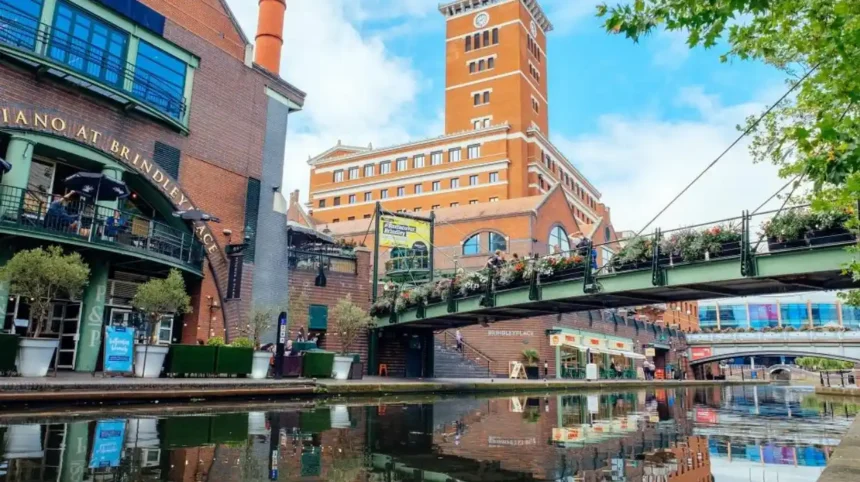
Birmingham is located in the West Midlands of England and serves as one of the United Kingdom’s most significant economic, cultural, and educational centres. The city developed from a small Anglo-Saxon settlement into the world’s first manufacturing city during the Industrial Revolution. Today, Birmingham welcomes millions of visitors annually who explore its historic landmarks, museums, entertainment districts, parks, and shopping centres.
- Which Historic Landmarks Should Every Birmingham Visitor Experience?
- Why Are Birmingham’s Museums and Galleries Internationally Significant?
- Birmingham Museum and Art Gallery
- Thinktank Birmingham Science Museum
- Museum of the Jewellery Quarter
- Sarehole Mill
- How Did Birmingham Become the Workshop of the World?
- What Can Visitors Discover Along Birmingham’s Historic Canal Network?
- Which Cultural Attractions Showcase Birmingham’s Creative Heritage?
- Why Is the Jewellery Quarter Central to Birmingham’s Identity?
- How Do Birmingham’s Parks and Green Spaces Reflect Urban Development?
- What Makes Birmingham’s Food and Shopping Districts Worth Exploring?
- How Can Visitors Experience Birmingham Throughout the Year?
- Why Does Birmingham Continue to Matter in British History and Modern Tourism?
Unlike many British cities that developed around royal institutions or maritime trade, Birmingham grew through craftsmanship, engineering, and innovation. Metalworking, jewellery production, steam engineering, and scientific discovery transformed the city into an international industrial powerhouse during the eighteenth and nineteenth centuries.
Modern Birmingham preserves this industrial legacy alongside contemporary architecture, award-winning cultural institutions, internationally recognised sporting venues, and one of Europe’s largest city-centre retail districts. This combination creates a destination suitable for first-time visitors, returning tourists, families, historians, and educational groups.
The city’s extensive public transport network, pedestrian-friendly centre, and interconnected canal system allow visitors to experience numerous attractions within a relatively compact urban area.
Which Historic Landmarks Should Every Birmingham Visitor Experience?
Birmingham’s historic landmarks represent medieval religion, Victorian civic ambition, industrial innovation, and twentieth-century regeneration. These surviving structures preserve the city’s architectural evolution while demonstrating how successive generations shaped Birmingham into a nationally significant urban centre.
Several landmarks define Birmingham’s historical identity.
Birmingham Cathedral
Completed in 1715, Birmingham Cathedral, officially the Cathedral Church of Saint Philip, began as a parish church designed by Thomas Archer. It became the city’s cathedral in 1905 following the creation of the Diocese of Birmingham.
Its Baroque architecture remains uncommon within England, while four stained-glass windows created by Edward Burne-Jones connect the building to the city’s internationally influential Arts and Crafts Movement.
The Council House and Victoria Square
Constructed between 1874 and 1879, the Council House symbolised Birmingham’s rapid civic expansion during the Victorian era. The surrounding Victoria Square became the administrative and ceremonial centre of municipal government.
Nearby public sculptures, including the Iron Man statue and the Fountain of the River, reflect Birmingham’s commitment to public art.
Birmingham Town Hall
Completed in 1834, Birmingham Town Hall was inspired by the Roman Temple of Castor and Pollux. Architect Joseph Hansom created one of Britain’s finest examples of Roman Revival architecture.
The building has hosted political speeches by national leaders, classical concerts, civic celebrations, and cultural performances for nearly two centuries.
The Jewellery Quarter
Established during the eighteenth century, the Jewellery Quarter developed into Europe’s largest concentration of jewellery manufacturers. More than 700 jewellers, craftspeople, and retailers continue operating within the district today.
Historic workshops, Georgian houses, Victorian factories, and converted industrial buildings illustrate Birmingham’s manufacturing heritage.
To experience these historic districts in person today, consult our comprehensive [How to Create the Ultimate Birmingham Travel Bucket List] for itineraries and visiting parameters.
Why Are Birmingham’s Museums and Galleries Internationally Significant?
Birmingham’s museums preserve nationally important collections covering industrial history, fine art, archaeology, science, transport, and social history. These institutions document regional innovation while presenting internationally recognised collections that support research, education, and cultural preservation.
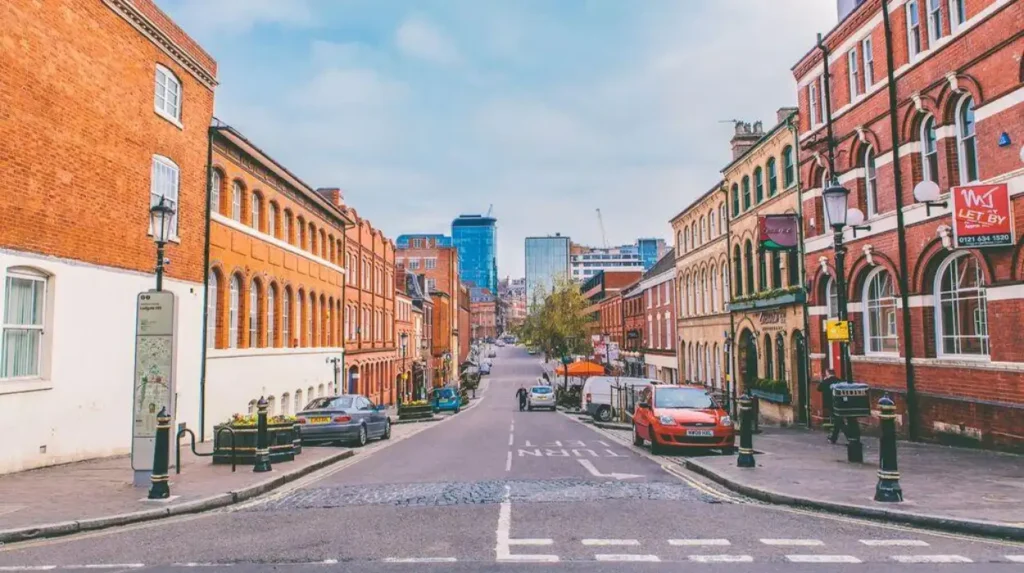
Museum collections provide evidence of Birmingham’s contribution to British and global history.
Birmingham Museum and Art Gallery
Opened in 1885, Birmingham Museum and Art Gallery houses internationally important collections of Pre-Raphaelite paintings, archaeology, decorative arts, numismatics, and local history.
Its Pre-Raphaelite collection ranks among the world’s finest, featuring works by Dante Gabriel Rossetti, John Everett Millais, William Holman Hunt, and Edward Burne-Jones.
Thinktank Birmingham Science Museum
Thinktank explores Birmingham’s scientific and industrial achievements through engineering, medicine, manufacturing, transport, and astronomy.
Historic steam engines, aircraft, locomotives, and interactive exhibits explain how innovation transformed Birmingham into an industrial leader.
Museum of the Jewellery Quarter
Located within the preserved Smith & Pepper factory, this museum offers a rare example of a complete Victorian jewellery workshop.
When the factory closed in 1981, machinery, tools, unfinished jewellery, and administrative records remained untouched, providing historians with exceptional evidence of twentieth-century manufacturing practices.
Sarehole Mill
Sarehole Mill dates largely from the eighteenth century and preserves Birmingham’s agricultural and industrial past.
The restored watermill also holds literary significance because it influenced J.R.R. Tolkien during his childhood in nearby Sarehole.
How Did Birmingham Become the Workshop of the World?
Birmingham earned international prominence through manufacturing, engineering, metalworking, transportation, and scientific innovation. Industrial growth accelerated during the eighteenth and nineteenth centuries, transforming a regional market town into one of Europe’s leading centres of production and technological advancement.
The city’s industrial development differed significantly from many British manufacturing centres.
Rather than relying on a single dominant industry, Birmingham specialised in thousands of skilled workshops producing diverse manufactured goods.
Metalworking became the city’s defining industry.
Manufacturers produced buttons, buckles, firearms, jewellery, scientific instruments, steam engines, coins, tools, bicycles, and household goods.
Matthew Boulton established the Soho Manufactory in 1761.
Together with Scottish engineer James Watt, Boulton revolutionised steam power through improved steam engine production.
Their partnership accelerated industrialisation across Britain and internationally.
The Lunar Society of Birmingham further strengthened the city’s scientific reputation.
Members included Erasmus Darwin, Joseph Priestley, James Watt, Matthew Boulton, William Withering, and Josiah Wedgwood.
Their meetings encouraged collaboration across engineering, chemistry, medicine, manufacturing, and natural philosophy.
By the nineteenth century, Birmingham had become one of Britain’s fastest-growing urban centres.
Its expanding canal network, railway connections, and skilled workforce supported international trade throughout Europe, North America, Asia, and the British Empire.
What Can Visitors Discover Along Birmingham’s Historic Canal Network?
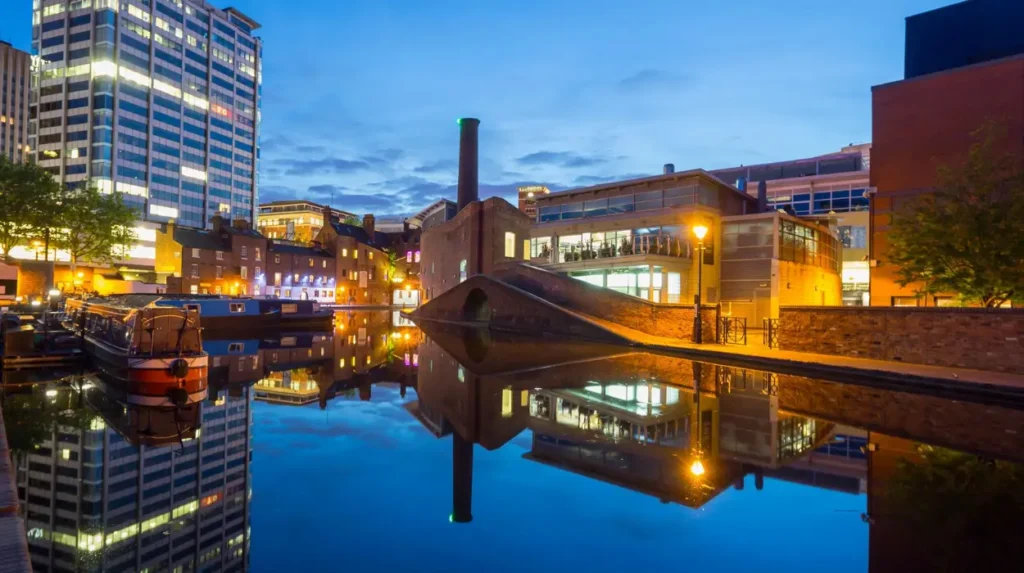
Birmingham’s canal system represents one of Britain’s greatest engineering achievements. More than 35 miles of navigable canals within the city connected factories, warehouses, and markets, supporting industrial expansion while creating distinctive urban landscapes that remain popular recreational spaces today.
Many visitors are surprised to learn Birmingham contains more miles of canals than Venice.
Construction accelerated during the late eighteenth century to transport coal, iron, raw materials, and manufactured goods.
The Birmingham Canal Navigations eventually connected hundreds of industrial sites across the Midlands.
Today, regenerated canal districts combine preserved industrial structures with modern restaurants, offices, residential developments, and cultural venues.
Gas Street Basin remains one of the city’s most recognisable waterfront locations.
Historic warehouses stand alongside contemporary developments while narrowboats continue using waterways originally designed over two centuries ago.
Brindleyplace demonstrates successful urban regeneration.
Former industrial land has become a mixed-use district containing public squares, cultural venues, restaurants, and pedestrian routes without erasing its industrial character.
Interpretation boards, restored bridges, lock systems, and surviving warehouses help visitors understand how canal transportation supported Birmingham’s economic growth before railways became dominant.
Which Cultural Attractions Showcase Birmingham’s Creative Heritage?
Birmingham supports internationally recognised performing arts, literature, music, festivals, and public culture. Historic institutions and modern venues demonstrate continuous investment in creative expression while reflecting the city’s diverse communities and evolving cultural identity across multiple centuries.
Culture extends beyond museums into performance, music, literature, and public festivals.
The Birmingham Hippodrome ranks among Britain’s busiest theatres.
It hosts ballet, opera, musicals, dance, drama, and international touring productions throughout the year.
Symphony Hall opened in 1991 and quickly earned recognition as one of the world’s finest concert venues due to its exceptional acoustics.
The venue serves as home to the City of Birmingham Symphony Orchestra.
Birmingham also played an important role in popular music history.
The city produced influential musicians across multiple genres including heavy metal, reggae, electronic music, and contemporary pop.
Bands including Black Sabbath emerged from Birmingham during the late twentieth century, helping establish heavy metal as a globally recognised musical genre.
Annual festivals celebrating literature, food, jazz, film, and cultural diversity continue attracting national and international audiences.
Why Is the Jewellery Quarter Central to Birmingham’s Identity?
The Jewellery Quarter preserves more than 250 years of specialist craftsmanship through surviving workshops, historic streets, museums, retailers, and manufacturers. The district continues producing approximately 40 percent of Britain’s jewellery while maintaining exceptional architectural and industrial heritage.
The Jewellery Quarter covers approximately one square kilometre northwest of Birmingham city centre.
Its concentration of workshops developed because skilled craftspeople benefited from proximity to suppliers, merchants, and specialist toolmakers.
Thousands of apprentices learned traditional techniques involving goldsmithing, silversmithing, engraving, gemstone cutting, casting, polishing, and watchmaking.
Historic cemeteries within the district contain monuments commemorating industrialists, artists, politicians, and military personnel associated with Birmingham’s development.
Modern independent retailers continue selling handcrafted jewellery alongside restored Victorian workshops.
The area’s conservation status protects hundreds of historic buildings while supporting sustainable commercial activity.
This combination of living industry and preserved heritage distinguishes the Jewellery Quarter from many former manufacturing districts that have become exclusively residential or commercial.
How Do Birmingham’s Parks and Green Spaces Reflect Urban Development?
Birmingham integrates extensive parks, botanical collections, historic landscapes, and nature reserves into its urban environment. These green spaces demonstrate Victorian planning principles while supporting biodiversity, recreation, education, and environmental sustainability across the modern metropolitan area.
Urban expansion during the nineteenth century increased demand for public parks.
Municipal authorities recognised that green spaces improved public health and provided recreational opportunities.
Cannon Hill Park opened in 1873 following land donated by Louisa Ryland.
The park includes formal gardens, lakes, woodland, sports facilities, and cultural venues.
The Birmingham Botanical Gardens opened in 1832.
Designed by J.C. Loudon, the gardens contain thousands of plant species from diverse climatic regions.
Glasshouses preserve tropical and subtropical collections supporting botanical education and conservation.
Sutton Park, one of Europe’s largest urban parks, covers approximately 2,400 acres.
Its habitats include heathland, woodland, wetlands, lakes, and grassland supporting significant biodiversity.
These landscapes preserve ecological heritage alongside recreational opportunities.
What Makes Birmingham’s Food and Shopping Districts Worth Exploring?
Birmingham combines historic markets, independent retailers, luxury shopping, multicultural cuisine, and regenerated commercial districts. These areas reflect centuries of commercial development while demonstrating the city’s continuing role as a regional economic and cultural centre.
Commercial activity has shaped Birmingham since medieval market trading.
The Bullring traces its market origins to 1166 when Peter de Bermingham received permission to establish a market.
Today’s Bullring remains one of the United Kingdom’s leading retail destinations.
Nearby markets continue serving local communities through fresh produce, clothing, household goods, and international foods.
The historic Indoor Market and Outdoor Market maintain centuries-old trading traditions while adapting to contemporary commerce.
The city’s diverse population contributes to one of Britain’s most varied culinary scenes.
Chinese, South Asian, Caribbean, Middle Eastern, African, and European influences appear throughout Birmingham’s restaurants and food markets.
The Balti Triangle became internationally recognised for developing the Birmingham-style balti curry during the late twentieth century.
This culinary tradition illustrates how immigration enriched the city’s cultural identity.
How Can Visitors Experience Birmingham Throughout the Year?
Birmingham offers year-round attractions combining indoor museums, historic buildings, seasonal festivals, outdoor recreation, sporting events, theatre, and canal activities. Every season provides opportunities to explore different aspects of the city’s historical, cultural, and recreational landscape.
Spring highlights botanical gardens, canal walks, and outdoor heritage exploration.
Longer daylight hours improve walking routes connecting historic districts and public parks.
Summer supports canal cruises, open-air performances, cultural festivals, and extensive exploration of Birmingham’s conservation areas.
Autumn brings literary festivals, museum exhibitions, university events, and changing colours across the city’s parks and historic landscapes.
Winter transforms the city centre through festive markets, seasonal performances, illuminated public spaces, and indoor cultural attractions.
Museums, galleries, theatres, libraries, and historic churches remain accessible regardless of weather conditions, making Birmingham a practical destination throughout the year.
Why Does Birmingham Continue to Matter in British History and Modern Tourism?
Birmingham remains nationally important because it preserves industrial innovation, architectural heritage, scientific achievement, cultural diversity, and educational institutions within a modern metropolitan environment. Its historic assets continue supporting tourism, research, conservation, and public understanding of Britain’s social and economic development.
Birmingham’s influence extends far beyond the West Midlands.
The city contributed significantly to Britain’s Industrial Revolution, engineering innovation, manufacturing excellence, political reform movements, educational development, and artistic achievement.
Preserved landmarks, museums, canals, parks, and historic districts allow visitors to understand how industrialisation reshaped cities during the eighteenth and nineteenth centuries.
Universities, archives, heritage organisations, and conservation projects continue documenting Birmingham’s evolving history.
Urban regeneration has demonstrated that industrial heritage can coexist with modern commercial development, environmental sustainability, and cultural investment.
For visitors, Birmingham offers more than individual attractions.
It presents an interconnected historical landscape where medieval origins, industrial innovation, Victorian ambition, twentieth-century transformation, and twenty-first-century regeneration remain visible within a single city.
This layered history explains why Birmingham continues to rank among England’s most rewarding destinations for travellers seeking authentic heritage, outstanding museums, thriving cultural institutions, distinctive neighbourhoods, and memorable year-round experiences.
What is Birmingham best known for?
Birmingham is best known for its Industrial Revolution heritage, extensive canal network, Jewellery Quarter, world-class museums, vibrant cultural scene, and major shopping destinations such as the Bullring.