Birmingham offers distinctive experiences throughout the year because its historic landscapes, cultural institutions, canals, parks, festivals, and industrial heritage change with the seasons. Selecting activities according to seasonal conditions allows visitors to understand how the city’s history, environment, and traditions developed over centuries while enjoying attractions at their best.
- Why does Birmingham offer different experiences in every season?
- What makes spring the best season to explore Birmingham’s historic parks and gardens?
- Why is summer ideal for discovering Birmingham’s industrial heritage?
- Which cultural institutions are most rewarding during autumn?
- Why do Birmingham’s historic buildings become especially significant during winter?
- How do Birmingham’s festivals preserve local history throughout the year?
- What role do Birmingham’s green spaces play in understanding local history?
- How has Birmingham preserved its heritage for future generations?
- How should visitors choose Birmingham activities according to the season?
Founded as a medieval market settlement before receiving borough status in 1166, Birmingham evolved into one of Britain’s most influential manufacturing centres during the Industrial Revolution. Today, the city combines preserved Victorian architecture, Georgian streets, extensive canal networks, modern public spaces, museums, and green parks. These historic and natural assets create different visitor experiences in spring, summer, autumn, and winter.
Choosing seasonal activities is more than planning around the weather. Seasonal events reflect centuries-old traditions, agricultural cycles, civic celebrations, educational programmes, and conservation practices. Understanding these patterns helps visitors appreciate Birmingham’s historical development while making informed travel decisions throughout the year.
Why does Birmingham offer different experiences in every season?
Birmingham provides unique seasonal experiences because its climate, historic landscapes, cultural calendar, gardens, waterways, and preserved heritage sites change throughout the year. Each season highlights different aspects of the city’s architecture, industrial history, public spaces, festivals, and environmental heritage for visitors.
Birmingham experiences a temperate maritime climate, with average summer temperatures ranging between 18°C and 24°C and winter temperatures generally remaining between 1°C and 8°C. These seasonal conditions influence opening hours, outdoor events, wildlife activity, heritage conservation work, and visitor programmes.
The city’s transformation from a medieval market town into Britain’s manufacturing powerhouse produced diverse attractions that remain relevant throughout the year. Historic canals become popular walking routes during warmer months, while museums and heritage buildings attract visitors during colder periods.
The annual rhythm of Birmingham reflects both natural and historical cycles. Spring celebrates botanical renewal and educational exhibitions. Summer encourages exploration of canals, parks, and outdoor festivals. Autumn highlights changing landscapes and cultural programmes. Winter focuses on festive traditions and indoor heritage experiences.
This seasonal diversity makes Birmingham one of Britain’s most adaptable heritage destinations.
The influence of geography on seasonal activities
Located in England’s West Midlands, Birmingham sits approximately 140 metres above sea level. The city’s elevation and inland position create moderate seasonal variation without extreme weather.
More than 8,000 acres of parks and open spaces provide changing scenery throughout the year. Examples include Sutton Park National Nature Reserve, Cannon Hill Park, and Lickey Hills Country Park.
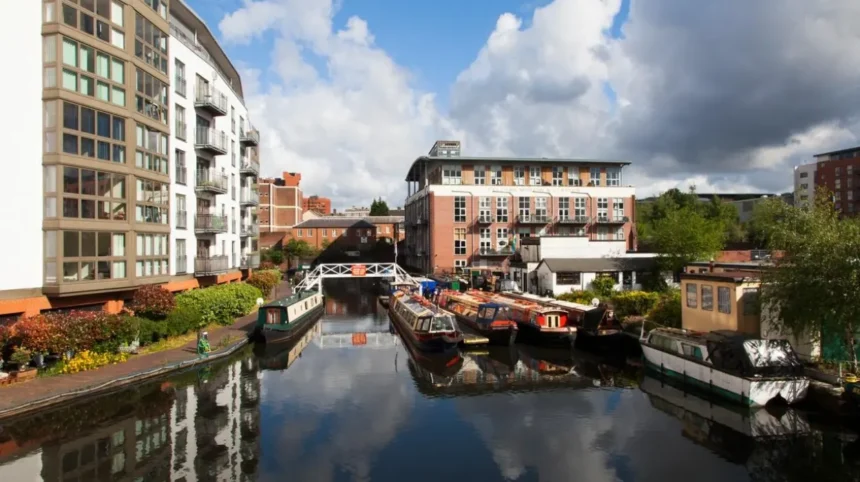
The extensive canal network extends for approximately 35 miles within the city, exceeding the length of Venice’s canals. Seasonal light, vegetation, and wildlife create different experiences along these waterways throughout the year.
What makes spring the best season to explore Birmingham’s historic parks and gardens?
Spring reveals Birmingham’s botanical heritage through flowering landscapes, restored Victorian parks, conservation projects, educational programmes, and comfortable walking conditions. Historic gardens demonstrate centuries of landscape design while supporting biodiversity and preserving significant cultural environments across the city.
Spring traditionally represents renewal in British landscapes. Birmingham’s Victorian civic leaders invested heavily in public parks during the nineteenth century to improve public health and provide recreational spaces for growing industrial populations.
Cannon Hill Park, opened in 1873, reflects Victorian landscape architecture through ornamental lakes, tree-lined avenues, and formal gardens. Spring flowering demonstrates the original planting schemes designed for seasonal colour.
Winterbourne House and Garden preserves an Edwardian Arts and Crafts garden established in the early twentieth century. Spring displays include thousands of bulbs, flowering shrubs, and heritage plant collections maintained according to historical horticultural principles.
The Birmingham Botanical Gardens, established in 1832, contain over 7,000 plant species. Spring highlights include cherry blossoms, magnolias, rhododendrons, and alpine collections that illustrate centuries of botanical research and plant exploration.
These gardens also contribute to scientific education through conservation programmes, seed preservation, and biodiversity research.
Walking conditions improve significantly during spring, making historic districts easier to explore on foot. Moderate temperatures allow extended visits to architectural landmarks and outdoor heritage sites.
Why is summer ideal for discovering Birmingham’s industrial heritage?
Summer provides extended daylight, favourable weather, active waterways, outdoor heritage events, and accessible walking routes. These conditions allow visitors to understand Birmingham’s Industrial Revolution legacy through canals, historic districts, engineering landmarks, museums, and preserved manufacturing environments.
Birmingham played a central role during Britain’s Industrial Revolution between the eighteenth and nineteenth centuries.
Its economy expanded through metalworking, jewellery manufacturing, engineering, firearms production, steam technology, and scientific innovation.
The canal network formed the backbone of industrial transportation before railways became dominant. Constructed from the late eighteenth century onward, these waterways connected Birmingham’s factories with national markets.
Summer allows visitors to explore canal-side warehouses, restored wharves, and engineering infrastructure comfortably.
Gas Street Basin demonstrates how canal transport supported industrial expansion. Historic warehouses, bridges, locks, and towpaths illustrate eighteenth- and nineteenth-century engineering.
The Jewellery Quarter preserves one of Europe’s largest concentrations of historic manufacturing premises. More than 200 listed buildings remain within the district, demonstrating Birmingham’s importance in global jewellery production.
Many historic workshops continue operating alongside museums, galleries, and educational centres.
Walking tours become especially practical during longer summer evenings, allowing visitors to appreciate architectural details that reflect Birmingham’s commercial prosperity.
To experience this historic landmark in person today, consult our comprehensive [Seasonal Things to Do in Birmingham Throughout the Entire Year] for itineraries and visiting parameters.
How canals transformed Birmingham’s economy
Canal construction dramatically reduced transport costs.
Raw materials including coal, iron, and limestone reached factories efficiently, while manufactured products travelled nationwide.
This transportation network contributed directly to Birmingham’s rapid population growth.
Between 1700 and 1900, Birmingham expanded from a market town into one of Britain’s largest industrial cities.
Many original canal features remain preserved, providing direct evidence of Industrial Revolution infrastructure.
Which cultural institutions are most rewarding during autumn?
Autumn combines comfortable indoor exploration with seasonal exhibitions, academic programmes, museum collections, heritage research, and architectural appreciation. Birmingham’s cultural institutions present historical evidence, archaeological discoveries, artistic collections, and industrial achievements within preserved historic environments during this season.
Autumn coincides with new educational programmes across museums, universities, libraries, and heritage organisations.
The Birmingham Museum and Art Gallery preserves internationally significant collections covering archaeology, fine art, local history, industrial development, and decorative arts.
Its collections include extensive Pre-Raphaelite paintings, Roman artefacts, medieval objects, and evidence documenting Birmingham’s manufacturing heritage.
Thinktank, Birmingham Science Museum, explores engineering innovation, transportation history, medical research, and industrial technology.
Historic steam engines, aircraft, locomotives, and scientific instruments demonstrate technological developments that transformed Britain.
The Library of Birmingham also houses internationally important archives documenting local history, family records, industrial businesses, and municipal governance.
Researchers studying genealogy frequently consult parish registers, historical maps, photographs, newspapers, and civic documents preserved within these collections.
Autumn’s cooler weather encourages extended indoor visits while maintaining pleasant conditions for walking between cultural institutions.
Why autumn supports historical research
Universities begin academic terms during autumn.
Museums launch new exhibitions.
Archives expand public research programmes.
Historical societies organise lectures examining Birmingham’s architecture, archaeology, genealogy, and industrial history.
These educational opportunities strengthen public understanding of local heritage while supporting preservation efforts.
Why do Birmingham’s historic buildings become especially significant during winter?
Winter emphasises Birmingham’s architectural heritage through indoor accessibility, festive traditions, conservation interpretation, seasonal exhibitions, and historic interiors. Churches, civic buildings, museums, theatres, and preserved Victorian structures reveal craftsmanship that remains visible regardless of weather conditions throughout the colder months.
Historic interiors become central visitor attractions during winter.
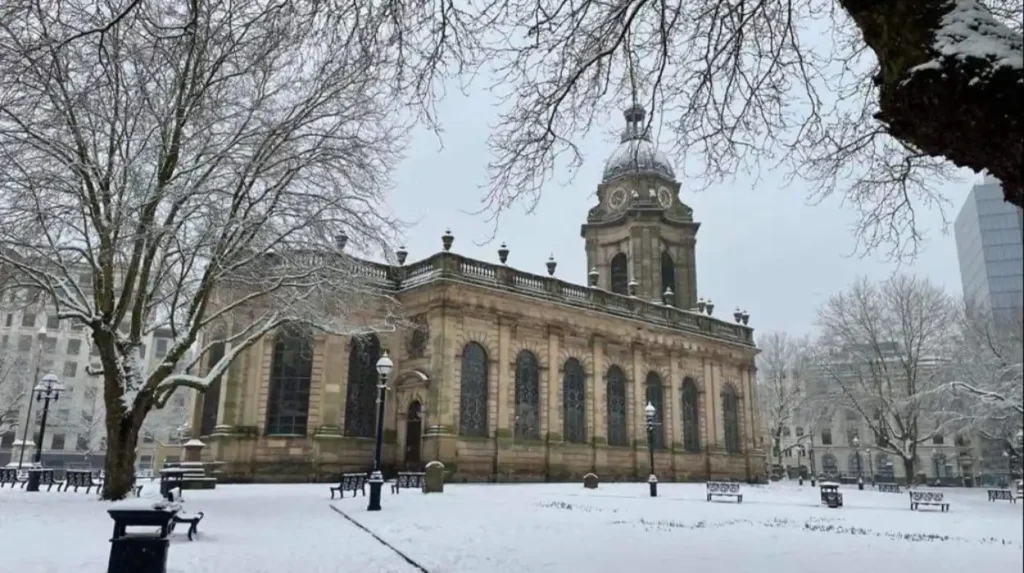
Birmingham Cathedral, completed in 1715, preserves Baroque architecture designed by Thomas Archer.
Its stained-glass windows created by Edward Burne-Jones demonstrate Birmingham’s contribution to nineteenth-century artistic movements.
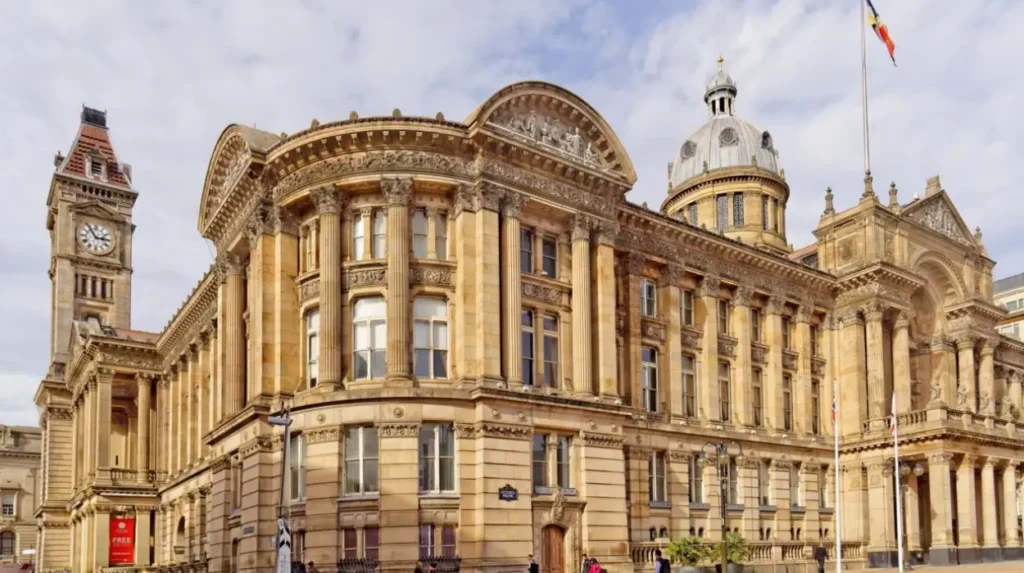
The Council House, completed during the Victorian era, reflects Birmingham’s civic ambitions through monumental architecture and decorative interiors.
The city’s historic theatres, including the Birmingham Hippodrome and Alexandra Theatre, continue traditions established during Britain’s expanding entertainment culture.
Winter festivals also reflect longstanding European seasonal customs.
Modern Christmas markets build upon centuries of winter trading traditions that historically brought merchants and communities together before major religious celebrations.
Historic public squares become centres of seasonal activity while maintaining their architectural significance.
Museums frequently organise exhibitions examining local customs, festive traditions, industrial production, and decorative arts associated with winter celebrations.
How do Birmingham’s festivals preserve local history throughout the year?
Birmingham’s festivals preserve historical traditions by celebrating cultural diversity, industrial achievements, performing arts, religious heritage, and community identity. Annual events connect contemporary audiences with historical customs while supporting heritage education, tourism, and conservation across different seasons.
Festivals provide living evidence of Birmingham’s evolving social history.
Industrial growth attracted migrants from across Britain and the wider world throughout the eighteenth, nineteenth, and twentieth centuries.
Today, Birmingham ranks among Europe’s most culturally diverse cities.
Annual festivals reflect this multicultural development through music, literature, food, visual arts, and religious celebrations.
Examples include Birmingham Heritage Week, Birmingham Literature Festival, and Birmingham Jazz & Blues Festival.
These events frequently incorporate guided tours, historic building access, lectures, exhibitions, and educational workshops.
Heritage Week, in particular, opens sites that remain inaccessible during much of the year, allowing visitors to explore churches, industrial buildings, archives, and civic institutions.
Such programmes improve public understanding of preservation while encouraging community participation.
Seasonal scheduling ensures different historical themes receive attention throughout the calendar year.
What role do Birmingham’s green spaces play in understanding local history?
Birmingham’s parks, nature reserves, woodlands, and public landscapes preserve archaeological evidence, Victorian planning principles, environmental history, and recreational traditions. These green spaces illustrate how urban development balanced industrial expansion with public health, conservation, and landscape design over several centuries.
Public parks formed an essential component of nineteenth-century urban planning.
Industrial pollution, overcrowding, and rapid population growth created demand for healthier public environments.
Municipal authorities invested in landscaped parks to improve living conditions.
Sutton Park represents one of Europe’s largest urban parks, covering approximately 2,400 acres.
Its history extends back to medieval royal hunting grounds.
Archaeological evidence includes ancient boundaries, prehistoric remains, and historical earthworks documenting continuous human activity.
Lickey Hills preserve geological formations millions of years old alongside archaeological sites representing early settlement.
Nature conservation programmes protect habitats supporting numerous species.
Examples include fallow deer, woodpeckers, foxes, bats, and rare wildflowers.
These landscapes demonstrate the relationship between environmental conservation and historical preservation.
Visitors gain insights into both natural history and human land management.
How has Birmingham preserved its heritage for future generations?
Birmingham protects its historical legacy through conservation legislation, listed buildings, archaeological investigations, museum collections, restoration programmes, educational partnerships, and community engagement. These coordinated efforts safeguard architecture, archives, industrial sites, and cultural traditions for future research and public understanding.
Historic preservation operates through national legislation and local planning policies.
Listed building status protects structures possessing special architectural or historical significance.
Conservation areas preserve neighbourhood character by regulating alterations affecting historic streetscapes.
Archaeological investigations accompany major redevelopment projects.
These excavations recover evidence documenting prehistoric occupation, Roman activity, medieval settlement, and industrial expansion.
Museums preserve millions of artefacts representing Birmingham’s social, economic, technological, and artistic history.
Universities collaborate with heritage organisations to conduct research supporting conservation decisions.
Digital archives also expand public access to historical photographs, newspapers, manuscripts, engineering drawings, and oral histories.
Community volunteers contribute thousands of hours annually through restoration projects, guided tours, educational programmes, and heritage interpretation.
These collaborative initiatives ensure Birmingham’s history remains accessible while adapting to modern educational needs.
How should visitors choose Birmingham activities according to the season?
Visitors should match activities with seasonal conditions by combining outdoor heritage exploration during warmer months with museums, historic interiors, cultural institutions, and festivals during colder periods. This balanced approach provides comprehensive understanding of Birmingham’s history, architecture, landscapes, and evolving cultural identity throughout the year.
Spring suits botanical gardens, historic parks, canal walks, and architectural exploration.
Summer supports longer walking itineraries, industrial heritage routes, open-air performances, waterways, and heritage festivals.
Autumn offers ideal conditions for museums, archives, libraries, galleries, and educational events while colourful landscapes enhance photography and park visits.
Winter emphasises churches, historic buildings, museums, seasonal exhibitions, theatres, and festive markets.
This year-round approach reflects Birmingham’s continuous historical development from medieval settlement to global industrial centre and modern cultural destination.
The city’s preserved architecture, canal engineering, museums, archives, public parks, and educational institutions collectively document more than eight centuries of social, economic, and cultural change.
Choosing activities according to the season allows visitors to experience these historic resources under their most suitable conditions while supporting sustainable tourism and heritage conservation.
Birmingham’s evolving calendar demonstrates that history remains active rather than static. Every season reveals different evidence of the city’s past, ensuring that each visit contributes to a deeper understanding of one of Britain’s most historically significant urban centres.
What is the best season to visit Birmingham?
Spring and summer are ideal for exploring Birmingham’s parks, canals, and outdoor attractions, while autumn and winter are best for museums, historic buildings, theatres, and seasonal cultural events.