
Extreme heat waves represent one of the most severe and frequent weather hazards affecting public health, infrastructure, and ecosystems across the United Kingdom. As global temperatures continue to rise, understanding the mechanisms, thresholds, and safety protocols associated with an extreme heat warning is vital for community resilience. This comprehensive guide by the Birmingham Express examines the scientific criteria, systemic impacts, and strategic responses required to navigate these critical weather events, with a specific focus on urban centers like Birmingham.
- What Is an Extreme Heat Warning?
- How Do Meteorological Agencies Determine When to Issue a Heat Alert?
- What Are the Primary Health Risks Associated with Prolonged High Temperatures?
- Who Is Most Vulnerable During an Extreme Heat Warning?
- How Does the Urban Heat Island Effect Intensify Heat Waves?
- What Are the Impacts of Extreme Heat on Critical Infrastructure?
- What Historical Heat Waves Have Shaped Current Emergency Responses?
- How Can Individuals and Communities Mitigate the Risks of Extreme Heat?
What Is an Extreme Heat Warning?
An extreme heat warning is an official alert issued by national meteorological services when atmospheric conditions present a severe risk of heat-related illnesses and fatalities. These warnings deploy specific temperature and humidity thresholds to activate emergency public health responses across affected regions.
National weather agencies, such as the UK Met Office, trigger these warnings based on localized climatological data. For instance, when a heat wave impacts the West Midlands, a specific Birmingham extreme heat warning may be deployed to signal that weather conditions deviate significantly from historical regional averages, posing a direct threat to human life and operational infrastructure.
The primary metric used to determine these warnings is often ambient air temperature combined with relative humidity to calculate how hot the weather actually feels to the human body. High humidity impedes the evaporation of sweat, which is the primary mechanism the human body uses to cool itself. When the air temperature in urban areas reaches extreme thresholds, meteorological bodies and public health frameworks initiate coordinated safety alerts to protect local citizens.
How Do Meteorological Agencies Determine When to Issue a Heat Alert?
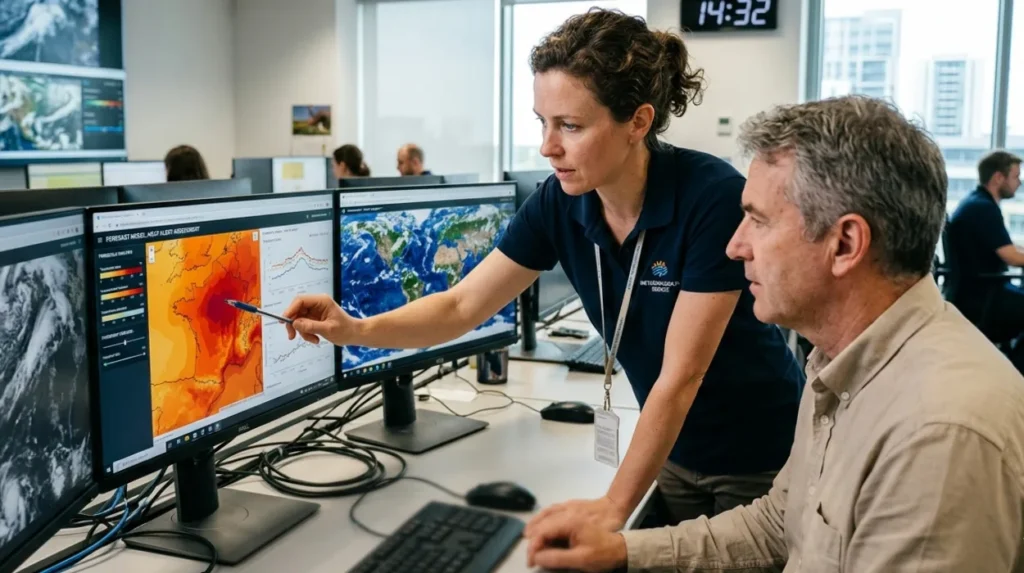
Meteorological agencies determine heat alerts by analyzing specific temperature thresholds, prolonged durations of overnight warmth, and humidity levels that exceed regional baselines. Meteorologists utilize advanced computer modeling and historical climate data to predict when atmospheric conditions will endanger public health.
The criteria for issuing an extreme heat warning vary by geographic location because human populations adapt to their local climates. The UK Met Office operates the Weather Health Alert system in partnership with the UK Health Security Agency (UKHSA). This system utilizes a four-tier warning structure: Green (Summer preparedness), Yellow (Alert), Amber (Enhanced response), and Red (Extreme heat national emergency). A Red warning indicates that heat impacts extend beyond the health and social care sector to cause widespread disruption to infrastructure, transport, and energy supplies in cities like Birmingham.
The inclusion of overnight temperatures is a critical factor in public health forecasting. When nighttime temperatures in the Birmingham metropolitan area fail to drop sufficiently, the human body cannot recover from daytime heat stress, accelerating the onset of heat-related medical emergencies.
Meteorologists track large-scale atmospheric phenomena to forecast these events. The primary driver of prolonged extreme heat is an atmospheric high-pressure system, often referred to as a heat dome. In a heat dome, high pressure traps warm air over a specific region, compressing it and driving temperatures upward. The sinking air prevents clouds from forming, allowing continuous solar radiation to heat the ground surface intensely.
What Are the Primary Health Risks Associated with Prolonged High Temperatures?
The primary health risks associated with prolonged high temperatures include heat exhaustion, heat stroke, severe dehydration, and the acute worsening of pre-existing cardiovascular and respiratory illnesses. These conditions occur when the body fails to maintain its internal core temperature.
The human body regulates its internal temperature through homeostatic mechanisms, primarily vasodilation and sweating. Vasodilation increases blood flow to the skin to radiate heat away from the body, which places significant stress on the cardiovascular system. When these mechanisms are overwhelmed, individuals progress through distinct stages of heat-related illness.
Heat Exhaustion
Heat exhaustion develops when the body loses excessive amounts of water and salt through sweating. Symptoms include heavy sweating, a rapid pulse, dizziness, fatigue, nausea, headache, and muscle cramps. If the individual is removed from the heat source and hydrated, the condition is reversible without permanent damage.
Heat Stroke
Heat stroke is a medical emergency that occurs when the internal body temperature rises above 40°C (104°F). At this threshold, the body’s thermoregulatory system fails entirely, and sweating ceases. Symptoms include confusion, altered mental status, slurred speech, loss of consciousness, and hot, dry skin. Without immediate medical intervention, heat stroke causes irreversible organ damage, neurological injury, and death.
Impact on Chronic Conditions
Prolonged heat accelerates mortality rates among vulnerable demographics by exacerbating chronic health conditions. Three categories of chronic illnesses are highly susceptible to heat stress: cardiovascular diseases (e.g., heart failure, ischemic heart disease), respiratory diseases (e.g., chronic obstructive pulmonary disease, asthma), and renal diseases (e.g., chronic kidney disease). The physiological strain of pumping blood to the skin to cool down can precipitate medical crises, highlighting the importance of localized health tracking by institutions like Birmingham hospitals during a crisis.
Who Is Most Vulnerable During an Extreme Heat Warning?
The populations most vulnerable during an extreme heat warning include older adults, infants, individuals with chronic medical conditions, outdoor laborers, and socioeconomically disadvantaged communities. These groups possess either diminished physiological heat-adaptation capabilities or limited access to cooling infrastructure.
Vulnerability to extreme heat is a function of both physiological susceptibility and socio-environmental factors. Identifying these populations allows public health officials to direct emergency resources effectively during an alert.
- Older Adults (Aged 65 and over): Age-related physiological changes reduce the body’s ability to sweat and perceive thirst. Many older individuals take medications, such as diuretics or beta-blockers, which further impair thermoregulation.
- Infants and Young Children: Children under the age of four have a higher surface area-to-mass ratio than adults, meaning they absorb heat more rapidly. Their metabolic rates are higher, and their sweat glands are not fully developed.
- Outdoor Workers: Laborers in sectors like construction, agriculture, and utilities face continuous exposure to solar radiation. The physical exertion generates internal metabolic heat, compounding the external thermal load.
- Socioeconomically Disadvantaged Populations: Individuals living in poverty frequently lack access to adequate climate control or cannot afford the electricity costs required to run cooling systems. High-density residential zones across the Birmingham region often experience heightened vulnerability due to structural housing limitations.
How Does the Urban Heat Island Effect Intensify Heat Waves?
The urban heat island effect intensifies heat waves by trapping solar radiation in densely built environments composed of concrete, asphalt, and brick. These materials absorb and store heat during the day, releasing it slowly into the atmosphere at night.
The Urban Heat Island (UHI) effect is a phenomenon where urban areas experience significantly higher temperatures than surrounding rural zones. This temperature differential can range from 1°C to over 7°C in highly developed built environments.
Material Composition and Geometry
Common construction materials like asphalt and concrete have low albedo, meaning they absorb the vast majority of solar radiation instead of reflecting it. Urban geometry, characterized by tall buildings arranged in narrow street canyons, creates a structural trap for thermal energy. These buildings block wind flow, reducing convective cooling, and radiate heat toward facing structures.
Loss of Vegetation
Urban development replaces natural landscapes, such as forests, wetlands, and grasslands, with impermeable surfaces. This removal eliminates the process of evapotranspiration. Trees and plants absorb water through their roots and release it into the air as vapor, which naturally cools the surrounding environment. In heavily paved zones within Birmingham, the absence of dense canopy coverage removes this natural cooling mechanism, intensifying local ground temperatures.
Anthropogenic Heat Generation
Cities generate internal heat through human activity. Three major sources of anthropogenic heat include vehicular emissions, industrial manufacturing processes, and the exhaust from air conditioning units. Ironically, as citizens run air conditioning systems to cool indoor spaces, the exterior compressors reject heat into the urban streets, worsening the outdoor microclimate.
What Are the Impacts of Extreme Heat on Critical Infrastructure?
The impacts of extreme heat on critical infrastructure involve the warping of railway tracks, sagging of electrical power lines, buckling of road pavements, and strain on power grids. These physical disruptions compromise transportation networks and cause widespread energy supply failures.
Modern infrastructure systems are engineered based on historical climate baselines. When temperatures exceed these design thresholds during an extreme heat warning, physical and structural failures occur across multiple sectors.
Electrical Grids and Power Generation
Extreme heat drives up the demand for electricity as millions of households and commercial buildings operate cooling systems simultaneously. This surge in demand strains transformers and distribution lines. Simultaneously, high ambient temperatures reduce the efficiency of power lines, as electrical resistance increases with heat. Thermal power plants require large volumes of cool water to condense steam in their turbines. If the source water from rivers or lakes becomes too warm, these plants must reduce their power output or shut down completely to comply with environmental regulations and prevent equipment damage.
Transportation Systems
Linear infrastructure, such as roads and railways, expands under high thermal stress. Railroad tracks, constructed from steel, can suffer from thermal expansion, leading to a phenomenon known as track buckling or sun kinks. When tracks buckle, regional rail networks, including major transit hubs like Birmingham New Street, must operate at reduced speeds or cease operations entirely to prevent derailments. Asphalt roadways soften and deform under the weight of heavy vehicles, creating ruts and potholes, while concrete highways can experience blowout failures where individual slabs expand against one another until they shatter or pop upward.
What Historical Heat Waves Have Shaped Current Emergency Responses?
Historical heat waves, such as the 2003 European heat wave and subsequent UK records, have shaped modern emergency responses by demonstrating the catastrophic lethality of unmitigated thermal events. These disasters prompted governments to develop formalized heat-health action plans.
Analyses of past meteorological disasters highlight the structural vulnerabilities in public health systems and underscore the necessity of early warning mechanisms.
The 2003 European heat wave remains one of the deadliest climate events in modern history, resulting in over 70,000 fatalities across nations including France, Italy, and the UK. The high mortality rate revealed that European healthcare infrastructure and residential housing were entirely unprepared for sustained temperatures exceeding 40°C. In response, governments established the first formalized Heat-Health Action Plans (HHAPs), which mandated real-time mortality tracking, public cooling centers, and direct outreach to isolated vulnerable citizens.
During recent record-breaking UK heat waves, temperatures climbed to unprecedented levels across England, heavily impacting major urban centers. These intense thermal events resulted in thousands of excess deaths nationwide and strained local emergency services to capacity. The severe disruption forced municipal authorities and regional councils to revise building codes, map out local heat vulnerabilities, and establish the necessity of localized, community-level resilience hubs.

How Can Individuals and Communities Mitigate the Risks of Extreme Heat?
Individuals and communities can mitigate the risks of extreme heat by implementing behavioral adaptations, enhancing urban forestry, retrofitting building insulation, and establishing localized emergency support networks. These combined interventions reduce heat exposure and protect vulnerable populations.
Mitigating the dangers of an extreme heat warning requires a dual approach combining immediate personal safety measures with long-term urban planning strategies.
Individual Behavioral Measures
During an active warning, individuals should restrict strenuous outdoor activities to the early morning or late evening hours when solar radiation is minimal. Maintaining hydration is essential; people should consume water continuously, avoiding beverages high in sugar, alcohol, or caffeine, which promote dehydration. Indoors, utilizing window coverings such as reflective films, blinds, or heavy curtains blocks radiant heat from entering living spaces. If indoor temperatures exceed 35°C (95°F), electric fans become ineffective at cooling the body, and individuals must seek shaded public environments or utilize cold compresses on major pulse points like the neck and wrists.
Community and Municipal Strategies
Municipalities can reduce the severity of the urban heat island effect by investing in green infrastructure. Increasing the urban tree canopy provides direct shade, lowering surface temperatures of pavements by up to 11°C to 25°C. Planting urban forests and installing green roofs on commercial buildings enhances regional evapotranspiration.
Cool pavement technologies, which involve coating roads and parking lots with high-albedo materials, reflect solar radiation back into space rather than absorbing it. Local community initiatives, such as Birmingham city environmental projects, focus on expanding these green spaces to provide natural cooling. Additionally, city planners must ensure designated public structures—such as libraries, community centers, and schools equipped with adequate ventilation—remain accessible so that high-risk individuals have safe sanctuaries during thermal emergencies.
The Birmingham Express emphasizes that tracking extreme heat warnings and adhering to local meteorological directives saves lives. As these weather patterns increase in frequency, integrating robust structural adaptations into daily routines and public policy is essential for preserving public health and maintaining regional infrastructure stability.
What is an extreme heat warning?
An extreme heat warning is an official alert issued when temperatures and related weather conditions pose a serious risk to human health, infrastructure, and public services.