Key Points
- Home Secretary and Birmingham Ladywood MP Shabana Mahmood said she “smells a rat” over the scale and handling of supported exempt accommodation (SEA) in Birmingham.
- She said the city’s housing benefit figures “do not make sense” and called for independent assurance over the sector.
- An internal Birmingham City Council review found more than £615m in SEA housing benefit was paid between April 2025 and July 2026, a 15-month period, without “timely evidence” that residents received the required care, support and supervision.
- The review found 12,700 live cases awaiting a post-tenancy review to establish whether support was being provided.
- The council is trying to clear a backlog of more than 7,000 overdue checks by the end of December.
- The review found only 2–4% of claims were routinely reviewed through management checks and targeted case reviews.
- Audit testing identified three processing errors and £26,636 in overpayments; the council said there was no evidence of fraud and the overpayments were recovered.
- The review found no clear single owner of SEA oversight within the council, fragmented systems and processes, and no consolidated risk register for providers of concern.
- Some residents had remained in the sector for more than 10 years, with some claims exceeding 20 years, despite its intended role as short-term supported housing.
- Mahmood said she was discussing enhanced housing benefit arrangements with Work and Pensions Secretary Pat McFadden.
- Birmingham MPs Preet Kaur Gill and Marcus Bernasconi called for an independent investigation and stronger national regulation.
- Birmingham City Council accepted the review’s findings but said many risks could not be resolved locally and required national legislative and regulatory action.
- The council said it had refused around 400 claims from one provider and about 40% of applications from new providers seeking enhanced housing benefit.
- The council said the Department for Work and Pensions had reviewed its housing benefit processes and had since approached the service to share its practice with other councils.
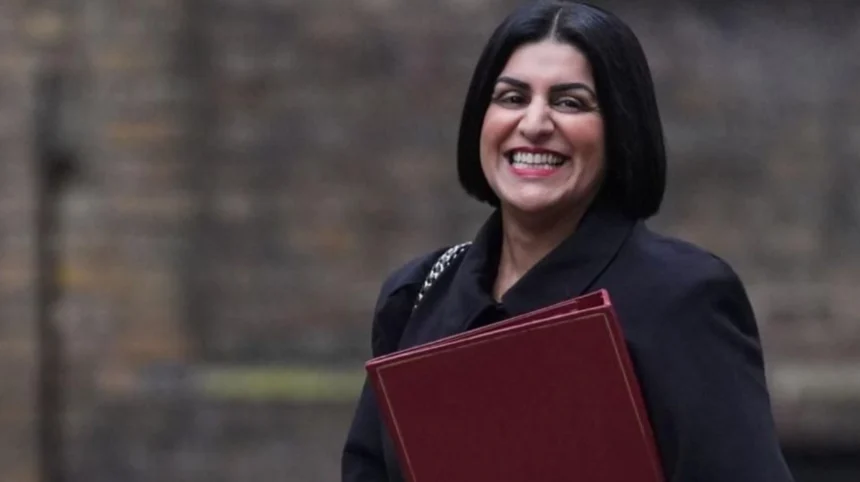
Birmingham (Birmingham Express) November 20, 2026 — The Home Secretary, Shabana Mahmood, has criticised housing provision for vulnerable people in her Birmingham constituency, saying she “smells a rat” over the scale of supported exempt accommodation and the way related housing benefit claims have been handled.
- Key Points
- What is supported exempt accommodation?
- What did Mahmood say?
- What did the council review find?
- Why has a backlog emerged?
- What other concerns were raised?
- What have Birmingham MPs said?
- What has the council said?
- What happens next?
- Background of the development
- Prediction: How this may affect Birmingham residents
As reported by Jane Haynes of BirminghamLive, Mahmood, the MP for Birmingham Ladywood, said during a constituency visit to Soho Road:
“I smell a rat. The numbers (in Birmingham) do not make sense.”
Her comments came as an internal examination at Birmingham City Council found that more than £615m in supported exempt accommodation housing benefit had been paid in 15 months without “timely evidence” that relevant support had been given to residents. The review, authored by the council’s internal auditors and led by group auditor David Mallard, was commissioned by the council’s cross-party audit committee.
What is supported exempt accommodation?
Supported exempt accommodation is housing intended to help vulnerable adults live independently. It can house people recently released from prison, survivors of domestic abuse, people with substance dependencies and people with mental health issues.
Providers receive enhanced housing benefit, which is exempt from the usual housing benefit cap, on the basis that they provide care, support and supervision. The system is designed to offer accommodation alongside support to people who may otherwise have limited housing options.
In Birmingham, the sector has become unusually large. BirminghamLive reported that more than 34,000 people were living in more than 12,000 properties under the exempt housing category.
What did Mahmood say?
Mahmood told BirminghamLive that supported exempt accommodation remained her “number one constituency priority”. She said:
“I see the impact of supported exempt accommodation all over the patch, and the use of it and the abuse I know happens in this sector is causing many of the issues in my communities.”
She said that, when compared with the rest of the country, Birmingham was “such an outlier”, adding:
“I smell a rat.”
Mahmood also said she had been pressing Work and Pensions Secretary Pat McFadden to examine the enhanced housing benefit arrangements linked to the sector. She said the Government was focused on tougher regulation, but argued that Birmingham City Council also needed to address issues within its housing and benefits team.
“I have never stopped campaigning on supported exempt accommodation,” Mahmood said.
“The Government must do its bit, but if Birmingham does not sort out what is going on in our own housing and benefits team in this city we are not going to deal with this problem.”
She said she had written to former council leader Ian Ward more than three years earlier to warn him that there was a problem and that the benefits team needed to be examined. She said she had also challenged his successor and was continuing to challenge the current administration, a Greens, Liberal Democrats and Independent coalition led by Councillor Roger Harmer.
“There were questions to answer for the Labour administration, questions to answer for the current administration and I will keep going, to get the council to investigate, review and prove to me and others that it isn’t just a Birmingham problem, because our numbers just do not make sense,” she said.
Mahmood said she wanted “independent assurance” and would continue pressing until she received an answer that felt like “the truth”.
What did the council review find?
The internal review found that the council paid £404.4m in SEA housing benefit in the year beginning April 2024. It also found 12,700 live cases were awaiting a review to prove that care, support and supervision were being provided after a tenancy had begun.
As a result, the council continued to make enhanced housing benefit payments “without timely evidence” that residents were receiving the relevant support.
BirminghamLive reported that the review found more than £616m was paid to exempt accommodation providers between April 2025 and July 2026. It said the vast majority of that money went to registered providers deemed “non-compliant” by the Regulator of Social Housing.
The review found that only 2–4% of all claims were routinely reviewed through management checks and targeted case reviews. When auditors tested a random selection of claims, they found three processing errors and overpayments totalling £26,636.
The council said the errors were technical processing errors, that there was no evidence of fraud and that the overpayments had been recovered. It said the errors could not be extrapolated to suggest a widespread problem of overpayments.
Why has a backlog emerged?
The council introduced local checks in 2019 after finding that too many tenants were receiving little or no support. The checks were intended to take place between two and six months into a tenancy.
The review found a backlog of more than 7,000 checks, many of them months overdue. The council attributed the backlog to claim volumes, staffing vacancies and recruitment challenges, and said it was working to reduce it by the end of December.
The council said the checks were a “belt and braces” local initiative that went beyond national requirements. It said the risks arising from the backlog were not “high”.
Despite the concerns, the review concluded that the council could be “moderately assured” that its benefits and review systems were working. This was described as the second-best outcome, and none of the issues identified were assessed as high risk.
What other concerns were raised?
The review found that responsibility for the sector was spread across benefits, housing, accommodation oversight, inspections and risk functions. It said there was no single end-to-end framework capable of identifying risks across the system.
It also found that the council relied on outdated and fragmented digital and manual systems to administer, monitor and report on claims. The review said these systems needed urgent updating.
The council did not maintain a consolidated risk register for providers of concern. Although it received information from internal and external sources, including police, staff and safeguarding concerns, it dealt with cases individually rather than monitoring trends or recurring issues.
The review also found that some tenants had lived in the sector for more than 10 years, while some claims exceeded 20 years. It said a proportion of the caseload remained in payment for extended periods without periodic assurance reviews, and that the council could not demonstrate that eligibility and support were being reviewed in some long-standing cases.
The number of referrals of concern also rose sharply. BirminghamLive reported that the operational taskforce considered more than 600 cases between January and July 2026, compared with 3,900 cases across the five years from June 2021.
What have Birmingham MPs said?
Preet Kaur Gill, the MP for Birmingham Edgbaston, described the findings as “shocking”. She said:
“The council’s own audit found a backlog of more than 7,000 checks while millions of pounds were being paid out every month. Behind every overdue check is a person still waiting for the council to verify that they are getting the support they need.”
Gill said she had spent a decade raising the issue with government, the council and police. She said she had worked with local partners to close Saif Lodge and that residents and campaigners had continued to speak out about conditions behind the front doors of supported housing.
“Now Birmingham needs an independent investigation, and ministers must give councils the powers to set and enforce minimum standards of care and support,” she said.
“When public money pays for supported housing, people should be able to count on getting that support.”
Councillor Marcus Bernasconi, Labour councillor for North Edgbaston, said the review made “grim reading” and called for a government investigation. He is one of two local Labour councillors who have called on the council to stop the claims.
What has the council said?
Birmingham City Council accepted the findings of the review but said many of the most significant risks could not be addressed through local action alone. It said the sector’s scale and nature required national legislative and regulatory change.
“There is no assurance that these measures, whether they had been taken previously or are taken now, will have a tangible impact upon the nature nor scale of the sector,” the council said.
The council said the continued failure to introduce licensing for supported housing following the Act passed in 2023 remained a “national omission”. It said next steps must maximise control in the present while delivering an effective future licensing regime.
The council said its ability to influence the sector was constrained by the current legislative and regulatory framework. It said it had limited powers to regulate providers, influence the location and growth of provision and property concentrations, or intervene where wider concerns were identified.
The council also said it had lobbied for, and continued to press for, a licensing scheme for the sector, along with a planning permission requirement not currently included in proposed new regulations.
It said it had recently refused around 400 claims from one provider seeking enhanced housing benefit, while around 40% of applications from new providers had been refused.
The council said the Department for Work and Pensions had conducted a performance review of its housing benefit processes relating to supported exempt accommodation. Since then, it said, the department had approached the benefits service to share its good practice with other councils.
What happens next?
Commissioners urged the council to implement a range of actions linked to the review’s findings within clearly defined timescales. They said this was particularly important given the scale of supported exempt accommodation in Birmingham, the vulnerability of many residents and the wider impact that poorly managed provision can have on communities.
“Commissioners expect the council to maintain a clear focus on addressing the identified risks, strengthening oversight and assurance arrangements, and ensuring that improvements deliver better outcomes for vulnerable residents and the communities in which they live,” they said.
The review has increased calls for a fully independent investigation into the sector. Mahmood, Gill and Bernasconi have all pressed for greater scrutiny, while the council has said national reform is needed to address risks beyond its local control.
Background of the development
Supported exempt accommodation has been a long-running issue in Birmingham. The system is intended to provide housing and support for vulnerable people, but politicians, charities and residents have raised concerns about rogue providers, inadequate support, exploitation and antisocial behaviour.
Mahmood has campaigned on the issue for years. In 2023, she wrote to Birmingham City Council supporting an independent inquiry into the growth of exempt housing in the city and asking that the inquiry examine the council’s benefits and revenues service.
She also wrote to the National Audit Office in 2023, raising concerns about “ghost tenancies”, overpayments and potential fraud at a national level. She said Birmingham City Council had found that 3,022 housing benefit claims had to be cancelled because residents had vacated properties.
Earlier reporting by BirminghamLive found that more than 32,000 people required support through the system and were living in more than 12,000 exempt properties. It estimated that about £400m was being paid each year in enhanced housing benefit in Birmingham.
The council has previously said that supported exempt accommodation is largely unregulated and subject to housing benefit regulations. It has also operated a preferred provider list based on Quality Standards assessments, with awards valid for up to two years and continued monitoring during that period.birmingham.
Prediction: How this may affect Birmingham residents
If the council clears the backlog and strengthens oversight, vulnerable residents could face more frequent checks to confirm that they are receiving the care, support and supervision they are entitled to. This could improve protection for tenants, particularly those in properties where support has been inadequate.
For residents living near supported accommodation, stronger monitoring and a consolidated provider risk register could help the council identify recurring problems earlier. However, the council has said that its ability to control the sector’s location, growth and concentration is limited by the current legislative and regulatory framework.
For providers, closer scrutiny of claims and support provision could lead to more refusals, delayed payments or enforcement action where care and supervision cannot be evidenced. The council’s review of around 400 claims from one provider and its refusal rate for new providers suggest that local checks may become more demanding.
For taxpayers, the review’s findings may increase pressure for tighter controls over enhanced housing benefit and for national licensing reforms. Any future independent investigation could examine whether public money is being used appropriately and whether vulnerable residents are receiving the support promised by providers.
For Birmingham City Council, the immediate priority will be reducing the backlog of more than 7,000 checks and implementing the commissioners’ required actions. The wider outcome will depend on whether national government introduces the licensing and regulatory changes that the council says are necessary to address risks it cannot manage locally.