Key Points
- Birmingham City Council has secured an interim High Court injunction preventing unauthorised flags from being attached to street furniture and highway infrastructure across the city.
- The order was granted by Judge Emma Kelly on 18 November 2026, following hearings on 8 September, 30 September and 2 November.
- It applies to Ryan Bridge, co-founder of Raise The Colours; Ben Cullen, who is associated with the group; and “persons unknown”.
- The injunction covers flags of all types, but only where they are attached without authorisation to public street furniture or highway infrastructure in Birmingham.
- It does not ban the display of the Union Jack, St George’s Cross, Pride flags or any other flag in general.
- A power of arrest applies to Ryan Bridge and persons unknown, allowing police to arrest someone without a warrant if they reasonably suspect a breach.
- Anyone found in contempt of court could face up to two years’ imprisonment, a fine and/or seizure of assets.
- The council said it had spent nearly £170,000 this year removing unauthorised attachments, including flags, from council-owned property.
- The council cited safety concerns, obstruction, interference with council assets and alleged intimidation, harassment and disorder linked to flag displays.
- The court heard that one man suffered a broken leg after being run over by a cherry picker while flags were being installed.
- The injunction remains in force until a further court order or a trial, should the council seek a permanent injunction.
- Ryan Bridge said the case was “spiralling out of control” and said he would contest the action.
- No date has been set for a trial or a further hearing.
Birmingham (Birmingham Express) November 2026 — Birmingham City Council has obtained an interim High Court injunction preventing unauthorised flags from being attached to lamp-posts, bridges, roadside barriers and other street furniture or highway infrastructure across the city.
The order was granted by Judge Emma Kelly on 18 November following a legal application by the council. It applies to Ryan Bridge, a co-founder of the campaign group Raise The Colours; Ben Cullen, who is associated with the group; and “persons unknown” who have attached, or intend to attach, flags to public infrastructure in Birmingham.
As reported by the BBC, Judge Kelly said there was a “compelling need” to grant the interim injunction. The order will remain in force until either a further court order extends it or a trial takes place, if the council pursues a permanent injunction.
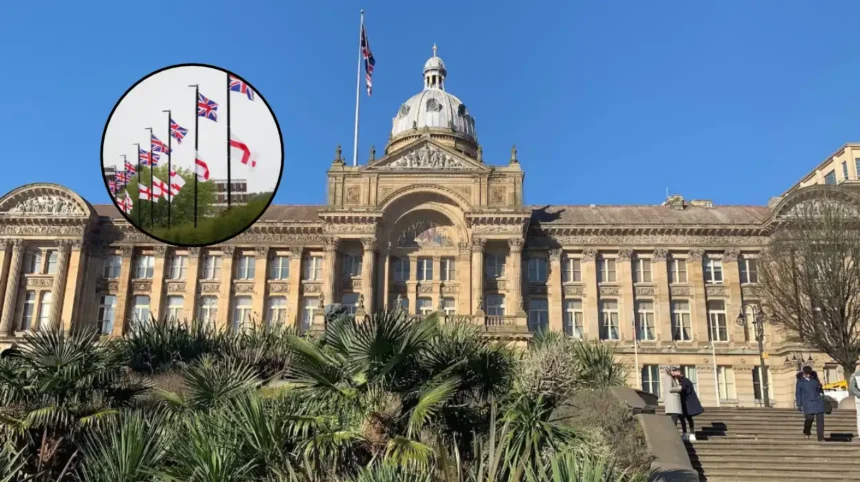
The legal action followed the appearance of thousands of St George’s Cross and Union Jack flags on lamp-posts, bridges and other roadside structures across parts of Birmingham. Many of the displays were associated with Raise The Colours, a group described in court reporting as anti-migrant.
The council argued that unauthorised attachments to highway infrastructure created safety risks, obstructed visibility, interfered with council assets and contributed to tensions and disorder.
What does the injunction prohibit?
The injunction prevents people from attaching unauthorised flags to street furniture and highway infrastructure within Birmingham’s administrative area.
According to the council, the order also prohibits people from instructing or encouraging others to attach flags, and from interfering with council officers or contractors seeking to remove them.
The order covers lamp-posts, bridges, roundabouts, roadside barriers and other council-owned highway assets. It applies to flags of all types, rather than only St George’s Crosses or Union Jacks.
However, Judge Kelly made clear that the injunction does not amount to a general ban on flags. As reported by ITV News, she stated:
“Whilst the interim injunction order will cover flags of all types, it is limited in scope to the restraint of unauthorised flags attached to highway street furniture or infrastructure, and to the restraint of associated conduct, within the administrative area of Birmingham.”
The judge also said the order was not “the court nor the claimant ‘banning the Union Jack’ or the display of Pride flags or anything of the like”, according to reporting by GB News.
In practical terms, residents and campaign groups may still display flags on private property, provided they have the necessary permissions and comply with other applicable rules. The restriction concerns the unauthorised fixing of flags to public street furniture and highway infrastructure.
Who is covered by the order?
The injunction names Ryan Bridge and Ben Cullen. It also applies to “persons unknown”, a legal term used for individuals who have attached, or are believed likely to attach, flags to street furniture in Birmingham but who have not been individually identified.
The court granted a power of arrest against Bridge and persons unknown. This means police may arrest someone without a warrant if they reasonably suspect that the injunction has been breached.
Birmingham City Council said that, once the sealed order is issued, anyone breaching the injunction could be imprisoned for up to two years, fined and/or have their assets seized for contempt of court.
The council said the court had not yet provided the sealed order setting out the full terms of the injunction. It said the document would be published on its website once available.
Why did the council take legal action?
Birmingham City Council said its application sought to prevent the attachment of flags to street furniture and highway infrastructure without permission. It also sought to prevent obstruction of the highway linked to such activity, interference with council officers or contractors carrying out removal work, and behaviour alleged to amount to harassment, alarm or distress towards council staff, contractors, elected members and members of the public.
As reported by the BBC, the council argued that the flags posed a hazard on lamp-posts, signs and other highway structures, and that the displays had fuelled community tensions.
Court documents referred to incidents allegedly connected to the displays, including reports of intimidation, harassment and obstruction. During the proceedings, the court was told that one man suffered a broken leg after being run over by a cherry picker while flags were being put up.
The council also referred to allegations that people had been assaulted or threatened in incidents connected to the displays. These were allegations put before the court during the injunction proceedings, rather than findings of criminal guilt against the defendants.
At an earlier hearing on 30 September, Jonathan Manning, representing Birmingham City Council, told the High Court that people had reported feeling “significantly less safe” following a series of violent and threatening incidents. As reported by the BBC, he said there had been incidents of erratic driving connected to Raise The Colours, including cherry pickers blocking pavements and confrontations with residents.
The council also said it had spent almost £170,000 this year removing unauthorised attachments, including flags, from lamp-posts and other council-owned property. BirminghamLive reported that the total to the end of October stood at £167,575, plus VAT, following a Freedom of Information request.
What did Raise The Colours say?
Ryan Bridge, co-founder of Raise The Colours, said he would fight the council’s legal action. At an earlier stage of the proceedings, he said in a statement that the action was against the European Convention on Human Rights.
After the injunction was granted, Bridge attended a further hearing on 19 November, where he was told that the order had come into force and would remain effective until a trial or another court ruling.
As reported by the BBC, Bridge said the case was “spiralling out of control”. He objected to the possibility that the dispute could proceed to a full trial.
A lawyer representing Bridge had earlier told the court that putting up flags was an expression of his political views and should be protected under the European Convention on Human Rights. The submission was made during a High Court hearing on 2 November, as reported by the BBC.
Judge Kelly reserved judgment at the end of that hearing and issued her ruling several days later.
What happens next?
The injunction is interim, meaning it is temporary rather than final. It will remain in place until the court issues a further order or the case proceeds to trial.
No date has been set for a trial. The court heard that any future trial could involve several days of evidence if the council seeks a permanent injunction.
Judge Kelly said the court would support the parties in reaching an agreement without proceeding to trial, according to BBC reporting. However, no agreement or settlement has been announced.
The council’s cabinet member for equalities, communities and social justice, Councillor Jane Baston, welcomed the ruling. In a statement issued by Birmingham City Council, she said:
“We are grateful that the court has granted the Council an interim injunction against Ryan Bridge, Ben Cullen and persons unknown relating to the unauthorised attachment of flags to street furniture and highway infrastructure.”
Background of the development
The dispute began after thousands of St George’s Cross and Union Jack flags were displayed across Birmingham from summer 2025 onwards. Many were attached to lamp-posts, bridges and other public structures, making them highly visible across parts of the city.
The displays became one of Birmingham’s most prominent and contested local issues. Supporters described them as an expression of national identity, while the council and other critics raised concerns about public safety, unauthorised use of public infrastructure and alleged disorder connected with the installations.
Birmingham City Council first applied to the High Court for an injunction, including an interim injunction and a power of arrest, in relation to the unauthorised attachment of flags. Hearings took place on 8 September, 30 September and 2 November before Judge Emma Kelly issued her judgment on 18 November.
The case has attracted national attention because it raises questions about the balance between freedom of expression, public safety, local authority control of street furniture and the use of civil injunctions against unnamed individuals.
Prediction: How this development can affect Birmingham residents
For Birmingham residents, the immediate effect is likely to be a reduction in unauthorised flags attached to lamp-posts, bridges and other public highway infrastructure. Council contractors may be able to remove such attachments more quickly, while individuals covered by the order could face police action if they are suspected of breaching it.
Residents who wish to display flags may need to consider alternative locations, such as private property, or seek permission from the relevant authority before using public infrastructure. The injunction does not prevent all flag displays, but it does restrict unauthorised attachments to public street furniture.
For community groups and campaigners, the ruling may make large-scale flag installations on public infrastructure more difficult in Birmingham. It could also encourage other local authorities facing similar displays to consider legal action where they believe public safety, highway access or council assets are affected.
For businesses and motorists, the council’s stated concerns about obstruction and visibility may reduce the risk of flags interfering with road signs, lamp-posts and other highway infrastructure. The outcome of any future trial could determine whether the restrictions become permanent and whether similar orders are sought elsewhere.