Key Points
- The third annual International Day of Birmingham took place across two days on 24 and 25 September 2026.
- Ten rooms in the Grade II-listed Council House were converted into event spaces under the name ‘The House That Brum Built’.
- Festivities began in Victoria Square with a public “FlashBab” shout, a flag-raising ceremony, and a bugle performance.
- Organisers staged more than 50 free and ticketed events featuring local performers, public figures, and cultural groups.
- Comedian Joe Lycett originally created the concept for his Sky Max show United States of Birmingham, but International Day of Birmingham CIC now runs the non-profit event to raise funds for the Lord Mayor’s Charity.
BIRMINGHAM (Birmingham Express) September 25, 2026 — As reported by Christian Abbott, Audience Writer for the Birmingham Mail, and official communications released by the University of Birmingham and International Day of Birmingham CIC, Birmingham city centre came alive on Thursday 24 September 2026 for the third annual International Day of Birmingham, bringing together music, colour, and community spirit across a expanded two-day itinerary.
- Key Points
- How did Birmingham mark the start of the 2026 International Day celebrations?
- What events took place inside ‘The House That Brum Built’?
- How did civic leaders and local institutions contribute to the proceedings?
- Background of the International Day of Birmingham development
- Prediction: How this development may affect local residents, cultural organizations, and municipal tourism
How did Birmingham mark the start of the 2026 International Day celebrations?
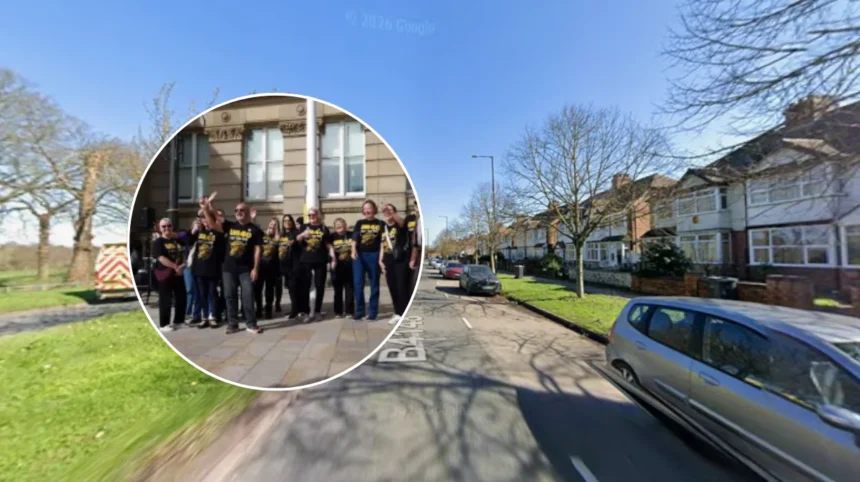
As reported by Christian Abbott of the Birmingham Mail and Nicola Silk, Director of International Day of Birmingham CIC, the municipal festivities initiated outside the Council House in Victoria Square with the traditional “FlashBab” gathering. As documented by event organizers, a crowds assembled in the square to participate in a collective shout of “Alright bab” in unison, led jointly by the Lord Mayor of Birmingham, Councillor Zaker Choudhry, and local figure Mr Egg.
Following the communal greeting, the official United States of Birmingham flag was raised above Victoria Square while a ceremonial bugler performed the official IDOB anthem. The outdoor opening ceremony also featured live musical performances and public distribution of traditional British confectionary to attendees.
What events took place inside ‘The House That Brum Built’?
As outlined by Christian Abbott of the Birmingham Mail, the 2026 festival marked the first time ten rooms within the Grade II-listed Council House were opened to the public under the banner ‘The House That Brum Built’. Visitors were issued a limited-edition “Brummie Passport” created by Draw My City artist Stacey Barnfield and the Colour Palette Company, which allowed participants to collect stamps across the distinct rooms to enter a civic prize draw.
According to event literature published by International Day of Birmingham CIC, the room transformations included:
- The Chamberlain Room: Converted into a community cinema operated by The Mockingbird Cinema.
- The Glass Corridor: Redesigned as a botanical display by the Birmingham Botanical Gardens.
- The Council Chamber: Hosted literary events organized by The Heath Bookshop.
- The Names Room: Operating as the “Brummie Bazaar” souvenir marketplace managed by Birmingham Artisan Markets.
- The Reception Space: Fitted with a pop-up Irish pub hosted by Nortons Digbeth, serving refreshments and traditional food.
Featured activities throughout the schedule included live performances by the City of Birmingham Symphony Orchestra Woodwind Quintet, pop-up appearances by the Birmingham Royal Ballet performing the Act II Swan Lake pas de deux, exhibitions by satirical collage artist Cold War Steve and anonymous artist Foka Wolf, and interactive art sessions led by Tat Vision.
How did civic leaders and local institutions contribute to the proceedings?
As reported in a media statement from the University of Birmingham, the higher education institution served as a headline sponsor for the 2026 festival. Speaking on behalf of the university, Cassie Chadderton, Director of Culture, Collections and Public Engagement, stated: “International Day of Birmingham is our annual reminder to the world that the second city is, in fact, second to none. As England’s first civic university, we’re proud to support an event that brings people, cultures and communities together, celebrates our global connections and showcases everything that makes Birmingham such a vibrant place to live, work and study.”
The university hosted a panel discussion titled ‘Birmingham United: celebrating football in Brum’, led by alumnus PJ Ellis and featuring foundation founder Siraj Hussain, BCFC Official Supporters Club representatives Paul Delves and Sukh Singh, and researcher Hijab Shah.
In an official civic statement, the Lord Mayor of Birmingham, Councillor Zaker Choudhry, stated: “International Day of Birmingham is a wonderful opportunity to celebrate everything that makes our city unique: our creativity, diversity, civic pride and strong sense of community. It is also a chance to recognise the special connections we share with other Birminghams around the world, bringing people together through friendship, culture and a shared identity.”
As reported by Colmore Life, comedian Joe Lycett, who originally created the concept for his television broadcast, commented on the growth of the event by stating: “This day has got out of hand and I want nothing to do with it.”
Producer and Director of International Day of Birmingham CIC, Nicola Silk, stated: “We invite Brummies and visitors to immerse themselves in the city’s creativity and have a laugh at the same time. Where else could you see Birmingham Royal Ballet and Mr Egg on the same bill?!”
Background of the International Day of Birmingham development
The International Day of Birmingham was originally conceived as a satirical and celebratory concept within comedian Joe Lycett’s Sky Max television series, United States of Birmingham. The initial premise sought to establish cultural and civic links between Birmingham, West Midlands, and approximately 30 other towns, cities, and locations worldwide that share the name “Birmingham,” most notably Birmingham, Alabama, in the United States.
Following public reception of the television special, the event was formalized as an annual civic occurrence administered by International Day of Birmingham Community Interest Company (CIC), a non-profit entity. The inaugural celebration was established on 24 September.
The 2026 edition represented the third official iteration of the observance and the first to extend over a two-day duration (24–25 September). Funding and operational support for the non-profit 2026 event were supplied through municipal partnerships with Birmingham City Council alongside corporate and charitable sponsors, including The Beattie Foundation, Colmore Life, The Heath Bookshop, Hollywood Monster, Nortons Digbeth, UB40, and the University of Birmingham, with event proceeds directed to the Lord Mayor’s Charity.
Prediction: How this development may affect local residents, cultural organizations, and municipal tourism
The expansion of the International Day of Birmingham into a multi-day civic festival operating within municipal landmarks like the Council House indicates a potential shift in how the city structures its cultural calendar and public engagement strategies.
For local residents and civic communities, the continued institutionalisation of the event provides an accessible, non-ticketed platform for local identity and neighborhood inclusion. The direct participation of grassroots creators, local businesses, and regional charities suggests that future iterations may serve as an annual showcase for independent local enterprise and cultural output.
For regional cultural organizations—such as the City of Birmingham Symphony Orchestra, Birmingham Royal Ballet, and local independent venues—the festival offers an established platform to engage non-traditional audiences outside conventional performance halls. If attendance and institutional sponsorship continue on this trajectory, municipal bodies and tourism agencies, such as Visit Birmingham, may increasingly utilize the global “Birmingham” branding to foster international cultural exchanges, educational partnerships, and municipal diplomacy with international namesake cities.