Birmingham is one of England’s most important historic cities for understanding industrialisation, manufacturing, transport, migration, science, architecture and civic development. Its modern weekend attractions sit within a landscape shaped by more than two centuries of economic and social change.
- What makes Birmingham one of the best UK cities for a historical weekend?
- How did Birmingham develop into an important industrial city?
- What can visitors see on a Birmingham city-centre walking route?
- Why are Birmingham’s canals important for a weekend visit?
- Why is the Jewellery Quarter essential for Birmingham heritage activities?
- What can visitors learn at Birmingham Museum & Art Gallery?
- What makes Thinktank a useful weekend activity for families and students?
- Which historic houses and industrial sites should visitors explore outside the city centre?
- Which Birmingham venues are suitable for a cultural weekend evening?
- Which parks provide historical and outdoor activities in Birmingham?
- How do Birmingham’s shopping, food and entertainment districts connect with history?
- How should visitors plan a Birmingham weekend around history and geography?
- Why do Birmingham’s weekend activities matter for heritage preservation?
- Frequently Asked Question
The city developed from a medieval market settlement into a major manufacturing centre during the eighteenth and nineteenth centuries. Metalworking, engineering, canals, railways and international trade transformed Birmingham’s economy and physical landscape. The resulting industrial infrastructure still influences the city centre, Jewellery Quarter, canal network and surrounding neighbourhoods.
Today, weekend activities in Birmingham range from museum visits and historic walking routes to canal walks, heritage attractions, concerts, parks and cultural venues. These activities provide direct access to surviving buildings, collections and landscapes connected with Birmingham’s past.
What makes Birmingham one of the best UK cities for a historical weekend?
Birmingham offers a weekend mix of industrial heritage, museums, historic streets, canals, architecture, parks, music, food and cultural venues. Its best activities connect the city with manufacturing, transport, migration, science and civic development across two centuries of change in total.
Birmingham’s historical importance is closely connected with the Industrial Revolution. The city became known for diverse manufacturing rather than dependence on one dominant industry. Jewellery, firearms, buttons, metalware, engineering products, steam technology and later motor vehicles formed important parts of its economy.
The Birmingham Canal Navigation became a major transport system during this transformation. The first Birmingham Canal was authorised in 1768, following proposals to connect Birmingham with the Staffordshire and Worcestershire Canal. Engineer James Brindley surveyed the route, and the section between Birmingham and Wednesbury was completed in 1769.
Industrial growth created demand for better roads, canals, railways, factories, warehouses and housing. The resulting urban structure remains visible during a weekend visit.
The city also became an important centre for intellectual and scientific activity. Matthew Boulton, James Watt, Joseph Priestley, Erasmus Darwin and other figures associated with the Lunar Society contributed to an environment linking industrial enterprise with scientific experimentation.
Birmingham therefore provides more than conventional sightseeing. Its weekend activities allow visitors to examine how technology, commerce, architecture and social change interacted over time.
How did Birmingham develop into an important industrial city?
A weekend in Birmingham has roots in the eighteenth-century industrial expansion that transformed a market town into a manufacturing centre. Canals, workshops, railways, civic buildings and cultural institutions created the urban landscape that visitors explore today across Birmingham surrounding districts.
Birmingham’s industrial development accelerated during the eighteenth century. Local metalworking already had medieval roots, but production expanded significantly as manufacturers developed specialised techniques and commercial networks.
The Jewellery Quarter provides strong evidence of this process. Birmingham became internationally associated with small manufactured goods known historically as “toys”. These included buckles, buttons, jewellery, cut-steel objects and other portable products. The work involved skilled craftsmen operating from workshops, houses and yards.
The 1746 release of Colmore family estates for development helped create new building land northwest of the medieval town. This expansion contributed to the urban development of the area that later became the Jewellery Quarter.
Matthew Boulton became one of Birmingham’s most significant industrial entrepreneurs. His Soho Manufactory, established in 1761, produced plated metalware, buttons, buckles and coins. Archaeological investigations in the 1990s identified surviving foundations and industrial remains beneath later residential development.
The city’s industrial system depended on connections. Canals moved heavy raw materials and finished goods. Railways later expanded national distribution. Workshops and factories supplied domestic and international markets.
This historical process explains why Birmingham remains especially suitable for a weekend focused on industrial heritage.
What can visitors see on a Birmingham city-centre walking route?
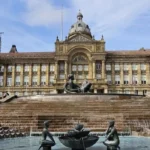
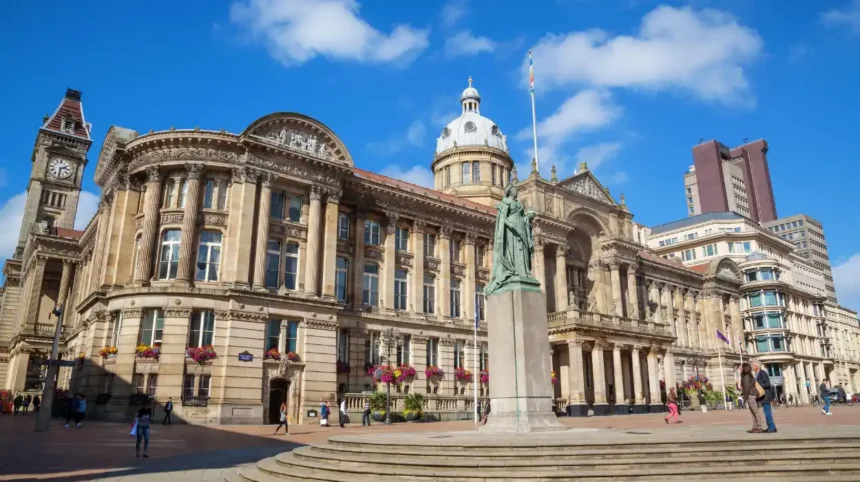
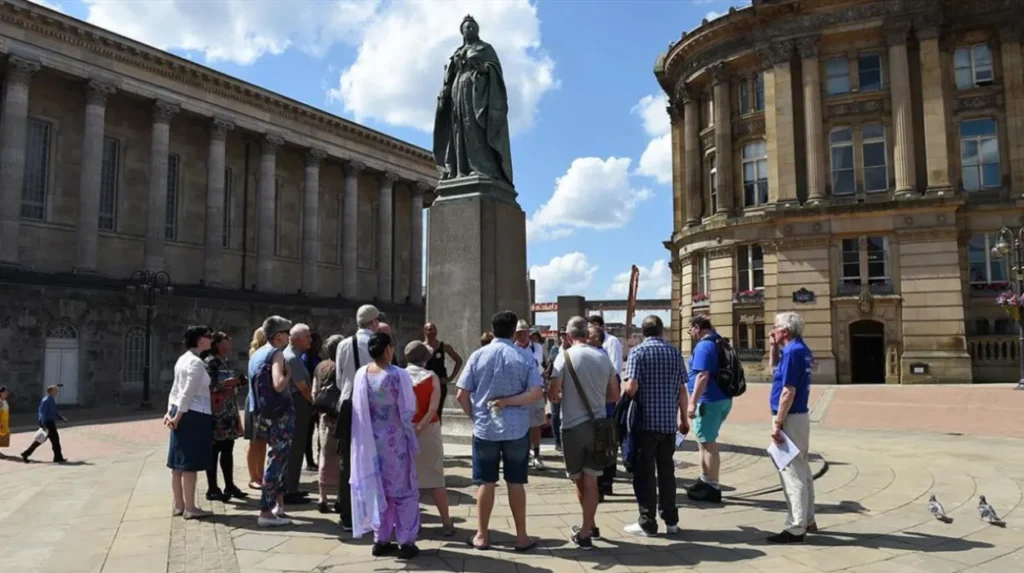
City-centre walking provides the clearest introduction to Birmingham’s civic history because Victoria Square, Town Hall, Council House, Chamberlain Square, Cathedral Square and Centenary Square connect major phases of urban development within a compact area for sightseeing, education and public life.
Victoria Square forms one of Birmingham’s principal civic spaces. Birmingham Town Hall stands nearby and is one of the city’s most important nineteenth-century buildings.
Designed by Joseph Hansom and Edward Welch, Birmingham Town Hall opened in 1834. Its architecture was based on the classical temple tradition, with a prominent exterior colonnade. The building became an important venue for public events, music and later popular entertainment.
The Town Hall’s history demonstrates how Birmingham’s economic development created demand for civic and cultural infrastructure. Its later use for rock and popular music also connects nineteenth-century architecture with twentieth-century cultural history.
Nearby Council House represents another stage in Birmingham’s civic development. The surrounding civic centre contains buildings associated with municipal government, public administration and cultural institutions.
Chamberlain Square provides access to Birmingham Museum & Art Gallery and the wider civic quarter. Centenary Square extends the route toward the Library of Birmingham and modern cultural buildings.
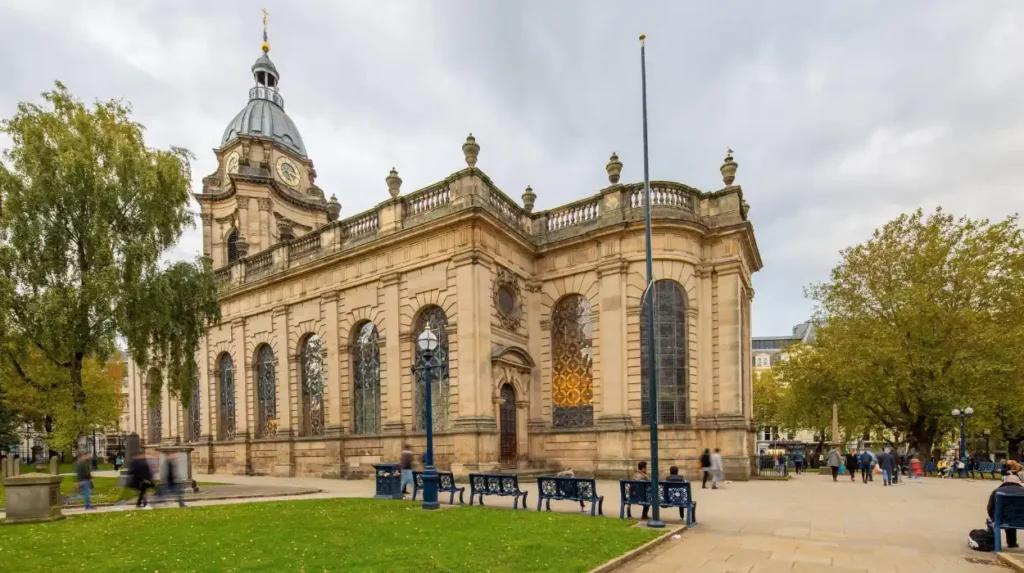
Cathedral Square provides another historical reference point through St Philip’s Cathedral, an eighteenth-century building that became central to Birmingham’s civic landscape.
A city-centre walking route therefore works as a chronological introduction. Visitors can move from Georgian and Victorian architecture toward twentieth- and twenty-first-century cultural development without travelling far.
Why are Birmingham’s canals important for a weekend visit?
Birmingham’s canals provide a direct route into the city’s industrial history because the Birmingham Canal Navigation connected factories, coalfields and national waterways from the eighteenth century. Today, towpaths and waterside routes preserve evidence of transport infrastructure while providing practical spaces.
Birmingham’s canal network is one of the clearest surviving expressions of its industrial past.
The Birmingham Canal was created during a period when industrial producers needed reliable transportation for heavy materials. The Birmingham Canal Navigation connected the town with wider waterway systems and supported the movement of coal, metals and manufactured products.
The 1768 Act created the Company of Proprietors of the Birmingham Canal Navigation. James Brindley acted as engineer, assisted by Robert Whitworth and Samuel Simcock. The Birmingham-to-Wednesbury section was completed in 1769.
Canal transport changed the economics of industrial production. Coal could be transported more efficiently to Birmingham’s workshops and factories. Finished goods could then move toward national markets.
Modern canal routes preserve towpaths, bridges, locks, warehouses and industrial boundaries. These physical features provide useful evidence for understanding the relationship between transport and manufacturing.
Weekend visitors can follow canal paths through areas that have experienced major regeneration. Brindleyplace, Gas Street Basin and the central canal corridors demonstrate how industrial infrastructure has been adapted for modern leisure and commercial use.
The canal landscape also provides an educational opportunity. Historic maps and surviving structures allow researchers and students to compare Birmingham’s eighteenth-century transport network with its modern urban form.
Why is the Jewellery Quarter essential for Birmingham heritage activities?
The Jewellery Quarter is one of Birmingham’s strongest heritage destinations because its surviving workshops, factories, churches, streets and specialist businesses record centuries of metalworking. A weekend visit links architectural conservation with manufacturing history, skilled labour, jewellery production and its identity.
The Jewellery Quarter is one of Birmingham’s most distinctive historic districts.
Its development accelerated from the eighteenth century as Birmingham’s metalworking trades expanded. Manufacturers produced jewellery, buckles, buttons, cut-steel goods and other precision products. Small workshops operated alongside larger manufacturing enterprises.
The area’s surviving streets retain evidence of this production system. Factory buildings, workshops, terraces, churches and commercial premises form a distinctive industrial landscape.
The Museum of the Jewellery Quarter occupies a preserved jewellery workshop. It provides direct evidence of how specialist manufacturing operated inside the district.
Heritage walking tours also help visitors understand the relationship between buildings and industrial processes. The streets themselves provide evidence of how manufacturing shaped urban planning.
Birmingham’s Jewellery Quarter is also important for heritage preservation. Historic industrial buildings have been adapted for modern businesses, hospitality, creative industries and cultural activities.
This creates a direct connection between past and present. The district remains associated with jewellery production while its historic architecture supports contemporary economic activity.
For visitors interested in industrial archaeology, the Jewellery Quarter is particularly significant because the physical environment remains closely connected with the original manufacturing purpose.
What can visitors learn at Birmingham Museum & Art Gallery?
Birmingham Museum and Art Gallery provides a framework for understanding the city because its collections connect local history with fine art, archaeology, social history and global material culture. Its exhibitions demonstrate how museums preserve evidence and interpret changing ideas about Birmingham.
Birmingham Museum & Art Gallery is a major cultural institution within the city’s civic centre.
Its historical importance extends beyond individual artworks. Museums provide organised collections that allow researchers, students and visitors to examine objects as evidence of social, technological and cultural change.
Birmingham’s municipal museum tradition developed during the nineteenth century. Birmingham City Council records show that the city’s museum and art collections were influenced by earlier institutions including the Birmingham Society of Arts and the School of Arts.
The museum therefore forms part of Birmingham’s longer history of public education.
Its collections connect local heritage with international art and material culture. This allows visitors to place Birmingham’s industrial development within broader European and global contexts.
Current programming also demonstrates the continuing role of the museum as a cultural venue. Birmingham Museums lists exhibitions, tours, workshops, family activities and specialist events across its network.
The museum network includes nine venues, among them Thinktank, Aston Hall, Blakesley Hall, the Museum of the Jewellery Quarter, Sarehole Mill, Soho House and Weoley Castle.
For educational visitors, museum collections provide primary evidence that complements written historical sources.
To experience this historic landmark in person today, consult our comprehensive [How to Plan an Unforgettable Weekend in Birmingham] for itineraries and visiting parameters.
What makes Thinktank a useful weekend activity for families and students?
Thinktank explains Birmingham’s industrial and scientific development through transport, engineering, manufacturing and science collections. Its four floors contain more than 200 hands-on displays, while historic machines connect learning and visits with technologies that transformed Birmingham during industrialisation and later periods.
Thinktank, Birmingham Science Museum, is located at Millennium Point in the city centre.
The museum contains more than 200 hands-on displays across four floors. Its collections cover science, technology, natural history, transport and Birmingham’s industrial heritage.
Its transport collections provide a direct connection with Birmingham’s manufacturing history. The “Move It” gallery examines cars, bicycles, aircraft, trains and trams associated with the city and wider transport revolution.
The collection includes the City of Birmingham steam locomotive and historic aircraft. The museum also records Birmingham’s contribution to wartime manufacturing. More than 11,000 Spitfires were built in Birmingham during the Second World War.
Thinktank also contains a 4K Planetarium, interactive science displays and the MiniBrum child-sized city. These features make the museum relevant to different educational levels.
The museum operates as both a historical institution and a science education centre. Its displays explain mechanisms rather than simply presenting objects.
Weekend programming includes Planetarium Weekend Shows and other scheduled activities. Current opening arrangements and admission requirements should be checked before visiting because schedules change.
For students, Thinktank demonstrates how technological change can be studied through machines, industrial processes and surviving objects.
Which historic houses and industrial sites should visitors explore outside the city centre?
Historic houses and industrial sites outside the city centre provide deeper context for Birmingham’s development. Aston Hall, Blakesley Hall, Sarehole Mill, Soho House and Weoley Castle represent periods, allowing weekend visitors to study architecture and historical change beyond central Birmingham.
Birmingham’s heritage extends well beyond the city centre.
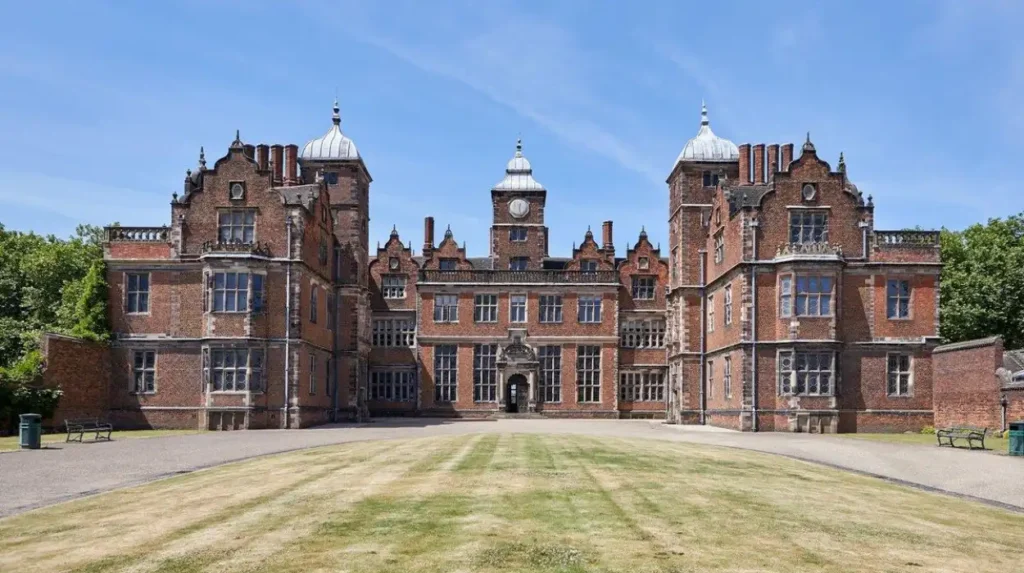
Aston Hall is a major seventeenth-century mansion. Its architecture and collections provide evidence of elite life and domestic organisation during the early modern period.
Blakesley Hall was built in 1590 and is one of Birmingham’s oldest surviving buildings. Birmingham City Council identifies it as a Tudor hall providing insight into Elizabethan life and architecture.
Sarehole Mill represents another part of Birmingham’s industrial history. Water power played an important role in pre-modern and early industrial production, making historic mills valuable evidence for studying technological change.
Soho House provides a direct connection with Matthew Boulton. Boulton lived there from 1766 to 1809, and the house became a meeting place for the Lunar Society. Members included James Watt, Joseph Priestley, Erasmus Darwin and Josiah Wedgwood.
The Soho Manufactory itself has been demolished, but archaeological investigations discovered surviving foundations and industrial remains below later development. These remains demonstrate the value of archaeology when above-ground industrial buildings disappear.
Weoley Castle provides archaeological evidence of medieval Birmingham. Together, these sites demonstrate that Birmingham’s history extends from medieval settlement through Tudor domestic architecture, Georgian industry and modern urban development.
Which Birmingham venues are suitable for a cultural weekend evening?
Birmingham’s cultural venues make weekend evenings part of the city’s history because music, theatre and performance developed alongside industrial prosperity. Town Hall opened in 1834, while Symphony Hall opened in 1991, showing how Birmingham’s cultural infrastructure spans two centuries overall.
Birmingham’s cultural history is closely connected with its economic development.
Town Hall opened in 1834 and became one of the city’s principal public venues. Its later history includes performances by major twentieth-century popular musicians, including Buddy Holly, The Rolling Stones and Black Sabbath.
Symphony Hall represents a much later stage of cultural investment. The 2,262-seat concert hall opened in April 1991 and received its official opening in June 1991. Its interior design drew inspiration from major European concert halls.
The City of Birmingham Symphony Orchestra also forms part of the city’s musical infrastructure. Birmingham’s concert culture demonstrates how cultural institutions developed alongside changing patterns of urban life.
The Birmingham Rep provides another important theatrical connection. The city’s performing arts infrastructure has helped establish Birmingham as a major regional cultural centre.
Weekend evenings can therefore extend a historical itinerary beyond museums and architecture. Concerts, theatre performances and cultural programmes provide evidence of how the city continues to use its historic and modern venues.
Current programmes vary throughout the year. Visitors should check official venue schedules before planning a specific performance.
Which parks provide historical and outdoor activities in Birmingham?
Public parks and open spaces add environmental and social history to a Birmingham weekend. Parks such as Cannon Hill Park, Sutton Park and Victoria Park in nearby Smethwick preserve recreational landscapes shaped by urban growth, municipal planning and public health.
Birmingham’s parks form an important part of its social history.
The development of public parks became increasingly important during nineteenth-century urbanisation. Industrial cities faced problems associated with population density, pollution and limited access to open space.
Municipal parks provided recreation and supported changing ideas about public health.
Cannon Hill Park is one of Birmingham’s best-known public parks. Its landscape includes gardens, open lawns, water features and recreational areas.
Sutton Park provides a substantially larger landscape and contains ecological, archaeological and recreational features. Its size makes it useful for combining outdoor activity with environmental history.
Victoria Park in Smethwick provides another example of the relationship between urban growth and public recreation.
These parks are relevant to historical study because they demonstrate that urban development was not limited to factories and commercial buildings. Municipal authorities also shaped landscapes intended for leisure and community use.
A weekend park visit therefore adds environmental context to an otherwise urban itinerary.
The historical value of parks also depends on preservation. Mature landscapes, historic features and established boundaries provide evidence of earlier approaches to recreation and municipal planning.
How do Birmingham’s shopping, food and entertainment districts connect with history?
Birmingham’s modern commercial districts reflect the commercial forces that shaped its historic growth. Markets, independent businesses, regenerated industrial areas and retail streets provide present-day activities while remaining connected to Birmingham’s traditions of manufacture, trade, migration and entrepreneurship today.
Birmingham’s commercial identity developed from its manufacturing economy.
The city historically supported large numbers of small producers and specialist workshops. This commercial diversity created networks of suppliers, manufacturers, traders and customers.
Modern shopping districts continue the city’s long tradition of commercial activity.
The Bullring area represents one of Birmingham’s most significant retail locations. Its present form differs substantially from earlier markets, but the wider area has long been associated with commerce.
Markets remain important for understanding Birmingham’s trading culture. Food businesses also demonstrate the city’s demographic development.
Migration has transformed Birmingham’s cultural and commercial landscape. Communities from the Caribbean, South Asia, Ireland and other regions have contributed to the city’s food, music, retail and social traditions.
The Jewellery Quarter provides another example of commercial continuity. Historic manufacturing premises now accommodate contemporary businesses and cultural uses.
Canal-side regeneration provides a further example of adaptive reuse. Former industrial waterways and warehouse areas have become locations for hospitality, offices, entertainment and leisure.
These changes demonstrate an important principle in urban history: historic infrastructure does not disappear when its original economic function ends. Buildings and spaces can acquire new functions while retaining physical evidence of earlier periods.
How should visitors plan a Birmingham weekend around history and geography?
A strong Birmingham weekend works best when activities are arranged geographically and historically rather than as an unrelated checklist. Combining civic landmarks with canals, museums, the Jewellery Quarter and one outer heritage destination creates a coherent route through Birmingham’s development.
A two-day itinerary can begin with Birmingham’s civic centre.
Victoria Square, Birmingham Town Hall, Council House, Birmingham Museum & Art Gallery and Cathedral Square form a logical first section. These sites establish the city’s civic, religious and cultural history.
The canal network can then provide a transition into industrial Birmingham. Gas Street Basin and nearby waterways demonstrate how transportation infrastructure shaped manufacturing and later regeneration.
The Jewellery Quarter provides a second industrial focus. Its workshops, streets and museum explain the specialist manufacturing economy that distinguished Birmingham from many other industrial cities.
Thinktank provides a scientific and technological dimension. Its transport collections connect the city’s industrial history with engineering and manufacturing.
A second day can focus on a historic property such as Aston Hall, Blakesley Hall or Sarehole Mill. Soho House provides an additional intellectual and industrial context, although Birmingham Museums currently states that Soho House is closed because of maintenance issues.
The route should allow sufficient time for individual sites. Museums contain extensive collections, while historic districts require walking time.
This approach also reduces repetition. Each destination contributes a distinct historical period or theme.
Why do Birmingham’s weekend activities matter for heritage preservation?
Birmingham’s weekend attractions have historical value because many preserve physical evidence of industrialisation, civic reform, migration, technological change and cultural production. Visiting these places supports heritage education while showing how historic buildings, waterways, collections and public spaces shape Birmingham’s identity.
Heritage preservation depends on maintaining both physical structures and historical knowledge.
Birmingham’s canals preserve evidence of eighteenth-century industrial transportation. The Jewellery Quarter preserves manufacturing buildings and street patterns. Historic houses preserve domestic architecture. Museums preserve objects that no longer survive in everyday use.
Archaeology provides another layer of evidence. The former Soho Manufactory demonstrates this clearly. Although the factory disappeared above ground, archaeological excavation identified surviving foundations, production areas and an engine-drive tunnel.
Museums also preserve intangible connections by documenting people, occupations, technologies and communities.
Birmingham Museums currently operates nine venues, although opening arrangements differ between sites. Its network includes major collections covering art, science, industrial heritage, archaeology and social history.
This preservation network has educational significance. Students can compare written records with buildings and artefacts. Genealogical researchers can investigate occupations and neighbourhoods. Heritage specialists can examine building conservation and adaptive reuse.
For tourists, these sites provide structured access to Birmingham’s past. For residents, they demonstrate how familiar streets and buildings developed.
The long-term historical relevance of Birmingham’s weekend activities therefore lies in continuity. The city’s industrial infrastructure, civic buildings, museums, parks and cultural venues remain part of an active urban environment.
Birmingham’s best weekend activities are consequently not separate from its history. They are practical ways to examine the processes that created the modern city. A weekend itinerary combining museums, canals, historic architecture, industrial districts, cultural venues and public parks provides a detailed introduction to Birmingham’s development from market town to major industrial and cultural centre.
Frequently Asked Question
What are the best weekend activities in Birmingham?
Birmingham offers historic landmarks, museums, canals, parks, cultural venues and heritage districts. Popular options include Birmingham Museum & Art Gallery, Thinktank, the Jewellery Quarter, Gas Street Basin, Birmingham Town Hall and Aston Hall.