Birmingham is widely recognised for landmarks such as the uk/local/bullring/">Bullring, Cadbury World, and the Library of Birmingham. However, the city’s deeper identity is preserved in overlooked streets, historic cemeteries, surviving industrial landscapes, medieval remains, hidden waterways, and specialist museums that reveal more than 1,000 years of urban development. Exploring these lesser-known places provides a richer understanding of Birmingham’s history, innovation, architecture, and cultural evolution beyond its best-known visitor attractions.
- Why should visitors explore unusual places in Birmingham beyond the famous attractions?
- What makes Birmingham’s canal network one of the city’s most unusual historical experiences?
- Why is the Jewellery Quarter more than a shopping district?
- How does Birmingham’s medieval history survive beneath the modern city?
- Why is Sarehole Mill one of Birmingham’s most significant hidden heritage sites?
- What unusual museums reveal Birmingham’s scientific and industrial achievements?
- Why is Digbeth considered Birmingham’s historic creative district?
- How do Birmingham’s historic churches reveal the city’s religious and architectural development?
- What can visitors learn from Birmingham’s historic cemeteries?
- Why are Birmingham’s historic pubs important heritage landmarks?
- How did Birmingham become a global centre of industrial innovation?
- How is Birmingham preserving its hidden historical places for future generations?
Why should visitors explore unusual places in Birmingham beyond the famous attractions?
Exploring Birmingham’s lesser-known historic sites reveals the city’s industrial origins, medieval heritage, scientific innovation, religious diversity, and social history. These places preserve authentic evidence of Birmingham’s transformation from a small medieval market settlement into Britain’s second-largest city through architecture, archaeology, canals, manufacturing, and community development.
Most visitors concentrate on Birmingham’s modern shopping districts and entertainment venues. The city’s lesser-known destinations present a different perspective. They document more than a millennium of continuous development, from Anglo-Saxon settlement through medieval trade, the Industrial Revolution, Victorian civic expansion, twentieth-century reconstruction, and modern regeneration.
Many unusual attractions remain active heritage sites rather than reconstructed displays. Historic churches continue to hold services. Canal tunnels remain operational. Former factories now operate as museums, creative spaces, or educational institutions. These surviving environments provide direct physical links with Birmingham’s historical development.
Unlike purpose-built tourist attractions, these locations preserve original structures, archaeological evidence, and authentic industrial landscapes. Their historical integrity makes them valuable for educators, heritage researchers, genealogists, and cultural tourists interested in Britain’s urban history.
What makes Birmingham’s canal network one of the city’s most unusual historical experiences?
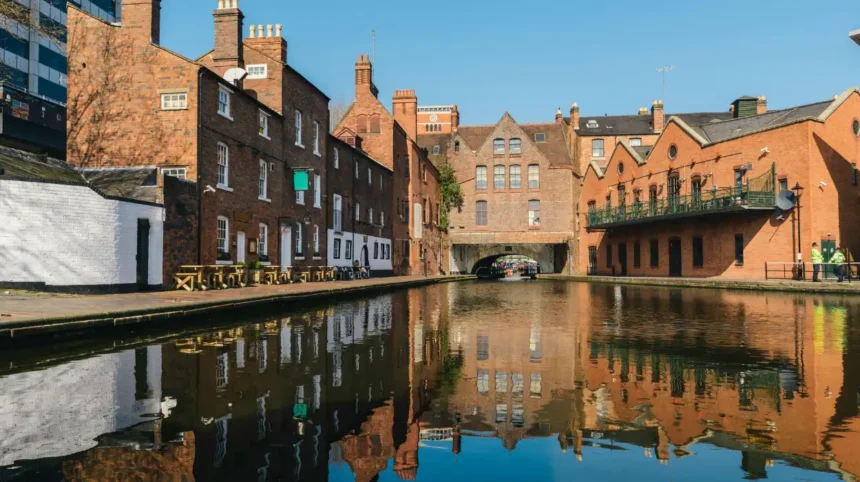
Birmingham’s canal system represents one of Britain’s largest surviving industrial transport networks. More than 100 miles of navigable waterways connected factories, mines, warehouses, and markets, making canals essential infrastructure during the Industrial Revolution and preserving remarkable engineering heritage today.
Birmingham’s canals began with the Birmingham Canal opening in 1769. Designed primarily to transport coal, the waterways dramatically reduced fuel costs for local industries. Additional canals followed rapidly throughout the late eighteenth century and nineteenth century, creating an extensive interconnected navigation system.
Explore the hidden canal tunnels
The canal tunnels beneath Birmingham demonstrate sophisticated eighteenth-century engineering. Structures including the Lapal Tunnel and Dudley Tunnel illustrate how engineers overcame difficult geological conditions before modern excavation technology existed.
Boat trips through surviving tunnels provide rare opportunities to observe original brickwork, ventilation shafts, towpaths, and construction methods that remain largely unchanged since the Industrial Revolution.
Discover the historic canal junctions
Gas Street Basin served as one of Britain’s busiest inland ports during the nineteenth century. Warehouses, wharves, lock systems, and commercial buildings clustered around the junction where several canals met.
The basin illustrates how water transport shaped Birmingham’s economic expansion by moving raw materials including coal, iron, timber, and limestone alongside manufactured goods destined for domestic and international markets.
Why is the Jewellery Quarter more than a shopping district?
The Jewellery Quarter preserves one of Europe’s best surviving industrial neighbourhoods, where workshops, factories, cemeteries, churches, and residential streets collectively document more than 250 years of specialised manufacturing, skilled craftsmanship, and urban industrial development.
Established during the eighteenth century, the Jewellery Quarter became internationally recognised for producing jewellery, silverware, medals, and precision metal goods. By the early twentieth century, the district employed tens of thousands of skilled workers across hundreds of individual workshops.
Many historic buildings continue operating within their original industrial premises, maintaining remarkable continuity between Birmingham’s manufacturing past and present.
Visit historic manufacturing workshops
The Museum of the Jewellery Quarter occupies the former Smith & Pepper jewellery factory, which closed in 1981 after operating continuously for more than 80 years. Machinery, tools, offices, and workbenches remain largely unchanged, preserving an authentic manufacturing environment.
Visitors gain insight into traditional production techniques including casting, engraving, polishing, stone setting, and electroplating that characterised Birmingham’s precision industries.
Explore Key Hill Cemetery and Warstone Lane Cemetery
These Victorian cemeteries preserve monuments commemorating industrialists, scientists, artists, civic leaders, and military personnel connected with Birmingham’s development.
Their funerary architecture reflects nineteenth-century artistic trends while documenting the city’s social history through inscriptions, memorial symbolism, and burial records valuable for genealogical research.
How does Birmingham’s medieval history survive beneath the modern city?
Although extensive redevelopment transformed Birmingham during the nineteenth century and twentieth century, important medieval remains survive through churches, archaeological excavations, street layouts, historic buildings, and preserved artefacts that document the city’s origins as a market settlement established before the Norman Conquest.
Birmingham received its market charter in 1166 from Peter de Birmingham. This charter accelerated commercial development and established the settlement as an important regional trading centre.
Archaeological investigations continue revealing evidence of medieval housing, workshops, roads, pottery production, and commercial activity beneath the modern city.
Visit St Martin’s Church
St Martin’s Church stands beside the Bullring and represents one of Birmingham’s oldest continuously occupied religious sites.
Although extensively restored during the Victorian period, archaeological evidence indicates Christian worship existed on the site before the Norman Conquest. The church preserves medieval architectural features alongside nineteenth-century restoration work.
Follow the medieval street pattern
Several modern streets retain alignments established during Birmingham’s medieval expansion. Street layouts surrounding Digbeth, High Street, and the Bullring reflect centuries of commercial development rather than modern planning.
These surviving urban patterns help historians reconstruct Birmingham’s growth from a small market settlement into an important manufacturing centre.
Why is Sarehole Mill one of Birmingham’s most significant hidden heritage sites?
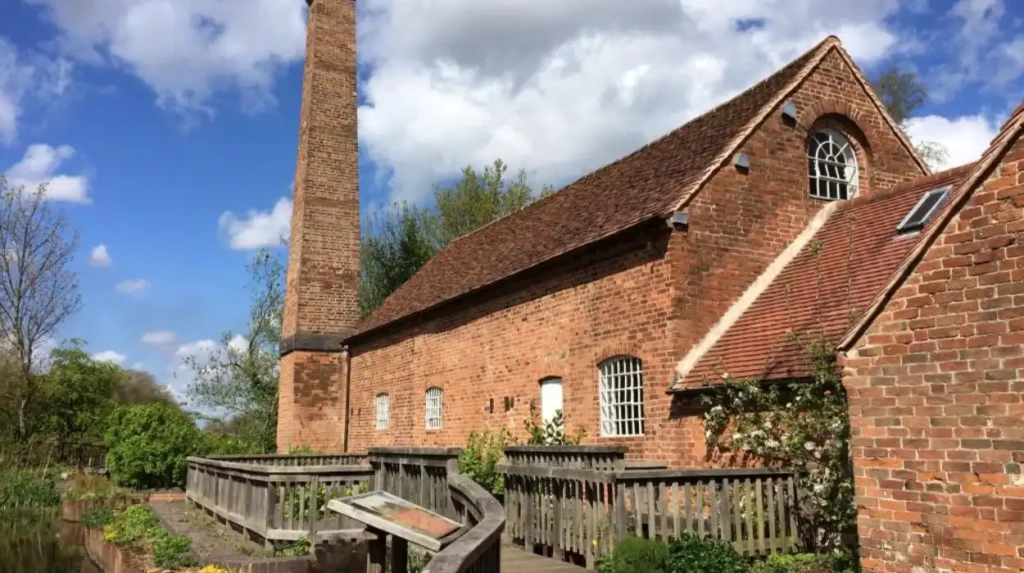
Sarehole Mill preserves an eighteenth-century working watermill that demonstrates traditional flour production, rural industry, and the landscape that inspired author J.R.R. Tolkien during his childhood in Birmingham, connecting industrial history with literary heritage.
The present mill dates primarily from the eighteenth century, although milling activity existed on the site much earlier.
Powered by water from the River Cole, the mill produced flour while supporting Birmingham’s expanding food supply before steam-powered industrialisation transformed manufacturing.
The mill also gained literary significance because nearby rural landscapes influenced Tolkien’s descriptions of the Shire in The Lord of the Rings.
Working machinery demonstrates traditional milling processes using water wheels, millstones, gears, and grain storage systems that illustrate pre-industrial manufacturing technology.
What unusual museums reveal Birmingham’s scientific and industrial achievements?
Several specialist museums preserve Birmingham’s internationally important contributions to manufacturing, transport, medicine, science, and engineering through original collections, working machinery, archival documents, and preserved industrial buildings spanning multiple centuries.
Birmingham’s economy diversified beyond metalworking into scientific instruments, transport engineering, medical research, printing, and technological innovation.
These specialist museums explain how industrial knowledge transferred between generations while supporting Britain’s wider economic development.
Birmingham Back to Backs
These restored nineteenth-century courtyard houses preserve working-class domestic life across multiple generations.
Original interiors, household objects, workshops, and living spaces illustrate changing housing conditions from the Industrial Revolution through the twentieth century.
Thinktank collections
Beyond its family exhibits, Thinktank preserves historically significant locomotives, aircraft, steam engines, scientific instruments, and manufacturing equipment documenting Britain’s technological progress.
Collections explain Birmingham’s role in engineering innovation, transportation development, and scientific education.
Why is Digbeth considered Birmingham’s historic creative district?
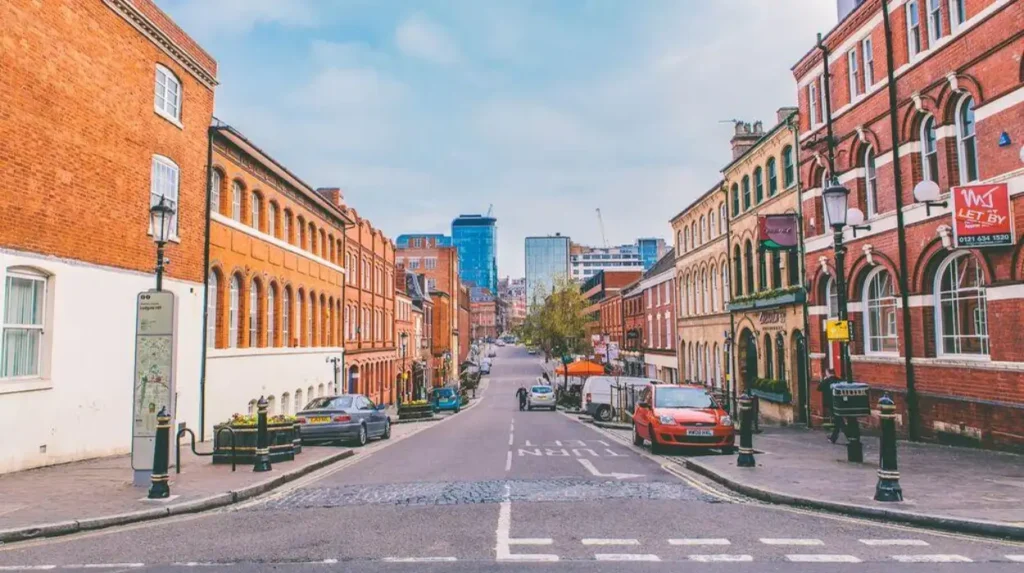
Digbeth combines medieval origins, nineteenth-century industry, Victorian architecture, railway engineering, and modern creative industries within one neighbourhood, preserving layers of Birmingham’s economic and cultural transformation over more than 800 years.
Digbeth developed outside Birmingham’s medieval core before becoming an important industrial district during the nineteenth century.
Warehouses, railway viaducts, factories, and commercial buildings survive alongside contemporary creative businesses occupying adapted industrial premises.
This continuity demonstrates adaptive reuse rather than wholesale demolition, preserving architectural evidence from successive historical periods.
To experience this historic landmark in person today, consult our comprehensive [How to Discover Unique Birmingham Experiences Away From Crowds] for itineraries and visiting parameters.
How do Birmingham’s historic churches reveal the city’s religious and architectural development?
Historic churches across Birmingham document changing architectural styles, expanding populations, religious reform, and civic patronage from the medieval period through the Victorian era, preserving important examples of Gothic, Georgian, and Victorian ecclesiastical architecture.
Population growth during industrialisation required numerous new churches serving expanding residential districts.
These buildings illustrate evolving construction methods, decorative styles, and community organisation across different historical periods.
St Paul’s Church within the Jewellery Quarter represents outstanding Georgian architecture, while St Philip’s Cathedral combines Baroque influences with significant stained-glass windows designed by Edward Burne-Jones, a Birmingham-born artist associated with the Pre-Raphaelite movement.
Church archives also preserve baptism, marriage, and burial records valuable for family historians tracing Birmingham ancestors.
What can visitors learn from Birmingham’s historic cemeteries?
Historic cemeteries function as open-air archives documenting Birmingham’s industrial expansion, demographic change, public health reforms, military service, artistic achievement, and civic leadership through monuments, inscriptions, landscape design, and burial records spanning more than two centuries.
Victorian cemetery planning reflected changing attitudes towards public health and urban development.
Monumental sculpture, symbolic carvings, and architectural chapels demonstrate nineteenth-century artistic traditions while preserving biographies of prominent residents.
Military memorials commemorate participants in conflicts including the Crimean War, both World Wars, and later military service.
Burial registers provide valuable historical evidence for genealogists researching Birmingham families across multiple generations, including industrial workers, business owners, religious leaders, and civic officials.
Why are Birmingham’s historic pubs important heritage landmarks?
Historic public houses preserve original architecture, decorative interiors, brewing traditions, and community history while illustrating the social importance of licensed premises within Birmingham’s commercial and industrial development from the eighteenth century onward.
Many historic pubs originated as coaching inns serving travellers before railway expansion transformed transport.
Others developed alongside factories, providing meeting places for workers, trade unions, business owners, and community organisations.
Buildings frequently retain original timber interiors, decorative tiles, stained glass, carved bars, and Victorian architectural detailing rarely preserved elsewhere.
Several pubs also hosted political meetings, charitable organisations, literary societies, and local campaigns influencing Birmingham’s civic development.
How did Birmingham become a global centre of industrial innovation?
Birmingham became a global manufacturing leader through skilled craftsmanship, technological innovation, entrepreneurial investment, canal transport, railway expansion, and educational development that collectively supported continuous industrial growth from the eighteenth century through the twentieth century.
Unlike many industrial cities specialising in one sector, Birmingham developed a remarkably diversified manufacturing economy.
Industries included jewellery, firearms, buttons, bicycles, scientific instruments, steam engines, electrical equipment, brassware, and automotive engineering.
Inventors, engineers, and manufacturers collaborated through organisations including the Lunar Society, whose members advanced scientific understanding during the eighteenth century.
Industrial expansion stimulated population growth, infrastructure investment, educational reform, and municipal governance, establishing Birmingham as Britain’s second city.
Surviving factories, warehouses, workshops, canals, and civic buildings collectively preserve this industrial legacy while supporting heritage tourism and historical research.
How is Birmingham preserving its hidden historical places for future generations?
Birmingham protects many overlooked heritage sites through conservation legislation, museum interpretation, archaeological investigation, listed building status, adaptive reuse projects, and partnerships between local authorities, universities, charities, and community organisations dedicated to long-term preservation.
Historic England, Birmingham City Council, heritage trusts, museums, universities, and volunteer groups contribute to documenting, restoring, and interpreting the city’s historic environment.
Archaeological investigations continue before major construction projects, recovering artefacts that improve understanding of Birmingham’s medieval and industrial development.
Adaptive reuse has become an important preservation strategy. Former factories, warehouses, mills, and commercial buildings now accommodate museums, offices, educational institutions, housing, and creative industries while retaining significant architectural features.
Digital archives increasingly preserve maps, photographs, manufacturing records, parish registers, newspapers, and oral histories, expanding public access to Birmingham’s historical resources.
These preservation initiatives ensure that Birmingham’s lesser-known heritage remains accessible not only to tourists but also to educators, researchers, students, genealogists, and future generations seeking to understand one of Britain’s most influential industrial cities.
Rather than existing solely as isolated attractions, Birmingham’s unusual historic places collectively explain how geography, commerce, engineering, religion, manufacturing, architecture, and community life shaped the modern city.
Exploring these locations offers a comprehensive understanding of Birmingham’s evolution that extends far beyond its most famous visitor destinations, revealing an urban landscape where medieval foundations, industrial innovation, and cultural heritage continue to coexist within the contemporary city.
What are the most unusual things to do in Birmingham?
Some of Birmingham’s most unusual experiences include exploring the historic canal network, visiting the Museum of the Jewellery Quarter, touring Sarehole Mill, discovering the Birmingham Back to Backs, walking through Digbeth’s industrial heritage, and exploring Victorian cemeteries such as Key Hill Cemetery and Warstone Lane Cemetery.