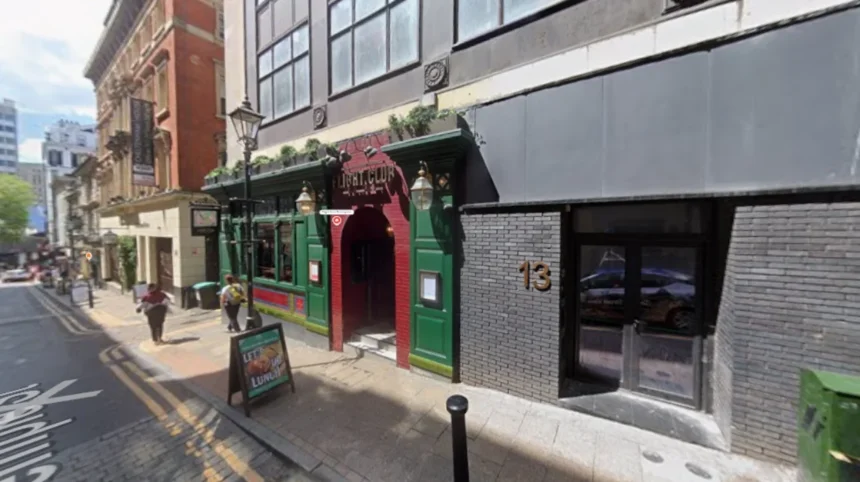
Selecting a commercial space for live performances, corporate events, or social gatherings requires evaluating spatial capacities, municipal licensing regulations, acoustic profiles, and regional transport infrastructure. Birmingham hosts approximately 348 live music and event spaces across its B-postcode boundary.
- What Factors Determine Venue Capacity Requirements in Birmingham?
- How Does Location and Accessibility Impact Venue Selection in Birmingham?
- What Technical and Acoustic Infrastructure Is Necessary for Live Events?
- How Do Licensing, Security, and Curfew Regulations Apply to Birmingham Venues?
- What Are the Financial and Contractual Considerations When Renting a Venue?
- What is the average cost to rent a medium-sized event venue in Birmingham?
- How far in advance should I book a major entertainment venue in Birmingham?
- Do I need a separate alcohol license if the venue already has one?
- What is the difference between dry hire and full-service venue hire?
- Are there specific sound restrictions for outdoor venues in Birmingham city center?
Venue options range from multi-thousand-seat arenas to intimate independent spaces in industrial quarters. Event organizers must align attendance projections, staging logistics, and catering requirements with venue specifications to ensure regulatory compliance and operational efficiency.
The West Midlands region functions as a central entertainment hub in the United Kingdom, supported by high-density rail links and specialized municipal zones. The city features distinct entertainment districts, including the central business district, the Digbeth creative quarter, and the Westside canal corridor.
Evaluating prospective properties involves verifying health and safety standards, acoustic dampening systems, disabled access provisions, and local authority entertainment licenses. Understanding structural capacities and technical infrastructure enables organizers to secure sites that meet technical riders, security protocols, and financial parameters.
What Factors Determine Venue Capacity Requirements in Birmingham?
Selecting the correct capacity requires calculating maximum attendance, floor layout configurations, fire safety regulations, and spatial needs for staging or catering equipment. Overestimating space increases rental expenses, while underestimating causes severe overcrowding and breach of local municipal safety licenses.
Event spaces in Birmingham are classified by total floor area and maximum safe occupancy thresholds governed by the Birmingham City Council Licensing Committee. Small spaces accommodate up to 100 attendees, medium sites hold between 100 and 500 guests, and large-scale complexes host over 1,000 visitors.
Organizers must match spatial footprints with event types, accounting for seated, cabaret, or standing configurations. For example, standing concert halls like The Castle & Falcon in Balsall Heath accommodate 400 standing guests, whereas cabaret seating reduces total capacity down to 120 individuals.
Spatial calculations require a minimum allocation of 0.5 square metres per person for standing crowds and 1.5 square metres per person for seated dining configurations. High-occupancy events require verified emergency egress routes, compliant fire exit widths, and adequate sanitary facilities proportional to guest volume.
Large-scale installations, such as those hosted at the National Exhibition Centre (NEC) or the International Convention Centre (ICC), utilize flexible hall partitions to modify spatial bounds dynamically. Failure to align ticket sales with licensed capacity limits can trigger immediate closure by West Midlands Fire Service inspectors.
Organizers must evaluate back-of-house areas, including green rooms, storage space, dressing quarters, and production offices, alongside guest floor space. Venue operators provide maximum capacity certificates that dictate strict crowd density limits under the Licensing Act 2003.
Calculating operational footprint margins prevents logistical bottlenecks at bar areas, cloakrooms, and entrance turnstiles. Selecting an appropriately scaled room ensures optimal room energy while maintaining compliance with statutory health and safety guidelines across all local venues.
How Does Location and Accessibility Impact Venue Selection in Birmingham?
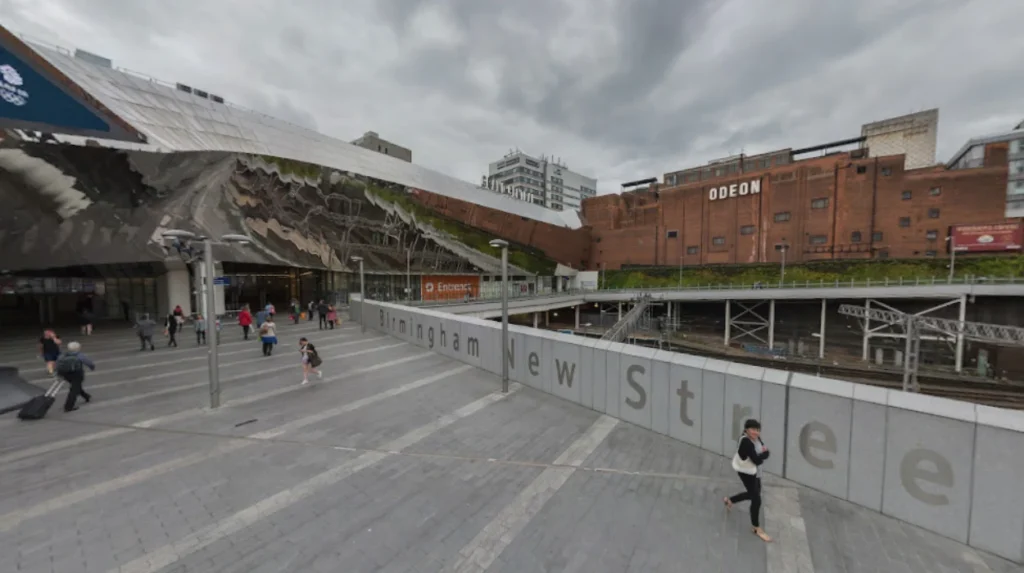
Transit accessibility, proximity to major railway hubs, parking availability, and pedestrian pathways directly dictate guest attendance rates, arrival logistics, and overall event success. Central venues near major transport interchanges minimize travel friction for national and international attendees.
Birmingham serves as a primary national transit node, connected by three main railway stations: Birmingham New Street, Moor Street, and Snow Hill. Venues situated within the B1 to B4 postcode sectors provide immediate access to intercity rail connections, light rail Midland Metro networks, and regional bus routes.
Properties located in the city center, such as the Town Hall or Symphony Hall, benefit from direct pedestrian routes from New Street Station. Suburban or industrial venues require additional considerations, such as dedicated shuttle services, taxi pick-up zones, or adjacent multi-story parking facilities.
District character heavily influences audience accessibility and event atmosphere across the West Midlands metropolitan area. The Digbeth district contains converted Victorian warehouses and industrial sites best suited for music festivals, creative exhibitions, and late-night nightlife events.
Conversely, the Westside district along Broad Street offers purpose-built conference spaces, luxury hotel suites, and high-capacity theatres supported by extensive canal-side hospitality infrastructure. Evaluating local vehicle access routes is vital for production trucks carrying heavy staging, lighting rigs, and sound equipment into central urban pedestrian zones.
Accessibility compliance under the Equality Act 2010 requires non-discriminatory physical entry for all attendees, staff, and performers. Venues must feature step-free access, automated doors, passenger elevators, accessible sanitary facilities, and integrated hearing loop systems. Parking facilities must include designated accessible bays within close proximity to main audience entrances. Assessing local traffic congestion patterns during peak hours ensures realistic scheduling for load-in procedures, guest arrivals, and late-night venue egress.
What Technical and Acoustic Infrastructure Is Necessary for Live Events?
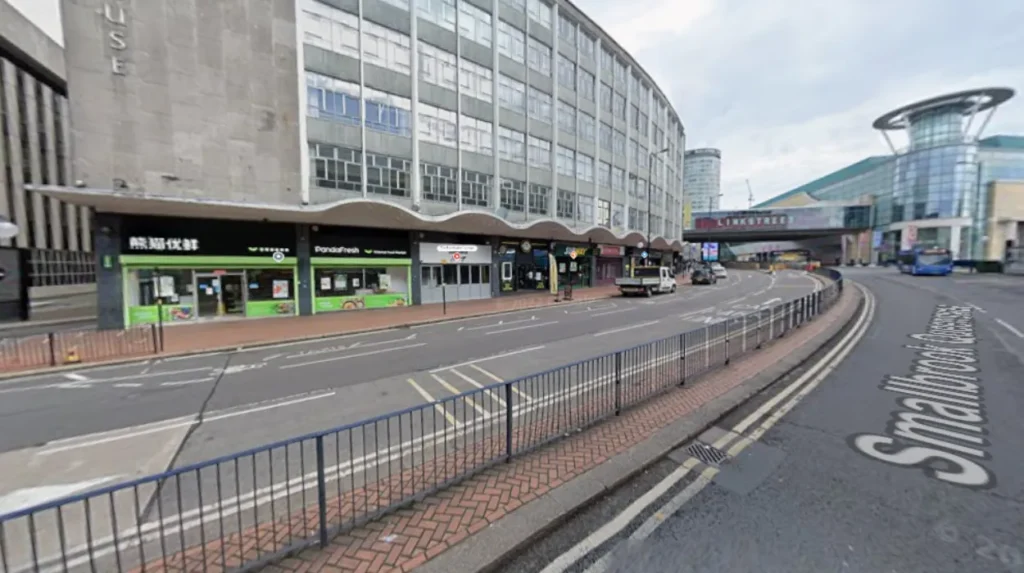
Live performance venues require specialized technical infrastructure, including high-voltage power supplies, certified rigging points, sound attenuation treatment, and modern audiovisual systems. Matching venue technical specifications to performer production riders avoids costly equipment rentals and structural installation delays.
Acoustic performance depends on structural design, wall insulation, ceiling height, and sound control systems installed within the building. Purpose-built auditoriums like Symphony Hall feature adjustable acoustic canopies and reverberation chambers engineered for acoustic clarity.
Conversely, converted industrial spaces require internal acoustic baffling and digital sound limiters to prevent audio distortion and maintain compliance with local environmental noise pollution regulations. Sound limiters automatically cut main power if decibel levels breach thresholds set by Environmental Health officers.
Electrical infrastructure must support substantial power draws required by modern stage lighting, LED video walls, and high-output sound reinforcement systems. Commercial spaces should provide three-phase power supplies, typically 32-amp, 63-amp, or 125-amp connections, located close to the main stage area. Venues lacking adequate internal power require external generator deployment, increasing overall production costs and requiring external fuel storage permits. Technical managers must verify the total weight-bearing capacity of ceiling trusses and load-bearing beams before suspending heavy lighting grids or speaker arrays.
In-house technical support and audiovisual inventory significantly reduce third-party supplier logistics and equipment haulage fees. Premier venues offer pre-installed lighting rigs, digital mixing consoles, projection systems, and high-speed fiber-optic data lines for live broadcasting. Venues with dedicated technical stage crews streamline load-in, soundcheck, and strike operations. Confirming technical compatibility between venue systems and artist production specifications ensures seamless execution without requiring structural modifications.
How Do Licensing, Security, and Curfew Regulations Apply to Birmingham Venues?
Operating an entertainment venue requires strict adherence to Premises Licenses issued under the Licensing Act 2003, governing alcohol sales, live music performance hours, security staffing ratios, and noise abatement conditions set by municipal authorities.
Every commercial event space operates under a Premises License that specifies permissible operating hours, maximum guest numbers, and regulated activities. Venues without a permanent license require a Temporary Event Notice (TEN) submitted to Birmingham City Council and West Midlands Police at least ten working days prior to the event date.
TENs are restricted to events hosting fewer than 500 people simultaneously and are capped at a limited number of applications per site annually. Larger gatherings must operate strictly within established, fully licensed commercial properties to avoid legal shutdowns.
Security requirements are dictated by risk assessments and license conditions, specifying Security Industry Authority (SIA) licensed personnel ratios per guest count. Standard regulations typically mandate one SIA-licensed security officer per 100 guests, with higher ratios required for late-night alcohol-focused events or high-profile public appearances.
Venues must maintain functional closed-circuit television (CCTV) coverage across entry points, bar areas, and main event floors, with footage retained for a minimum of 31 days for law enforcement inspection. Security plans must also incorporate bag search protocols, metal detection sweeps, and crowd management barriers.
Curfew regulations limit outdoor noise emissions and late-night operational hours, particularly for venues situated near residential areas. Central zones like Digbeth and Broad Street operate under specific late-night levy guidelines, allowing entertainment licenses to extend until early morning hours under strict noise control parameters.
Venues near housing developments enforce strict terminal hours for live music, often requiring sound isolation lobbies at exit doors. Compliance with health, safety, and fire regulations prevents municipal fines, license revocations, or emergency event cancellations.
What Are the Financial and Contractual Considerations When Renting a Venue?
Venue rental agreements involve evaluating base hire fees, minimum food and beverage spend thresholds, security surcharges, technical staffing costs, and mandatory cancellation clauses. Transparent financial assessment prevents budget overruns caused by hidden operational surcharges.
Pricing models for entertainment venues in Birmingham vary between flat hire fees, minimum spend commitments, and ticket sales revenue splits. Flat hire fees secure the physical space for a defined duration, covering basic utility usage and basic venue access.
Minimum spend arrangements require the organizer to guarantee a specific gross revenue generated at the venue bar or catering counters. If bar sales fall short of the agreed benchmark, the event organizer must pay the remaining financial balance directly to the venue operator.
Contractual agreements must clearly delineate included services from mandatory add-on costs. Standard hire fees frequently exclude technical staff, box office ticketing integration, post-event cleaning fees, security personnel, and waste management disposal.
\Organizers should request itemized cost breakdowns before signing binding rental contracts. Payment terms typically require a non-refundable deposit upon booking confirmation, ranging from 20 percent to 50 percent of the total contract value, with the final balance due prior to the event date.
Insurance coverage is a non-negotiable legal requirement when entering into commercial venue contracts. Organizers must hold public liability insurance with a minimum indemnity limit of 5 million pounds to cover property damage, personal injury, or third-party claims.
Contracts must contain clear force majeure clauses outlining cancellation rights, refund schedules, and liability limits in cases of extreme weather, utility grid failures, or government-mandated closures. Comprehensive financial planning balances rental expenditures against projected ticket sales, sponsorship packages, and commercial returns.
What is the average cost to rent a medium-sized event venue in Birmingham?
Medium-sized venue hire in Birmingham typically ranges from 1,200 to 3,500 pounds per day for flat hire fees. Alternatively, venues may operate on a minimum food and beverage spend model between 1,500 and 5,000 pounds. Final pricing depends heavily on venue location, day of the week, technical staff requirements, and season.
How far in advance should I book a major entertainment venue in Birmingham?
Major commercial venues in Birmingham should be booked 6 to 12 months in advance for corporate conferences, large concerts, and weekend events. High-demand periods, such as the December holiday season and summer festival months, often require booking up to 18 months in advance. Securing dates early ensures availability and locks in current rental rates.
Do I need a separate alcohol license if the venue already has one?
If the venue possesses a valid Premises License covering alcohol sales, you do not need an additional personal or temporary license. Alcohol sales must strictly follow the conditions, operating hours, and designated premises supervisor regulations outlined in the existing venue license. If hiring a blank-canvas site without a license, you must apply for a Temporary Event Notice.
What is the difference between dry hire and full-service venue hire?
Dry hire provides exclusive use of the physical space without catering, technical equipment, event staff, or decoration included. Full-service venue hire includes integrated audiovisual equipment, dedicated technical operators, security personnel, bar staff, and internal catering operations. Dry hire offers greater creative flexibility but requires managing external vendor logistics.
Are there specific sound restrictions for outdoor venues in Birmingham city center?
Yes, outdoor venues in central Birmingham are subject to strict municipal noise limits enforced by Environmental Health officers. Events must adhere to maximum decibel thresholds and enforced sound curfews, typically requiring music levels to drop significantly or cease entirely by 23:00. Sound insulation barriers and directional directional speakers are frequently required to prevent noise complaints.