Birmingham is one of the United Kingdom’s largest and most diverse cities, with a nightlife scene shaped by centuries of commercial growth, industrial innovation, immigration, and cultural change. Today, the city offers historic pubs, live music venues, theatres, canal-side restaurants, comedy clubs, late-night cafés, and entertainment districts that appeal to visitors with a wide range of interests and budgets.
- Why is Birmingham considered one of Britain’s leading nightlife destinations?
- How has Birmingham’s history shaped its modern nightlife?
- What are Birmingham’s main nightlife districts?
- How can visitors enjoy Birmingham’s nightlife safely?
- How can visitors experience Birmingham’s nightlife without spending large amounts?
- Which historic venues remain important parts of Birmingham’s nightlife?
- How does Birmingham’s transport network support evening travel?
- Why does Birmingham’s multicultural population influence its nightlife?
- What role do canals play in Birmingham’s evening atmosphere?
- How can visitors behave responsibly during Birmingham’s nightlife?
- What makes Birmingham’s nightlife an enduring part of the city’s cultural identity?
Modern Birmingham’s evening economy reflects the city’s transformation from a manufacturing powerhouse during the Industrial Revolution into a leading centre for culture, hospitality, education, and tourism. The city’s nightlife contributes significantly to the West Midlands economy, supporting thousands of businesses and tens of thousands of jobs while attracting millions of visitors every year.
Enjoying Birmingham after dark safely and affordably requires understanding how the city is organised, how public transport operates, where major entertainment districts are located, and how visitors can make informed decisions about spending, personal safety, and responsible travel. This guide explains these elements while placing Birmingham’s nightlife within its broader historical and cultural context.
Why is Birmingham considered one of Britain’s leading nightlife destinations?
Birmingham combines historic public houses, internationally recognised entertainment venues, diverse cultural districts, extensive public transport, and a thriving hospitality industry. Its nightlife reflects centuries of urban development, making evening exploration both culturally significant and accessible across different budgets.
Birmingham developed rapidly during the eighteenth and nineteenth centuries as Britain’s industrial centre. Prosperity generated by metalworking, engineering, jewellery manufacturing, and international trade encouraged the construction of inns, taverns, theatres, assembly rooms, and music halls that became important centres of social life.
During the Victorian period, public houses expanded alongside Birmingham’s growing population. Many historic pubs became community institutions serving factory workers, merchants, craftsmen, and visitors. Several historic establishments continue operating today, preserving architectural features dating from the nineteenth century.
The twentieth century introduced cinemas, concert halls, jazz clubs, and dance venues. Following post-war redevelopment, Birmingham diversified its entertainment economy by investing heavily in cultural institutions, convention facilities, and waterfront regeneration projects.
Today, areas including Broad Street, Brindleyplace, Digbeth, the uk/local/jewellery-quarter/">Jewellery Quarter, the Chinese Quarter, and Southside each contribute distinct evening experiences. Visitors can choose between traditional British pubs, independent breweries, cocktail bars, live music, theatre performances, fine dining, international cuisine, comedy venues, and late-night cultural events.
This diversity allows travellers to tailor their evening according to interests while maintaining reasonable budgets.
How has Birmingham’s history shaped its modern nightlife?
Birmingham’s nightlife evolved from coaching inns, industrial taverns, Victorian theatres, and civic entertainment venues into a modern cultural economy. Historic architecture, canal regeneration, immigration, and creative industries collectively shaped the city’s diverse evening experiences over several centuries.
The earliest evening gathering places in Birmingham centred on coaching inns serving travellers moving between London, Wales, and northern England. These establishments provided accommodation, food, horses, and meeting spaces.
During the Industrial Revolution, Birmingham’s rapidly growing workforce increased demand for licensed premises. Public houses became places where workers relaxed after long factory shifts while discussing trade, politics, and local affairs.
The nineteenth century also witnessed the construction of major civic institutions including theatres, concert halls, and assembly buildings that expanded evening entertainment beyond drinking establishments.
Following industrial decline during the late twentieth century, Birmingham invested in urban regeneration. Canal restoration transformed former industrial waterways into attractive leisure destinations featuring restaurants, cafés, hotels, and waterside bars.
Immigration also played a defining role. Communities from South Asia, the Caribbean, China, the Middle East, and Eastern Europe introduced new culinary traditions and cultural festivals that expanded Birmingham’s evening economy beyond traditional British entertainment.
Today, visitors experience a city where industrial heritage coexists with modern hospitality and multicultural dining.
What are Birmingham’s main nightlife districts?
Broad Street, Brindleyplace, Digbeth, the Jewellery Quarter, Southside, and the Chinese Quarter each offer distinct entertainment experiences. Together they provide historic pubs, live music, restaurants, theatres, and cultural venues serving different audiences throughout the evening.
Broad Street
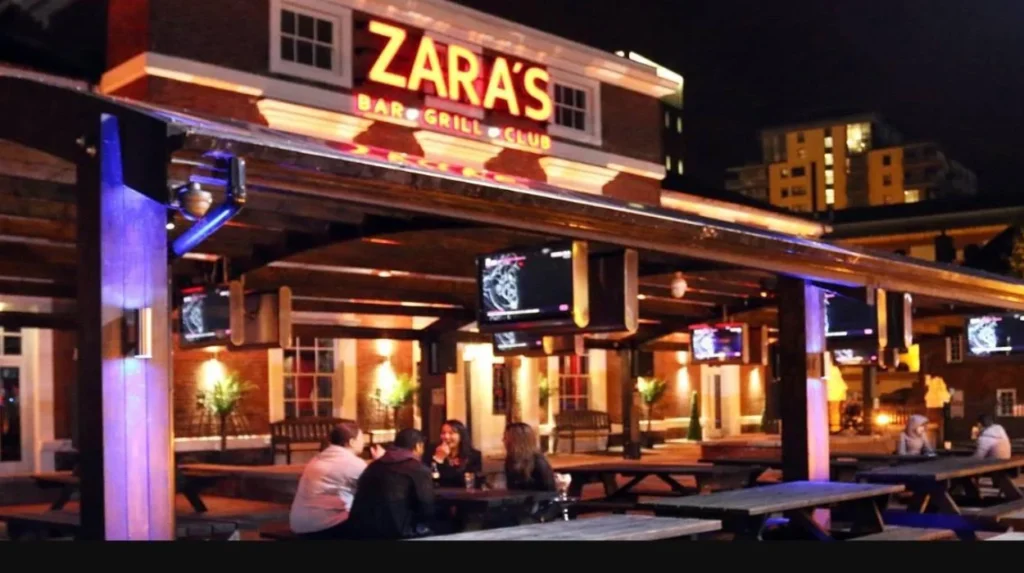
Broad Street is Birmingham’s best-known nightlife destination. It contains numerous bars, restaurants, clubs, hotels, casinos, and entertainment venues within walking distance of one another.
The area benefits from extensive police presence, CCTV coverage, taxi availability, and convenient public transport connections.
Brindleyplace
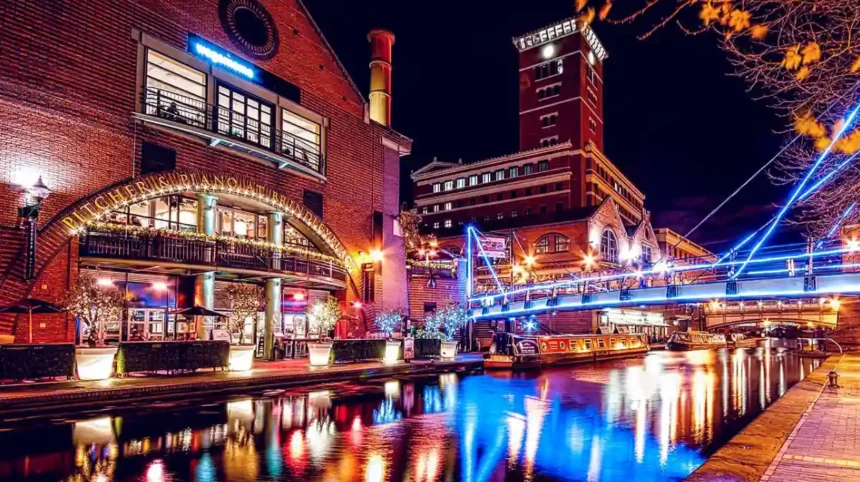
Brindleyplace sits beside Birmingham’s restored canal network. Modern restaurants, waterside cafés, cocktail bars, and office developments occupy former industrial land, illustrating successful urban regeneration.
The district attracts professionals, tourists, and families seeking a more relaxed evening atmosphere.
Digbeth
Digbeth represents Birmingham’s creative quarter. Former industrial warehouses now house independent music venues, art spaces, breweries, food markets, and cultural events.
Historic industrial architecture remains an important feature of the district.
Jewellery Quarter
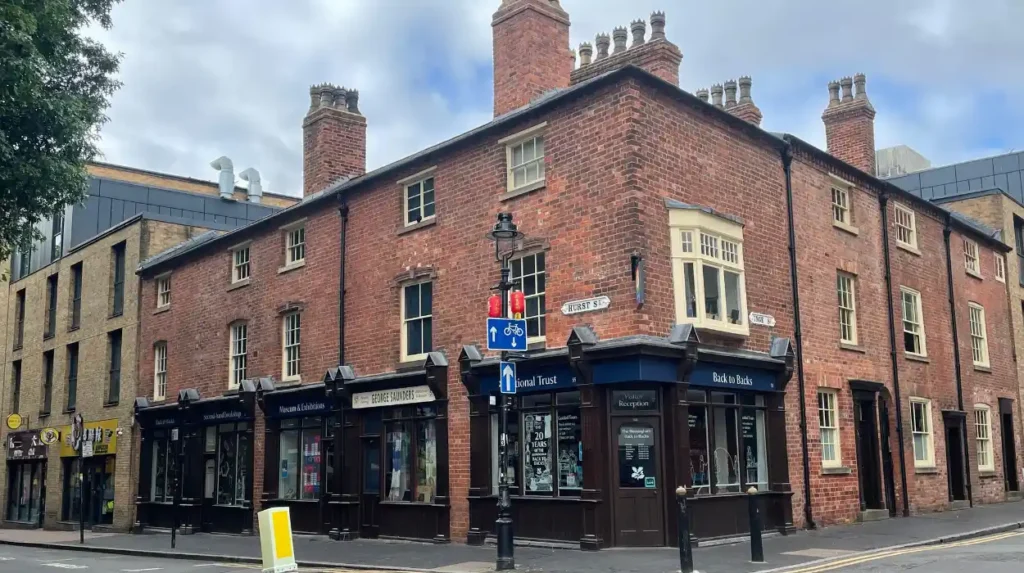
The Jewellery Quarter combines heritage with contemporary hospitality. Historic workshops, traditional pubs, wine bars, and independent restaurants create a quieter nightlife environment compared with Broad Street.
Southside and the Chinese Quarter
These neighbouring districts are known for theatres, Asian restaurants, karaoke venues, cafés, dessert shops, and cultural festivals that continue late into the evening.
How can visitors enjoy Birmingham’s nightlife safely?
Visitors improve personal safety by planning journeys, remaining aware of surroundings, using licensed transport, protecting valuables, travelling with companions where possible, and following local guidance. Birmingham maintains extensive security measures across major entertainment districts and transport hubs.
Safety begins before leaving accommodation. Visitors should understand transport routes, identify nearby taxi ranks, and confirm the location of their hotel before heading out.
Carrying only necessary valuables reduces potential losses. Mobile phones, wallets, and identification should remain securely stored.
Licensed taxis and authorised ride-hailing services provide safer transport than accepting lifts from unofficial drivers.
Major nightlife districts benefit from visible policing, private security staff, CCTV systems, and street lighting. These measures contribute to Birmingham’s reputation as a well-managed city centre destination.
Alcohol should be consumed responsibly. Remaining aware of surroundings and personal belongings reduces opportunities for theft.
Visitors should also respect local regulations regarding public behaviour and alcohol consumption.
How can visitors experience Birmingham’s nightlife without spending large amounts?
Affordable nightlife combines free cultural attractions, historic pubs, budget restaurants, discounted theatre tickets, student offers, public transport, and advance planning. Birmingham provides entertainment options across nearly every price range throughout the year.
Budget-conscious travellers benefit from researching venue promotions before arriving.
Many restaurants offer early evening dining menus that cost significantly less than late-night service.
Historic pubs often provide affordable food alongside locally brewed beers.
Live music venues regularly host emerging artists with relatively inexpensive admission.
Comedy clubs frequently advertise discounted weekday performances.
Independent cafés remain open into the evening, allowing visitors to enjoy Birmingham’s atmosphere without purchasing expensive drinks.
Walking between nearby districts also reduces transport costs while allowing visitors to appreciate Birmingham’s architecture after dark.
To explore the city’s attractions before enjoying its evening entertainment, consult our comprehensive [Top Evening and Nighttime Things to Do in Birmingham] for itineraries and visiting parameters.
Which historic venues remain important parts of Birmingham’s nightlife?
Historic public houses, theatres, concert venues, canalside buildings, and Victorian entertainment spaces preserve Birmingham’s architectural heritage while continuing to serve modern audiences through hospitality, music, dining, and cultural programming across the city centre.
Several historic pubs preserve Victorian interiors featuring decorative woodwork, stained glass, tiled walls, and traditional bars.
Historic theatres continue presenting drama, opera, musicals, ballet, and concerts, maintaining cultural traditions established during the nineteenth century.
Symphony venues have strengthened Birmingham’s international reputation for classical music, attracting renowned orchestras and performers.
Canal-side warehouses converted into restaurants and bars preserve industrial architecture while supporting contemporary leisure.
Together these venues illustrate how adaptive reuse protects historic buildings while supporting sustainable urban development.
How does Birmingham’s transport network support evening travel?
Rail services, trams, buses, pedestrian routes, licensed taxis, and regulated ride-hailing services allow visitors to travel efficiently between nightlife districts. Careful journey planning improves convenience, affordability, and personal safety throughout the evening.
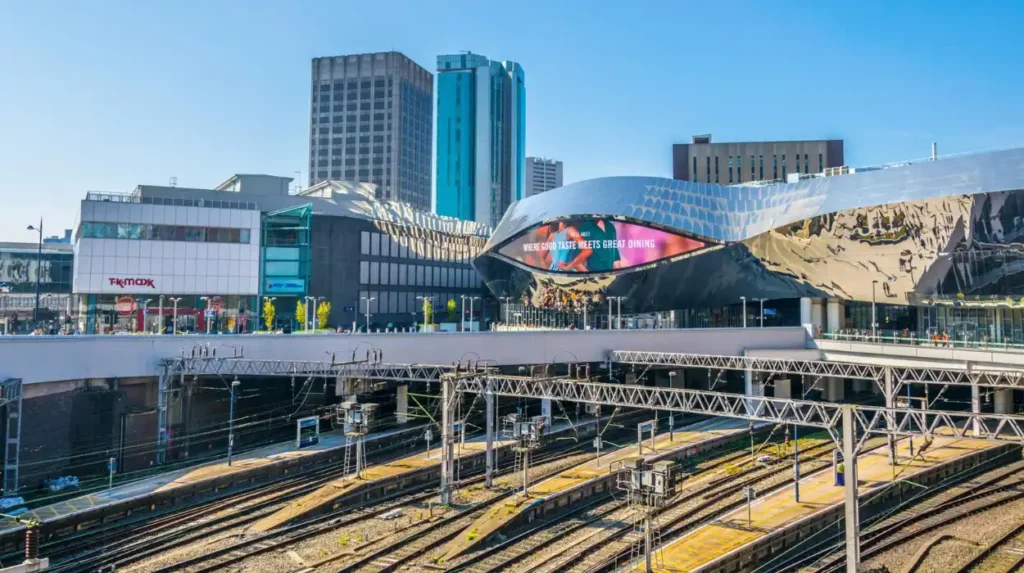
Birmingham New Street Station serves as the city’s principal transport hub, connecting local, regional, and national rail services.
The West Midlands Metro links parts of the city centre with surrounding communities.
Evening bus services continue operating across major residential and visitor areas, although frequencies vary later at night.
Walking remains practical between several central districts because many attractions are located within relatively short distances.
Visitors should verify final departure times before beginning an evening programme to avoid unnecessary transport expenses.
Why does Birmingham’s multicultural population influence its nightlife?
Communities originating from South Asia, the Caribbean, China, Africa, Europe, and the Middle East expanded Birmingham’s evening economy through restaurants, music, festivals, cafés, and cultural venues that celebrate diverse traditions throughout the year.
Post-war immigration transformed Birmingham into one of Britain’s most culturally diverse cities.
This diversity enriched local cuisine by introducing authentic Indian, Pakistani, Bangladeshi, Chinese, Vietnamese, Middle Eastern, Ethiopian, Caribbean, and Mediterranean restaurants.
Many establishments remain family-owned businesses serving traditional recipes developed over generations.
Cultural festivals regularly extend into evening hours through food markets, performances, music, and community celebrations.
This multicultural landscape enables visitors to experience global cuisine within a relatively compact city centre.
What role do canals play in Birmingham’s evening atmosphere?
Restored canals transformed former industrial infrastructure into attractive leisure spaces supporting restaurants, cafés, hotels, bars, and pedestrian routes. Canal regeneration demonstrates how historic engineering continues contributing to Birmingham’s modern visitor economy and urban identity.
Birmingham possesses more miles of historic canals than Venice, reflecting the city’s industrial importance during the eighteenth and nineteenth centuries.
Originally constructed for transporting coal, iron, manufactured goods, and raw materials, canals became less commercially important during the twentieth century.
Extensive restoration projects preserved locks, bridges, towpaths, and warehouses while introducing new commercial uses.
Evening walks along illuminated canal paths offer quieter alternatives to busier entertainment streets.
Waterside dining also provides opportunities to experience Birmingham’s industrial heritage within a contemporary setting.
How can visitors behave responsibly during Birmingham’s nightlife?
Responsible visitors respect residents, support local businesses, follow venue rules, dispose of litter properly, consume alcohol responsibly, and protect historic buildings. Respectful behaviour strengthens Birmingham’s reputation as a welcoming cultural destination for everyone.
Responsible tourism benefits both visitors and local communities.
Historic buildings should be appreciated without causing damage or disturbance.
Supporting independent restaurants, cafés, music venues, and heritage pubs contributes to Birmingham’s local economy.
Noise should remain considerate when leaving entertainment districts late at night, particularly near residential neighbourhoods.
Visitors should also recycle where facilities exist and minimise waste whenever possible.
Respect for cultural diversity remains equally important. Birmingham welcomes visitors from across the United Kingdom and around the world, making inclusive behaviour an essential part of enjoying the city’s evening environment.
What makes Birmingham’s nightlife an enduring part of the city’s cultural identity?
Birmingham’s nightlife represents centuries of industrial growth, migration, architectural preservation, cultural investment, and economic transformation. Historic venues and modern entertainment together create an evening economy that reflects Britain’s evolving urban history while remaining accessible to contemporary visitors.
The city’s nightlife is not simply a collection of bars and restaurants. It represents the continuing evolution of Birmingham itself.
Industrial prosperity financed many of the historic buildings that still define the city centre. Later regeneration preserved important architectural landmarks while adapting them for modern use.
Public investment in transport, canal restoration, cultural institutions, and public spaces strengthened Birmingham’s attractiveness as both a visitor destination and a place to live.
The city’s universities, creative industries, hospitality businesses, and multicultural communities continue expanding the range of evening experiences available throughout the year.
Visitors who plan carefully can enjoy Birmingham safely without excessive spending. Historic pubs provide connections to Victorian social history. Canal-side walks reveal the engineering achievements of the Industrial Revolution. Independent music venues demonstrate the city’s continuing creative energy. International restaurants reflect generations of migration that reshaped Birmingham into one of Europe’s most diverse urban centres.
These combined influences explain why Birmingham’s nightlife remains an important component of Britain’s cultural landscape. Rather than existing separately from the city’s history, modern evening entertainment grows directly from centuries of commercial innovation, civic development, architectural preservation, and cultural exchange. Understanding this historical foundation enables visitors to appreciate Birmingham not only as a destination for an enjoyable night out but also as a living city whose past continues to shape its present.
What is the best area in Birmingham for nightlife?
Broad Street is Birmingham’s most famous nightlife district, offering bars, clubs, restaurants, and entertainment venues. However, Brindleyplace is ideal for waterside dining, Digbeth is known for live music and independent venues, while the Jewellery Quarter provides a quieter evening atmosphere.