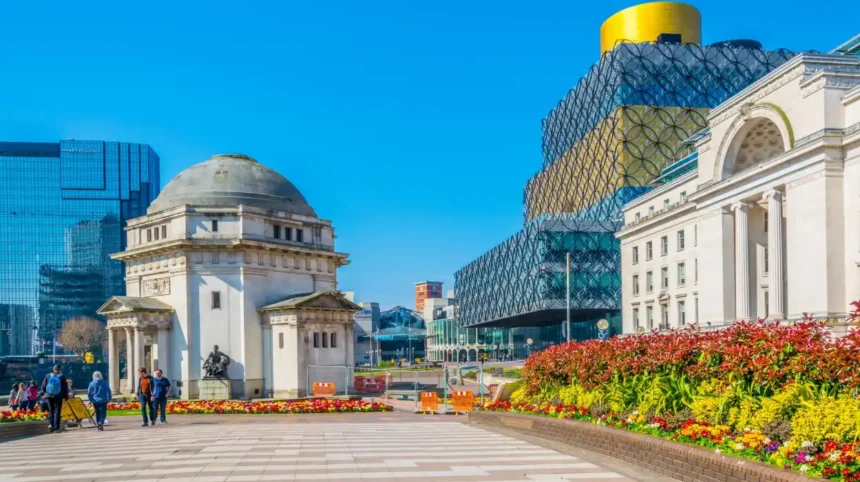
Birmingham is one of England’s most historically significant cities. Known as the workshop of the world during the Industrial Revolution, the city contains a wide range of lesser-known landmarks, historic districts, museums, canals, and cultural sites that reveal centuries of economic, social, and architectural development. Beyond its famous attractions, Birmingham offers numerous hidden gems that provide insight into medieval origins, industrial innovation, religious heritage, artistic achievements, and urban transformation.
- What makes Birmingham’s hidden gems historically significant?
- Why are Birmingham’s canals considered one of its most overlooked attractions?
- How does the Jewellery Quarter reveal Birmingham’s industrial heritage?
- What secrets are preserved inside Birmingham’s historic churches?
- How does Sarehole Mill connect Birmingham to its pre-industrial past?
- Why is Birmingham Back to Backs an important heritage site?
- What can Birmingham’s historic cemeteries teach us about the city’s past?
- How did Victorian Birmingham shape many of today’s hidden attractions?
- Why do Birmingham’s museums contain overlooked historical treasures?
- How has heritage preservation protected Birmingham’s lesser-known landmarks?
- What is the lasting importance of Birmingham’s hidden gems today?
Understanding these unique places helps visitors appreciate how Birmingham evolved from a medieval market settlement into the United Kingdom’s second-largest city. Many of these sites remain preserved through conservation efforts, local heritage organisations, museums, and municipal planning initiatives, making them valuable resources for historians, cultural tourists, educators, and researchers.
What makes Birmingham’s hidden gems historically significant?
Birmingham’s hidden gems preserve evidence of medieval settlement, industrial innovation, religious diversity, artistic development, and social change. These sites document more than 1,000 years of urban evolution and provide physical connections to key periods that shaped both Birmingham and modern Britain.
The historical significance of Birmingham’s lesser-known attractions lies in their ability to illustrate the city’s transformation across multiple eras. Unlike major landmarks that attract international attention, hidden gems often retain original features and local character.
Historical records indicate that Birmingham emerged as a market centre during the medieval period. By the eighteenth century, it became a major manufacturing hub. During the nineteenth century, industrial expansion accelerated population growth and infrastructure development. Many lesser-known sites preserve evidence from each phase of this evolution.
Conservation studies conducted by local authorities and heritage organisations identify hundreds of protected structures throughout the city. These include former factories, churches, public buildings, canal infrastructure, workshops, and residential districts.
The preservation of these locations contributes to public understanding of industrial heritage, urban planning history, and cultural identity. They also support educational research in archaeology, architecture, genealogy, and social history.
Why are Birmingham’s canals considered one of its most overlooked attractions?
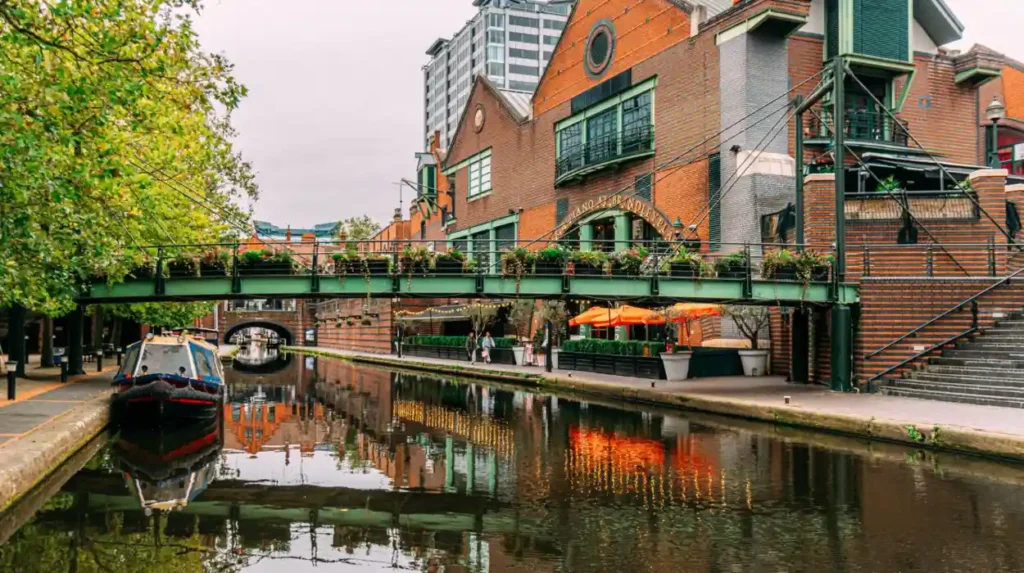
Birmingham’s canal network represents one of the most important surviving transport systems of the Industrial Revolution. With approximately 35 miles of navigable canals within the city, the waterways demonstrate how goods, materials, and manufactured products moved through industrial Britain.
Birmingham is often associated with factories and manufacturing, yet its canals were equally important to economic development.
Construction began during the eighteenth century when canal engineers sought efficient transportation routes for coal, iron, and finished goods. Water transport significantly reduced costs compared with road transport.
The canal system connected Birmingham to regional and national trade networks. Industrial products manufactured in workshops and factories could reach markets across England.
Several canal districts remain relatively unknown compared with more heavily visited waterfront developments.
What can visitors discover along the canals today?
Historic canal structures include locks, bridges, towpaths, warehouses, and former industrial buildings. Many survive as protected heritage assets.
The area around the Birmingham Canal Navigations preserves important engineering features dating from the eighteenth and nineteenth centuries. These waterways once served thousands of working boats annually.
Modern regeneration projects have transformed sections of the canal network into recreational corridors while retaining historic character.
To experience these historic waterways in person today, consult our comprehensive [How to Discover Birmingham’s Hidden Gems Beyond Tourist Hotspots] for itineraries and visiting parameters.
The canals remain among Birmingham’s most valuable examples of industrial infrastructure preservation.
How does the Jewellery Quarter reveal Birmingham’s industrial heritage?
The Jewellery Quarter preserves one of Europe’s most important historic manufacturing districts. Covering more than 100 hectares, the area contains thousands of historic buildings associated with jewellery production, metalworking, and skilled craftsmanship dating back over 250 years.
The Jewellery Quarter developed during the eighteenth century as Birmingham’s metalworking industries expanded.
Artisans established workshops specialising in jewellery, silverware, watchmaking, engraving, and related trades. By the nineteenth century, the district had become a global centre for precious metal manufacturing.
Historical production records indicate that the area manufactured a significant proportion of Britain’s jewellery output.
Which historic features survive in the Jewellery Quarter?
Many original workshops remain intact. Narrow streets preserve the historic urban layout that evolved alongside industrial growth.
The district contains listed buildings, cemeteries, churches, and former factories. These structures illustrate how production, commerce, and residential life coexisted within a compact urban environment.
The preservation of manufacturing premises allows researchers to study historical production methods, labour organisation, and technological development.
Today, the Jewellery Quarter remains both a working industrial district and a major heritage conservation area.
What secrets are preserved inside Birmingham’s historic churches?
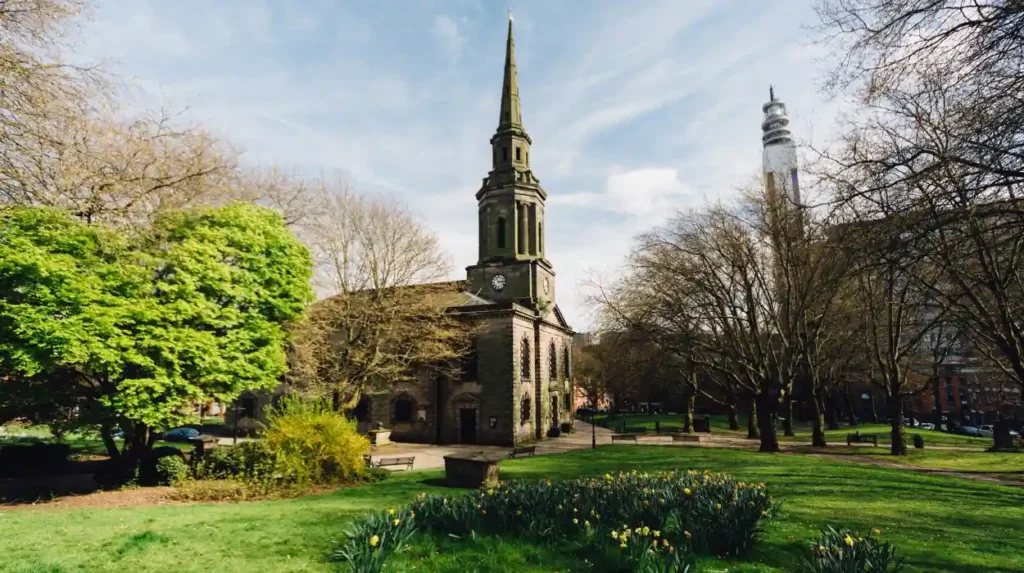
Birmingham’s historic churches preserve medieval foundations, Victorian architecture, commemorative monuments, and records documenting centuries of local history. These religious sites provide valuable evidence of population growth, community development, and changing architectural styles across different eras.
Religious buildings have played a central role in Birmingham’s development since the medieval period.
Church archives often contain baptism, marriage, and burial records used by genealogists and historians. These documents help reconstruct demographic patterns and family histories.
Several churches also contain memorials dedicated to industrialists, civic leaders, soldiers, and community figures who influenced Birmingham’s development.
Why are church buildings important historical sources?
Architectural features reveal changing construction techniques and artistic preferences.
Examples include Gothic Revival designs, medieval stonework, stained-glass windows, and Victorian decorative programmes.
Churches often survived urban redevelopment projects that transformed surrounding neighbourhoods. As a result, they provide continuity between historical and modern Birmingham.
Preservation initiatives continue to protect these structures as important educational and cultural resources.
How does Sarehole Mill connect Birmingham to its pre-industrial past?
Sarehole Mill demonstrates what Birmingham looked like before large-scale industrialisation. The eighteenth-century watermill preserves agricultural and manufacturing technologies that existed before factories transformed the region into a global industrial centre.
Before Birmingham became famous for manufacturing, much of the surrounding landscape consisted of agricultural settlements, woodland, and small-scale industry.
Watermills played an essential role in local economies by processing grain and supporting production activities.
Sarehole Mill represents this earlier phase of development.
What historical importance does Sarehole Mill hold?
The mill illustrates traditional mechanical systems powered by flowing water.
Visitors can study how water wheels, gears, and milling equipment functioned before steam engines became widespread.
The site also contributes to environmental history by demonstrating how communities utilised natural resources for economic purposes.
Research into regional industrialisation frequently uses surviving mills as evidence of technological transition from rural production to mechanised manufacturing.
The preservation of Sarehole Mill provides a rare glimpse into Birmingham’s pre-industrial landscape.
Why is Birmingham Back to Backs an important heritage site?
Birmingham Back to Backs preserve examples of nineteenth-century working-class housing. These restored residences document living conditions experienced by industrial workers and reveal how urban populations adapted to rapid growth during the Industrial Revolution.
Population expansion during the nineteenth century created significant housing demand.
Developers constructed back-to-back houses to maximise land use within rapidly growing neighbourhoods. These homes became characteristic features of industrial cities.
Many examples disappeared during twentieth-century redevelopment programmes.
What do the preserved houses reveal about urban history?
The surviving properties illustrate domestic life across multiple generations.
Historical interpretation draws upon census records, photographs, municipal archives, and oral histories to reconstruct resident experiences.
The houses demonstrate how families managed limited living space while participating in Birmingham’s industrial economy.
They also highlight broader themes including public health, urban planning, sanitation reform, and social mobility.
The site remains one of the most informative examples of preserved working-class heritage in Britain.
What can Birmingham’s historic cemeteries teach us about the city’s past?
Historic cemeteries provide evidence of demographic change, religious diversity, public health developments, and social hierarchy. Monument inscriptions, burial records, and landscape design collectively document Birmingham’s evolution across several centuries.
Cemeteries serve as valuable historical archives.
Burial grounds preserve information about occupations, migration patterns, family structures, and mortality rates.
Many nineteenth-century cemeteries were designed according to emerging principles of landscape architecture and urban planning.
Why are cemetery records important to researchers?
Genealogists frequently use burial records to trace family histories.
Archaeologists and social historians examine monuments to understand cultural attitudes toward remembrance and identity.
Examples of historical evidence include military memorials, industrialist tombs, civic monuments, and religious burial sections.
The preservation of these landscapes supports educational research while protecting important historical data.
Historic cemeteries remain among Birmingham’s most overlooked cultural resources.
How did Victorian Birmingham shape many of today’s hidden attractions?
Victorian Birmingham created much of the infrastructure, architecture, and public institutions that survive today. Rapid economic growth during the nineteenth century produced libraries, museums, parks, civic buildings, and transport systems that continue to influence the city’s identity.
The Victorian era represented one of Birmingham’s most transformative periods.
Industrial success generated wealth that funded major public works projects. Municipal leaders invested heavily in urban improvement programmes.
Infrastructure expansion included roads, public utilities, educational institutions, and civic facilities.
Which Victorian developments remain visible today?
Many surviving buildings reflect Victorian architectural styles and engineering achievements.
Examples include public parks, museums, municipal offices, libraries, and transport structures.
Urban historians often identify Victorian planning decisions as foundational elements of modern Birmingham.
These developments improved living conditions while establishing cultural institutions that continue serving residents and visitors.
Victorian heritage remains deeply embedded within the city’s landscape.
Why do Birmingham’s museums contain overlooked historical treasures?
Birmingham’s museums preserve archaeological artefacts, industrial collections, artworks, scientific instruments, and archival materials that document regional history from prehistoric settlement through modern urban development. Many significant collections remain less widely known than major national institutions.
Museums play a crucial role in heritage preservation.
Their collections provide evidence supporting historical research across numerous disciplines.
Artefacts reveal information about trade networks, manufacturing processes, artistic traditions, and everyday life.
What types of collections offer unique insights?
Industrial collections document Birmingham’s role in metalworking, engineering, and manufacturing.
Archaeological finds reveal evidence of Roman activity, medieval settlement, and prehistoric occupation.
Art collections demonstrate cultural developments across multiple centuries.
Museum archives also preserve photographs, maps, business records, and personal documents used extensively by researchers and educators.
These resources contribute significantly to public understanding of Birmingham’s historical development.
How has heritage preservation protected Birmingham’s lesser-known landmarks?
Heritage preservation programmes safeguard historic buildings, industrial sites, archaeological remains, and cultural landscapes. Legal protections, conservation policies, and community initiatives ensure that important locations remain accessible for future generations.
Preservation efforts intensified during the twentieth century as redevelopment threatened historic structures.
Government agencies, local authorities, and heritage organisations established frameworks for identifying and protecting significant sites.
Listing systems classify buildings according to architectural and historical importance.
What methods are used to preserve heritage assets?
Conservation projects stabilise structures and prevent deterioration.
Examples include masonry repairs, roof restoration, archival documentation, and adaptive reuse programmes.
Adaptive reuse allows historic buildings to serve modern functions while retaining significant features.
Research indicates that preservation initiatives contribute to cultural tourism, education, and local economic activity.
These efforts ensure that Birmingham’s hidden gems remain visible components of the urban landscape.
What is the lasting importance of Birmingham’s hidden gems today?
Birmingham’s hidden gems provide essential evidence of the city’s historical development, industrial achievements, cultural diversity, and architectural evolution. Their preservation supports education, tourism, research, and public understanding of Britain’s broader historical transformation.
The significance of Birmingham’s lesser-known attractions extends beyond tourism.
These locations collectively document major historical processes including industrialisation, urbanisation, technological innovation, migration, and civic development.
Examples of preserved heritage assets include canal infrastructure, jewellery workshops, historic churches, watermills, workers’ housing, museums, and cemeteries. Together, these sites create a comprehensive record of urban change.
Modern historians, archaeologists, educators, and genealogical researchers rely upon these resources to examine Birmingham’s past. Preservation programmes continue to protect structures and collections that might otherwise disappear.
As cities evolve, surviving historical landmarks become increasingly important sources of evidence. Birmingham’s hidden gems offer direct connections to centuries of social, economic, and cultural development. They demonstrate how local innovation contributed to national transformation and global industrial progress.
For visitors seeking a deeper understanding of the city, these locations reveal stories that extend far beyond Birmingham’s most famous attractions. They illustrate the complexity of urban history and highlight the enduring value of heritage conservation. Through continued preservation, research, and public engagement, Birmingham’s hidden gems will remain vital components of the city’s historical landscape for generations to come.
What are some hidden gems to visit in Birmingham?
Birmingham’s hidden gems include the Jewellery Quarter, Sarehole Mill, Birmingham Back to Backs, historic churches, canals, cemeteries, museums, and lesser-known heritage districts. These locations reveal the city’s industrial, social, and architectural history beyond the main attractions.