Birmingham is one of the United Kingdom’s most historically significant cities. Known as the birthplace of the Industrial Revolution, the city combines centuries of innovation, cultural heritage, and educational attractions with modern family entertainment. Families visiting Birmingham during a weekend encounter museums, historic districts, scientific institutions, green spaces, and cultural landmarks that provide both recreation and learning opportunities.
- Why is Birmingham a leading family-friendly destination in England?
- What can families learn at Birmingham Museum and Art Gallery?
- How does Thinktank Birmingham Science Museum connect families with innovation?
- Why are Birmingham’s canals important for family visitors?
- What makes Cadbury World historically significant for families?
- How do Birmingham’s parks reflect Victorian social history?
- Why is the Black Country Living Museum valuable for children?
- How does Birmingham’s cultural diversity enhance family experiences?
- What educational benefits do family attractions provide?
- Why does Birmingham remain one of Britain’s best weekend destinations for families?
Unlike many destination guides that focus solely on activities, understanding the historical context behind Birmingham’s attractions provides a deeper appreciation of the city. Its canals, manufacturing heritage, public parks, libraries, and museums represent the evolution of Britain’s second-largest city from a medieval market settlement into a global industrial centre.
Why is Birmingham a leading family-friendly destination in England?
Birmingham combines nationally important heritage sites, educational institutions, museums, green spaces, and modern attractions within a compact urban area. Families benefit from diverse experiences that connect history, science, culture, wildlife, and recreation while remaining accessible throughout a weekend visit.
Birmingham occupies a central position in England and has developed into one of the country’s most visited urban destinations. The city attracts millions of visitors annually through a combination of cultural institutions, heritage assets, and family-oriented attractions.
The city’s historical development began as a medieval market town during the twelfth century. By the eighteenth century, Birmingham emerged as a major centre of manufacturing and innovation. This industrial success generated wealth that funded public museums, libraries, parks, and educational institutions that remain important family destinations today.
Many family attractions occupy historically significant sites. Former industrial districts have been transformed into cultural quarters. Historic canal networks support leisure activities. Victorian civic buildings continue serving educational purposes. This relationship between past and present creates unique opportunities for families seeking meaningful experiences.
Parents increasingly seek destinations that combine entertainment with education. Birmingham’s museums, science centres, wildlife attractions, and heritage locations satisfy this demand by presenting information through interactive exhibits and family-focused programming.
What can families learn at Birmingham Museum and Art Gallery?
Birmingham Museum and Art Gallery preserves centuries of local, national, and international history through collections that explain industrial development, artistic achievement, archaeology, and social change. Families gain direct access to educational resources representing multiple historical periods and cultures.
Birmingham Museum and Art Gallery ranks among the city’s most important cultural institutions. Established in 1885, the museum reflects Victorian Britain’s commitment to public education and civic improvement.
The museum houses extensive collections covering archaeology, fine art, decorative arts, social history, and natural history. These collections help visitors understand Birmingham’s role in Britain’s economic and cultural development.
Children encounter artefacts from different historical eras, including examples from Ancient Egypt, Roman Britain, and medieval England. These exhibits provide chronological context for understanding historical change.
The institution is particularly renowned for its collection of Pre-Raphaelite artworks. The Pre-Raphaelite Brotherhood was a nineteenth-century artistic movement established in 1848. Its members sought greater realism and detail in painting, influencing British art for generations.
Museum exhibitions frequently incorporate interactive elements that encourage younger visitors to engage with historical material. Educational programmes support school-age children by connecting national curriculum topics with real-world artefacts.
The museum’s location within Birmingham’s civic centre also illustrates Victorian urban planning. The surrounding public buildings demonstrate how municipal leaders invested in culture and education during the nineteenth century.
How does Thinktank Birmingham Science Museum connect families with innovation?
Thinktank explains Birmingham’s historic role in science, engineering, and industrial development through interactive exhibits, technological artefacts, and educational demonstrations. Families explore the innovations that helped transform Birmingham into a globally significant manufacturing and research centre.
Thinktank Birmingham Science Museum occupies a central position within the city’s educational landscape. The museum focuses on scientific discovery and technological advancement while highlighting Birmingham’s contribution to innovation.
The Industrial Revolution fundamentally reshaped Britain between approximately 1760 and 1840. Birmingham served as one of its most influential centres. Inventors, engineers, and manufacturers operating within the city introduced new production methods that affected global economic development.
Museum galleries showcase steam engines, transportation technologies, manufacturing equipment, and scientific instruments. These artefacts demonstrate how technological progress influenced everyday life.
One notable feature is the museum’s emphasis on local inventors and entrepreneurs. Birmingham’s manufacturing sector produced goods ranging from jewellery and buttons to steam engines and scientific equipment.
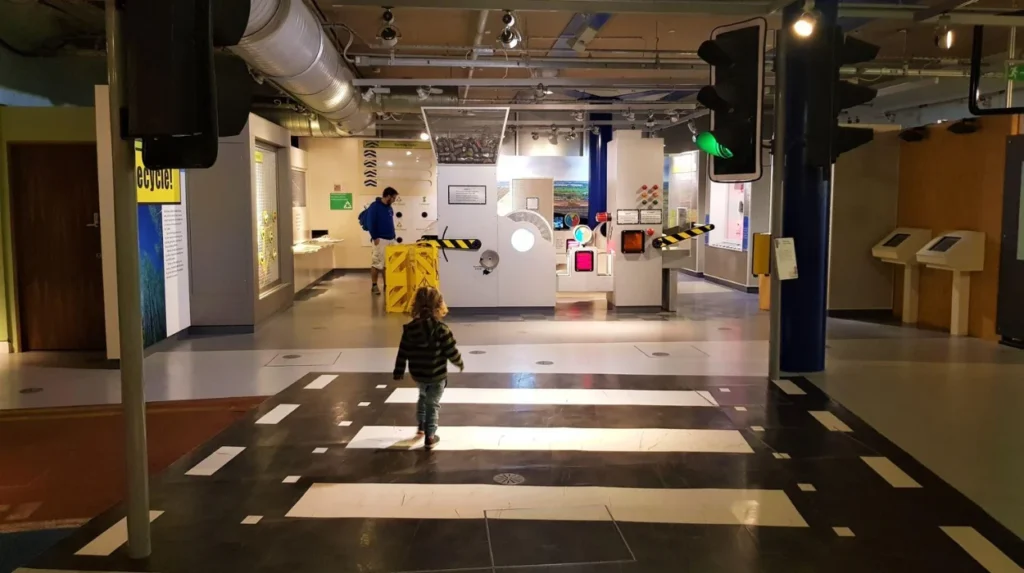
Interactive exhibits encourage children to experiment with scientific concepts. Physics, chemistry, engineering, and biology become accessible through hands-on activities that reinforce educational learning.
The museum also contains a planetarium, allowing families to explore astronomy and space science. This combination of historical innovation and contemporary scientific education supports Birmingham’s reputation as a city of learning and discovery.
Why are Birmingham’s canals important for family visitors?
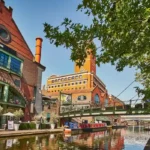
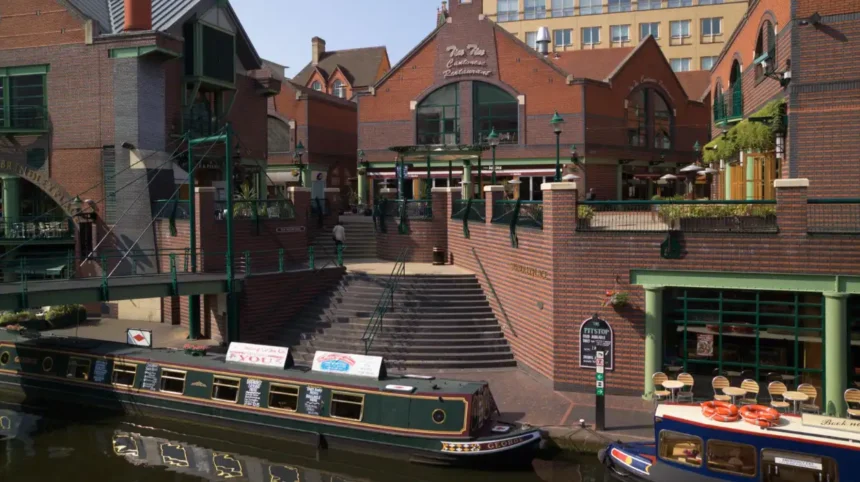
Birmingham’s canal network represents one of the most significant surviving infrastructures of the Industrial Revolution. Families can explore waterways that transported raw materials and manufactured goods while learning how transportation systems enabled Britain’s industrial expansion.
Many visitors are surprised to discover that Birmingham possesses more miles of canals than Venice. These waterways formed an essential transportation network during the eighteenth and nineteenth centuries.
Canal construction expanded rapidly between the 1760s and the early nineteenth century. Water transport provided an efficient method for moving heavy goods before the development of railways.
Birmingham’s manufacturers relied upon canals to distribute products throughout Britain. Coal, iron, steel, and finished goods travelled through the network, supporting industrial growth.
Today, restored canal corridors function as recreational and educational spaces. Families can walk along towpaths, observe historic engineering features, and participate in boat tours.
The canal environment also supports biodiversity. Urban wildlife habitats developed along waterways provide opportunities to observe birds, fish, insects, and aquatic plants.
These waterways illustrate how infrastructure influences economic development. They also demonstrate successful heritage preservation, as many historic canal structures remain operational more than two centuries after construction.
To experience this historic landmark in person today, consult our comprehensive How to Plan a Family-Friendly Weekend in Birmingham for itineraries and visiting parameters.
What makes Cadbury World historically significant for families?
Cadbury World explains the development of Britain’s confectionery industry through the history of the Cadbury company, industrial production methods, and social welfare initiatives established during the nineteenth century. Families learn how business innovation influenced communities and consumer culture.
Cadbury World explores the history of one of Britain’s most recognised chocolate manufacturers. The Cadbury business originated in Birmingham during 1824 when John Cadbury established a grocery and cocoa business.
The company expanded significantly during the Victorian era. Its growth reflected broader changes occurring within British industry, consumer markets, and manufacturing technology.
A particularly important historical element involves the development of Bournville. The Cadbury family created this model village during the late nineteenth century to provide improved housing and living conditions for workers.
Bournville represented a response to urban overcrowding associated with industrialisation. The community included housing, recreational facilities, educational opportunities, and green spaces.
Visitors learn about chocolate production processes, international trade networks, and the agricultural origins of cocoa. Exhibits connect food manufacturing with broader themes in economic history and global commerce.
The attraction demonstrates how family-oriented experiences can communicate complex historical and social concepts through engaging presentations.

How do Birmingham’s parks reflect Victorian social history?
Birmingham’s public parks preserve nineteenth-century ideas about public health, recreation, and urban planning. Families enjoy green spaces that were intentionally created to improve living conditions and provide accessible leisure opportunities for rapidly growing urban populations.
The nineteenth century witnessed dramatic population growth throughout Birmingham. Industrial employment attracted workers from across Britain, increasing demand for housing and public amenities.
Urban reformers recognised the importance of green spaces for public health. Consequently, municipal authorities established parks to provide recreation and improve environmental conditions.
Examples include Cannon Hill Park, which opened in 1873. The park remains one of Birmingham’s most popular family destinations. Its landscape reflects Victorian design principles that combined aesthetics with public utility.
Public parks served multiple purposes. They encouraged exercise, provided social gathering spaces, and improved air quality within industrial cities.
Modern families continue benefiting from these historical investments. Walking trails, playgrounds, gardens, and recreational facilities support diverse visitor interests.
The preservation of historic parks demonstrates continuity between nineteenth-century urban planning objectives and contemporary quality-of-life priorities.
Why is the Black Country Living Museum valuable for children?
The Black Country Living Museum presents an immersive interpretation of industrial and social history through reconstructed streets, historic buildings, and working demonstrations. Families observe how ordinary people lived and worked during periods of significant economic and technological change.
Although located near Birmingham, the Black Country Living Museum provides essential context for understanding the wider industrial region.
The Black Country refers to an area historically associated with coal mining, iron production, and heavy industry. Industrial activity transformed the landscape during the eighteenth and nineteenth centuries.
The museum preserves historic structures relocated from different communities. These buildings include shops, schools, houses, workshops, and industrial facilities.
Costumed interpreters demonstrate historical occupations and daily routines. This approach helps children understand historical experiences through direct observation.
Educational programmes address themes including industrialisation, migration, technological innovation, and community development.
The museum illustrates how industrial growth affected families, workers, and local communities. It therefore complements Birmingham’s museums by providing broader regional context.
How does Birmingham’s cultural diversity enhance family experiences?
Birmingham’s multicultural population reflects centuries of migration, economic opportunity, and social change. Families encounter diverse traditions, cuisines, festivals, and cultural institutions that illustrate the city’s continuing historical evolution.
Birmingham developed as a destination for migrants seeking employment and economic opportunity. Population growth accelerated during the Industrial Revolution and continued throughout the twentieth century.
Successive migration waves contributed to the city’s cultural diversity. Communities from South Asia, the Caribbean, Ireland, Africa, and other regions established lasting social and cultural institutions.
Today, Birmingham ranks among Europe’s most diverse cities. This diversity influences food, arts, architecture, festivals, and educational programming.
Museums and cultural organisations increasingly incorporate multicultural perspectives into exhibitions and events. These initiatives help families understand both local and global historical connections.
Children benefit from exposure to different traditions and cultural experiences. Such encounters support broader understanding of social history and contemporary society.
The city’s cultural diversity represents a continuing chapter in Birmingham’s historical development rather than a separate phenomenon.
What educational benefits do family attractions provide?
Family attractions in Birmingham transform historical, scientific, and cultural information into accessible learning experiences. Museums, heritage sites, parks, and educational centres support curriculum objectives while encouraging critical thinking, observation, and historical understanding.
Educational tourism continues to expand globally. Families increasingly prioritise destinations that combine leisure with learning.
Birmingham’s institutions support this trend through structured educational programmes, interpretive exhibits, and interactive experiences.
Historical attractions introduce chronology, evidence analysis, and historical interpretation. Science museums encourage experimentation and inquiry-based learning. Cultural institutions promote understanding of artistic and social development.
Research consistently demonstrates that experiential learning improves knowledge retention. Direct interaction with artefacts, historical environments, and scientific demonstrations enhances educational outcomes.
The city’s concentration of educational attractions allows families to explore multiple subjects within a single weekend itinerary.
This interdisciplinary environment supports lifelong learning while making educational experiences enjoyable and accessible.
Why does Birmingham remain one of Britain’s best weekend destinations for families?
Birmingham remains a leading family destination because it combines historical significance, educational value, cultural diversity, green spaces, and modern attractions. The city preserves its industrial heritage while continuously adapting to contemporary visitor expectations and learning needs.
Birmingham’s evolution from medieval market settlement to global industrial centre created a rich historical legacy. Museums, canals, parks, cultural institutions, and educational attractions preserve this legacy while serving modern audiences.
The city’s heritage infrastructure continues to support tourism, education, and community engagement. Victorian museums remain active educational centres. Industrial waterways function as recreational corridors. Historic districts accommodate contemporary cultural activities.
Preservation efforts ensure that future generations can access tangible evidence of Britain’s industrial and social development. These efforts also strengthen Birmingham’s identity as a destination where history remains visible within the modern urban environment.
Families visiting Birmingham during a weekend encounter more than entertainment. They engage with centuries of innovation, urban development, cultural exchange, and educational progress. This combination of historical depth and contemporary accessibility distinguishes Birmingham from many competing city-break destinations.
As heritage tourism, educational travel, and cultural exploration continue expanding, Birmingham’s integrated approach to preservation and public engagement ensures its enduring relevance. The city demonstrates how historical assets can remain meaningful, educational, and enjoyable for families in the twenty-first century.
What are the best family-friendly things to do in Birmingham this weekend?
Popular family attractions include Birmingham Museum and Art Gallery, Thinktank Birmingham Science Museum, Cadbury World, Cannon Hill Park, Birmingham’s canal network, and the Black Country Living Museum.