Birmingham’s markets, food halls, and shops form one of the most historically layered retail landscapes in Britain. The city combines a medieval market tradition, Victorian commercial architecture, industrial manufacturing, multicultural food culture, independent retail, and modern urban regeneration.
- What makes Birmingham’s markets, food halls, and shops historically important?
- How did Birmingham’s market tradition develop from the medieval period?
- Where can visitors find Birmingham’s historic market tradition today?
- Which Birmingham shopping areas best preserve historic architecture?
- Where can visitors find Birmingham’s best food halls and industrial food heritage?
- How does Birmingham’s Jewellery Quarter connect shopping with manufacturing history?
- How should visitors organise a Birmingham market, food hall, and shopping route?
- Why do Birmingham’s markets and shops matter for the city’s future heritage?
Finding the best places to shop and eat requires more than following a single high street. Birmingham’s commercial identity is distributed across distinct districts. The Bull Ring represents the city’s oldest market tradition. The Jewellery Quarter preserves specialist manufacturing and craft retail. Digbeth connects industrial heritage with contemporary food culture. The city centre contains historic arcades, major shopping streets, department stores, and independent businesses.
This structure reflects Birmingham’s historical development. The city grew from a medieval market settlement into an industrial manufacturing centre and later into a major regional retail and cultural economy. Markets supplied food and household goods. Workshops produced metalware, jewellery, and manufactured products. Shops developed around transport routes and civic expansion. Food halls now occupy former industrial buildings and reinterpret the city’s manufacturing past through contemporary dining.
What makes Birmingham’s markets, food halls, and shops historically important?
Birmingham’s retail landscape is historically important because medieval markets, industrial manufacturing, Victorian shopping architecture, migrant food traditions, and modern regeneration remain connected across the city centre, Bull Ring, Jewellery Quarter, Digbeth, and surrounding commercial districts today.
Birmingham’s commercial history begins with its medieval market economy. The settlement developed around trade, production, and regional exchange. The Bull Ring became the central location associated with Birmingham’s market tradition. The market supported the circulation of food, livestock, textiles, household goods, and manufactured products.
The city’s industrial expansion transformed this commercial system. During the eighteenth and nineteenth centuries, Birmingham became one of Britain’s most important manufacturing centres. Metalworking, jewellery production, engineering, firearms manufacturing, and small-scale workshops created a dense economic network. Retail activity developed alongside production because manufacturers needed suppliers, traders, and customers.
The city’s commercial geography therefore contains different types of retail heritage. The Bull Ring represents public market trading. The Jewellery Quarter represents specialist craft production and trade. Digbeth represents industrial manufacturing and warehouse conversion. The city centre represents formal retail architecture, department stores, arcades, and modern shopping complexes.
This historical layering explains why Birmingham offers different shopping experiences within a relatively compact urban area. A visitor can move from fresh produce and fish stalls to Victorian arcades, jewellery workshops, independent designers, street food kitchens, and major retail brands.
The pattern also reflects Birmingham’s social history. The city attracted workers and communities from across Britain and the wider world during industrialisation. Migration contributed to the development of new food businesses, specialist shops, restaurants, and cultural districts.
Birmingham’s markets therefore function as more than commercial spaces. They preserve trading traditions, occupational histories, architectural evidence, and social connections. Food halls similarly demonstrate how former industrial buildings have acquired new economic uses.
How did Birmingham’s market tradition develop from the medieval period?
Birmingham’s market tradition developed from medieval commercial activity and expanded through industrialisation, urban growth, and municipal investment. The Bull Ring became the best-known market district, while later specialist markets and shopping streets reflected the city’s growing population and manufacturing economy.
Birmingham’s market history is commonly associated with a market charter granted in 1166. The charter provided formal recognition for market activity and helped establish the settlement as a place of regional exchange.
Markets were essential to medieval urban economies. They connected producers, traders, farmers, craftspeople, and consumers. Food entered the town through market networks, while manufactured goods circulated through specialist traders and workshops.
The Bull Ring became the most important historical market area. Its name is connected with the former bull-baiting arena and later market activity in the area. Over time, the district developed into a major centre for commercial exchange.
Birmingham’s population growth increased demand for market space. The Industrial Revolution intensified this pressure. Workers required affordable food, clothing, household goods, and other necessities. Markets provided a flexible trading environment that served different income groups.
The nineteenth century also produced new retail architecture. Covered markets offered protection from weather and created more controlled trading environments. Shopping arcades introduced another form of commercial space, combining retail activity with architectural design.
The expansion of railways and canals strengthened Birmingham’s position as a distribution centre. Goods could enter the city more efficiently, while manufactured products could reach national and international markets.
This development produced a layered retail system. Markets supplied everyday goods. Specialist districts served manufacturing trades. Formal shops served expanding middle-class consumers. Department stores introduced larger-scale retailing.
The modern city still reflects this historical structure. The Bull Ring remains a major market destination. The city centre retains historic arcades. The Jewellery Quarter continues to connect manufacturing heritage with specialist retail. Digbeth demonstrates the reuse of industrial buildings for food, entertainment, and independent businesses.
Where can visitors find Birmingham’s historic market tradition today?
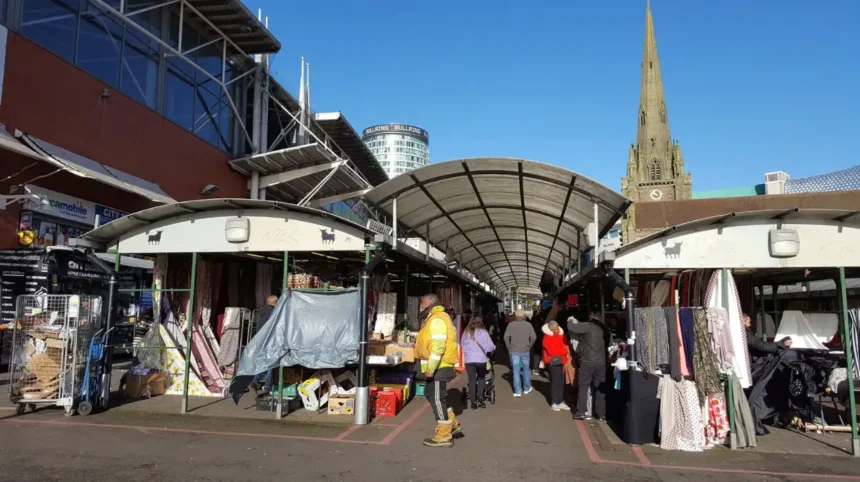
The Bull Ring remains Birmingham’s principal historic market district, with the Open Market and Indoor Market providing fresh produce, fish, meat, clothing, household goods, fabrics, and other products within a commercial area shaped by centuries of urban trading.
The Bull Ring is the essential starting point for understanding Birmingham’s market tradition. Its present-day facilities continue a long history of commercial activity in the city centre.
The Birmingham City Council Open Market contains 130 stalls and sells fresh fruit, vegetables, fabrics, household items, and seasonal goods. The market operates in a covered environment with wide aisles designed to support accessibility.
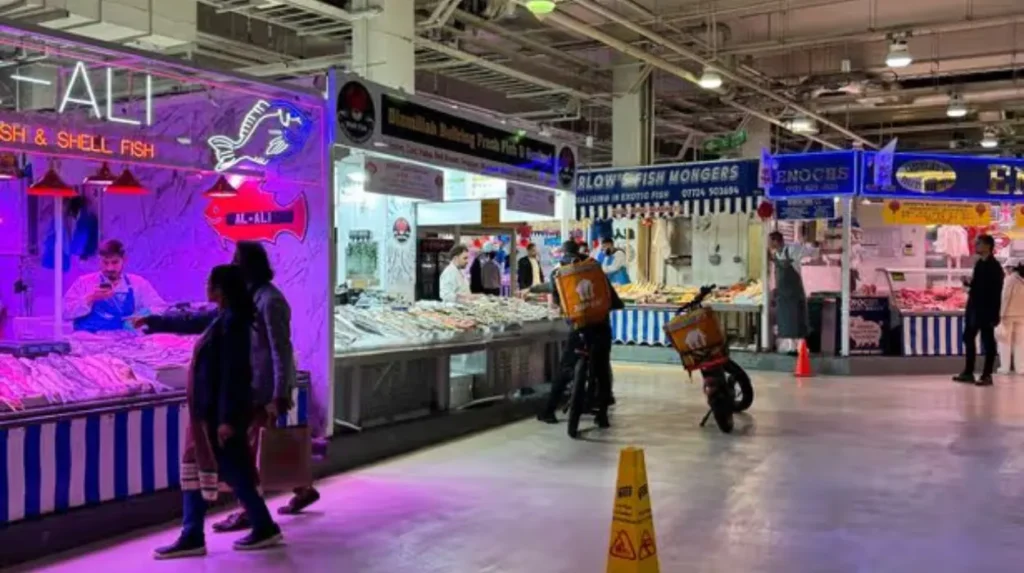
The Bull Ring Indoor Market provides another specialist retail environment. Birmingham City Council identifies it as one of the United Kingdom’s largest fish markets. Its wider offer includes fresh meat and poultry, exotic fruit and vegetables, clothing, and household goods.
These markets demonstrate the continuing importance of specialist trading. Supermarkets provide standardised retail systems, but market stalls retain direct relationships between traders and customers. Product variety also remains a defining feature.
The market district is historically important because it preserves commercial functions that existed before modern shopping centres. Fresh food trading, specialist goods, and independent stalls continue to occupy a central position within Birmingham’s economy.
The location also makes the Bull Ring easy to combine with other city-centre retail areas. The market sits close to major shopping streets, the Bullring shopping centre, historic churches, and transport connections.
For historical research, the Bull Ring provides evidence of changing urban commerce. Its development demonstrates how a medieval market tradition adapted to industrial growth, twentieth-century redevelopment, and twenty-first-century retail pressures.
The market’s future also forms part of Birmingham’s wider urban-development debate. Large redevelopment proposals have generated discussion about the future location of market trading and the preservation of commercial identity. This issue demonstrates that markets remain active parts of the city’s civic and economic history rather than static heritage sites.
Which Birmingham shopping areas best preserve historic architecture?
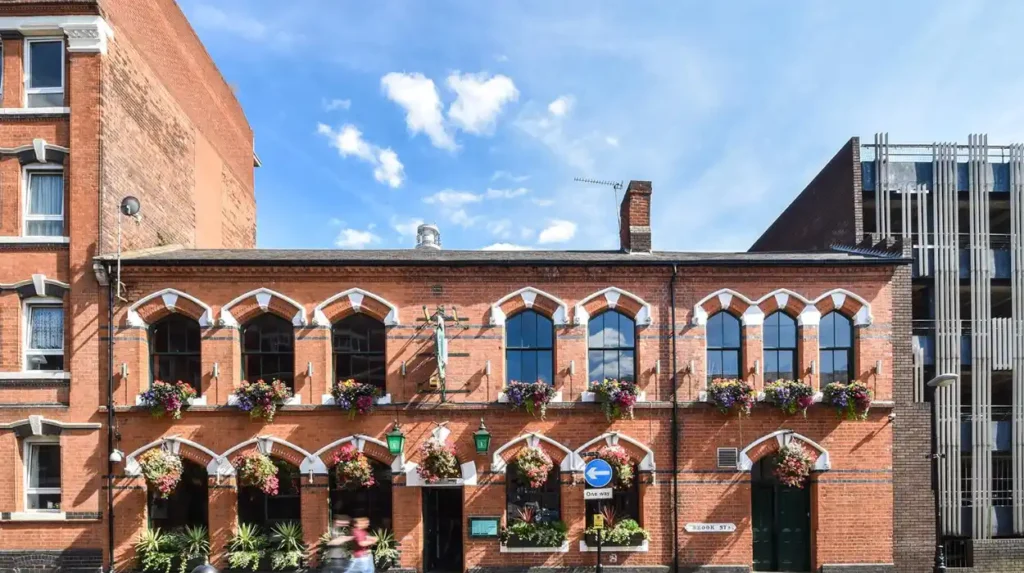
Birmingham’s historic shopping architecture is concentrated in areas such as the Great Western Arcade, city-centre commercial streets, and the Jewellery Quarter, where Victorian buildings, specialist workshops, historic streetscapes, and surviving manufacturing premises continue to support modern retail activity.
The Great Western Arcade provides one of Birmingham’s clearest examples of historic retail architecture. The arcade was built in 1876–1877 by the Great Western Company to span a railway tunnel between Moor Street and Snow Hill stations. W. H. Ward designed the structure, which was influenced by the architectural ideas associated with Joseph Paxton’s Crystal Palace.
The arcade demonstrates how transport infrastructure and retail development became connected during the Victorian period. Railway expansion increased movement through Birmingham. Commercial architecture developed around this new urban mobility.
The Great Western Arcade also preserves the small-retailer model. Its independent businesses occupy a historic architectural setting that differs from large shopping centres and standardised high streets.
The Jewellery Quarter provides a different type of historic commercial environment. The district developed from the eighteenth century as a centre of jewellery manufacturing and related trades. Historic England identifies the Jewellery Quarter as containing the most extensive surviving group of Victorian and twentieth-century buildings devoted to jewellery manufacture in Europe. Many premises continue to support manufacturing activity.
The Birmingham Assay Office has been central to the district’s commercial identity. The first Birmingham Assay Office was established in 1773, creating an institutional foundation for the city’s precious-metal industry. The office later moved to Newhall Street in 1877 before relocating to Icknield Street in 2015.
Visitors looking for specialist shops should therefore explore the Jewellery Quarter rather than treating Birmingham shopping as a single city-centre activity. The district connects jewellery retail with workshops, design studios, craft businesses, historic factories, and architectural heritage.
In 2025, the Jewellery Quarter received World Craft City status from the World Crafts Council. This recognition reflects the area’s continuing relationship with craftsmanship and specialist production.
Where can visitors find Birmingham’s best food halls and industrial food heritage?
Birmingham’s strongest food-hall experiences are concentrated in regenerated industrial districts, especially Digbeth, where former factories, warehouses, and creative spaces now support independent kitchens, street-food businesses, cafés, events, and contemporary dining.
Digbeth is the most important district for understanding the relationship between Birmingham’s industrial past and modern food culture. The area developed through manufacturing, transport, warehousing, and industrial production.
The Custard Factory provides the clearest example of industrial reuse. The complex was built in the early twentieth century for Alfred Bird’s custard production. The Custard Factory website identifies 1906 as the year the complex was built for Bird’s Custard production.
Alfred Bird was a Birmingham chemist and food manufacturer. His eggless custard powder developed into a major commercial product. The factory complex later became one of Digbeth’s most recognisable examples of industrial heritage being adapted for creative and commercial uses.
The building retains industrial features including Crittall windows, exposed steelwork, and high ceilings. These architectural elements provide direct evidence of its manufacturing history.
Modern food halls within this broader district continue the connection between food and industrial space. Alfred Works, located within the Custard Factory complex, occupies a 17,500-square-foot space and contains 15 independent kitchens, an outdoor courtyard, and social gaming areas.
This format reflects a wider transformation in urban economies. Manufacturing buildings that once produced packaged food, machinery, or industrial goods now accommodate independent food businesses and cultural enterprises.
Digbeth’s food culture also reflects Birmingham’s population history. The city’s international communities have shaped its restaurants, markets, cafés, and food businesses. The result is a commercial environment where global cuisines exist alongside British food traditions and contemporary street-food formats.
Visitors should therefore examine the building as well as the food. The architectural setting explains why Digbeth has become a distinctive food destination. The industrial structure is part of the experience and provides evidence of Birmingham’s economic transition.
Explore More Area Guide
Ultimate Birmingham Travel Bucket List: History, Culture and Attractions | Birmingham
How to Choose Birmingham Activities for Every Season – Birmingham
How does Birmingham’s Jewellery Quarter connect shopping with manufacturing history?
The Jewellery Quarter connects modern shopping with Birmingham’s historic manufacturing economy through specialist jewellers, designers, workshops, assay institutions, historic factories, and surviving buildings associated with precious-metal production and craft industries.
The Jewellery Quarter is one of Birmingham’s most important specialist shopping districts. Its identity developed from production rather than conventional retail planning.
The district’s history began to accelerate during the eighteenth century. Land released by the Colmore family helped support urban expansion. By the late 1770s, the area had developed into a wealthy Georgian residential district. Jewellery manufacturing later became increasingly important.
The establishment of the Birmingham Assay Office in 1773 strengthened the city’s position in precious-metal production. Hallmarking provided an official system for testing and marking precious metals. This system supported trust in the trade and helped Birmingham develop as a major jewellery centre.
The Jewellery Quarter expanded during the nineteenth century. Workshops, factories, housing, religious buildings, schools, and commercial premises formed a dense industrial neighbourhood.
Historic England’s architectural research identifies the district as an exceptionally extensive surviving group of buildings associated with jewellery manufacture. The survival of original premises and equipment provides important evidence of industrial production.
Modern visitors can therefore combine shopping with industrial heritage research. Specialist jewellers sell contemporary and traditional products. Designers operate alongside businesses connected to long-established craft traditions.
The district also demonstrates the importance of adaptive economic change. Manufacturing remains part of the area’s identity, but the economy now includes design, hospitality, education, creative industries, and tourism.
The Jewellery Quarter is particularly valuable for students and researchers studying industrial heritage. Its streets provide a physical record of how a specialised manufacturing district developed and adapted without losing all of its historic building stock.
The area also illustrates the difference between heritage preservation and museum display. Many historic premises remain part of active economic life. The buildings are not simply preserved as exhibits. They continue to support production, retail, education, and business activity.
How should visitors organise a Birmingham market, food hall, and shopping route?
The most efficient route begins with the Bull Ring markets, continues through central shopping streets and historic arcades, then extends to the Jewellery Quarter or Digbeth according to whether the priority is specialist retail, craft heritage, industrial architecture, or contemporary food culture.
A structured route prevents Birmingham’s commercial districts from becoming disconnected experiences. The city’s retail heritage is distributed across several areas, so geographical planning improves both efficiency and historical understanding.
Begin in the Bull Ring district. The Open Market and Indoor Market provide the strongest introduction to Birmingham’s historic market economy. The area is particularly suitable for visitors interested in fresh produce, fish, meat, fabrics, household goods, and traditional market trading.
Continue towards the central shopping streets and historic arcades. The Great Western Arcade provides a compact example of Victorian commercial architecture and independent retail. Its railway-related construction demonstrates the connection between transport infrastructure and shopping development.
The next destination should depend on the visitor’s main interest.
Choose the Jewellery Quarter for jewellery, craft, industrial architecture, assay history, and specialist manufacturing. Historic England’s architectural survey provides a useful framework for understanding the district’s surviving industrial buildings and manufacturing heritage.
Choose Digbeth for food halls, converted industrial buildings, creative businesses, and modern commercial uses within historic structures. The Custard Factory provides a particularly clear example of industrial heritage adapted for contemporary business and food culture.
A visitor interested in Birmingham’s broader cultural attractions can combine these commercial districts with the city’s museums, civic buildings, canals, and historic landmarks. To experience this historic commercial landscape in person today, consult our comprehensive [Top Birmingham Markets, Food Halls, and Shopping Experiences Today] for itineraries and visiting parameters.
The route should also account for the different operating patterns of markets and independent businesses. Market opening times, food-hall schedules, and individual shop hours are not identical. Visitors should verify current arrangements before travelling.
The historical value of the route comes from its sequence. The Bull Ring demonstrates long-term market exchange. The arcade demonstrates Victorian commercial architecture. The Jewellery Quarter demonstrates specialised manufacturing. Digbeth demonstrates industrial reuse.
Together, these locations provide a coherent explanation of Birmingham’s commercial development.
Why do Birmingham’s markets and shops matter for the city’s future heritage?
Birmingham’s markets, food halls, and shops matter for future heritage because they preserve active trading practices, historic buildings, specialist skills, food traditions, and community connections while adapting to redevelopment, changing consumer behaviour, and new economic uses.
Heritage is strongest when historic places retain meaningful functions. Birmingham’s markets continue to trade. Jewellery Quarter businesses continue to produce and sell specialist goods. Former factories now support food, creative, and commercial activity.
This continuity creates a direct connection between historical evidence and modern urban life.
The Bull Ring illustrates the challenge of preserving traditional markets within a changing city centre. Market buildings and trading communities face pressure from redevelopment, changing retail habits, property economics, and competition from large commercial schemes.
The Jewellery Quarter illustrates another preservation challenge. Specialist manufacturing requires suitable premises, skilled labour, investment, and commercial demand. Historic buildings retain value only when economic activity continues within or around them.
Digbeth demonstrates the potential of adaptive reuse. Industrial buildings can support new uses without removing every trace of their original purpose. Exposed structures, factory layouts, historic materials, and industrial architecture remain visible while the buildings serve modern businesses.
Food halls also contribute to the preservation of food culture. They bring independent kitchens and different culinary traditions into shared commercial environments. This reflects Birmingham’s long history as a diverse industrial city.
The future historical value of these places will depend on the balance between development and continuity. New investment can restore buildings and create employment. Excessive redevelopment can remove the physical and social characteristics that make commercial districts distinctive.
Researchers studying Birmingham’s future will therefore examine more than landmark buildings. They will study market stalls, shopfronts, food businesses, workshop spaces, retail patterns, and the survival of specialist skills.
Birmingham’s commercial heritage is consequently both architectural and social. A historic arcade matters because of its structure. A market matters because traders and customers continue to use it. A former factory matters because its industrial identity remains visible through new economic activity.
The city’s best markets, food halls, and shops therefore form a connected historical system. The Bull Ring preserves the longest market tradition. The Great Western Arcade preserves Victorian commercial architecture. The Jewellery Quarter preserves specialist manufacturing heritage. Digbeth demonstrates industrial transformation through food and creative enterprise.
Together, these places explain how Birmingham developed from a medieval market settlement into an industrial city and then into a modern regional centre with a complex retail and food economy.
The most effective way to explore Birmingham’s commercial heritage is to move between these districts with their historical differences in mind. Each location represents a distinct stage in the city’s economic development.
Birmingham’s markets, food halls, and shops are therefore not separate attractions. They are physical evidence of the city’s changing relationship with production, trade, migration, architecture, technology, and urban regeneration.
That historical continuity makes Birmingham one of Britain’s most valuable cities for studying how commerce evolves while remaining connected to the built environment and the communities that use it.
What is Birmingham best known for in terms of markets?
Birmingham is best known for the historic Bull Ring markets, including the Open Market and Indoor Market. They sell fresh produce, meat, fish, clothing, fabrics, household goods, and other products.