Key Points
- FIFA has awarded the 2035 Women’s World Cup to England, Northern Ireland, Scotland and Wales.
- Birmingham is a candidate host city, with Villa Park included among the proposed venues.
- Birmingham City’s planned 62,000-capacity Powerhouse stadium could be added to the venue list.
- Final host cities and stadiums will be confirmed by FIFA at a later date.
- Regional leaders say the tournament could support tourism, businesses, infrastructure, jobs and women’s football.
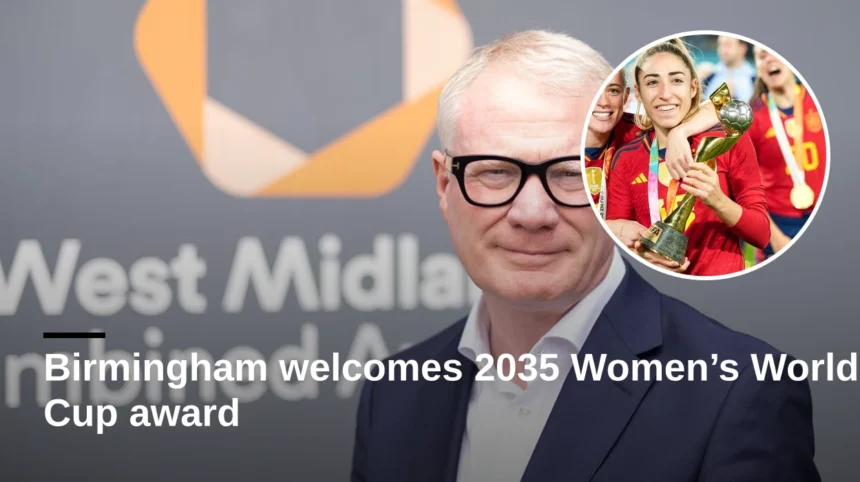
Birmingham (Birmingham Express) November 23, 2026 – Birmingham City Council and the West Midlands Combined Authority have welcomed FIFA’s decision to award the 2035 Women’s World Cup to England, Northern Ireland, Scotland and Wales. Birmingham is a candidate host city, with Aston Villa’s Villa Park among the proposed venues and Birmingham City’s planned Powerhouse stadium also identified as a possible addition. FIFA has yet to confirm the final host cities and stadiums. The tournament could bring international supporters to Birmingham while supporting the city’s existing programme of major sporting events.
What has FIFA awarded to the United Kingdom?
FIFA confirmed the United Kingdom’s successful “All Together” bid during an Extraordinary FIFA Congress. The bid was the only valid proposal in contention and was approved by acclamation, according to BBC Sport and Express & Star. England, Northern Ireland, Scotland and Wales will jointly stage the 2035 tournament.
UK Sport said the decision followed the online Congress meeting in Zurich. The Independent described the event as potentially the largest single-sport competition to be staged in the United Kingdom.
Could Birmingham host matches in 2035?
Birmingham is included as a Candidate Host City in the joint bid submitted by Birmingham City Council and the West Midlands Combined Authority. Villa Park is listed among the proposed stadiums, alongside venues including Wembley, the Etihad Stadium, Old Trafford and St James’ Park.
As reported by Birmingham Mail, Birmingham City’s proposed 62,000-capacity Powerhouse stadium in East Birmingham could also be added to the tournament plans. Sky Sports and ESPN likewise identified the Powerhouse as a possible venue. FIFA will make the final decision on host cities and stadiums at a later date.
What have Birmingham’s leaders said?
Richard Parker, Mayor of the West Midlands, said Birmingham and the wider region had a strong record of staging major sporting events. He said investment in railway stations serving Villa Park and support for the Metro extension to Birmingham City’s new ground could benefit residents and visitors beyond match days.
Mayor Parker also said hosting the tournament could encourage young girls in the region to view elite football as a possible future. His comments were published by Birmingham City Council.
Councillor Deborah Harries, Cabinet Member for Culture at Birmingham City Council, said the city was preparing to welcome the world after UEFA EURO 2028. She said a host-city selection could attract visiting supporters and benefit restaurants, bars, shops and hotels, while helping connect communities across Birmingham.
What wider benefits are being considered?
Birmingham City Council said a successful host-city selection could provide economic benefits, investment in infrastructure, jobs, skills and volunteering opportunities. The council also linked the bid to Birmingham’s wider programme of major events, including the 2022 Commonwealth Games, the 2026 European Athletics Championships and the 2027 Invictus Games.
Birmingham is also preparing for UEFA EURO 2028, when Villa Park is expected to host four matches. Aston Villa and Birmingham City both compete in the Barclays Women’s Super League, giving the city an established connection with women’s football.
How could the tournament affect Birmingham’s particular audience?
For young girls, grassroots players and women’s football supporters in Birmingham, matches featuring leading international teams could provide greater visibility for the sport and opportunities to attend elite fixtures locally. The potential presence of visiting fans could also create additional trading opportunities for hospitality, retail and accommodation businesses.
Any longer-term effect would depend on Birmingham being formally selected as a host city, the final stadium programme and the delivery of planned transport and regeneration projects. The confirmed award establishes the opportunity, but it does not yet guarantee that Birmingham will stage matches.
Background to Birmingham’s bid
Birmingham and the West Midlands submitted their Candidate Host City proposal jointly through Birmingham City Council and the West Midlands Combined Authority. Villa Park is among the proposed venues, while Birmingham City’s Powerhouse stadium remains a potential addition rather than a confirmed tournament ground. The planned stadium has been described in media reports as having a proposed capacity of 62,000. FIFA will determine the final host-city and stadium list later.