The safest areas to live in Birmingham include Sutton Coldfield, Bournville, Edgbaston, Harborne, and Hall Green South according to official West Midlands Police statistical records. These residential districts maintain total crime rates significantly below the broader metropolitan average of 105 offences per 1,000 residents.
- How Do Crime Statistics Define Neighborhood Safety in Birmingham?
- Why Is Sutton Coldfield Ranked Among the Safest Places to Live?
- What Makes Bournville an Exceptionally Safe District for Families?
- How Does Edgbaston Balance Urban Living With Low Crime Rates?
- Why Do Harborne and Hall Green South Rank High for Safety?
- How Does Crime Data in Safe Areas Compare to High-Risk Zones?
- What is the safest area to live in Birmingham overall?
- Are Birmingham suburban areas safer than the city center?
- Is Bournville a safe neighborhood for students and young families?
- How does Harborne compare to Edgbaston in terms of safety?
- What factors contribute to low crime rates in Birmingham neighborhoods?
Residential security analysis relies on local authority ward figures and police incident databases. Evaluated datasets highlight suburban sectors with high homeownership, low commercial footfall, and active neighborhood watch networks as primary drivers of long-term suburban stability.
How Do Crime Statistics Define Neighborhood Safety in Birmingham?
Crime statistics define neighborhood safety in Birmingham through recorded criminal incident rates per 1,000 residents, evaluating categories including violent offences, vehicle theft, burglary, and anti-social behavior across official West Midlands Police ward reports and local authority datasets.
Neighborhood security assessments evaluate recorded crime figures published monthly by West Midlands Police across 69 Birmingham electoral wards. Statistical frameworks categorize risk using annual crime counts per 1,000 at-risk population units. Suburban residential districts consistently record total annual rates ranging between 37 and 68 offences per 1,000 residents, whereas high-density commercial hubs exceed 140 offences per 1,000 citizens.
Analytical metrics distinguish between opportunistic acquisitive crime, violent incidents, and public order violations. Residential safety models prioritize low violent crime frequencies and minimal anti-social behavior reports. Public databases confirm that suburban zones featuring low commercial density report 60 percent fewer violent offences compared to city-center entertainment sectors.
Historical trends show a steady reduction in domestic burglaries across suburban districts due to widespread adoption of smart home security technology and targeted police patrols. Multi-agency safety partnerships utilize spatial mapping to deploy community support officers into vulnerable corridors, keeping overall residential crime levels stable across designated low-risk zones.
Long-term safety planning integrates local council street lighting initiatives, physical CCTV coverage, and property design standards. Wards exhibiting higher proportions of owner-occupied housing continuously demonstrate lower offender mobility and higher reporting rates for minor suspicious activities.
Why Is Sutton Coldfield Ranked Among the Safest Places to Live?
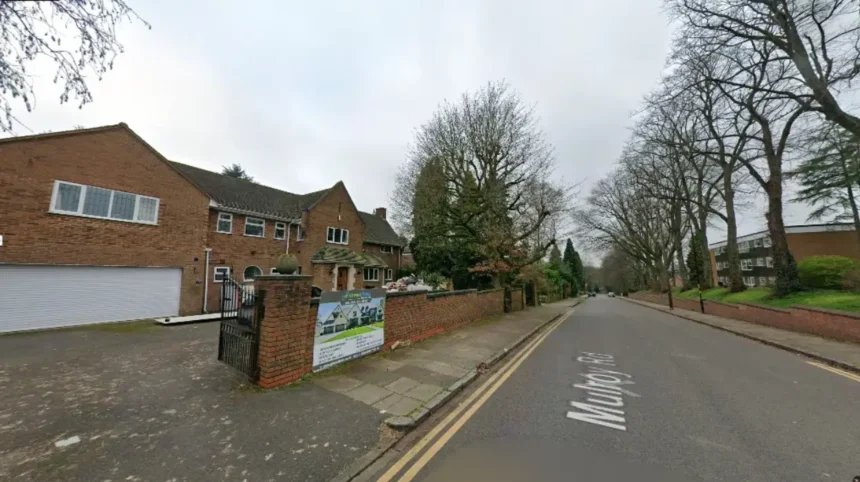
Sutton Coldfield ranks among the safest places to live due to low crime figures recorded across northern wards like Sutton Roughley, Sutton Mere Green, and Sutton Four Oaks, which report annual crime rates below 42 per 1,000 residents.
Sutton Coldfield sits in the northernmost section of the Birmingham metropolitan boundary, operating as a distinct royal town within the local government district. Official crime reports rank Sutton Roughley and Sutton Mere Green as the two safest wards in the city, recording annual crime scores of 37.8 and 38.1 per 1,000 residents respectively.
Sutton Four Oaks ranks third overall, recording 40.8 offences per 1,000 people. The area benefits from expansive natural boundaries, including the 2,400-acre Sutton Park, which limits urban transit corridors and reduces transient foot traffic. High levels of property ownership, private security integrations, and active resident associations contribute directly to low anti-social behavior numbers.
Local police data confirms that violent crime remains exceptionally low across Four Oaks and Mere Green, with the vast majority of recorded incidents limited to minor non-violent vehicle offences or opportunistic property theft. Municipal planning policies preserve single-family residential layouts, preventing commercial over-development that typically elevates crime volumes.
Transportation infrastructure connects Sutton Coldfield directly to Birmingham New Street via the Cross-City Rail Line, offering commuters safe, well-monitored transit options. The combination of historic estate homes, premier state and independent schools, and dedicated neighborhood policing teams maintains Sutton Coldfield as Birmingham’s premier low-crime residential enclave.
What Makes Bournville an Exceptionally Safe District for Families?
Bournville provides an exceptionally safe district for families due to strict conservation controls enforced by the Bournville Village Trust, historical prohibitions on commercial off-licenses, and long-standing community governance structures that maintain exceptionally low public disorder statistics.
Bournville was established in the late 19th century by the Cadbury family as a model village designed to provide high-quality housing for industrial workers. The estate remains governed by the Bournville Village Trust, which enforces strict architectural and land-use regulations across thousands of residential properties to maintain environmental quality and community cohesion.
Crime rate metrics for Bournville and Cotteridge display a low-to-medium overall score of 76.5 per 1,000 residents, remaining well below the broader city average. Property maintenance rules mandated by the trust eliminate environmental degradation indicators such as litter, graffiti, and unmaintained structures, which criminological research directly links to reduced criminal activity.
Public commercial alcohol sales were historically restricted within the core estate boundaries, suppressing late-night public disorder and street violence commonly associated with nightlife corridors. The neighborhood layout features extensive green spaces, dedicated pedestrian parkways, and low-speed residential street designs that deter high-speed vehicle crimes and street robberies.
Family-centric amenities, including high-performing primary schools, community centers, and local trust events, foster high social cohesion. High resident retention rates create strong informal surveillance networks, where neighbors actively monitor streets and communicate with West Midlands Police beat officers regarding local security concerns.
How Does Edgbaston Balance Urban Living With Low Crime Rates?
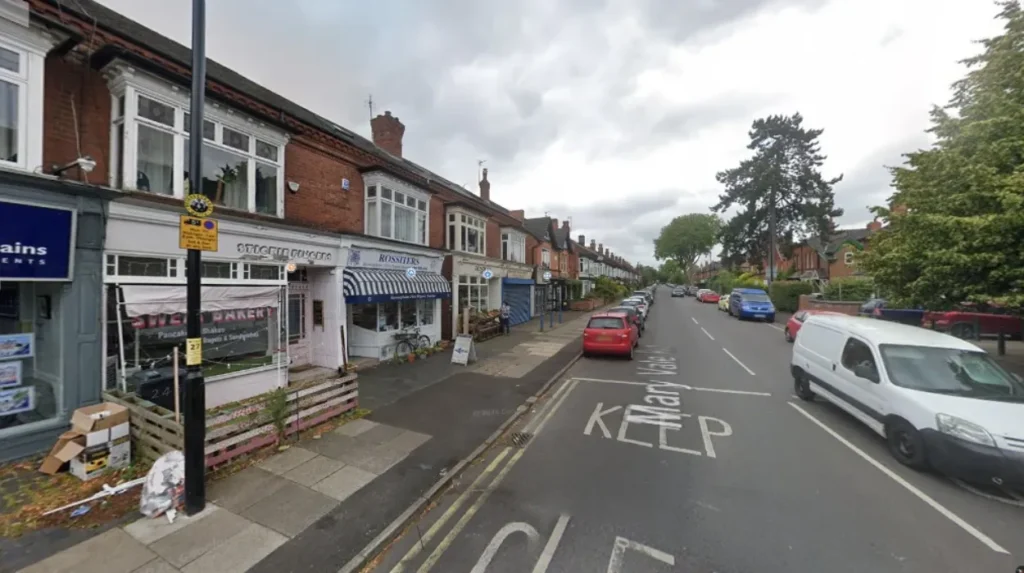
Edgbaston balances urban living with low crime rates by leveraging affluent residential pockets, private estate management, high security spending among property owners, and expansive green buffers situated just south of the city center.
Edgbaston is an affluent suburban area situated southwest of central Birmingham, famous for its historic Victorian architecture, diplomatic consulates, and major institutions like the University of Birmingham and Edgbaston Cricket Ground. The Edgbaston ward registers a low annual crime score of 64.5 per 1,000 residents, contrasting sharply with adjacent inner-city zones.
Safety variations within Edgbaston depend heavily on geographical micro-zones. The Calthorpe Estate covers a massive portion of the neighborhood, enforcing private conservation standards and maintaining private security patrols that deter property crimes. Tree-lined avenues, set-back mansions, and private cul-de-sacs limit general through-traffic, creating physical barriers to opportunistic criminal entry.
Local incident reports show that while minor vehicle crime occurs due to higher average vehicle values, violent street crime remains exceptionally rare across central and southern Edgbaston sectors. The presence of major medical facilities, including the Queen Elizabeth Hospital, ensures continuous public sector security coverage and well-lit thoroughfares throughout the day and night.
Edgbaston attracts medical professionals, academics, and corporate executives seeking proximity to commercial centers without compromising personal security. Dedicated cycling infrastructure, monitored light-rail extensions along Broad Street, and proactive neighborhood policing teams maintain Edgbaston as a safe, highly stable urban environment.
Why Do Harborne and Hall Green South Rank High for Safety?
Harborne and Hall Green South rank high for safety because of their strong suburban community structures, high owner-occupancy rates, active neighborhood watch schemes, and local police crime rates ranging between 48.9 and 80.4 per 1,000 citizens.
Hall Green South represents one of the lowest-crime wards in southern Birmingham, recording an annual crime rate of just 48.9 per 1,000 residents. The neighborhood consists primarily of semi-detached and detached suburban housing stock occupied by long-term residents, yielding high community stability and minimal public order disturbances.
Harborne sits directly west of Edgbaston, operating as a self-contained suburban village centered around a bustling High Street. Harborne records a moderate overall crime score of 80.4 per 1,000 residents, with the vast majority of offences clustered around commercial retail premises rather than surrounding quiet residential side streets.
Community watch organizations operating across both Harborne and Hall Green South maintain direct communication channels with West Midlands Police teams. Frequent community meetings allow residents to address localized concerns such as speeding, residential parking disputes, or minor property trespass before issues escalate into serious criminal activity.
Both districts benefit from high-performing primary and secondary schools, extensive public parklands like Kings Heath Park and Harborne Walkway, and strong local business associations. These socio-economic factors support stable family environments, keeping youth anti-social behavior rates significantly lower than regional norms.
How Does Crime Data in Safe Areas Compare to High-Risk Zones?
Crime data in safe areas shows total annual incident rates between 37 and 68 per 1,000 residents, whereas high-risk Birmingham zones like Handsworth and Ladywood record crime rates exceeding 140 per 1,000 population units.
Comparative crime mapping across West Midlands Police wards reveals stark geographical contrasts in public safety. Wards categorized as low-risk, including Sutton Roughley, Hall Green South, and Oscott, record overall crime scores under 65 per 1,000 people. In contrast, urban core wards such as Ladywood, Handsworth, and Bordesley & Highgate report figures ranging from 112 to 140 offences per 1,000 citizens.
Category breakdowns demonstrate that high-risk zones experience disproportionately high volumes of violent offences, drug activity, and public order incidents tied to commercial density and transit hubs. Low-risk suburban wards record minimal violent crime, with recorded incidents predominantly comprising minor theft, low-level property damage, or isolated vehicle interference.
Anti-social behavior statistics highlight a similar divide across the metropolitan area. leafy suburban wards like Sutton Four Oaks recorded fewer than 50 anti-social behavior incidents annually, whereas central city sectors reported over 600 incidents due to dense late-night commercial activity and major public transportation interchanges.
Understanding these statistical variations enables prospective home buyers and renters to evaluate location risks accurately. Statistical analysis confirms that selecting suburban wards in northern or southern Birmingham dramatically reduces statistical exposure to street crime and domestic burglary.
What is the safest area to live in Birmingham overall?
Sutton Roughley and Sutton Mere Green rank as the safest overall areas in Birmingham based on West Midlands Police data. Both wards maintain annual crime rates under 39 offences per 1,000 residents, featuring extremely low levels of violent crime, minimal anti-social behavior, and peaceful suburban housing environments.
Are Birmingham suburban areas safer than the city center?
Yes, suburban areas like Sutton Coldfield, Bournville, and Hall Green are significantly safer than the city center. Central zones like Ladywood experience high commercial footfall and nightlife activity, driving crime rates above 140 per 1,000 people, whereas outer suburbs maintain residential crime rates below 70 per 1,000 residents.
Is Bournville a safe neighborhood for students and young families?
Bournville is considered one of Birmingham’s safest districts for families and students due to community governance by the Bournville Village Trust. The area features low violent crime numbers, well-maintained parks, historical anti-disorder layout rules, and easy transport access to the University of Birmingham campus.
How does Harborne compare to Edgbaston in terms of safety?
Both Harborne and Edgbaston offer high safety levels compared to the city average. Edgbaston records a slightly lower residential crime rate of 64.5 per 1,000 due to large private estates, while Harborne records 80.4 per 1,000, with incidents mostly confined to its high-street retail district rather than quiet residential side streets.
What factors contribute to low crime rates in Birmingham neighborhoods?
Low crime rates in Birmingham neighborhoods are driven by high homeownership rates, active neighborhood watch groups, low commercial retail density, and private estate management rules. Areas with extensive green spaces and restricted through-traffic naturally deter opportunistic street crimes and public order offences.