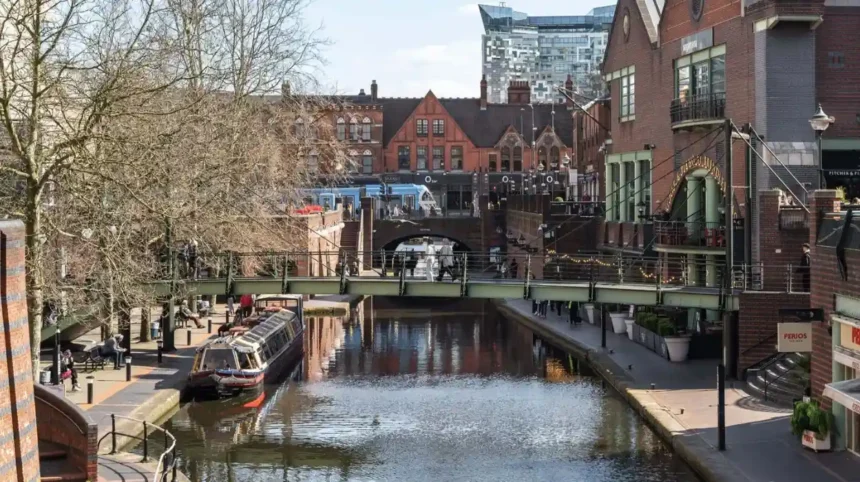
Birmingham is the second-largest city in England and one of the United Kingdom’s most important centres of industry, commerce, culture, and education. Located in the West Midlands, Birmingham developed from a medieval market town into the heart of the Industrial Revolution. Today, the city combines historic landmarks, Victorian architecture, world-class museums, extensive canal networks, modern shopping districts, and diverse cultural communities.
- Why is Birmingham an important destination for first-time visitors?
- What should visitors know before arriving in Birmingham?
- What makes Birmingham’s canal network one of the city’s best attractions?
- Why should first-time visitors explore the Birmingham Museum and Art Gallery?
- What can visitors discover in the Jewellery Quarter?
- Why is the Library of Birmingham worth visiting?
- What makes the Bullring a significant Birmingham landmark?
- Why should visitors experience Birmingham’s food culture?
- What historical significance does Aston Hall have?
- Why is the Black Country Living Museum important for understanding Birmingham?
- What makes Cadbury World a notable visitor attraction?
- Why should visitors spend time in Digbeth?
- What can visitors learn at Thinktank Birmingham Science Museum?
- Why is Birmingham’s Victorian architecture significant?
- What role do parks and green spaces play in Birmingham?
- How can visitors experience Birmingham like a local?
For first-time visitors, Birmingham offers a concentrated introduction to British industrial history, urban regeneration, and contemporary cultural life. Understanding the city’s historical foundations helps visitors appreciate its modern attractions and neighbourhoods. This guide explains how to plan a first visit to Birmingham like a local while highlighting the fifteen most significant places and experiences that define the city.
Why is Birmingham an important destination for first-time visitors?
Birmingham combines more than 1,000 years of urban history with nationally significant museums, historic canals, industrial heritage sites, cultural institutions, and modern entertainment districts. First-time visitors can experience Britain’s industrial legacy, multicultural communities, and architectural transformation within a compact and accessible city centre.
Birmingham’s documented history extends to the Anglo-Saxon period. The settlement appeared in the Domesday Book of 1086 as a small manor. By the eighteenth century, Birmingham became a major manufacturing centre. During the Industrial Revolution, the city emerged as a global leader in metalworking, engineering, and innovation.
The city contributed significantly to technological advancement. Birmingham manufacturers produced steam engine components, jewellery, firearms, buttons, and scientific instruments. The city’s industrial success led to rapid population growth throughout the nineteenth century.
Today, Birmingham welcomes millions of visitors annually. Major regeneration projects transformed former industrial districts into cultural and commercial destinations. Historic infrastructure remains visible throughout the city, providing a direct connection between Birmingham’s industrial past and present-day urban landscape.
To experience these historic landmarks in person today, consult our comprehensive How to Plan Your First Visit to Birmingham Like a Local for itineraries and visiting parameters.
What should visitors know before arriving in Birmingham?
First-time visitors should understand Birmingham’s neighbourhood structure, transport connections, historical districts, and major attractions. Most leading sites are accessible on foot from the city centre, while public transport provides convenient access to surrounding heritage locations and cultural institutions.
Birmingham is served by several major transport hubs. Birmingham New Street Station is one of the busiest railway stations in the United Kingdom. Birmingham Airport provides international connections, while regional rail services link the city with London, Manchester, Liverpool, Bristol, and Edinburgh.
The city centre is organised around several distinct districts. The Jewellery Quarter preserves Birmingham’s historic jewellery manufacturing heritage. Digbeth reflects the city’s industrial character and creative economy. The Colmore Business District contains many Victorian and modern commercial buildings.
Visitors benefit from spending at least two to three days exploring the city. This timeframe allows adequate opportunities to experience major museums, historic sites, cultural venues, and local neighbourhoods.
What makes Birmingham’s canal network one of the city’s best attractions?
Birmingham’s canal system represents one of Britain’s most important industrial transport networks. The city contains approximately 35 miles of navigable canals, supporting industrial expansion during the eighteenth and nineteenth centuries while providing attractive leisure spaces for modern visitors.
Many visitors are surprised to learn that Birmingham has more miles of canals than Venice. Although the comparison measures different geographical boundaries, Birmingham’s extensive canal infrastructure remains a defining feature of the city.
The canal network expanded rapidly between the 1760s and 1830s. Waterways transported coal, iron, manufactured goods, and raw materials across the Midlands. These transport links reduced costs and accelerated industrial growth.
Today, canal-side regeneration projects transformed former industrial corridors into vibrant public spaces. Visitors can walk along towpaths, observe historic locks, and explore restored warehouses that now house restaurants, offices, and residential developments.
The area surrounding Brindleyplace and the canal basin offers one of Birmingham’s most attractive urban environments.
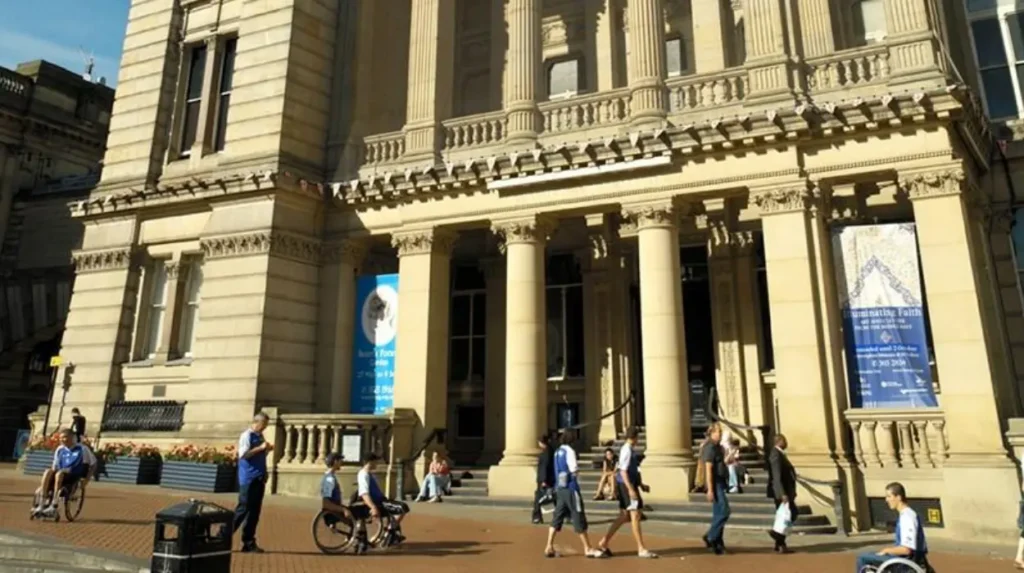
Why should first-time visitors explore the Birmingham Museum and Art Gallery?
The Birmingham Museum and Art Gallery preserves nationally significant collections covering fine art, archaeology, local history, and industrial heritage. Its exhibitions provide essential context for understanding Birmingham’s development from a medieval settlement into a major industrial city.
Established in 1885, the museum reflects Victorian commitments to public education and cultural enrichment. The building itself represents an important example of civic architecture.
The institution is internationally known for its collection of Pre-Raphaelite artworks. The Pre-Raphaelite movement emerged in 1848 and included artists such as Dante Gabriel Rossetti and Edward Burne-Jones.
Archaeological collections document thousands of years of regional history. Historical displays explain Birmingham’s industrial development, social transformation, and civic achievements.
For visitors seeking historical context, the museum serves as an ideal starting point.
What can visitors discover in the Jewellery Quarter?
The Jewellery Quarter preserves one of Europe’s most important jewellery manufacturing districts. Approximately 40 percent of Britain’s jewellery has historically been produced here, making the area a unique combination of industrial heritage, craftsmanship, and architectural preservation.
The district developed during the eighteenth century as skilled artisans established workshops and manufacturing premises. By the nineteenth century, thousands of workers produced jewellery, silverware, medals, and decorative metal goods.
Many historic workshops survive today. The area’s street pattern, building stock, and industrial character remain largely intact. This preservation provides valuable insight into Victorian manufacturing practices.
The district contains hundreds of listed buildings. Heritage attractions explain jewellery production techniques and Birmingham’s role in international trade.
Visitors can observe contemporary craftspeople working alongside businesses that maintain centuries-old traditions.
Why is the Library of Birmingham worth visiting?
The Library of Birmingham combines modern architecture with extensive historical collections documenting local, regional, and national history. It functions as both a public library and a major research centre for genealogy, archives, and historical scholarship.
Opened in 2013, the library replaced previous facilities while incorporating advanced archival preservation systems. The building quickly became one of Birmingham’s most recognisable modern landmarks.
Its collections include historical photographs, newspapers, maps, manuscripts, and civic records. Researchers investigating family history frequently consult these archives.
The library’s elevated terraces provide panoramic views across Birmingham’s skyline. These viewing areas help visitors understand the scale of the city’s development and regeneration.
Educational exhibitions regularly highlight significant aspects of Birmingham’s history and culture.
What makes the Bullring a significant Birmingham landmark?
The Bullring represents nearly one thousand years of commercial activity in Birmingham. The site evolved from a medieval market area into one of the United Kingdom’s most visited retail destinations while maintaining its historical importance within the city centre.
Markets operated in this location from the twelfth century. Commercial activity helped establish Birmingham as an important regional trading centre.
Modern redevelopment transformed the area during the early twenty-first century. Contemporary architecture exists alongside historic landmarks, demonstrating Birmingham’s ability to balance preservation and urban renewal.
The nearby church of St Martin in the Bull Ring preserves centuries of religious and community history. Archaeological evidence indicates continuous occupation and activity around this site for hundreds of years.
The Bullring remains a central gathering point for residents and visitors.
Why should visitors experience Birmingham’s food culture?
Birmingham’s food scene reflects centuries of migration, trade, and cultural exchange. The city offers one of Britain’s most diverse culinary landscapes, with strong influences from South Asian, Caribbean, Middle Eastern, and European communities.
Population growth during the nineteenth and twentieth centuries attracted workers from across Britain and the wider world. Immigration patterns significantly shaped Birmingham’s cultural identity.
The city became particularly influential in the development of British South Asian cuisine. Areas such as the Balti Triangle gained national recognition for distinctive restaurant traditions.
Food culture provides evidence of Birmingham’s multicultural evolution. Local markets, independent restaurants, and community businesses demonstrate how migration influenced economic and social development.
Exploring neighbourhood dining districts helps visitors understand contemporary Birmingham beyond traditional tourist attractions.
What historical significance does Aston Hall have?
Aston Hall is one of England’s finest surviving Jacobean country houses. Constructed between 1618 and 1635, the building preserves important evidence of seventeenth-century architecture, politics, and elite domestic life.
The house was commissioned by Sir Thomas Holte during a period of significant political and social change in England.
During the English Civil War, Aston Hall experienced military action. Damage from parliamentary artillery remains visible on parts of the structure.
The building contains period interiors, decorative plasterwork, historic furnishings, and collections illustrating elite lifestyles during the early modern period.
Its survival provides valuable insight into architectural design before industrial urbanisation transformed Birmingham.
Why is the Black Country Living Museum important for understanding Birmingham?
The Black Country Living Museum demonstrates the industrial environment that shaped Birmingham and the wider West Midlands. Historic buildings, reconstructed workshops, and working demonstrations explain how industrial communities functioned during the nineteenth and twentieth centuries.
Located near Birmingham, the museum preserves structures relocated from across the region. These include houses, shops, factories, and public buildings.
Industrial heritage interpretation focuses on coal mining, metalworking, engineering, and manufacturing. Visitors observe technologies that contributed to Britain’s industrial expansion.
Historical research supports the reconstruction of working environments. Educational programmes explain social conditions, employment patterns, and technological innovation.
The museum provides essential context for understanding Birmingham’s economic development.
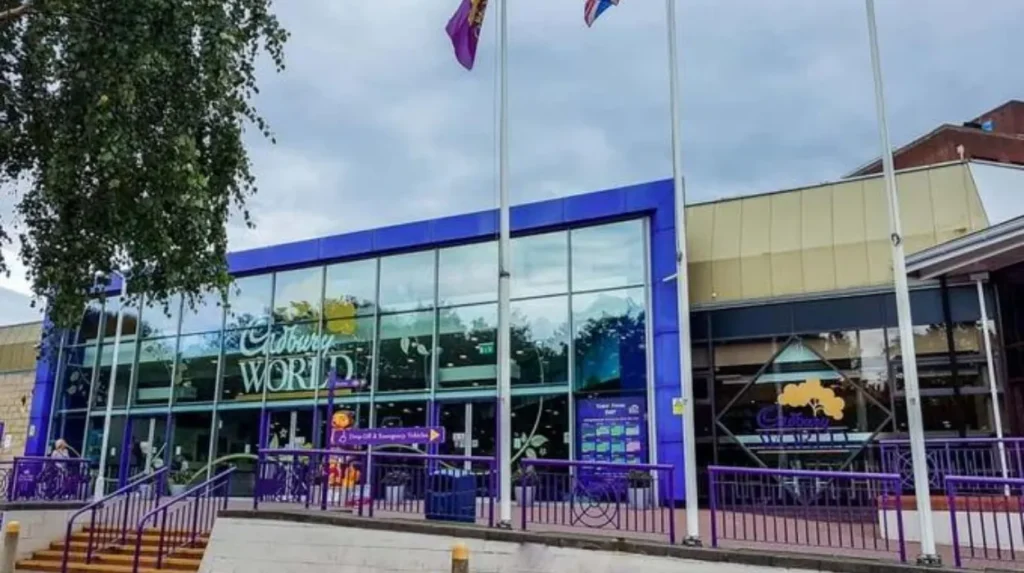
What makes Cadbury World a notable visitor attraction?
Cadbury World explores the history of one of Britain’s most influential manufacturing companies. The attraction explains industrial production, corporate welfare initiatives, and the development of a globally recognised confectionery brand.
The business was founded by John Cadbury in Birmingham during 1824.
The company’s expansion led to the creation of Bournville, a planned community designed to improve living conditions for employees. This approach reflected broader nineteenth-century debates regarding industrial welfare and urban planning.
Exhibitions document manufacturing processes, business history, and social reform initiatives associated with the company.
The attraction connects industrial history with contemporary consumer culture.
Why should visitors spend time in Digbeth?
Digbeth represents Birmingham’s industrial heritage and creative future. Historic factories, warehouses, and transport infrastructure coexist with cultural venues, independent businesses, and contemporary artistic activity.
The district developed as an industrial zone during the eighteenth and nineteenth centuries. Manufacturing facilities and commercial premises dominated the area.
Recent regeneration encouraged creative industries to occupy former industrial buildings. Adaptive reuse preserved historic architecture while supporting new economic activity.
Street art, performance venues, studios, and cultural events contribute to Digbeth’s reputation as one of Birmingham’s most dynamic neighbourhoods.
The district demonstrates how historic industrial landscapes can support contemporary urban development.
What can visitors learn at Thinktank Birmingham Science Museum?
Thinktank explains scientific innovation, engineering achievements, and industrial technologies that shaped Birmingham’s development. The museum connects local inventions with broader national and international technological progress.
Birmingham played a major role in Britain’s scientific and industrial history. Inventors, engineers, and manufacturers contributed to developments in transport, manufacturing, and communication.
Museum collections include steam engines, vehicles, machinery, and scientific instruments. Exhibits explain technological processes in accessible formats.
Educational displays highlight the relationship between innovation and economic growth.
For visitors interested in industrial history, Thinktank complements Birmingham’s broader heritage attractions.
Why is Birmingham’s Victorian architecture significant?
Birmingham’s Victorian buildings reflect the city’s transformation into a major industrial and commercial centre. Public institutions, civic structures, and commercial premises demonstrate architectural ambitions associated with nineteenth-century prosperity and urban expansion.
Rapid economic growth generated substantial investment in public infrastructure. Civic leaders commissioned buildings that projected confidence and permanence.
Notable examples include municipal offices, educational institutions, libraries, and cultural venues. Architectural styles incorporated Gothic Revival, Classical, and Renaissance influences.
These structures remain important components of Birmingham’s urban identity. Preservation initiatives protect many buildings through statutory listing and conservation policies.
Architectural heritage provides visible evidence of Birmingham’s industrial success.
What role do parks and green spaces play in Birmingham?
Birmingham’s parks preserve environmental resources while reflecting historical approaches to public health, recreation, and urban planning. Green spaces became increasingly important during the nineteenth century as industrialisation intensified population growth and urban density.
Municipal authorities established public parks to improve living conditions and provide recreational opportunities.
Sites such as Cannon Hill Park illustrate Victorian commitments to public welfare. Landscaped environments offered residents access to fresh air and organised leisure activities.
Today, parks support biodiversity, community events, and outdoor recreation. They also preserve historical landscape features and commemorative monuments.
Green spaces contribute significantly to Birmingham’s quality of life.
How can visitors experience Birmingham like a local?
Experiencing Birmingham like a local involves combining major attractions with neighbourhood exploration, public transport use, canal walks, local markets, cultural events, and independent businesses. This approach provides a balanced understanding of the city’s historical foundations and contemporary identity.
Residents often move between historic and modern environments during daily life. A typical Birmingham experience includes time spent in commercial districts, cultural institutions, public parks, and canal-side areas.
Visitors benefit from exploring beyond major landmarks. Local neighbourhoods reveal architectural diversity, community history, and cultural traditions that shaped Birmingham’s development.
The city’s evolution from medieval market town to global industrial centre remains visible throughout its streets, buildings, and institutions.
For first-time visitors, Birmingham offers a comprehensive introduction to British urban history. Its museums, canals, historic districts, industrial heritage sites, and multicultural communities demonstrate how centuries of economic, social, and technological change created one of the United Kingdom’s most distinctive cities. Understanding these historical layers allows visitors to experience Birmingham not simply as a destination, but as a living record of Britain’s transformation across more than a millennium.
Is Birmingham worth visiting for first-time visitors?
Yes. Birmingham offers a combination of industrial heritage, museums, canals, historic architecture, shopping districts, cultural attractions, and diverse food experiences, making it one of England’s most rewarding cities for first-time visitors.