Relocating to requires understanding average housing costs, expanding employment sectors, neighborhood safety, and public transportation networks across the metro area.
Moving to Birmingham involves evaluating key financial, geographic, and economic conditions before securing property or signing leases.
The municipality functions as a primary economic center within the West Midlands region, supporting a population exceeding 1.14 million residents. Historical industrial expansion transformed the territory into a major industrial center during the nineteenth century.
Modern municipal investments have shifted the regional landscape toward financial technology, advanced manufacturing, and academic medical infrastructure.
Housing dynamics present distinct variations between central urban districts and peripheral residential sectors. Average residential property prices across the urban boundary stand at £235,000, while average monthly rental payments reach £1,106.
Understanding municipal transport infrastructure, including the West Midlands Metro and national rail interconnections, allows residents to plan daily commuting routes efficiently. Local tax assessments, climate patterns, and educational catchments further dictate long-term settlement outcomes for incoming households.
What Is the Cost of Living in Birmingham?
The cost of living in Birmingham requires an average monthly expenditure of £1,942 for single individuals and £3,980 for four-person families including housing costs.
Living costs in the municipality remain lower than national capital averages while exceeding rural regional baselines. Housing represents the largest single monthly expense for incoming residents across all demographic segments.
Average monthly rental fees for a one-bedroom apartment in the central business district equal £1,058. Single-bedroom units located outside the central core average £831 per month.
Three-bedroom urban residential properties require £1,664 monthly, whereas suburban equivalent properties average £1,275 per month.
Essential utility services combining electricity, heating, water, and municipal waste removal average £286 per month for standard housing units.
High-speed broadband internet connectivity adds approximately £36 to monthly utility commitments. Basic grocery requirements for one individual total £220 per month based on standard consumer index measurements.
Monthly public transit commuting passes cost £70 per person across standard urban service zones. Overall consumer price indices place regional baseline costs significantly below metropolitan London figures.
What Are the Best Neighborhoods to Live in Birmingham?
The best neighborhoods to live in Birmingham include Digbeth, Edgbaston, Harborne, Jewellery Quarter, and Solihull based on safety, amenities, and transit connection metrics.
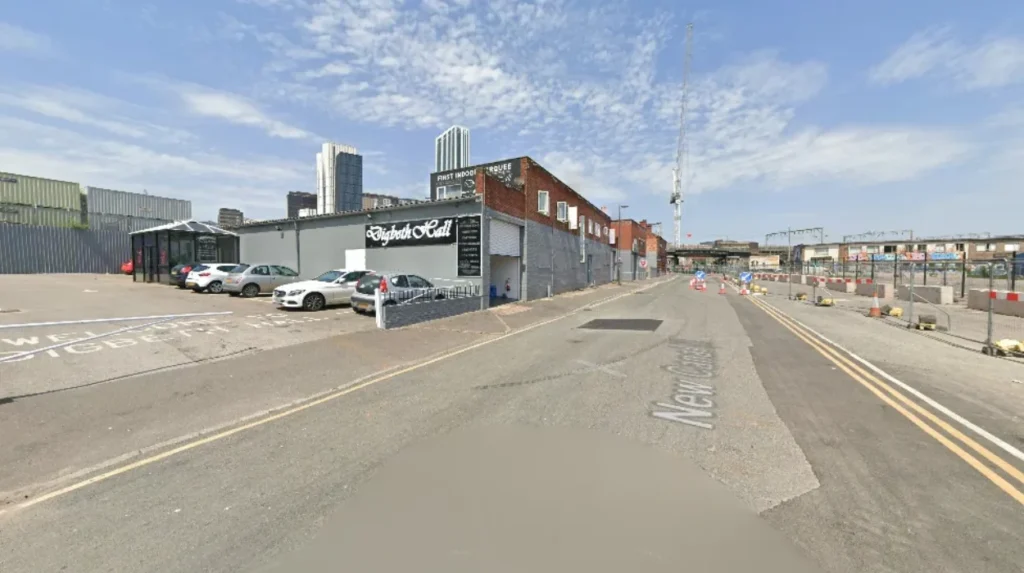
Selecting a residential area depends on individual priorities regarding commute duration, property footprint, and local amenities. Digbeth serves as a major creative and digital media district featuring converted industrial warehouses and commercial venues.
Edgbaston provides suburban residential streets, traditional housing stock, and access to educational institutions alongside professional sports venues. Harborne offers a suburban village atmosphere centered on high street commercial retail, primary healthcare facilities, and Victorian housing options.
The Jewellery Quarter contains over 500 industrial businesses alongside modern apartment developments and historic architectural structures. Solihull provides suburban housing developments, public parks, top-tier municipal school access, and direct rail link connections.
Examples of urban loft developments include The Custard Factory complex in Digbeth and St Pauls Square properties in Jewellery Quarter. Examples of suburban family housing developments include Moor Pool Heritage Estate in Harborne and Calthorpe Estate properties in Edgbaston.
What Is the Current Job Market like in Birmingham?
The job market in Birmingham exhibits strong growth across financial services, digital technology, life sciences, healthcare, construction, and advanced engineering sectors.
Economic expansion in the municipality is driven by major commercial relocations, municipal regeneration schemes, and corporate investments. Regional employment levels remain supported by large enterprise headquarters, public administration offices, and higher education institutions.
The healthcare sector operates as a primary employer through the University Hospitals Birmingham NHS Foundation Trust, supporting over 20,000 workers. The financial and professional services industry employs over 50,000 individuals across regional operational centers.
Major technology investment initiatives have expanded the digital economy, creating positions in software development, data analytics, and cybersecurity. Construction and civil engineering sectors maintain active hiring due to high-speed rail projects and urban renewal developments. The average net monthly salary for full-time employees within the metropolitan area stands at £2,733.
Corporate employers establishing major operations include HSBC UK, PwC, Goldman Sachs, and Advanced Computer Software. Educational institutions such as the University of Birmingham supply advanced workforce talent across technical disciplines.
How Does Public Transportation Work in Birmingham?
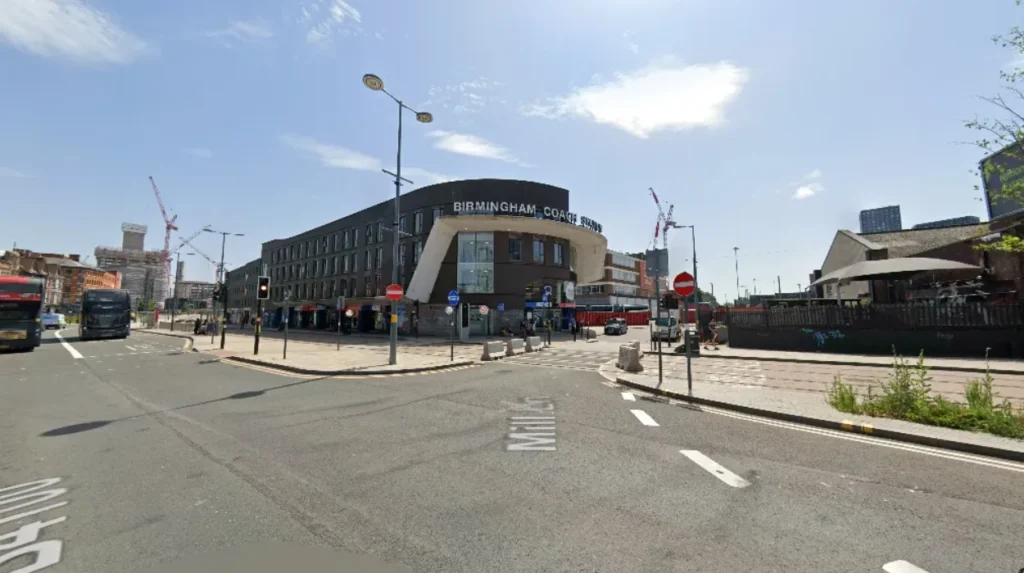
Public transportation in Birmingham operates through a integrated network of commuter rail services, the West Midlands Metro light rail system, and municipal bus routes.
Commuters navigate the metropolitan area using coordinated regional transit systems managed under unified ticketing frameworks. Grand Central and New Street Station function as primary rail hubs connecting local commuters to national rail destinations.
The West Midlands Metro light rail line connects central urban districts with neighboring regional commercial nodes including Wolverhampton. Local bus transit networks operate continuously across peripheral residential suburbs and central commercial corridors.
Swift smartcards and contactless payment systems enable seamless transfer across different transit modes within specified travel zones. Standard single bus transit tickets cost £3.00, while daily multi-transit travel passes average £4.80. Rail commuting intervals between suburban stations and the central station average 10 to 20 minutes.
Major roadway networks include the M5, M6, and M42 motorways encircling the metropolitan area. Traffic congestion during peak commuting hours frequently increases vehicle travel durations along major arterial roadways.
What Are the Local Schools and Educational Standards in Birmingham?
Local schools in Birmingham offer high educational standards managed by the local education authority alongside grammar schools, academies, and private institutions.
Educational infrastructure across the municipality includes state-funded primary schools, comprehensive secondary institutions, selective grammar schools, and independent academies. The Office for Standards in Education evaluates local institutions to maintain national performance benchmarks.
Selective grammar entry requires performance qualification through the West Midlands Grammar Schools entrance examinations. Higher education facilities contribute heavily to regional academic performance and scientific research outputs.
Primary school allocation depends strictly on geographic catchment boundaries and proximity to residential addresses.
University of Birmingham School provides combined secondary and sixth-form educational programming aligned with university academic frameworks. King Edward VI Foundation operates multiple grammar schools ranked among top academic institutions nationally.
Higher education options include the University of Birmingham, Birmingham City University, Aston University, and University College Birmingham. Total university student population metrics across all local campuses exceed 80,000 enrolled individuals annually.
What is the average salary needed to live comfortably in Birmingham?
An individual requires an average net monthly income of £2,000 to cover housing, utilities, food, and transit. Families typically require a combined household income exceeding £4,000 monthly to maintain comfortable suburban living standards and cover childcare expenses.
Is Birmingham a safe city to move to with family?
Birmingham contains many safe, family-oriented residential districts with active community policing and strong school catchments. Areas such as Harborne, Edgbaston, and Solihull maintain consistently lower crime rates compared to high-density central urban commercial zones.
How does the cost of living in Birmingham compare to London?
Overall living costs in Birmingham are approximately 30% to 40% lower than London across key expenditure categories. Housing rental prices present the largest variance, remaining up to 60% lower than equivalent properties in capital locations.
What driving rules apply within central Birmingham?
Central Birmingham operates a Clean Air Zone requiring non-compliant vehicles to pay daily access charges. Motorists driving higher-emission vehicles must check emission compliance standards or utilize public park-and-ride facilities outside the central ring road.
What is the climate like throughout the year in Birmingham?
The region experiences a temperate maritime climate characterized by moderate summers and cool, wet winters. Average summer temperatures range between 18°C and 22°C, while winter averages remain between 2°C and 7°C with frequent rainfall.