Key Points
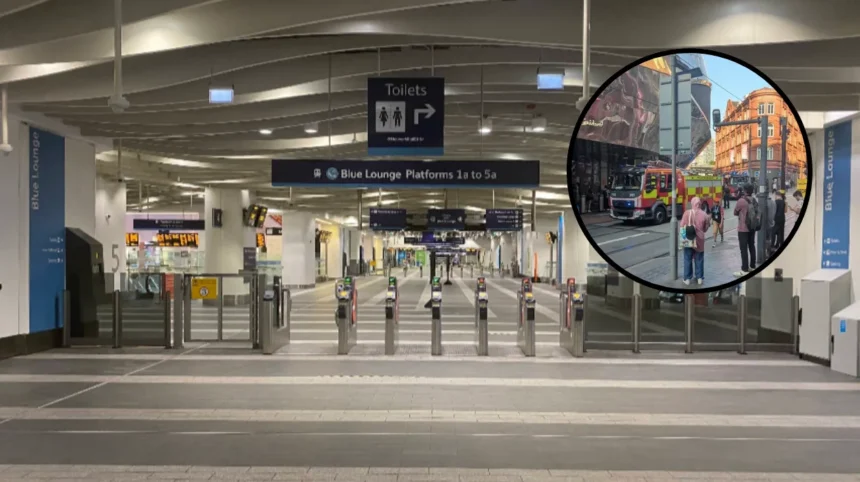
- Mass Evacuation Triggered: A passenger train suffered a severe engine failure at approximately 7:00 am on Friday, 10 July 2026, causing thick smoke to fill multiple underground platforms and forcing the complete evacuation of Birmingham New Street station.
- Rapid Emergency Response: Crews from Aston, Bournbrook, and Highgate Fire Stations arrived at the scene in under five minutes, deploying thermal imaging cameras to secure the scene and isolate hotspots in the engine cab.
- Widespread Rail Disruption: The incident caused extensive cancellations and cascading delays across major rail networks, heavily impacting CrossCountry, West Midlands Railway, London Northwestern Railway, and Avanti West Coast services.
- Safety Protocols Enforced: Network Rail and emergency services closed the travel hub entirely during the morning rush hour to safely disperse the heavy smoke accumulation from the enclosed subterranean platforms.
- Full Service Resumption: Following rigorous safety checks by engineers and the West Midlands Fire Service, the station was safely reopened to the public later that morning, with formal investigations launched into the mechanical failure.
Birmingham (Birmingham Express) July 13, 2026 — A major rush-hour emergency occurred at the heart of the UK’s rail network this morning when a passenger train suffered a critical engine failure, filling multiple platforms with smoke and triggering a mass evacuation of Birmingham New Street station. Hundreds of commuters were ordered to leave the travel hub immediately after the incident began at approximately 7:00 am, forcing a multi-agency emergency response and causing widespread cancellations and delays across the national rail infrastructure. West Midlands Fire Service deployed teams from three local stations who arrived within five minutes to secure the locomotive, using thermal imaging technology to ensure the engine cab had safely cooled down before allowing the public back into the terminal.
What Caused the Birmingham New Street Train Fire?
The sudden disruption that crippled the Midlands’ busiest transport hub stems directly from a severe mechanical breakdown within a passenger train’s propulsion system. According to an official statement provided by a spokesperson for the West Midlands Fire Service to reporter Nick Horner of BirminghamLive, the emergency response was initiated immediately after reports highlighted that an incoming passenger train had suffered a catastrophic engine failure upon entering the station area.
As reported by Nick Horner of BirminghamLive, the West Midlands Fire Service spokesman stated that:
“The incident involved a passenger train suffering from engine failure, which filled a number of platforms with smoke. As a precaution, Birmingham New Street was evacuated.”
Because Birmingham New Street’s platforms are located entirely underground, they operate within an enclosed, subterranean environment. When the engine failed, the resulting exhaust and smoke became trapped under the low ceilings, rapidly spreading across several adjacent platforms. This heavy smoke accumulation severely compromised visibility and air quality, leaving station operators with no choice but to initiate emergency evacuation protocols to protect thousands of passengers arriving for the morning rush hour.
How Did Emergency Services Respond to the Rail Emergency?
The response from regional emergency services was instantaneous, preventing what could have escalated into a far more hazardous public safety crisis. Fire control rooms dispatched multiple appliances to the city centre location as soon as the first alarms were raised.
As reported by regional journalists covering the West Midlands Fire Service brief, the emergency infrastructure reacted with high-velocity deployment protocols. The fire service spokesman confirmed to local media that:
“Crews from Aston, Bournbrook and Highgate Fire Stations attended the incident, with first crews arriving in under 5 minutes.”
What Tactics Did Firefighters Use to Secure the Train?
Upon arriving at the smoke-filled platforms, firefighters found that the rail crew had already initiated basic emergency shutdown procedures. This early intervention by the train crew drastically lowered the risk of an open structural fire breaking out beneath the city centre.
As reported by the editorial team at BirminghamLive, the West Midlands Fire Service spokesman further detailed the tactical operation, stating that:
“The train was shut down prior to our crews’ arrival, where they made sure the train and carriages were safe, using thermal imaging cameras to identify hotspots in the engine cab which had thankfully started to cool.”
By utilising advanced thermal imaging cameras, fire crews were able to peer through the dense smoke and pinpoint the exact source of the thermal spike within the engine casing. This allowed them to monitor the cooling process precisely, ensuring no hidden embers or electrical faults could re-ignite the mechanical components before the train was cleared for extraction from the platform.
Explore More Local Birmingham News
Queen Elizabeth Hospital Issues Urgent Heatwave Warning: Birmingham 2026
Carpenter Uses Poetry to Challenge Cancer Taboos: Handsworth 2026
What Was the Scale of the Rail Disruption Across the Midlands?
The impact of the evacuation at Birmingham New Street reverberated across the entire United Kingdom rail network due to the station’s status as a primary central node for cross-country travel. Network Rail immediately halted all inbound and outbound train movements, locking down signals to prevent trains from entering the smoke-logged tunnels leading into the station.
As reported by transport correspondents for regional news outlets, thousands of passengers found themselves stranded outside the station gates or stuck on stationary trains outside the city limits. The immediate halt in operations triggered a massive logistical backlog for multiple train operating companies, including:
- CrossCountry: Long-distance services connecting the North East and Scotland to the South West were halted, causing delays that extended hundreds of miles outside the West Midlands.
- West Midlands Railway & London Northwestern Railway: Commuter networks serving local routes, including lines to Coventry, Wolverhampton, Walsall, and Lichfield Trent Valley, experienced total cancellations during the peak commuting window.
- Avanti West Coast: Mainline services running along the West Coast Main Line between London Euston, Manchester, and Liverpool faced severe delays as platforms at New Street remained inaccessible.
To keep the public updated during the rapidly evolving crisis, Network Rail’s media relations team issued advice across social media and digital departure boards, urging passengers to check their journeys online, seek alternative bus routes, or delay travel until the smoke could be safely cleared via the station’s industrial ventilation systems.
When Did Birmingham New Street Reopen to the Public?
Following an intensive operation to clear the platforms of toxic smoke and ensure the structural safety of the affected terminal area, emergency services and Network Rail engineers successfully declared the station safe for public re-entry later that morning.
Once the thermal imaging data confirmed that the broken-down train posed zero further risk of ignition, fire crews systematically handed control of the platforms back to Network Rail safety officers. The industrial extraction fans worked to vent the remaining fumes out of the subterranean levels, allowing transport police to reopen the main concourse doors.
While the physical station reopened and passengers were permitted back onto the platforms, the train operating companies warned that the knock-on effects of the morning cancellations would persist throughout the afternoon. Engineers worked behind the scenes to couple the failed train to a rescue locomotive, moving it out of the active platform lane to a nearby depot for full mechanical forensics.
What Legal and Regulatory Investigations Will Follow This Incident?
With the immediate threat resolved, attention has quickly shifted toward preventing similar mechanical failures in the future. The incident has raised questions regarding fleet maintenance standards and the reliability of aging rolling stock currently operating on UK tracks.
Independent regulatory bodies, including the Rail Accident Investigation Branch (RAIB) and the Office of Rail and Road (ORR), are expected to review the circumstances surrounding the engine failure. Investigators will look closely at the maintenance logs of the specific passenger train involved to determine if the failure was an unpredictable component breakdown or a systemic issue that should have been caught during routine depot checks.
Furthermore, the smooth execution of the mass evacuation will be analysed by Network Rail and the British Transport Police to evaluate the efficiency of the station’s emergency public address systems and crowd control measures. Observers noted that while the financial toll of the disruption is substantial—coming alongside separate infrastructure challenges such as Birmingham City Council’s recent mixed outcomes in property sales—the rapid response of the West Midlands Fire Service undoubtedly prevented any civilian casualties or severe injuries during this high-stakes morning emergency.