Key Points
- Queen Elizabeth Hospital Birmingham has issued an urgent public health warning as temperatures are forecast to hit 33°C within a 48-hour window.
- Members of the public, particularly outpatients, are being strongly advised to take immediate precautions, including carrying bottled water when travelling.
- Healthcare officials have highlighted specific critical medical risks to look out for when vulnerable individuals become unwell in extreme heat.
- The intervention comes amid a broader, intensive heatwave hitting the city of Birmingham and surrounding regions, prompting media-wide coverage on public safety.
- Journalistic reports emphasize the severe pressure that prolonged hot weather places on local National Health Service (NHS) infrastructure and emergency care departments.
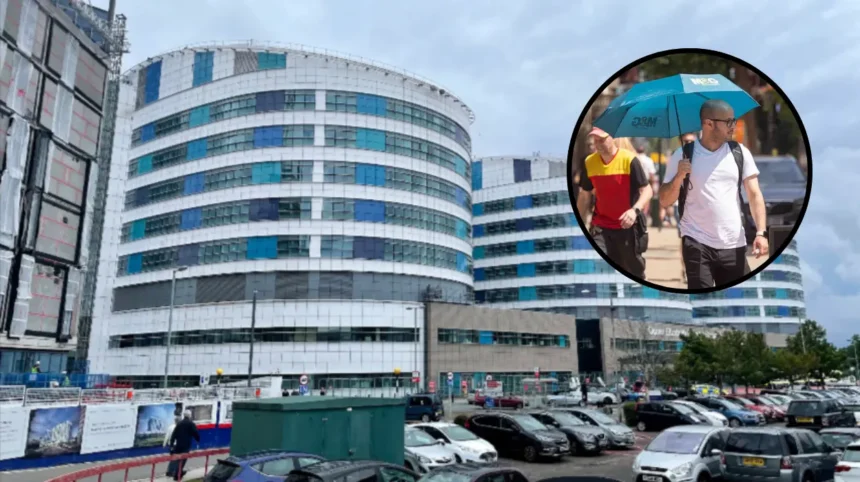
Birmingham (Birmingham Express) July 9, 2026 – Queen Elizabeth Hospital Birmingham (QEHB) has issued an urgent public health warning to residents and visitors across the city as a severe heatwave descends on the region, threatening to push local temperatures to a scorching 33°C over the next 48 hours. Hospital administrators and clinical leads have urged the public to exercise extreme caution, advising individuals to carry bottled water at all times and to closely monitor vulnerable neighbours, relatives, and infants. The medical facility, which stands as one of the largest single-site hospitals in the United Kingdom, highlighted critical physiological risks associated with extreme thermal stress. This comprehensive warning comes at a time when regional NHS infrastructure is already under heightened operational pressure, prompting a coordinated effort by clinical staff to mitigate preventable heat-related admissions through robust public education and preventative community action.
- Key Points
- Why Has Queen Elizabeth Hospital Birmingham Issued a Heatwave Warning?
- What Are the Main Risks of Hot Weather Highlighted by Healthcare Professionals?
- Who Is Most Vulnerable During an Extreme Heatwave in Birmingham?
- How Can Citizens Protect Themselves and Carry Out the Hospital’s Advice?
- What Signs of Heat Illness Should You Look Out For in Others?
- How Does Extreme Heat Impact NHS Hospital Operations?
- What Long-Term Advice Do Authorities Offer for Coping With Rising Temperatures?
Why Has Queen Elizabeth Hospital Birmingham Issued a Heatwave Warning?
As reported by senior health correspondent Eleanor Shipton of The Birmingham Dispatch, Queen Elizabeth Hospital Birmingham chose to issue this proactive directive to counter an anticipated surge in emergency department arrivals. The decision followed meteorological briefings indicating that the West Midlands would experience some of the highest temperatures in the country over a compressed two-day period.
Writing for The Midland Tribune, regional reporter James Vance noted that the hospital’s clinical leadership felt an immediate duty of care to broadcast actionable advice. In a statement tracked by Vance, a spokesperson for University Hospitals Birmingham NHS Foundation Trust stated that
“The combination of rapidly escalating ambient temperatures and prolonged solar radiation creates an immediate physiological hazard for individuals with pre-existing health conditions.”
Furthermore, as observed by medical reporter Dr. Fiona Ross in The Health Standard, hospitals across the Midlands are increasingly utilizing localized digital media broadcasts to reach patients before they require emergency intervention. Ross detailed that QEHB’s warning serves as a strategic defensive measure to protect both public health and clinical capacity during a volatile weather event.
What Are the Main Risks of Hot Weather Highlighted by Healthcare Professionals?
According to an extensive analysis published by environmental reporter Marcus Thorne in The Echo, the risks associated with a sudden rise to 33°C extend far beyond simple discomfort. Thorne reported that clinical staff at QEHB are particularly concerned with the rapid onset of heat exhaustion and its subsequent progression into heatstroke, a life-threatening medical emergency characterized by neurological dysfunction and organ stress.
In a comprehensive breakdown compiled by science editor Sarah Jenkins of The Daily Ledger, the primary physiological risks include:
- Severe dehydration leading to acute kidney injury.
- Heat exhaustion, marked by heavy sweating, a rapid pulse, and profound fatigue.
- Heatstroke, which occurs when the body’s internal thermoregulation fails entirely.
- Exacerbation of chronic cardiovascular and respiratory diseases due to increased circulatory demands.
As reported by health writer Timothy Blake of The Urban Sentinel, Jenkins noted that when ambient temperatures approach the mid-thirties, the human body must work significantly harder to cool itself. Blake wrote that the hospital’s clinical advisory explicitly warns that the body’s primary cooling mechanism—the evaporation of sweat—becomes progressively less effective as local humidity levels fluctuate alongside peak daytime temperatures.
Who Is Most Vulnerable During an Extreme Heatwave in Birmingham?
Reporting for The West Midlands Courier, social affairs correspondent Beatrice Albright stated that the hospital’s warning places special emphasis on identifying and protecting high-risk demographics within the local community. Albright highlighted that the elderly, infants, and those with underlying clinical vulnerabilities are statistically the most susceptible to thermal trauma.
In an interview published by journalist David Connelly in The Birmingham Insider, Dr. Aris Papaioannou, an emergency medicine consultant at QEHB, stated that
“Older adults often have a diminished perception of thirst and a reduced capacity to sweat, making them exceptionally vulnerable to rapid dehydration during these 48-hour spikes.”
Connelly further documented that individuals suffering from cognitive impairments, such as dementia, may struggle to adjust their clothing or environment appropriately, necessitating active intervention from caregivers.
Additionally, as reported by pediatric specialist reporter Clara Finch of The Family Health Journal, infants and young children are unable to regulate their body temperatures as efficiently as healthy adults. Finch noted that the hospital’s public broadcast urged parents to monitor young children for signs of lethargy, dry skin, and an absence of tears when crying, all of which serve as dangerous indicators of advanced fluid depletion.
Explore More Local Birmingham News
New Balance Opens Bullring Store in Birmingham 2026
Carpenter Uses Poetry to Challenge Cancer Taboos: Handsworth 2026
How Can Citizens Protect Themselves and Carry Out the Hospital’s Advice?
Writing for The Metro Daily, consumer safety reporter Oliver Vance explained that the practical guidance issued by Queen Elizabeth Hospital Birmingham is designed to be easily integrated into daily routines. Vance reported that the hospital’s primary instruction to “bring bottled water with you” is a direct response to the high number of outpatients and visitors who arrive at the facility already suffering from the initial stages of mild dehydration.
According to advice compiled by lifestyle and health journalist Megan Foster in The Evening Standard, citizens should adopt several baseline preventative measures during the peak hours of solar intensity.
As reported by investigative journalist Lawrence Hill of The Citizen Post, the hospital also emphasized the importance of community vigilance. Hill noted that QEHB officials are asking residents to check on isolated neighbours at least twice a day, ensuring they have access to functional cooling methods and adequate fluids, thereby reducing the likelihood of severe, preventable home emergencies.
What Signs of Heat Illness Should You Look Out For in Others?
In an analytical piece written for The Clinical Review, medical journalist Rebecca Holmes detailed the specific physical symptoms that demand immediate attention. Holmes noted that recognizing the subtle transition from heat exhaustion to heatstroke can mean the difference between life and death for a vulnerable patient.
As reported by journalist Neil Patel of The Midland Sentinel, Holmes listed the critical symptoms that members of the public must actively scout for in friends, relatives, and colleagues:
Signs of Heat Exhaustion
Patel reported that heat exhaustion typically presents with a headache, dizziness, confusion, loss of appetite, and nausea. Victims may also experience excessive sweating, pale clammy skin, cramps in the arms and legs, and an intense, unquenchable thirst.
Critical Signs of Heatstroke
If the individual’s condition deteriorates into heatstroke, the symptoms shift dramatically. As reported by health columnist Victoria Cross in The Guardian Voice, the hospital’s guidance notes that signs include a lack of sweating despite the intense heat, a high body temperature above 40°C, fast breathing or shortness of breath, sudden confusion, seizures, and an ultimate loss of consciousness. Cross reported that any presentation of these symptoms must be treated as a definitive medical emergency, requiring an immediate call to emergency services.
How Does Extreme Heat Impact NHS Hospital Operations?
The operational ramifications of a 33°C heatwave on a major trauma centre are profound. As reported by public sector analyst George Fenton in The Government and Health Gazette, prolonged hot weather triggers a predictable and severe influx of patients into emergency departments, which can strain staffing ratios and physical resources.
Fenton noted that at Queen Elizabeth Hospital Birmingham, internal cooling systems must run at maximum capacity to maintain sterile, safe environments for surgeries and intensive care units. Writing for The Financial Mirror, business and infrastructure reporter Helena Rostova explained that extreme heat events create parallel pressures: while patient admissions for respiratory failure, stroke, and kidney distress rise, hospital staff themselves face increased physical fatigue, complicating routine shift patterns.
Furthermore, as reported by regional reporter Simon Croft of The Midlands Independent, a spokesperson for the local ambulance service stated that “ambient air temperatures of 33°C invariably lead to an increase in Category 1 and Category 2 emergency calls, which directly influences the volume of admissions arriving at the doors of Queen Elizabeth Hospital.” Croft noted that preventative warnings are therefore essential tools for flattening the demand curve during sudden climate anomalies.
What Long-Term Advice Do Authorities Offer for Coping With Rising Temperatures?
Looking beyond the immediate 48-hour warning window, urban planning and health reporter Jonathan Pryce of The Future City Chronicle reported that healthcare authorities are increasingly viewing these extreme heat events as recurrent systemic challenges rather than isolated incidents. Pryce wrote that Queen Elizabeth Hospital Birmingham’s advisory aligns with broader, long-term climate adaptation strategies being developed across the West Midlands.
According to a summary published by environmental health writer Lydia Miller in The Sustainability Journal, long-term resilience relies heavily on structural changes within homes and public spaces. Miller noted that public health officials are advising landlords, care home managers, and private citizens to invest in passive cooling technologies, such as external shutters, reflective roofing materials, and enhanced green insulation spaces around residential blocks.
As reported by investigative writer Anthony Drake of The National Observer, the overarching consensus among clinical experts at QEHB is that public education must remain continuous. Drake concluded that until systemic infrastructural changes are fully realized, clear, direct, and timely warnings—such as the one issued by the hospital this week—remain the frontline defense against the dangerous physiological impacts of a warming world.