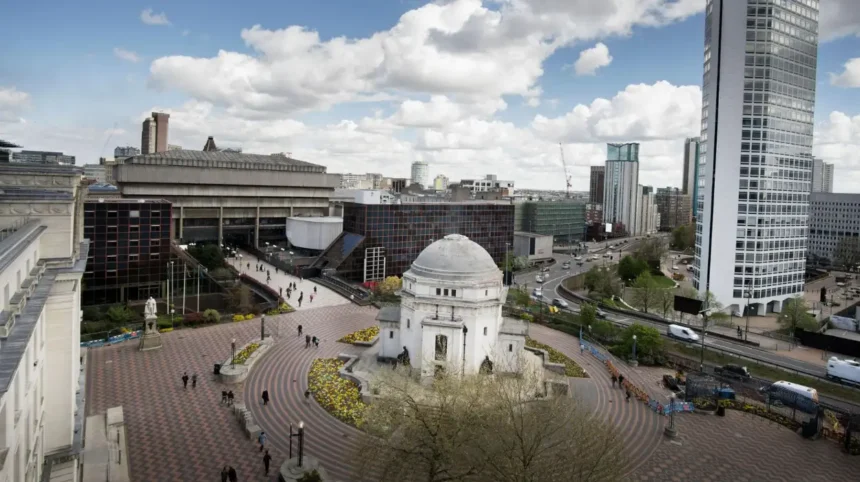
Birmingham occupies a central position within England, making it one of the country’s best starting points for rewarding day trips. Extensive railway connections, a historic canal network, and modern road infrastructure allow visitors to reach medieval towns, industrial heritage sites, stately homes, and nationally significant cultural landscapes within a short journey. Planning the perfect day trip from Birmingham involves understanding travel times, selecting destinations based on historical significance, and balancing transport efficiency with sightseeing opportunities. This guide explains how Birmingham became a transport hub, identifies the best nearby destinations, and outlines practical strategies for creating an enjoyable and historically enriching day itinerary.
- Why is Birmingham an ideal starting point for a day trip?
- How should you choose the right day trip from Birmingham?
- Which historic destinations offer the best day trips from Birmingham?
- What transport options make day trips from Birmingham efficient?
- What historical themes can you explore during different day trips?
- How can you plan an efficient one-day itinerary?
- Why do heritage conservation and preservation matter during day trips?
- What practical advice helps visitors enjoy a successful day trip from Birmingham?
Why is Birmingham an ideal starting point for a day trip?
Birmingham serves as England’s central transport hub, connecting visitors to historic cities, castles, countryside landscapes, industrial heritage sites, and cultural attractions within one to two hours. Its railway, motorway, and canal networks make efficient and varied day trips possible throughout the year.
Birmingham’s geographical position has shaped its importance for centuries. During the Middle Ages, the settlement developed as a regional market town because it lay close to important trading routes across the English Midlands. The city’s accessibility expanded dramatically during the Industrial Revolution when canals connected Birmingham with the wider manufacturing economy.
The arrival of railways during the nineteenth century transformed Birmingham into one of Britain’s principal transport centres. Today, major stations including Birmingham New Street, Birmingham Moor Street, and Birmingham Snow Hill provide direct services to numerous historic destinations across England and Wales.
Modern motorway connections including the M5, M6, M40, and M42 further strengthen Birmingham’s accessibility. These transport corridors allow travellers to reach castles, Roman settlements, cathedral cities, and Areas of Outstanding Natural Beauty within comfortable day-trip distances.
The variety of nearby attractions also makes Birmingham exceptional. Visitors can explore medieval architecture, Tudor houses, Georgian squares, Victorian industrial landscapes, UNESCO-recognised heritage sites, and royal residences without requiring overnight accommodation.
How should you choose the right day trip from Birmingham?
Selecting the ideal destination depends on travel time, historical interest, seasonal conditions, transport availability, and the number of attractions within walking distance. Efficient planning maximises sightseeing while reducing unnecessary travel between locations during a single day.
Every successful day trip begins with defining its purpose. Some travellers prefer medieval history, while others focus on industrial heritage, literary landmarks, royal residences, archaeology, or countryside scenery.
Destinations within one hour allow relaxed exploration and shorter travel periods. Examples include Stratford-upon-Avon, Coventry, Worcester, and Lichfield. Destinations requiring approximately two hours include Oxford, Bath, Chester, and the Welsh border.
Walking accessibility deserves careful consideration. Historic city centres containing major attractions within compact areas reduce transport costs and increase sightseeing time.
Opening hours also influence itinerary planning. Museums, cathedrals, castles, and heritage properties often operate seasonal schedules. Planning arrival times around these opening hours ensures efficient visits.
Seasonality changes the visitor experience. Spring and summer provide longer daylight for gardens, castles, canals, and countryside walks. Autumn offers quieter heritage sites and colourful landscapes, while winter highlights Christmas markets, historic interiors, and museums.
Budget planning includes rail fares, admission tickets, refreshments, and local transport where required.
Which historic destinations offer the best day trips from Birmingham?
Several nationally important destinations surround Birmingham, including medieval towns, cathedral cities, Roman settlements, industrial heritage landscapes, and royal landmarks. Each preserves distinctive architecture, archaeological evidence, and cultural traditions representing different periods of British history.
Stratford-upon-Avon
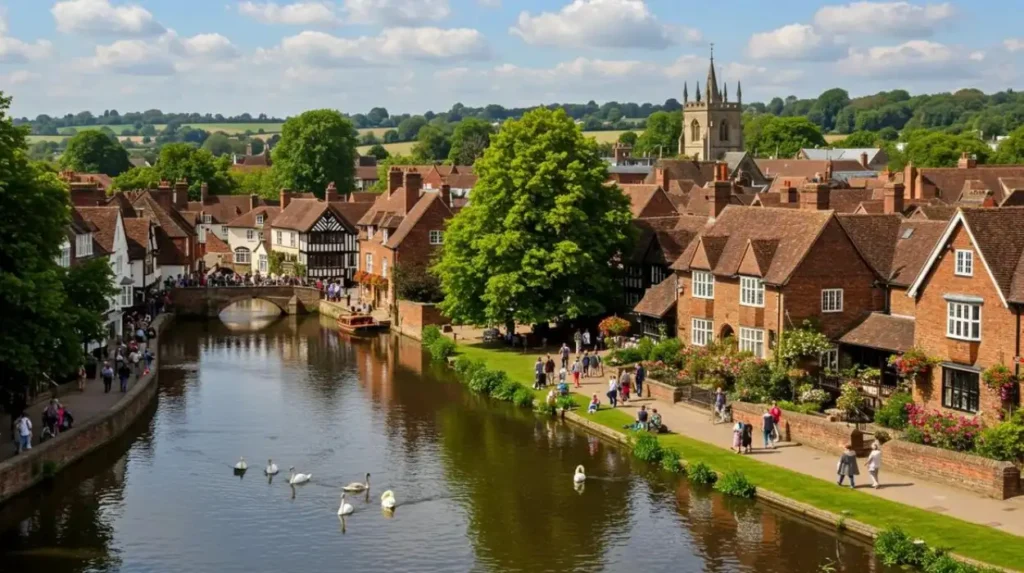
Stratford-upon-Avon remains one of England’s most internationally recognised historic towns because it was the birthplace of William Shakespeare in 1564.
Its preserved Tudor streetscape includes timber-framed buildings, historic inns, guild buildings, and riverside landscapes that illustrate urban development during the sixteenth century.
The town also demonstrates how literary heritage supports long-term conservation through carefully protected historic buildings and museums.
Coventry
Coventry presents one of Britain’s most remarkable historical contrasts. Medieval guildhalls, surviving timber-framed streets, and the ruins of the old cathedral stand beside the modern cathedral completed after the Second World War.
German bombing during the Coventry Blitz in November 1940 destroyed much of the historic city centre, leaving the cathedral ruins as a permanent memorial promoting reconciliation.
Warwick
Warwick is dominated by Warwick Castle, originally established by William the Conqueror in 1068 following the Norman Conquest.
The town preserves medieval streets, Georgian buildings, historic churches, and riverside parks that illustrate continuous urban development spanning nearly one thousand years.
Lichfield
Lichfield is famous for its magnificent medieval cathedral with three distinctive spires.
The city also preserves Georgian architecture, market traditions, and literary connections with Samuel Johnson, whose birthplace remains an important museum.
Worcester
Worcester combines Roman origins, medieval streets, Tudor architecture, and Civil War history.
Worcester Cathedral contains significant medieval architecture and the tomb of King John, making it one of England’s most historically important ecclesiastical buildings.
Ironbridge Gorge
Ironbridge Gorge represents one of the world’s most important industrial heritage landscapes.
The Iron Bridge, completed in 1779, became the first major cast-iron bridge ever constructed and symbolises Britain’s Industrial Revolution.
The surrounding museums explain iron production, early engineering innovation, and industrial society.
To experience Birmingham’s own historic attractions before exploring the surrounding region, consult our comprehensive [Best Day Trips and Things to Do Near Birmingham] for itineraries and visiting parameters.
What transport options make day trips from Birmingham efficient?
Rail travel offers the fastest access to many historic destinations, while road travel provides flexibility for rural attractions. Local buses, walking routes, and cycling infrastructure complete efficient transport networks once visitors reach their chosen destination.
Britain’s railway system remains the preferred option for many day trips because historic city centres frequently surround railway stations.
Direct trains connect Birmingham with Stratford-upon-Avon, Coventry, Worcester, Oxford, Chester, and numerous other destinations without complicated transfers.
Road travel offers greater flexibility when visiting country houses, castles, archaeological landscapes, and national parks located beyond railway stations.
Coach services provide economical alternatives for budget-conscious travellers.
Walking remains the best method for exploring historic towns because many evolved before motor vehicles. Narrow medieval streets naturally favour pedestrians.
Cycling routes also connect several heritage attractions, particularly along canal towpaths and former railway corridors.
Planning return journeys before departure prevents missed connections, especially during evenings when transport frequency decreases.
What historical themes can you explore during different day trips?
Each destination reflects a distinct historical period, including Roman Britain, Anglo-Saxon kingdoms, Norman conquest, medieval commerce, Tudor England, the Industrial Revolution, Victorian expansion, and twentieth-century reconstruction after global conflict.
Roman Britain survives through archaeological remains at places including Chester, Wroxeter, and Cirencester. Excavated walls, baths, roads, and military installations illustrate Roman administration between AD 43 and approximately AD 410.
The Anglo-Saxon period appears in cathedral cities such as Lichfield, where early Christian institutions shaped regional identity following the collapse of Roman authority.
Norman England introduced castles, fortified settlements, and administrative reforms after 1066. Warwick Castle remains among the finest surviving examples of Norman military architecture.
The medieval period transformed English towns through markets, guilds, parish churches, and defensive walls. Examples include Coventry, Worcester, and Stratford-upon-Avon.
Tudor England introduced religious change following Henry VIII’s Reformation. Historic churches, manor houses, and educational institutions preserve evidence of these transformations.
The Industrial Revolution fundamentally reshaped Birmingham and neighbouring regions. Ironbridge, the Black Country, and canal networks demonstrate technological innovation that influenced global industrialisation.
Victorian Britain expanded railways, civic buildings, museums, libraries, and public parks, many of which continue serving communities today.
Twentieth-century history includes wartime reconstruction, urban planning, and heritage conservation, particularly visible in Coventry.
How can you plan an efficient one-day itinerary?
An effective itinerary begins with early departure, prioritises major attractions before peak crowds, balances indoor and outdoor visits, schedules meal breaks logically, and leaves sufficient time for return transport without unnecessary rushing throughout the day.
Early departures maximise sightseeing opportunities. Reaching destinations before mid-morning allows quieter exploration of popular landmarks.
Historic attractions often cluster around town centres. Beginning with principal monuments before visiting smaller museums reduces walking distances later in the day.
Combining architecture, museums, parks, and local food creates a balanced itinerary without excessive repetition.
Lunch provides an opportunity to experience regional specialities while resting between sightseeing sessions.
Afternoon visits suit museums and galleries because changing weather has less impact on indoor attractions.
Allowing contingency time for transport delays ensures stress-free return journeys.
Photography benefits from morning and late afternoon light, especially around historic buildings constructed from local stone.
Why do heritage conservation and preservation matter during day trips?
Historic destinations preserve nationally important buildings, archaeological evidence, landscapes, and cultural traditions through conservation programmes that protect architecture while supporting education, tourism, and local economic development for future generations.
Historic England, local authorities, charitable organisations, and heritage trusts collaborate to protect nationally significant buildings and archaeological sites.
Listed building legislation safeguards structures possessing architectural or historic importance.
Conservation areas preserve the overall historic character of streets, squares, marketplaces, and residential neighbourhoods rather than protecting individual buildings alone.
UNESCO World Heritage Sites receive additional international recognition for outstanding cultural value. Ironbridge Gorge represents one such designation near Birmingham.
Museums preserve artefacts recovered through archaeological excavation, historical research, and local collections.
Public education remains central to conservation. Interpretation panels, guided tours, exhibitions, and digital archives help visitors understand historical significance.
Tourism revenue contributes directly to ongoing maintenance of cathedrals, castles, museums, and historic houses.
Responsible visitors also support preservation by respecting protected landscapes, following site regulations, and contributing through admission fees.
What practical advice helps visitors enjoy a successful day trip from Birmingham?
Preparation, realistic scheduling, advance ticket booking, weather awareness, comfortable walking equipment, and understanding local heritage significantly improve the overall visitor experience while reducing travel disruptions and maximising historical exploration throughout the journey.
Advance rail booking frequently reduces travel costs compared with purchasing tickets on the day of travel.
Many heritage attractions provide timed entry during busy periods, particularly during school holidays and weekends.
Comfortable footwear remains essential because historic towns contain uneven paving, steep streets, castle grounds, and extensive walking routes.
Weather conditions influence outdoor heritage experiences. Carrying waterproof clothing allows uninterrupted sightseeing throughout changing British weather.
Digital maps simplify navigation, although printed town maps remain valuable in areas with limited mobile connectivity.
Reading introductory historical information before arrival increases appreciation of architectural details and museum collections.
Supporting independent businesses including local cafés, bookshops, and heritage gift shops contributes to historic town economies.
Finally, avoiding overcrowded schedules produces more meaningful visits. Exploring fewer attractions thoroughly creates a deeper understanding than attempting to visit every landmark within limited time.
Planning the perfect day trip from Birmingham combines historical understanding with practical organisation. Birmingham’s central location, exceptional transport links, and proximity to some of Britain’s most significant heritage destinations allow travellers to experience Roman archaeology, medieval cathedrals, Tudor market towns, Norman castles, Industrial Revolution landmarks, and modern conservation projects within a single day.
Each destination reveals a different chapter of British history, from ancient settlements and royal fortifications to literary heritage and engineering innovation. Careful itinerary planning, efficient transport choices, and respect for historic environments ensure visitors gain both educational value and memorable experiences. Whether exploring Shakespeare’s Stratford-upon-Avon, the industrial achievements of Ironbridge Gorge, the medieval streets of Warwick, or the cathedral cities of Worcester and Lichfield, Birmingham remains one of England’s finest gateways to discovering the nation’s remarkable historical landscape.
What are the best day trips from Birmingham?
Some of the best day trips from Birmingham include Stratford-upon-Avon, Warwick, Coventry, Worcester, Lichfield, Ironbridge Gorge, Oxford, Chester, the Malvern Hills, and the Cotswolds. Each destination offers unique historical, cultural, or natural attractions within easy travelling distance.