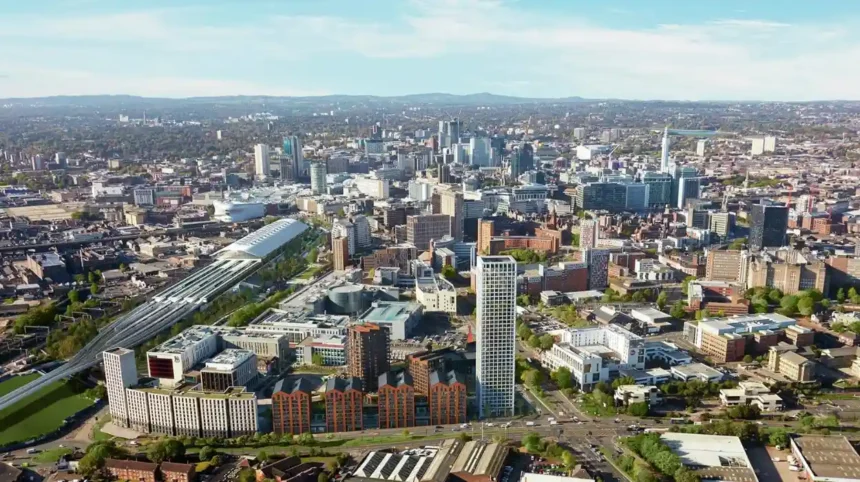
Birmingham serves as the historic and geographic centre of England, making it an ideal base for exploring centuries of British history, industrial heritage, medieval towns, royal landscapes, and nationally significant cultural attractions. Within approximately two hours of the city, visitors can experience Roman archaeology, medieval castles, UNESCO World Heritage Sites, historic universities, and landscapes that shaped Britain’s political, religious, and industrial development.
- Why is Birmingham an excellent base for historic day trips?
- Which historic destinations offer the best day trips near Birmingham?
- Which countryside and natural landscapes provide rewarding day trips?
- What Industrial Revolution sites can visitors explore near Birmingham?
- Which castles and historic houses are worth visiting from Birmingham?
- Which cathedral cities make memorable cultural excursions?
- How do market towns preserve England’s local history?
- How has heritage conservation protected day-trip destinations near Birmingham?
- Why do Birmingham’s surrounding destinations remain historically important today?
Whether travelling by rail or road, these destinations reveal how the Midlands connected England’s regions through commerce, transport, manufacturing, and governance. Many nearby locations also preserve important archaeological sites, historic buildings, canals, battlefields, and market towns that continue to illustrate Britain’s evolving history.
Why is Birmingham an excellent base for historic day trips?
Birmingham occupies a central position within England, providing direct transport connections to medieval cities, Industrial Revolution landmarks, Roman settlements, royal residences, and protected countryside. This accessibility allows visitors to experience nearly 2,000 years of British history during convenient day excursions from the West Midlands.
Birmingham developed into Britain’s manufacturing centre during the eighteenth and nineteenth centuries because of its strategic location between northern and southern England. Extensive canal networks, followed by railway expansion during the Victorian period, transformed the city into one of Britain’s best-connected transport hubs.
Today, major railway lines radiate from Birmingham to every direction. Fast services connect travellers with historic destinations including Oxford, Stratford-upon-Avon, Warwick, Coventry, Worcester, and Shrewsbury. Motorways including the M5, M6, M40, and M42 similarly provide efficient access to surrounding counties.
The surrounding regions contain exceptional historical diversity. Roman Britain survives in archaeological sites around Wroxeter. Medieval England remains visible in castles, cathedrals, and timber-framed towns. Tudor history flourishes in Shakespeare’s birthplace, while the Industrial Revolution transformed Ironbridge Gorge into the birthplace of modern industry.
This concentration of nationally significant heritage sites makes Birmingham one of Britain’s strongest starting points for educational travel, cultural tourism, and historical exploration.
Which historic destinations offer the best day trips near Birmingham?
Historic cities, medieval castles, literary landmarks, Industrial Revolution sites, cathedral cities, and protected market towns surround Birmingham. Together they represent Roman Britain, Norman conquest, medieval commerce, Tudor culture, Georgian expansion, Victorian engineering, and modern heritage conservation within accessible travelling distance.
Each destination reflects a distinct period in British history while remaining practical for a single-day visit.
Stratford-upon-Avon
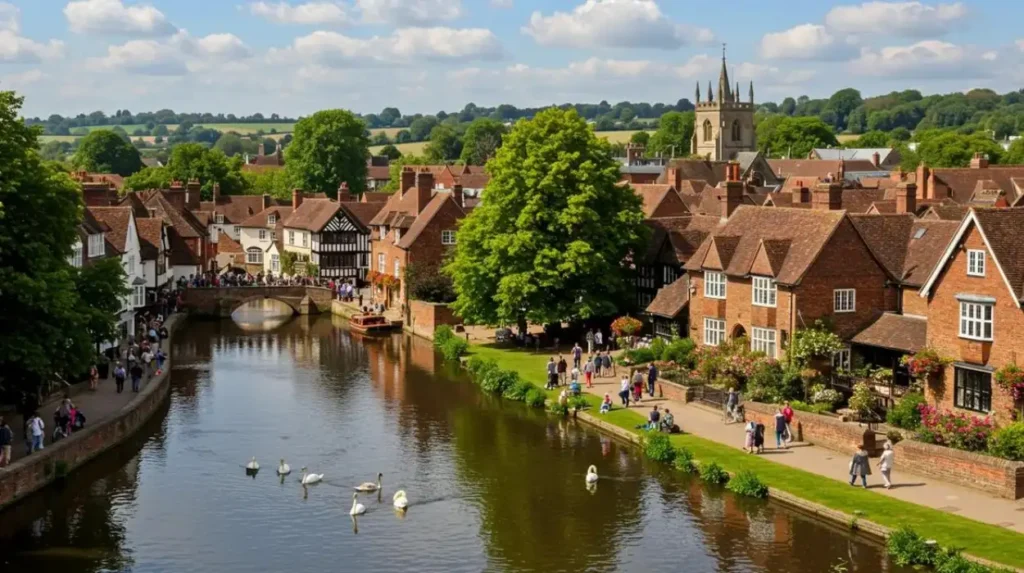
Approximately 35 miles south-east of Birmingham, Stratford-upon-Avon preserves one of England’s finest Tudor market towns.
The town became internationally significant as the birthplace of William Shakespeare, born in 1564. Shakespeare’s Birthplace remains one of Britain’s most visited literary landmarks. Other preserved properties connected with Shakespeare’s family include Anne Hathaway’s Cottage, Hall’s Croft, and Mary Arden’s Farm.
The town itself retains medieval street patterns, half-timbered buildings, historic inns, and riverside walks that illustrate everyday life during Tudor England.
To experience this historic destination in greater depth today, consult our comprehensive [How to Plan the Perfect Day Trip From Birmingham] for itineraries and visiting parameters.
Warwick
Only 20 miles from Birmingham, Warwick developed around one of Britain’s finest surviving medieval fortifications.
Warwick Castle originated shortly after the Norman Conquest of 1066 as a motte-and-bailey fortress before expanding into a massive stone castle during the twelfth century.
The surrounding town retains medieval churches, historic streets, Georgian architecture, and traditional market squares. Warwick demonstrates how fortified settlements evolved into prosperous county towns during the Middle Ages.
Coventry
Coventry illustrates both medieval prosperity and twentieth-century resilience.
The city became one of England’s most important medieval textile centres before suffering devastating destruction during the Second World War.
The ruins of the medieval Coventry Cathedral remain beside the modern cathedral completed in 1962, symbolising reconciliation after wartime bombing.
Coventry’s surviving guildhalls, medieval streets, and transport museums further document the city’s commercial and industrial importance.
Worcester
Situated along the River Severn, Worcester combines ecclesiastical history with nationally significant political events.
Its magnificent cathedral dates largely from the eleventh to sixteenth centuries and contains the tomb of King John, who died in 1216.
The city also witnessed the decisive Battle of Worcester, marking the final major battle of the English Civil War.
Which countryside and natural landscapes provide rewarding day trips?
Protected landscapes surrounding Birmingham preserve ancient woodlands, limestone hills, river valleys, prehistoric archaeology, and traditional rural settlements. These environments demonstrate how geography influenced settlement, agriculture, transport, and regional economies across several historical periods in central England.
Natural landscapes around Birmingham often contain archaeological remains that predate written history.
Malvern Hills
The Malvern Hills rise dramatically above surrounding countryside.
Archaeological evidence indicates human activity extending back over 5,000 years. Iron Age hill forts crown several summits, illustrating defensive settlement before Roman Britain.
Victorian visitors later transformed Great Malvern into an internationally recognised spa town because of mineral spring water.
Cannock Chase
The Cannock Chase is designated as a National Landscape.
The area contains prehistoric burial monuments, remnants of medieval forests, military training grounds from both World Wars, and internationally important heathland ecosystems.
Walking routes combine environmental conservation with archaeological interpretation.
Cotswolds
The northern Cotswolds can comfortably be explored from Birmingham.
Golden limestone villages, medieval churches, market towns, and ancient agricultural landscapes illustrate rural prosperity generated through England’s medieval wool trade.
Historic settlements such as Broadway and Chipping Campden preserve architectural traditions spanning several centuries.
What Industrial Revolution sites can visitors explore near Birmingham?
Industrial heritage sites near Birmingham explain how technological innovation transformed Britain during the eighteenth and nineteenth centuries. Preserved furnaces, canals, factories, museums, and workers’ settlements illustrate engineering achievements that influenced global industrial development and modern manufacturing systems.
The Midlands played a leading role during Britain’s Industrial Revolution.
Ironbridge Gorge
Ironbridge Gorge is recognised as a UNESCO World Heritage Site.
The world’s first major cast-iron bridge opened across the River Severn in 1779. Nearby furnaces, factories, mines, workers’ housing, and museums explain how iron production transformed engineering, transportation, and architecture.
Industrial archaeologists consider Ironbridge one of the world’s most important preserved industrial landscapes.
Black Country Living Museum
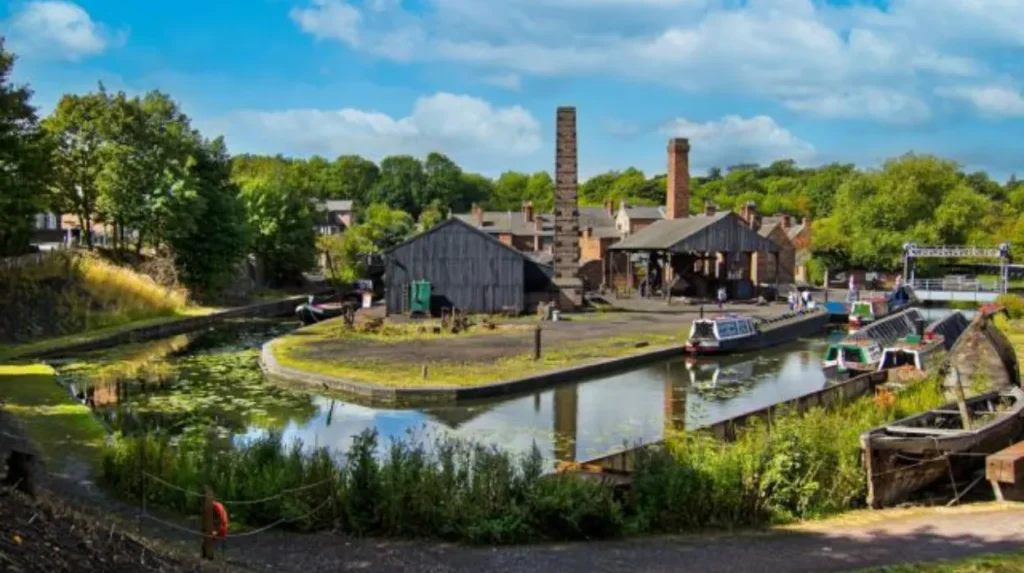
Located in nearby Dudley, the Black Country Living Museum recreates everyday life from Britain’s industrial age.
Historic buildings have been carefully relocated and reconstructed. Traditional workshops demonstrate chain making, metalworking, glass production, canal transport, and nineteenth-century commerce.
The museum preserves skills alongside physical buildings, allowing visitors to understand industrial communities beyond machinery alone.
Severn Valley Railway
Historic steam locomotives operate along preserved railway lines linking Worcestershire and Shropshire.
The railway demonstrates Victorian engineering, railway architecture, signalling systems, and transport technology that connected Britain’s industrial economy during the nineteenth century.
Which castles and historic houses are worth visiting from Birmingham?
Norman castles, Tudor manor houses, medieval estates, and aristocratic country residences surrounding Birmingham illustrate changing architecture, defensive strategies, political authority, and domestic life from the eleventh century through the Victorian era.
These properties preserve both buildings and landscapes.
Kenilworth Castle
Kenilworth Castle originated during the Norman period before expanding into one of medieval England’s greatest castles.
It played an important role during the reign of Elizabeth I, particularly through its association with Robert Dudley.
Its extensive ruins reveal medieval military engineering alongside Renaissance garden design.
Blenheim Palace
Located near Oxford, Blenheim Palace represents one of Britain’s greatest Baroque country houses.
Constructed during the early eighteenth century, it commemorated **John Churchill>’s military victories.
The palace also became the birthplace of Winston Churchill in 1874.
Baddesley Clinton
This medieval moated manor house preserves timber framing, Tudor interiors, Catholic recusant history, and priest holes used during periods of religious persecution after the English Reformation.
The surrounding gardens and parkland demonstrate changing landscape design across several centuries.
Which cathedral cities make memorable cultural excursions?
Historic cathedral cities surrounding Birmingham preserve exceptional religious architecture, medieval education, civic government, manuscript traditions, and centuries of continuous worship. Their cathedrals remain among Britain’s most important surviving architectural and archaeological monuments.
Religious institutions shaped urban development throughout medieval England.
Lichfield
Lichfield Cathedral is unique among English medieval cathedrals for possessing three spires.
Construction largely occurred between the twelfth and fourteenth centuries.
The city also became associated with Samuel Johnson, compiler of the influential English dictionary published in 1755.
Hereford
Hereford Cathedral houses the internationally significant medieval Mappa Mundi, the largest surviving medieval world map.
The cathedral also preserves one of the world’s oldest chained libraries, illustrating medieval scholarship and manuscript preservation.
Oxford
Oxford combines nearly one thousand years of educational history with remarkable architecture.
Its colleges, libraries, museums, churches, and quadrangles document the development of higher education from the twelfth century onward.
The city also contains extensive medieval street plans alongside Georgian and Victorian expansion.
How do market towns preserve England’s local history?
Historic market towns surrounding Birmingham preserve medieval commerce, traditional architecture, parish churches, civic institutions, and local industries. Their street layouts and surviving buildings demonstrate how regional economies developed before industrial urbanisation transformed Britain during the eighteenth century.
Markets historically connected rural producers with urban consumers.
Towns including Bridgnorth, Ludlow, Bewdley, Pershore, and Ashbourne retain traditional marketplaces, guild buildings, coaching inns, bridges, and parish churches.
Ludlow possesses one of England’s finest medieval street plans alongside an impressive Norman castle overlooking the River Teme.
Bridgnorth uniquely developed as both High Town and Low Town because of dramatic sandstone cliffs dividing the settlement.
Bewdley prospered through river trade before later developing tourism around the River Severn.
These towns collectively illustrate medieval trade, agricultural exchange, and regional governance that supported England’s expanding economy.
How has heritage conservation protected day-trip destinations near Birmingham?
Conservation organisations, local authorities, archaeologists, museums, and national heritage agencies protect historic buildings, archaeological sites, landscapes, and collections. Their work ensures significant places remain accessible for research, education, tourism, and future generations through long-term preservation programmes.
Britain’s heritage sector protects thousands of historic structures through legal designation.
Scheduled Monuments preserve nationally important archaeological sites.
Listed Buildings receive statutory protection because of architectural or historic significance.
National Landscapes conserve culturally important countryside while supporting farming and biodiversity.
Museums increasingly combine traditional conservation with digital documentation, archaeological surveys, laser scanning, and climate resilience planning.
Universities throughout the Midlands also contribute archaeological research, architectural conservation, and historical interpretation that continually improves understanding of these destinations.
Tourism supports local economies while encouraging continued investment in preservation, education, and public engagement.
Why do Birmingham’s surrounding destinations remain historically important today?
Day trips from Birmingham reveal the continuous development of Britain from prehistoric settlement through Roman occupation, medieval kingdoms, Tudor culture, Industrial Revolution innovation, and modern conservation. Together they provide an exceptional historical landscape that supports education, tourism, archaeological research, and national heritage preservation.
Few British cities offer access to such a diverse concentration of nationally important heritage within a single day’s travel.
Visitors can explore Roman cities, Norman castles, Tudor market towns, medieval cathedrals, Industrial Revolution landmarks, royal residences, literary heritage, and protected countryside without travelling long distances. This geographical concentration reflects Birmingham’s central position within England’s transport network and its historical role as a crossroads connecting every major region.
The continued preservation of these places also demonstrates the success of heritage conservation across Britain. Historic England, local authorities, museums, universities, charitable trusts, and community organisations work together to protect archaeological remains, restore historic buildings, interpret collections, and maintain public access.
For educators, these destinations provide living classrooms that explain Britain’s constitutional development, industrial innovation, religious change, literary achievement, and architectural evolution. For cultural tourists, they offer authentic experiences rooted in preserved landscapes and historic environments. For researchers and genealogists, parish records, historic streets, churches, and local archives continue to illuminate the lives of earlier generations.
Taken together, the historic destinations surrounding Birmingham form one of England’s richest cultural regions. They demonstrate how geography, politics, religion, commerce, engineering, and conservation have shaped the nation across more than two millennia, making Birmingham an outstanding gateway for discovering Britain’s enduring historical legacy.
What are the best day trips from Birmingham?
The best day trips from Birmingham include Stratford-upon-Avon, Warwick, Coventry, Worcester, Ironbridge Gorge, the Cotswolds, Lichfield, Hereford, Oxford, Kenilworth Castle, Cannock Chase, and the Malvern Hills. Most can be reached within one to two hours by car or train.