Summer transforms Birmingham into one of England’s most vibrant urban destinations. Long daylight hours, extensive parks, canals, historic landmarks, cultural festivals, and open-air attractions provide opportunities to explore the city’s industrial heritage alongside its modern green spaces. Birmingham, the United Kingdom’s second-largest city, contains more than 8,000 acres of public parks and open spaces, over 35 miles (56 kilometres) of navigable canals, nationally important heritage sites, and internationally recognised cultural venues. These outdoor attractions reflect more than 1,000 years of urban development, from the medieval manor of Birmingham to the Industrial Revolution and today’s sustainable metropolitan landscape.
- Why is Birmingham one of England’s best cities for outdoor summer activities?
- What makes Birmingham’s canals one of the city’s greatest outdoor attractions?
- How did Birmingham’s parks become some of Britain’s finest Victorian public landscapes?
- Why is the Birmingham Botanical Gardens important beyond recreation?
- How does Birmingham’s historic architecture enhance outdoor exploration?
- What outdoor heritage sites explain Birmingham’s industrial history?
- How do Birmingham’s rivers, reservoirs, and lakes support outdoor recreation?
- Why are Birmingham’s summer festivals important cultural experiences?
- How do Birmingham’s nature reserves preserve biodiversity within an urban environment?
- What family-friendly outdoor attractions are available during Birmingham’s summer months?
- How has Birmingham balanced urban growth with outdoor conservation?
- Why do Birmingham’s outdoor attractions remain historically significant today?
Whether visitors seek historical exploration, recreational activities, architectural appreciation, or family-friendly experiences, Birmingham’s outdoor attractions offer a comprehensive introduction to the city’s evolution. Understanding how these spaces developed also provides valuable insight into Birmingham’s social, economic, and environmental history.
Why is Birmingham one of England’s best cities for outdoor summer activities?
Birmingham combines extensive historic parks, Britain’s longest urban canal network, world-famous cultural landmarks, Victorian civic planning, and modern public spaces. Summer offers ideal weather, longer daylight hours, outdoor festivals, and enhanced accessibility across the city’s diverse attractions.
Unlike many major European cities, Birmingham developed around industry while deliberately preserving large green spaces. During the nineteenth century, civic leaders invested heavily in public parks to improve public health as the population expanded rapidly during industrialisation.
Today, Birmingham manages hundreds of public green spaces, numerous nature reserves, woodlands, lakes, gardens, and riverside environments. These complement internationally recognised attractions including historic squares, canals, museums, heritage buildings, and outdoor event venues.
Summer temperatures generally range between 18°C and 24°C, creating favourable conditions for walking, cycling, boating, sightseeing, and attending outdoor performances.
The city’s integrated public transport network also makes outdoor exploration practical without requiring private vehicles.
What makes Birmingham’s canals one of the city’s greatest outdoor attractions?
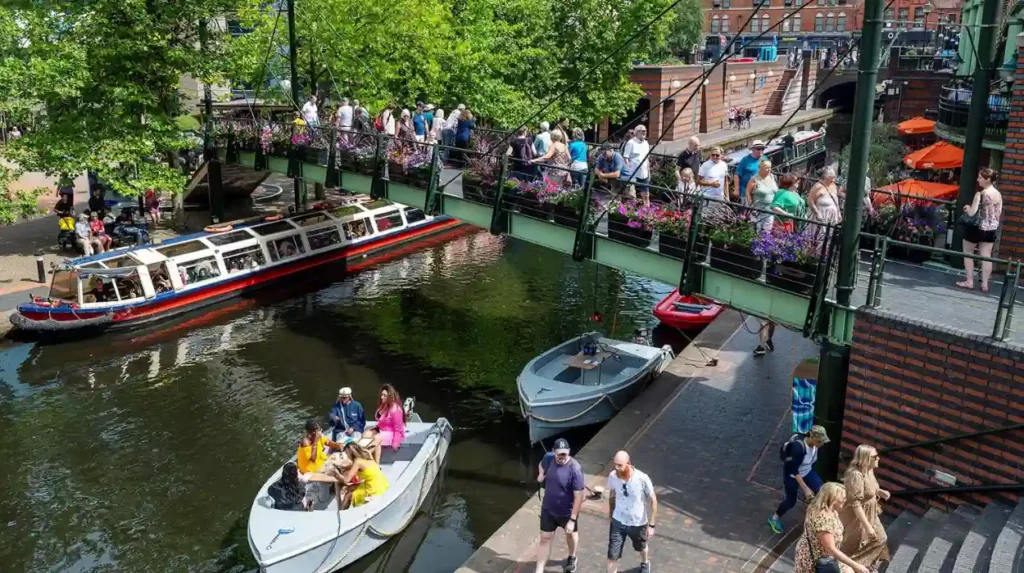
Birmingham possesses more navigable canals than Venice, with approximately 35 miles weaving through historic industrial districts, regenerated waterfronts, residential neighbourhoods, and cultural quarters. These waterways preserve Britain’s Industrial Revolution while supporting leisure boating, walking, and cycling throughout summer.
The Birmingham Canal Navigations system developed primarily between the late eighteenth and early nineteenth centuries. Engineers created waterways that connected coal mines, factories, warehouses, and regional markets before the widespread introduction of railways.
Canals dramatically reduced transportation costs and enabled Birmingham’s manufacturing industries to expand internationally.
Today, former industrial wharves have become vibrant public spaces containing cafés, restaurants, public art, and walking routes.
Popular sections include:
Gas Street Basin
Gas Street Basin served as a major commercial interchange during the Industrial Revolution. Narrowboats transported coal, iron, glass, ceramics, and manufactured goods through this important junction.
Today, restored towpaths offer scenic walking routes alongside preserved warehouses and historic bridges.
Brindleyplace
Brindleyplace represents one of Britain’s most successful urban regeneration projects. Former industrial land has been transformed into landscaped public squares, canalside restaurants, cultural venues, and open-air event spaces.
Summer visitors regularly encounter outdoor performances, public art installations, and waterfront festivals.
To experience these historic waterways in person today, consult our comprehensive [How to Make the Most of Summer Activities in Birmingham] for itineraries and visiting parameters.
How did Birmingham’s parks become some of Britain’s finest Victorian public landscapes?
Birmingham’s public parks emerged during the nineteenth century as part of Victorian social reform. Civic authorities created landscaped green spaces to improve public health, recreation, education, and environmental quality for rapidly expanding industrial communities across the city.
Industrial Birmingham experienced extraordinary population growth during the nineteenth century. Between 1801 and 1901, the city’s population increased from approximately 74,000 residents to more than 522,000.
Rapid expansion created overcrowded housing and worsening environmental conditions. Public parks became an essential element of municipal planning.
Cannon Hill Park
Opened in 1873, Cannon Hill Park occupies approximately 250 acres.
Landscape designer Thomas Crowder created ornamental lakes, woodland walks, formal gardens, and recreational facilities inspired by Victorian landscape principles.
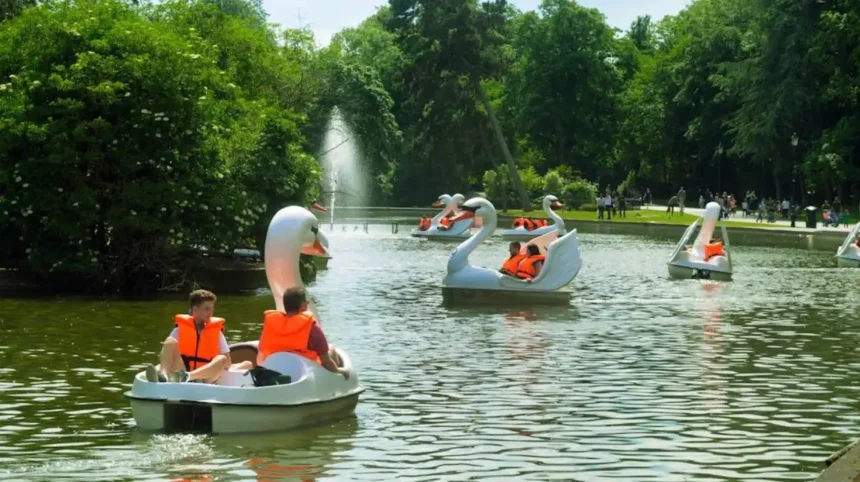
Today, visitors enjoy boating lakes, tennis courts, miniature railways, outdoor performances, wildlife habitats, and seasonal festivals.
The park also houses the Midlands Arts Centre, extending Birmingham’s cultural landscape into outdoor settings.
Sutton Park
Sutton Park covers approximately 2,400 acres, making it one of Europe’s largest urban parks.
The National Nature Reserve contains heathland, wetlands, ancient woodland, lakes, marshes, and grazing landscapes.
Archaeological evidence demonstrates continuous human activity dating back thousands of years.
Wildlife includes deer, rare bird species, amphibians, insects, and protected plant communities.
Walking, cycling, horse riding, and nature observation remain popular summer activities.
Why is the Birmingham Botanical Gardens important beyond recreation?
The Birmingham Botanical Gardens preserve globally significant plant collections while demonstrating Victorian scientific education, botanical research, and landscape design. Since opening in 1832, the gardens have supported conservation, horticulture, and public learning through carefully curated outdoor environments.
Designed by renowned landscape architect John Claudius Loudon, the gardens reflected growing nineteenth-century interest in botanical science and imperial plant collection.
The site includes themed gardens representing different climates and ecological regions.
Outdoor areas feature:
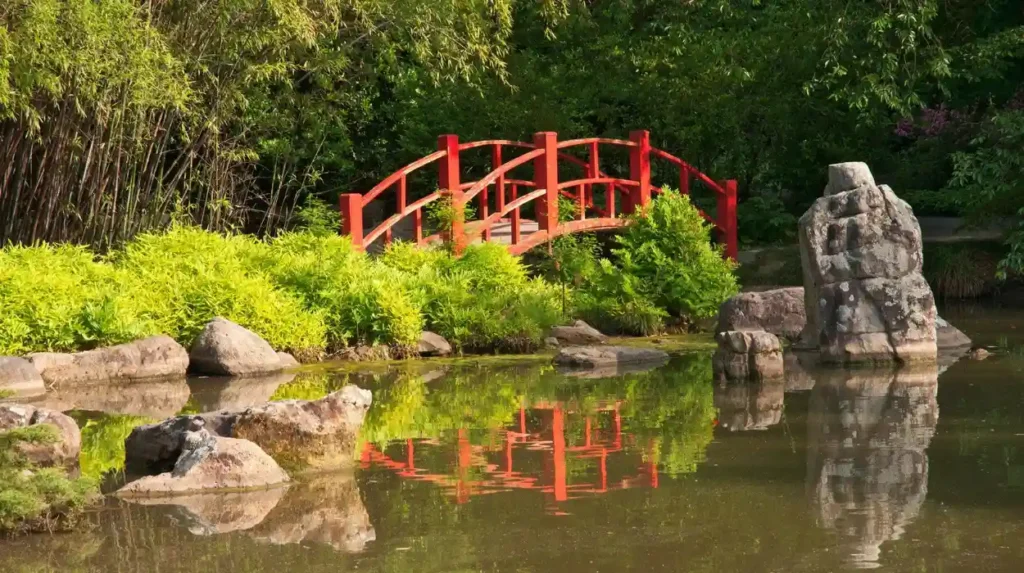
- Japanese Garden
- Alpine Garden
- Rose Garden
- Mediterranean collections
- Native British woodland
- Ornamental lawns
Thousands of plant species contribute to ongoing conservation programmes and educational research.
Summer flowering seasons offer exceptional displays that attract visitors from across Britain.
How does Birmingham’s historic architecture enhance outdoor exploration?
Birmingham’s outdoor historic landmarks demonstrate nearly one thousand years of architectural evolution, from medieval parish churches to Victorian civic monuments and twenty-first-century public squares. Walking between these sites reveals the city’s transformation across successive historical periods.
Unlike cities dominated by a single architectural style, Birmingham reflects continuous redevelopment.
Victoria Square
Completed during Birmingham’s Victorian civic expansion, Victoria Square became the symbolic centre of municipal government.
Notable landmarks include Birmingham Town Hall, the Council House, and public sculptures celebrating political reform and civic identity.
Summer often brings outdoor concerts, cultural celebrations, and public exhibitions.
Chamberlain Square
Named after statesman Joseph Chamberlain, this square illustrates Birmingham’s nineteenth-century ambition to become Britain’s leading municipal city.
Recent redevelopment integrates historic architecture with contemporary public spaces.
Visitors regularly encounter outdoor art installations and cultural programming.
St Philip’s Cathedral Grounds
Although Birmingham Cathedral remains relatively modest compared with medieval English cathedrals, its surrounding churchyard provides one of the city’s oldest surviving landscaped public spaces.
The cathedral originated as a parish church completed in 1715 before becoming a cathedral in 1905.
What outdoor heritage sites explain Birmingham’s industrial history?
Birmingham’s surviving industrial landscapes preserve workshops, factories, canals, engineering infrastructure, and historic districts that collectively explain Britain’s Industrial Revolution. These outdoor heritage environments demonstrate how manufacturing transformed global commerce, technology, and urban development.
Birmingham became internationally recognised for metalworking, jewellery manufacturing, firearms production, steam engineering, and scientific innovation.
Several outdoor locations preserve this legacy.
Jewellery Quarter
The Jewellery Quarter remains Europe’s largest concentration of independent jewellery businesses.
Established during the eighteenth century, the district contains more than 200 listed buildings.
Walking routes reveal former workshops, historic cemeteries, industrial architecture, and restored factory buildings.
Interpretation panels explain manufacturing techniques and economic history.
Soho House Grounds
The gardens surrounding Soho House illustrate eighteenth-century industrial prosperity.
Home to industrial pioneer Matthew Boulton, the estate became a meeting place for members of the Lunar Society.
Visitors explore landscaped grounds while learning about innovations that influenced global manufacturing.
How do Birmingham’s rivers, reservoirs, and lakes support outdoor recreation?
Birmingham’s rivers, lakes, and reservoirs combine environmental conservation with recreation. These waterways improve biodiversity, reduce flood risk, provide wildlife habitats, and create opportunities for walking, sailing, fishing, kayaking, and birdwatching throughout the summer season.
Although canals dominate Birmingham’s waterways, natural and artificial lakes also contribute significantly to outdoor recreation.
Edgbaston Reservoir
Constructed in 1827 to supply water for Birmingham’s canals, Edgbaston Reservoir now supports sailing, rowing, canoeing, and nature conservation.
The surrounding walking route attracts joggers, cyclists, photographers, and wildlife observers.
Bird populations include herons, cormorants, grebes, and migratory species.
River Cole Valley
The River Cole corridor demonstrates Birmingham’s commitment to protecting natural landscapes despite urban expansion.
Walking trails pass wetlands, woodland habitats, meadows, and historic bridges.
Conservation projects enhance biodiversity while reducing environmental degradation.
Why are Birmingham’s summer festivals important cultural experiences?
Birmingham’s outdoor festivals celebrate the city’s multicultural identity through music, food, heritage, literature, arts, and community events. These festivals strengthen tourism, support local businesses, and continue traditions established through successive generations of cultural development.
Birmingham ranks among Britain’s most culturally diverse cities.
Summer festivals reflect this diversity.
Examples include Birmingham Mela, one of Europe’s largest South Asian cultural festivals; outdoor food festivals showcasing international cuisine; community heritage events celebrating local history; and seasonal performances across public parks and civic squares.
These events strengthen civic identity while introducing visitors to Birmingham’s evolving cultural landscape.
How do Birmingham’s nature reserves preserve biodiversity within an urban environment?
Birmingham protects extensive urban biodiversity through designated nature reserves, ancient woodlands, wetlands, and ecological restoration projects. These protected landscapes preserve native species while providing educational opportunities and accessible outdoor recreation close to the city centre.
Urban biodiversity contributes significantly to environmental sustainability.
Protected habitats support mammals, birds, reptiles, insects, fungi, and native vegetation.
Examples include:
- Moseley Bog, which inspired landscapes associated with J.R.R. Tolkien’s childhood.
- Woodgate Valley Country Park, combining farming landscapes with wildlife conservation.
- RSPB Sandwell Valley, located near Birmingham and supporting internationally important bird populations.
Summer offers peak opportunities for ecological observation.
What family-friendly outdoor attractions are available during Birmingham’s summer months?
Birmingham offers outdoor attractions suitable for families through parks, wildlife centres, botanical gardens, heritage railways, adventure playgrounds, boating lakes, educational trails, and interactive historical sites. These destinations combine recreation with environmental and cultural education.
Families frequently visit Cannon Hill Park for boating and miniature railway rides.
Sutton Park provides extensive walking routes suitable for different ages.
The Birmingham Botanical Gardens offer educational programmes introducing children to biodiversity and conservation.
Open-air theatre performances and seasonal festivals create additional opportunities for intergenerational learning.
Outdoor heritage trails encourage exploration of Birmingham’s industrial and civic history through accessible interpretation.
How has Birmingham balanced urban growth with outdoor conservation?
Birmingham integrates historic preservation, environmental protection, sustainable planning, and urban regeneration through long-term investment in parks, canals, heritage districts, and ecological restoration. This balance supports tourism, biodiversity, public health, and cultural identity simultaneously.
Modern Birmingham demonstrates how industrial cities can successfully regenerate former manufacturing landscapes.
Redeveloped canal corridors preserve historic infrastructure while introducing public spaces.
Historic buildings coexist with contemporary architecture.
Nature reserves protect sensitive ecosystems despite ongoing urban expansion.
Municipal planning increasingly prioritises sustainable transport, cycling infrastructure, tree planting, flood resilience, and habitat restoration.
These initiatives ensure Birmingham’s outdoor attractions remain relevant for future generations.
Why do Birmingham’s outdoor attractions remain historically significant today?
Birmingham’s outdoor attractions preserve more than one thousand years of English history through landscapes, waterways, architecture, public parks, industrial heritage, and ecological conservation. Together, they illustrate how a medieval settlement evolved into one of Europe’s most influential industrial and cultural cities.
Every outdoor destination contributes to Birmingham’s broader historical narrative.
Medieval churches reveal the city’s earliest origins.
Victorian parks reflect nineteenth-century public health reforms.
Canals preserve engineering achievements that powered global industrialisation.
Historic squares demonstrate civic ambition.
Nature reserves protect landscapes shaped over centuries of human interaction.
Summer provides the ideal opportunity to experience these interconnected environments because extended daylight hours encourage exploration across multiple districts in a single visit.
For history enthusiasts, Birmingham offers a living historical landscape rather than isolated monuments. Its canals remain navigable, Victorian parks continue serving their original civic purpose, heritage districts support active businesses, and regenerated public spaces connect industrial history with contemporary urban life. This continuity distinguishes Birmingham from many historic cities where heritage survives only within museums.
As Birmingham continues investing in conservation, sustainable development, and cultural programming, its outdoor attractions remain essential resources for education, tourism, research, recreation, and community identity. They demonstrate that preserving the past and supporting modern urban life are complementary goals, ensuring Birmingham’s landscapes continue telling the story of one of Britain’s most transformative cities for generations to come.
What are the best outdoor things to do in Birmingham during summer?
Some of the best outdoor activities include walking along Birmingham’s historic canals, exploring Sutton Park and Cannon Hill Park, visiting the Birmingham Botanical Gardens, discovering the Jewellery Quarter, enjoying Edgbaston Reservoir, and attending outdoor festivals such as Birmingham Mela.