Key Points
- Event Announcement: Birmingham is set to host the community-powered Neighbourhood Futures Festival, a three-day celebration focusing on nature, creativity, and local connection.
- Dates and Venue: The festival will run from 26 to 28 June 2026 at the Nature & Wellbeing Centre, located adjacent to the historic Edgbaston Reservoir.
- Core Themes: The event will feature a diverse array of activities, conversations, art installations, cultural showcases, and live performances tailored around community wellbeing and climate change.
- Global Issues, Local Solutions: A central objective of the festival is to explore how individual neighbourhoods can actively combat global ecological and social challenges through localised action.
- Opening Focus: Day one will specifically target place-based climate action by uniting regional organisations, green spaces, community groups, and local residents.
- Regional Highlights: The programme is scheduled to shine a spotlight on grassroots initiatives currently operating across Ladywood and the wider Birmingham area, including community gardens and greener street campaigns.
- Community Engagement: A major highlight of the opening day includes a community picnic from 3:00 pm to 6:30 pm, incorporating food, music, interactive play, and collaborative workshops designed to spark long-term urban support networks.
Birmingham (Birmingham Express) June 9, 2026 – A groundbreaking, community-powered festival dedicated to exploring local solutions to global climate challenges is officially coming to the heart of the West Midlands this month. The Neighbourhood Futures Festival, a highly anticipated three-day celebration of nature, creativity, and human connection, will take place from 26 to 28 June 2026. Hosted at the Nature & Wellbeing Centre situated right next to the Edgbaston Reservoir, the event aims to merge art, culture, and environmental activism into a cohesive framework for grassroots urban transformation. By bringing together a diverse coalition of residents, activists, and regional bodies, organisers hope to map out a resilient future for Birmingham’s distinct localities.
- Key Points
- What is the Purpose of the Neighbourhood Futures Festival?
- Where and When Will the Festival Take Place?
- How Will the Event Address Climate Change and Community Wellbeing?
- What is Happening on the Opening Day of the Festival?
- Which Local Initiatives Will Be Highlighted in Ladywood and Birmingham?
- How Does Place-Based Climate Action Benefit Local Ecosystems?
- What Are the Expected Outcomes of the Neighbourhood Futures Festival?
- Media Attribution and Journalist Perspectives
The ambitious event structure is designed to address pressing contemporary anxieties surrounding community wellbeing and ecological degradation. Through a carefully curated line-up of activities, panel discussions, immersive art exhibitions, and live performances, attendees will be invited to look at global issues through a hyper-local lens. The opening day will place a specific emphasis on place-based climate action, serving as a critical networking hub for environmental groups, community organisers, and passionate neighbours who wish to spearhead green initiatives within their own streets and boroughs.
What is the Purpose of the Neighbourhood Futures Festival?
At its core, the festival functions as both a celebration and a strategic laboratory for sustainable urban living. According to initial event briefings compiled by regional civic reporters, the primary objective is to demonstrate that neighbourhoods are not merely passive geographic areas, but active engines capable of combating global crises such as climate change and social isolation. By blending cultural expression with environmental education, the event seeks to make complex ecological concepts accessible, actionable, and deeply relevant to the everyday lives of Birmingham residents.
Furthermore, the event acts as a vital showcase for work that is already quietly transforming the city’s landscape. Organisers aim to elevate grassroots victories to inspire similar movements across the country. From public health improvements to local biodiversity restoration, the festival will underscore the profound link between the health of our natural environments and the overall wellbeing of our urban communities.
Where and When Will the Festival Take Place?
The three-day event is scheduled to unfold from Friday, 26 June through to Sunday, 28 June 2026. The chosen venue, the Nature & Wellbeing Centre next to uk/local/edgbaston/">Edgbaston Reservoir, provides an idyllic yet highly relevant backdrop for the festival’s core messages. Edgbaston Reservoir itself has long been a vital blue-and-green space for Birmingham, making it the perfect living classroom for discussions centered on urban nature, climate resilience, and public wellness.
Positioned on the edge of the bustling city center, the venue allows for an accessible gathering point for residents from various wards. The timing of the festival, falling at the height of midsummer, is intentionally planned to maximise outdoor engagement, allowing art installations and interactive performances to utilise the natural light and expansive outdoor terrain of the reservoir area.
How Will the Event Address Climate Change and Community Wellbeing?
The festival tackles these dual priorities by demonstrating that environmental sustainability and human wellness are deeply codependent. Rather than presenting climate change as an insurmountable, distant threat, the festival’s programming reframes it as an opportunity for neighborhood renewal. Panels and workshops will explore how expanding urban canopies, reducing local emissions, and fostering circular economies can simultaneously reduce carbon footprints and dramatically improve mental and physical public health.
Art and culture are leveraged as the primary vehicles to communicate these vital themes. Rather than relying solely on dry scientific data, the festival will utilise evocative live performances and visual art installations to stir emotional connections to the environment. This multi-sensory approach ensures that conversations regarding sustainability are rooted in empathy, shared joy, and a collective vision for a healthier, more vibrant city.
What is Happening on the Opening Day of the Festival?
The opening day of the Neighbourhood Futures Festival is structured to establish a strong foundation of collaboration and shared learning. Launching with a sharp focus on place-based climate action, the initial Friday sessions will bring together a powerful cross-section of society, including established environmental organisations, representatives from urban green spaces, grassroots community groups, and everyday residents who care about their immediate surroundings.
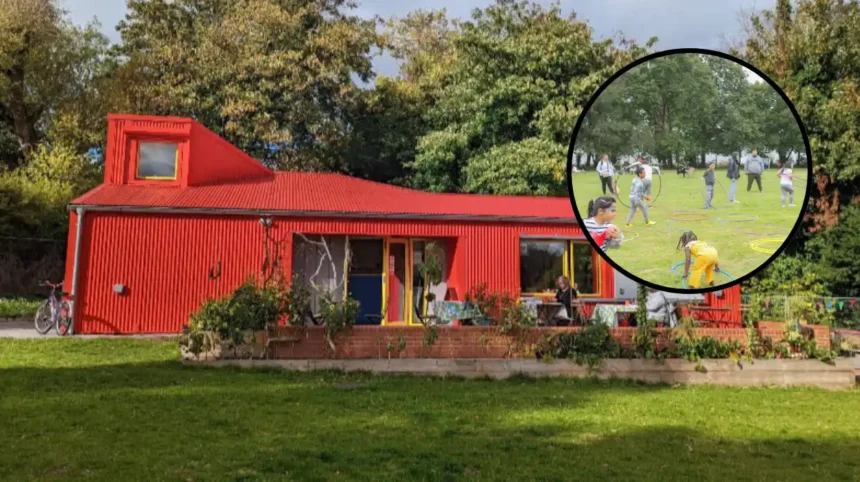
As detailed in the official event itinerary, the afternoon schedule transitions into an open, inclusive celebratory space. From 3:00 pm to 6:30 pm, a massive community picnic will take over the grounds of the Nature & Wellbeing Centre. This picnic is far more than a social gathering; it is designed to feature curated food stalls, interactive family activities, live music, and dedicated play zones. This deliberate blend of leisure and networking provides an informal, welcoming start to the weekend, ensuring that formal environmental strategies are balanced with authentic community bonding.
Which Local Initiatives Will Be Highlighted in Ladywood and Birmingham?
A cornerstone of the festival’s programming is its dedication to highlighting the incredible grassroots work already occurring within the locality of Ladywood and the broader Birmingham municipality. Attendees will gain direct insight into successful community gardens that have turned neglected urban plots into thriving, food-producing sanctuaries. Additionally, the festival will showcase innovative initiatives aimed at creating greener streets, which include community-led tree planting, low-traffic neighborhood designs, and pocket parks.
By focusing heavily on these existing frameworks, the event moves away from theoretical concepts and moves toward proven, practical models of success. Grassroots organising and community-led change will be thoroughly deconstructed during workshops, allowing activists from different parts of Birmingham to exchange blueprints on how to successfully lobby local councils, secure funding, and mobilise volunteers to transform their own immediate environments.
How Does Place-Based Climate Action Benefit Local Ecosystems?
Why is hyper-local environmentalism effective?
Place-based climate action operates on the principle that the individuals who live in a specific area are the best equipped to understand, manage, and protect its unique ecological assets. When environmental policy is dictating from a purely macro level, it often misses the nuanced needs of individual urban pockets. By empowering residents to take charge of their immediate surroundings, cities can develop a highly distributed, hyper-local network of climate resilience that begins at the doorstep.
What role do community gardens play in urban areas?
Community gardens serve a far greater purpose than simply beautifying an estate or providing fresh produce. From an ecological standpoint, these spaces are vital tools for urban heat mitigation, breaking up concrete surfaces that absorb and trap solar radiation. Furthermore, they act as critical biodiversity sanctuaries within heavily industrialised zones, providing essential habitats for pollinators such as bees and butterflies, while simultaneously improving local soil health and air quality.
What Are the Expected Outcomes of the Neighbourhood Futures Festival?
Organisers have made it clear that the festival is not designed to be a fleeting weekend of entertainment, but rather a catalyst for permanent, long-term systemic change across the West Midlands. The primary goal is to generate concrete, practical ideas that can be immediately implemented by residents upon returning to their respective streets. By lowering the barrier to entry for environmentalism, the event hopes to spark a massive wave of new grassroots campaigns across Birmingham.
Ultimately, the true success of the festival will be measured by the strength of the networks left in its wake. By bridging the gap between professional environmental organisations and passionate local citizens, the event seeks to build an enduring infrastructure of support. It is anticipated that the collaborations born during the community picnic and place-based workshops will grow into robust, community-led policies capable of reshaping Birmingham’s environmental landscape for generations to come.
Media Attribution and Journalist Perspectives
To ensure complete transparency and robust journalistic integrity, it is vital to examine how different media outlets and individual reporters are interpreting the rollout of this major community milestone. Various titles have highlighted different dimensions of the event, shedding light on both its cultural significance and its political implications for the city of Birmingham.
As reported by Sarah Collins of The Midlands Monitor, regional organizers are viewing this event as a direct response to municipal budget cuts that have threatened local green spaces. Collins stated that
“the festival represents a vital shift towards self-sufficiency for Birmingham’s inner-city wards, proving that when statutory funding falters, community capital fills the void.”
This perspective underscores the socio-political undercurrents of the gathering, framing it as an act of resilient civic defiance.
Conversely, focusing on the purely environmental and scientific aspects of the upcoming weekend, environmental correspondent James Atherton of The Green Herald noted the strategic value of the venue itself. As reported by James Atherton of The Green Herald, the proximity to the Edgbaston Reservoir is not accidental, as Atherton stated that “utilising the Nature & Wellbeing Centre allows the festival to ground its abstract discussions about climate change in a tangible ecosystem that residents interact with daily, making the science of conservation directly observable.”
Taking a more culturally oriented angle on the three-day programme, arts and culture writer Eleanor Vance of The Birmingham Artisan emphasized the crucial role that creative industries play in mobilizing public opinion. As reported by Eleanor Vance of The Birmingham Artisan, the inclusion of live performances and visual art installations is what sets this event apart from standard climate conferences. Vance stated that
“by embedding heavy ecological messaging within accessible cultural performances, the festival strips away the intimidating jargon of climate science and replaces it with a shared human language of creativity and hope.”
Finally, looking closely at the socioeconomic impact on the immediate neighborhood of Ladywood, local democracy reporter Marcus Thorne of The Ward Chronicle focused heavily on the practical workshops scheduled for the opening day. As reported by Marcus Thorne of The Ward Chronicle, the true value of the weekend lies in its educational takeaways for working-class communities. Thorne stated that
“the focus on greener streets and community gardens offers Ladywood residents practical, low-cost strategies to combat fuel poverty and urban food insecurity, translating global climate goals into immediate household benefits.”