Key Points
- A man died following a medical emergency at a Dudley road junction in the West Midlands.
- Emergency crews were called to the scene late on Tuesday, 22 September.
- Bystanders were administering CPR to the man before paramedics arrived.
- West Midlands Ambulance Service sent an ambulance, paramedic officers, a MERIT trauma team, and a critical care paramedic.
- Medics took over resuscitation attempts, but the man was pronounced dead at the scene.
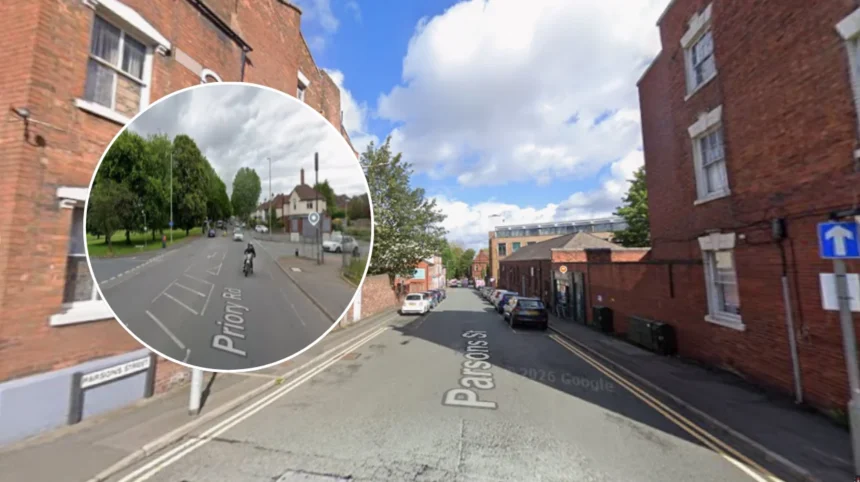
DUDLEY (Birmingham Express) September 23, 2026 — A man has died after being discovered in a critical condition on a street in the Black Country. Emergency services were called to the junction of Priory Road and Woodland Avenue in Dudley shortly before 10:00 pm on Tuesday, 22 September, where bystanders were attempting life-saving resuscitation. Despite advanced medical intervention by arriving crews, the man could not be saved and was pronounced dead at the scene.
What happened on Priory Road in Dudley?
As reported by reporter Isabelle Bates of BirminghamLive, emergency medical services received an urgent call to the junction of Priory Road and Woodland Avenue in Dudley at approximately 9:50 pm on Tuesday evening.
A spokesperson for the West Midlands Ambulance Service confirmed the operational details of the response, stating: “We were called to the junction of Priory Road and Woodland Avenue, Dudley at 9.50pm on Tuesday. An ambulance, two paramedic officers, a MERIT trauma team and critical care paramedic responded to the scene and arrived to find a man in a critical condition being given CPR.”
How did emergency services respond at the scene?
Upon arrival at the residential junction, specialised critical care teams immediately assumed control of the resuscitation efforts from the individuals on site. The West Midlands Ambulance Service deployed a comprehensive emergency response array, sending advanced medical assets including the Trauma Team (MERIT) to deliver specialist life support.
As detailed by Isabelle Bates of BirminghamLive, the ambulance spokesperson added: “The team took over resuscitation efforts but sadly, nothing could be done to save the man and he was confirmed deceased on scene.”
Background of emergency service responses in the West Midlands
The incident at Priory Road highlights the operational workflow of the West Midlands Ambulance Service (WMAS) when handling cardiac arrests and critical life-threatening events in public spaces. Across the Black Country and wider West Midlands region, emergency medical protocols dictate the deployment of specialised critical care units—such as Medical Emergency Response Intervention Teams (MERIT)—alongside standard dual-staffed ambulances when individuals are reported in cardiac arrest or severe physiological trauma.
Early intervention, particularly high-quality bystander CPR prior to the arrival of professional paramedics, remains a key variable in emergency resuscitation protocols within the UK healthcare framework. Emergency dispatch services frequently instruct members of the public to initiate chest compressions while emergency assets are in transit.
Prediction: How this development may affect the local community
The tragic outcome of this incident on Priory Road is likely to have immediate and local impacts across several groups in the Dudley area:
- Local Residents and Community Members: The presence of multiple emergency vehicles, critical care units, and a tragic fatality at a prominent junction like Priory Road and Woodland Avenue often creates heightened anxiety and distress within the immediate neighborhood. Community members may seek further reassurance regarding general public safety or road closures in the vicinity.
- Emergency Medical Infrastructure: The resource-intensive deployment of multiple command officers, air/land critical care paramedics, and MERIT teams illustrates the operational burden placed on regional ambulance trusts during sudden late-night critical events.
- Bystanders and First Responders: The members of the public who initiated CPR prior to the arrival of medics faced significant psychological stress. Local health networks and post-incident support services often experience secondary demand following traumatic public medical events.