Birmingham’s arts and creative scene reflects more than a modern concentration of galleries, theatres, studios, music venues, and cultural organisations. It is the result of centuries of industrial development, civic investment, artistic education, manufacturing skill, migration, architectural change, and cultural enterprise.
- What shaped Birmingham’s arts and creative identity?
- How did Birmingham’s industrial history create its modern creative districts?
- Which historic institutions established Birmingham’s cultural infrastructure?
- Birmingham Museum and Art Gallery
- Royal Birmingham Society of Artists
- Birmingham Repertory Theatre
- Birmingham Hippodrome
- Barber Institute of Fine Arts
- Midlands Arts Centre
- Why is Digbeth central to Birmingham’s contemporary creative scene?
- How can visitors explore Birmingham’s visual arts heritage?
- How does Birmingham’s music and performance history strengthen its creative scene?
- How can Birmingham’s creative scene support education and historical research?
- What does Birmingham’s creative future depend on?
- Frequently Asked Question
The city became one of Britain’s most important manufacturing centres during the Industrial Revolution. Its workshops produced jewellery, metal goods, firearms, engineering components, printed materials, musical instruments, and other manufactured products. These industries created technical skills and commercial networks that later supported artistic and design activity.
Birmingham’s cultural infrastructure also developed through philanthropy and civic organisation. Art societies, museums, theatres, universities, orchestras, and arts centres created permanent institutions for producing, collecting, studying, and presenting creative work.
Today, Birmingham City Council describes culture as encompassing history and heritage, literature, art, music, performance, film, festivals, and creative activity. The council states that Birmingham’s cultural sector includes around 450 organisations and generates approximately £200 million in economic activity annually, supporting about 5,000 jobs including freelance work.
Understanding this development makes it easier to explore Birmingham’s creative scene as a connected historical landscape rather than a collection of isolated attractions.
What shaped Birmingham’s arts and creative identity?
Birmingham’s creative identity developed alongside manufacturing, engineering, jewellery, printing, music, and civic reform. The nineteenth century established galleries, art societies, theatres, and educational institutions, while twentieth-century organisations expanded public access to performance, visual art, orchestral music, and contemporary cultural practice.
Birmingham’s industrial expansion transformed the city from a market town into a major manufacturing centre. The growth of workshops and factories created demand for skilled workers who could design, manufacture, decorate, engrave, cast, print, and assemble complex objects.
This connection between manufacturing and creativity remains important. Jewellery production required design and craftsmanship. Engineering required technical drawing and precision. Printing required typography and graphic composition. Metalworking required knowledge of materials and form.
The city’s cultural institutions developed within this environment.
The Royal Birmingham Society of Artists, commonly known as the RBSA, traces its origins to 1809, when Samuel Lines, Moses Haughton, Vincent Barber, and Charles Barber established a life-drawing academy. The Birmingham Society of Artists was formally created in 1821. Its early purpose included providing art and design training for artisans working in Birmingham’s workshops.
This relationship between artistic education and manufacturing established an important principle: creative skills were part of Birmingham’s industrial economy rather than separate from it.
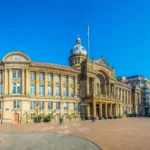
The nineteenth century also produced major public cultural buildings. Birmingham Museum and Art Gallery opened in 1885 and occupies a Grade II* listed building overlooking Chamberlain Square and Victoria Square. Its collections document Birmingham’s history while also presenting significant fine and decorative art.
The result was an expanding cultural system involving education, collecting, exhibition, performance, and public access.
How did Birmingham’s industrial history create its modern creative districts?
Industrial Birmingham supplied buildings, skills, audiences, and commercial networks that supported creative production. Former factories, workshops, warehouses, canals, and railway environments remain visible in Digbeth and the Jewellery Quarter, where industrial heritage provides settings for studios, galleries, events, and businesses.
Industrial buildings became important to Birmingham’s modern creative economy because many offered large floor areas, distinctive architectural features, and central locations.
Digbeth provides the clearest example.
The district was associated with manufacturing from the medieval period and became heavily industrialised during Birmingham’s expansion. By the late nineteenth century, large industrial complexes occupied substantial parts of Digbeth.
The Custard Factory demonstrates how industrial property can acquire a second cultural function.
The complex was constructed for Alfred Bird’s custard production in the early twentieth century. Digbeth records identify 1902 as an important date in the development of the factory complex, while current property records describe the Custard Factory as dating from 1906. Its surviving industrial character includes exposed steelwork, high ceilings, and original Crittall windows.
After manufacturing operations moved elsewhere in the 1960s, the buildings eventually entered a new phase. Funding for restoration was secured in 1993, and the first phase of the regenerated Custard Factory opened that year.
The site now contains creative studios, technology companies, media agencies, makers, independent businesses, and event spaces.
This process illustrates a wider mechanism of urban cultural change. Industrial decline created vacant or underused buildings. Their architectural character and central locations attracted alternative businesses and cultural activity. Investment then converted selected buildings into workspaces, galleries, entertainment venues, and creative hubs.
Digbeth’s current development continues this pattern. Birmingham City Council identifies the Custard Factory, The Bond, BIMM, The Night Owl, and Eastside Projects among the district’s cultural and creative landmarks. The council also identifies more than 300,000 square metres of commercial development space across ten sites and plans for significant housing growth as regeneration continues.
The industrial landscape therefore remains part of Birmingham’s creative infrastructure.
Which historic institutions established Birmingham’s cultural infrastructure?
Several institutions provide the foundations of Birmingham’s arts infrastructure. Birmingham Museum and Art Gallery, the Royal Birmingham Society of Artists, Birmingham Repertory Theatre, Birmingham Hippodrome, Barber Institute, Midlands Arts Centre, and City of Birmingham Symphony Orchestra represent stages of development.
Birmingham’s cultural scene depends on institutions established across different periods and for different purposes.
Birmingham Museum and Art Gallery
Birmingham Museum and Art Gallery is one of the city’s principal heritage institutions. The Grade II* listed building opened in 1885 and contains collections covering fine art, archaeology, social history, decorative art, and Birmingham’s industrial past.
Its Birmingham history galleries provide a chronological interpretation of the city from its medieval beginnings through its industrial expansion and modern development. The permanent history exhibition covers more than 850 square metres.
The museum is particularly significant for understanding the relationship between Birmingham’s history and creative production because its collections include both artistic objects and evidence of industrial life.
Royal Birmingham Society of Artists
The RBSA provides another direct connection between artistic education and Birmingham’s manufacturing heritage.
The society’s 1821 foundation followed earlier life-drawing and art education initiatives. Its original purpose included training artisans, demonstrating how drawing and design were considered practical skills within Birmingham’s industrial economy.
The society received a royal charter in 1868. Its historical membership included figures associated with the Pre-Raphaelite and Arts and Crafts movements, including William Morris and Edward Burne-Jones.
The present RBSA Gallery operates in St Paul’s Square in the Jewellery Quarter and continues to support artists through exhibitions, workshops, and engagement with visual art.
Birmingham Repertory Theatre
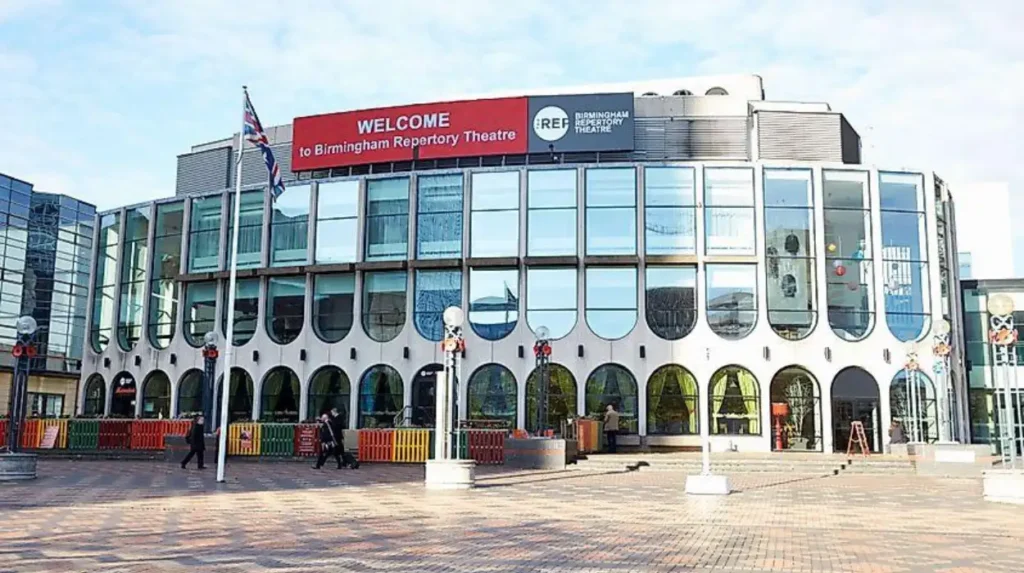
Birmingham Repertory Theatre, usually called the Birmingham Rep, was founded by Barry Jackson. Its first building opened in 1913 with a production of Twelfth Night. Jackson used the theatre to develop professional repertory theatre and later challenged conventional approaches to Shakespearean performance.
A major example came in 1923, when Jackson staged Cymbeline using contemporary 1920s clothing instead of traditional Elizabethan costumes. The production demonstrated the Rep’s role in changing theatrical presentation and connecting historic drama with modern audiences.
The Rep later became an important centre for new writing and experimental theatre.
Birmingham Hippodrome
Birmingham Hippodrome began as the Tower of Varieties and Circus in 1899. Its original auditorium used a circular circus arrangement with seating around a central performance area. After closing for five weeks, the venue reopened in 1900 as the Tivoli Theatre of Varieties. The name Birmingham Hippodrome appeared in 1903.
The building survived both world wars and continued hosting variety entertainment, theatre, music, dance, and large touring productions.
In 1990, Sadler’s Wells Royal Ballet moved to Birmingham and became Birmingham Royal Ballet. The company remains based at Birmingham Hippodrome.
Barber Institute of Fine Arts
The Barber Institute demonstrates the importance of philanthropy and university-based culture.
Lady Martha Constance Hattie Barber founded the institute in 1932 in memory of her husband, Sir William Henry Barber. Her endowment funded an art collection, gallery, and concert hall intended to support the study and encouragement of art and music.
The Art Deco building opened in 1939 and was designed by architect Robert Atkinson. Historic England upgraded the building to Grade I listed status in 2020, recognising its architectural quality and its significance as an integrated facility combining art, music, teaching, gallery, and exhibition functions.
Midlands Arts Centre
The Midlands Arts Centre, known as MAC, opened in 1962 in Cannon Hill Park. It developed as a contemporary arts centre combining visual arts, theatre, cinema, courses, community activity, and creative learning.
MAC now receives more than 850,000 visitors annually and describes itself as the most visited free attraction in the West Midlands. Its programme includes theatre, independent cinema, exhibitions, practical courses, and special events.
These institutions demonstrate that Birmingham’s cultural history is not concentrated in one period. It developed continuously from the nineteenth century through the twentieth century and into the contemporary era.
Why is Digbeth central to Birmingham’s contemporary creative scene?
Digbeth became a creative district because its industrial buildings offered large spaces close to the city centre. The Custard Factory, The Bond, Eastside Projects, studios, production companies, educational organisations, and entertainment venues demonstrate industrial property adapted for contemporary creative work.
Digbeth occupies a strategic position east of Birmingham city centre, approximately a 15-minute walk from Birmingham New Street Station according to Birmingham City Council. Its historic industrial character remains visible in former factories, warehouses, canals, railway infrastructure, and converted commercial buildings.
The area’s transformation illustrates adaptive reuse.
Adaptive reuse means giving an existing building a new function while retaining elements of its original structure. In Digbeth, industrial buildings have become studios, offices, cultural venues, educational spaces, production facilities, and entertainment sites.
The Custard Factory is the best-known example. Its former manufacturing buildings now accommodate creative businesses, technology companies, media agencies, makers, and independent enterprises.
Eastside Projects provides a different model. Established in 2008, the artist-run organisation operates as a not-for-profit company and has developed programmes involving artists, communities, public projects, and cultural partners.
The district also forms part of Birmingham’s expanding screen and digital economy. Birmingham City Council identifies the BBC’s regional headquarters and Digbeth Loc Studios among the developments reinforcing the district’s role in film and television production.
For visitors, Digbeth provides a direct way to observe the relationship between industrial heritage and contemporary creativity. Historic structures are not simply museum objects. They remain active workplaces and cultural environments.
To experience this historic relationship in person, consult our comprehensive [Top Art Galleries and Creative Experiences to Enjoy Birmingham] for itineraries and visiting parameters.
How can visitors explore Birmingham’s visual arts heritage?
Birmingham offers a connected cultural landscape rather than a single arts centre. City-centre galleries, theatres, concert venues, the Jewellery Quarter, Digbeth, Edgbaston, and Cannon Hill Park provide activity, allowing visitors to compare historic collections, contemporary practice, performance, music, and design.
A productive exploration begins with the city centre.
Birmingham Museum and Art Gallery provides the historical foundation. Its reopened galleries include the Pre-Raphaelite galleries, Staffordshire Hoard Gallery, Birmingham history galleries, Round Room, Industrial Gallery, Bridge Gallery, and Wild City.
The Pre-Raphaelite collection is particularly relevant to Birmingham’s nineteenth-century artistic history. The museum currently presents more than 60 paintings, sculptures, and stained-glass panels in four refurbished galleries.
The RBSA provides a different perspective. Its artist-led structure connects historic artistic traditions with contemporary practitioners. The organisation currently represents approximately 200 artists through its membership and associates.
The Jewellery Quarter provides architectural context for this artistic tradition. Its streets contain historic workshops, jewellery businesses, churches, commercial buildings, and former manufacturing premises. The area remains associated with jewellery, design, craft, and independent creative activity.
Ikon Gallery provides another important part of Birmingham’s visual arts history.
Ikon began in 1964 when a group of artists developed the concept of an accessible gallery that would challenge exclusive art institutions. In 1965, the organisation operated from an octagonal glass kiosk in Birmingham’s Bullring precinct.
This origin is significant because it established accessibility and experimentation as central elements of the organisation’s identity.
Today, visitors can therefore compare different institutional models: municipal collections at Birmingham Museum and Art Gallery, artist-led practice at the RBSA and Eastside Projects, and contemporary exhibition programming at Ikon.
The Barber Institute extends this cultural geography into Edgbaston. Its location within the University of Birmingham places art, music, research, teaching, and public exhibitions within an academic environment.
MAC provides another major destination in Cannon Hill Park. Its programme combines exhibitions with participation, cinema, theatre, practical courses, and community activity.
Together, these places show how Birmingham’s visual arts scene operates through museums, universities, artist organisations, contemporary galleries, community arts centres, and historic buildings.
How does Birmingham’s music and performance history strengthen its creative scene?
Birmingham’s performance culture developed through theatres, concert halls, orchestral institutions, touring venues, and specialist companies. The City of Birmingham Symphony Orchestra, Birmingham Hippodrome, Birmingham Rep, and Birmingham Royal Ballet connect historic performance traditions with contemporary production and education.
Birmingham’s musical history extends back well before the establishment of modern cultural organisations.
The City of Birmingham Symphony Orchestra, or CBSO, records orchestral concerts in the city from at least 1740. More than 20 orchestras operated in Birmingham between 1740 and the creation of the modern CBSO in 1920.
The orchestra developed from a civic campaign for a permanent municipally funded ensemble. Birmingham City Council agreed to provide an annual grant of £1,250 for an experimental five-year period. The organisation became the first publicly funded orchestra in Great Britain.
Its first full symphonic concert took place at Birmingham Town Hall on 10 November 1920, with Edward Elgar conducting his own works, including the Cello Concerto.
The CBSO also established an educational role early in its history. Concerts for schoolchildren began in 1921, while Adrian Boult introduced initiatives including student open rehearsals and free concerts for children after becoming chief conductor in 1924.
The orchestra’s history therefore demonstrates that cultural institutions can serve both professional artistic production and public education.
Birmingham Hippodrome provides another perspective. Its stage has hosted variety entertainment, circus, theatre, musical productions, opera, and ballet since the late nineteenth century. Its history includes wartime performances and major redevelopment during the twentieth century.
Birmingham Royal Ballet added a permanent international dance institution to the city’s cultural infrastructure after its arrival in 1990. The company combines classical repertory with new work and operates from its Birmingham base.
Birmingham Rep provides the theatrical equivalent of this development. Its history demonstrates how a regional theatre became a site for experimentation in Shakespeare, new writing, production methods, and professional performance.
The combination of orchestral music, ballet, theatre, circus traditions, and contemporary performance gives Birmingham a broad performing-arts infrastructure.
How can Birmingham’s creative scene support education and historical research?
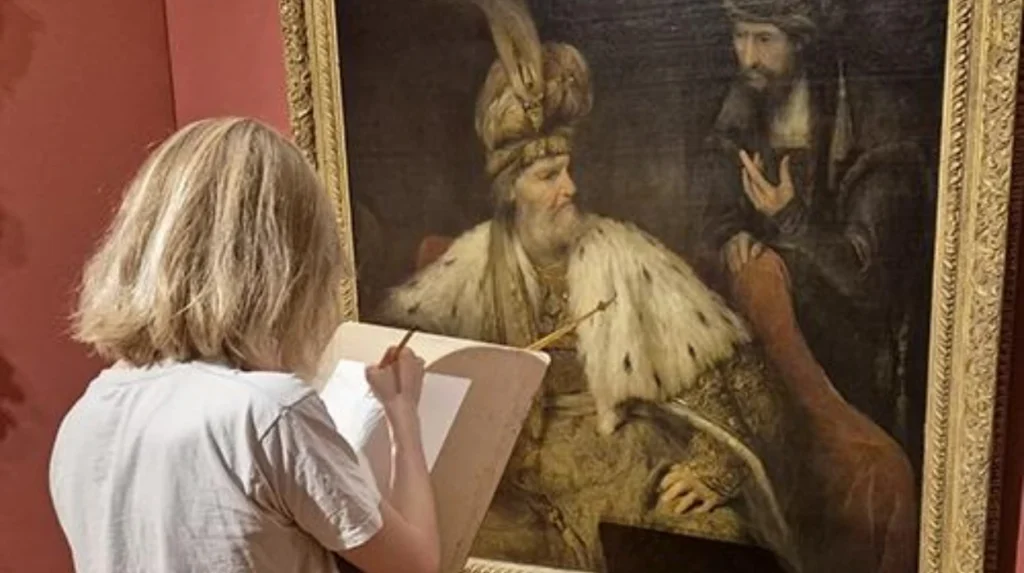
Schools, universities, museums, galleries, theatres, orchestras, and community arts organisations make Birmingham’s creative scene valuable for education. Students can study original objects, architecture, performance history, industrial design, music, and contemporary art while examining how institutions preserve evidence and develop knowledge.
Birmingham’s cultural institutions function as research environments as well as visitor attractions.
Birmingham Museum and Art Gallery provides primary-source material through objects, artworks, archaeological evidence, photographs, documents, and social-history collections. Its Birmingham history galleries trace the city from its medieval origins through industrialisation, suburban expansion, and the twentieth century.
For history students, this allows industrialisation to be studied through physical evidence rather than written records alone.
The RBSA provides evidence of the historical relationship between art education and manufacturing. Its early drawing academy trained artisans during a period when Birmingham’s economy depended heavily on skilled workshop production.
The Barber Institute provides an academic connection between art history and music. Its foundation was explicitly linked to the study and encouragement of both disciplines.
MAC offers another educational model. Since opening in 1962, it has provided thousands of creative courses for people of different ages and abilities. Its current programme includes practical activities such as life drawing, painting, photography, ceramics, collage, and life writing.
The CBSO also has a long educational tradition. Its early concerts for schoolchildren established a model of public musical education that continues through contemporary community and youth programmes.
Performance archives also provide valuable historical sources.
Birmingham Hippodrome’s heritage programme has preserved programmes, photographs, tickets, building plans, oral histories, and other archival material. Its heritage archive contains evidence covering performances from 1899 onwards.
These resources support research into theatre history, social history, architecture, entertainment, urban development, and audience behaviour.
For educators, Birmingham’s arts scene therefore provides opportunities to connect classroom subjects with physical evidence. Art history, industrial history, architecture, music, drama, design, geography, and urban studies can all be examined through the city’s cultural infrastructure.
What does Birmingham’s creative future depend on?
Birmingham’s creative future depends on preserving historic buildings, sustaining cultural organisations, supporting artists, and adapting industrial spaces without erasing their evidence. Existing institutions, creative districts, educational networks, and the cultural economy provide a strong framework for continued artistic production.
Birmingham’s future creative development is closely connected to heritage preservation.
Historic buildings provide physical evidence of earlier economic and cultural systems. The Custard Factory demonstrates how an industrial building can support new creative activity without losing its architectural character.
The Barber Institute provides another preservation example. Its Grade I listing recognises the survival of its original architectural character and its importance as an integrated arts and music facility.
Birmingham Museum and Art Gallery also demonstrates the importance of conservation. Its phased reopening has involved restoration and refurbishment while retaining access to important collections and historical galleries.
The city’s cultural economy provides another important foundation. Birmingham City Council estimates that culture and the arts directly generate around £200 million in economic activity each year across approximately 450 organisations, with around 5,000 people employed including freelancers.
Creative development therefore has an economic dimension as well as a cultural one.
Digbeth illustrates this particularly clearly. Birmingham City Council identifies ongoing regeneration, screen-sector investment, commercial development, transport improvements, and new housing as factors shaping the district’s future.
The challenge for heritage preservation is to retain the evidence of earlier uses while accommodating new economic functions.
Birmingham’s historical experience provides a strong foundation for this process. The city repeatedly adapted to economic change. Manufacturing created specialist skills. Industrial decline created opportunities for building reuse. Cultural institutions preserved collections and traditions. New organisations introduced contemporary forms of art, performance, film, and design.
The creative scene is therefore best understood as an evolving cultural infrastructure.
Its museums preserve evidence. Its theatres preserve performance traditions. Its orchestras preserve musical practice. Its galleries support visual artists. Its universities connect culture with research. Its creative districts provide workplaces and production environments. Its historic buildings connect present activity with Birmingham’s industrial past.
This combination gives Birmingham’s arts and creative scene its distinctive historical structure.
For visitors, the most effective approach is to explore these connections rather than treating each venue as an isolated destination. A journey through the city can begin with nineteenth-century civic culture at Birmingham Museum and Art Gallery, continue through the artistic traditions of the Jewellery Quarter, examine contemporary practice at galleries and artist-led organisations, and then follow Birmingham’s industrial architecture into Digbeth.
The resulting experience demonstrates a clear historical process: Birmingham’s creative economy developed from the same industrial, educational, civic, and commercial foundations that shaped the modern city.
The city’s creative identity remains rooted in that history while continuing to produce new forms of art, design, music, theatre, film, craft, and cultural research.
Frequently Asked Question
What is Birmingham’s arts and creative scene known for?
Birmingham is known for its museums, galleries, theatres, music, ballet, design, independent arts organisations, and creative districts. Digbeth and the Jewellery Quarter are particularly important for contemporary creative activity.