Birmingham is England’s second-largest city and one of the United Kingdom’s most historically significant industrial centres. It combines free museums, historic public parks, canal networks, architectural landmarks, cultural festivals, and affordable transport, allowing visitors to experience the city without high costs. Careful planning enables travellers to explore Birmingham’s heritage, arts, and neighbourhoods while maintaining a modest budget.
- Why is Birmingham an excellent destination for budget-conscious travellers?
- What free attractions should every visitor experience in Birmingham?
- How can visitors explore Birmingham’s canals without spending money?
- Which museums offer the best value in Birmingham?
- Which parks provide affordable outdoor experiences?
- Where can visitors find inexpensive food in Birmingham?
- How does Birmingham’s history help visitors understand the modern city?
- What affordable cultural experiences are available throughout the year?
- How can visitors reduce transportation costs in Birmingham?
- Which historic neighbourhoods are ideal for inexpensive exploration?
- What practical strategies help visitors enjoy Birmingham on a small budget?
- Why does Birmingham remain one of Britain’s best-value historic cities?
Why is Birmingham an excellent destination for budget-conscious travellers?
Birmingham combines nationally important heritage, extensive free attractions, affordable public transport, historic public spaces, and year-round cultural events. Visitors can experience industrial history, Victorian architecture, museums, canals, markets, and public parks while spending very little, making the city one of Britain’s strongest value-for-money urban destinations.
Birmingham occupies approximately 267 square kilometres in the West Midlands region of England and has a population exceeding 1.1 million residents. Together with the wider metropolitan area, it forms one of Europe’s largest urban economies.
The city’s historical significance developed during the Industrial Revolution. Birmingham became internationally recognised for manufacturing jewellery, firearms, steam engines, scientific instruments, and metal products during the eighteenth and nineteenth centuries. This industrial success created museums, civic buildings, libraries, public parks, canals, and marketplaces that remain accessible today.
Unlike destinations where major attractions require expensive admission, Birmingham offers numerous publicly funded cultural institutions. National museums, historic churches, art galleries, botanical landscapes, public squares, canals, and heritage districts provide extensive opportunities for low-cost exploration.
Students, families, history enthusiasts, photographers, and international tourists all benefit from Birmingham’s combination of accessibility and affordability.
What free attractions should every visitor experience in Birmingham?
Birmingham offers numerous free attractions including museums, galleries, historic churches, canal districts, public squares, libraries, and parks. These locations collectively explain the city’s industrial development, artistic heritage, civic identity, and multicultural evolution without requiring admission fees.
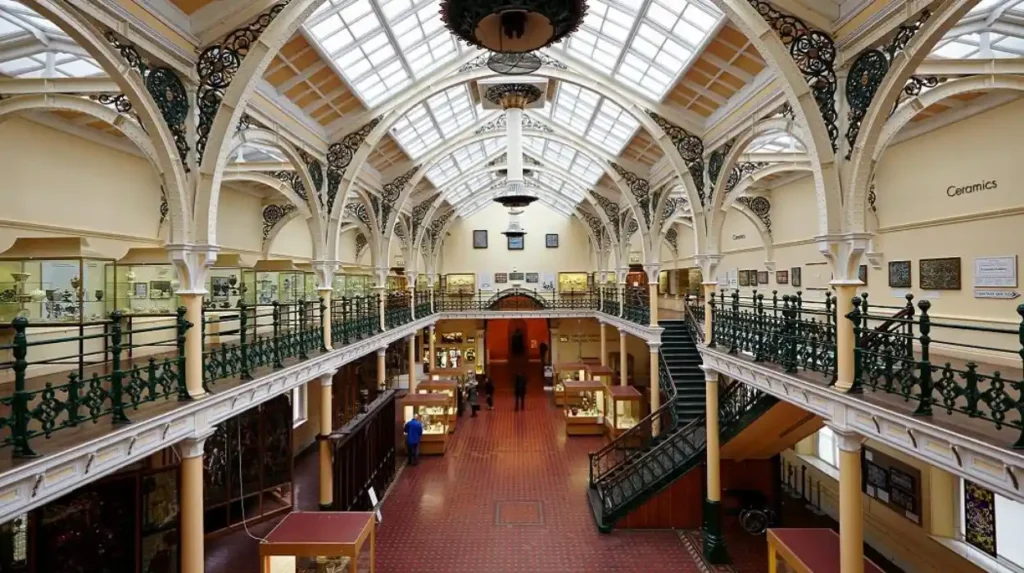
One of Birmingham’s most visited free attractions is the Birmingham Museum and Art Gallery. Its collections include Pre-Raphaelite paintings, archaeology, local history, decorative arts, and internationally significant metalwork.
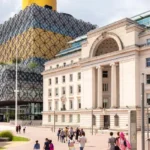
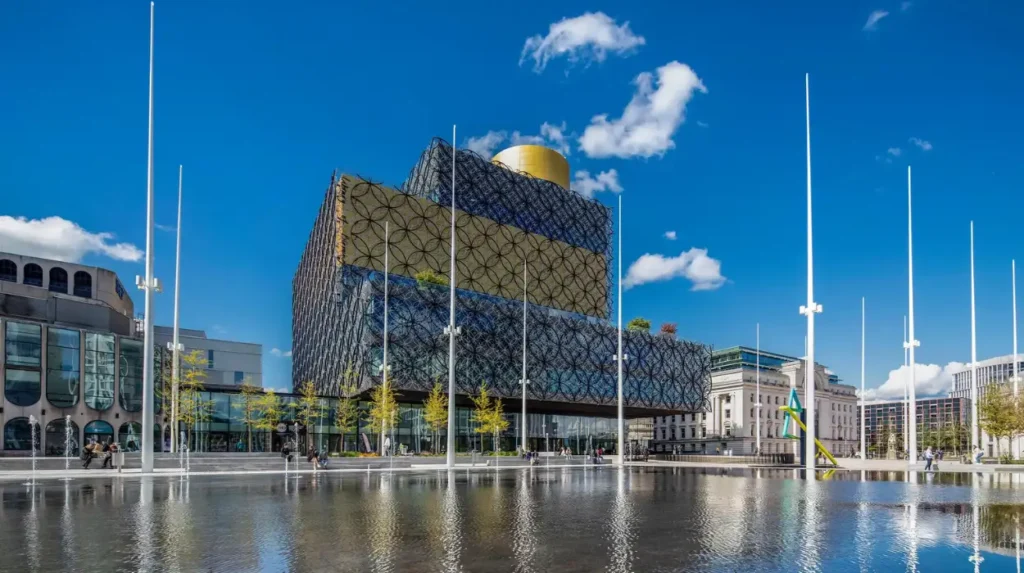
The Library of Birmingham is another landmark destination. Opened in 2013, the building cost approximately £189 million and became one of Europe’s largest public libraries. Visitors enjoy panoramic viewing terraces, heritage collections, exhibitions, and Shakespeare Memorial Room access.
The historic Jewellery Quarter provides an outdoor museum experience. More than 200 listed buildings survive within this conservation area. Approximately 40% of Britain’s jewellery continued to be manufactured there well into the twentieth century.
St Philip’s Cathedral offers free entry and contains stained-glass windows designed by Edward Burne-Jones, who was born in Birmingham in 1833.
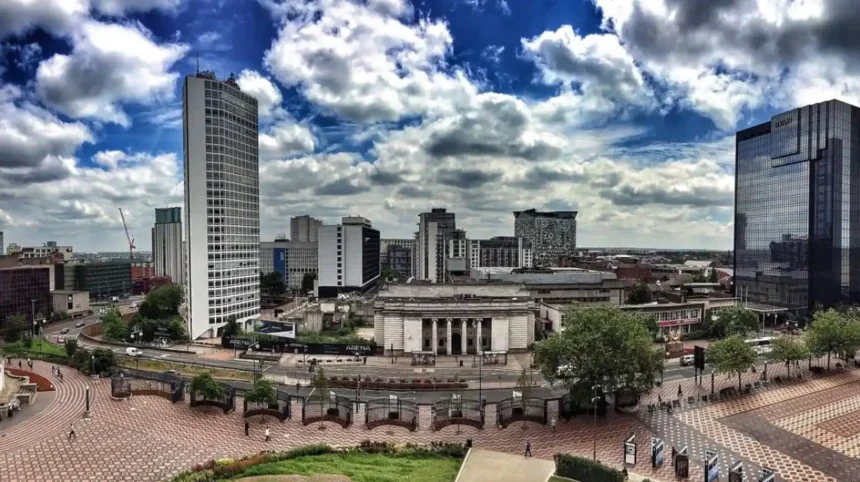
Victoria Square showcases civic architecture including Birmingham Town Hall, the Council House, and public sculptures reflecting the city’s nineteenth-century expansion.
Gas Street Basin illustrates Birmingham’s canal heritage. During the Industrial Revolution, canals transported coal, iron, and manufactured goods across England. Today the basin serves as a historic walking destination surrounded by restored warehouses.
These attractions demonstrate Birmingham’s transformation from medieval market settlement into a global industrial powerhouse.
How can visitors explore Birmingham’s canals without spending money?
Birmingham possesses approximately 35 miles of navigable canals within the city. Public towpaths allow visitors to experience historic waterways, industrial architecture, restored warehouses, bridges, locks, and waterfront districts completely free throughout the year.
Birmingham famously contains more miles of canals than Venice. Although this comparison refers only to canal length rather than water area, the city’s canal system remains one of Britain’s defining historical features.
Construction accelerated after the Birmingham Canal Navigations expanded during the eighteenth century. Engineers developed an interconnected transport network supporting factories, mines, warehouses, and workshops throughout the Midlands.
Walking from Gas Street Basin toward Brindleyplace introduces visitors to restored industrial buildings now serving restaurants, offices, and cultural venues.
Continuing toward the Jewellery Quarter reveals quieter stretches where original canal engineering remains visible through locks, bridges, towpaths, and stone infrastructure.
Photographers often visit early morning or evening when reflections highlight Birmingham’s industrial landscape.
To experience these historic waterways alongside other affordable attractions, consult our comprehensive [Best Things to Do in Birmingham on a Budget This Year] for itineraries and visiting parameters.
Walking routes remain among Birmingham’s highest-value experiences because they combine exercise, history, architecture, engineering, and urban regeneration without admission charges.
Which museums offer the best value in Birmingham?
Several Birmingham museums provide free permanent exhibitions covering archaeology, industrial innovation, military history, natural science, and fine art. Donations support operations, but visitors can experience nationally significant collections without purchasing admission tickets.
Birmingham Museum and Art Gallery houses collections representing thousands of years of history. Ancient Egyptian artefacts, Roman discoveries, Anglo-Saxon material, and local industrial collections illustrate the city’s long historical development.
The Museum Collection Centre occasionally opens for guided visits, allowing public access to stored collections exceeding one million artefacts.
The Lapworth Museum of Geology, operated by the University of Birmingham, contains fossils, minerals, rocks, and geological specimens spanning more than 3.5 billion years of Earth’s history.
The Barber Institute of Fine Arts provides free access to internationally respected paintings, sculptures, ceramics, coins, and musical performances during selected events.
The National Trust’s Birmingham Back to Backs requires paid entry, yet observing the surrounding historic streets remains free and offers insight into nineteenth-century working-class neighbourhoods.
These institutions preserve Birmingham’s scientific, artistic, and industrial heritage while maintaining broad public accessibility.
Which parks provide affordable outdoor experiences?
Birmingham maintains more than 8,000 acres of public parks, gardens, and open spaces. Historic Victorian parks, nature reserves, botanical landscapes, lakes, and woodland walking routes provide recreation, heritage, biodiversity, and relaxation at little or no cost.
Cannon Hill Park opened in 1873 following land donated by Louisa Ryland. Covering approximately 250 acres, it includes lakes, woodland, sports facilities, and riverside walks.
Sutton Park National Nature Reserve extends across approximately 2,400 acres. It ranks among Europe’s largest urban parks and contains heathland, wetlands, ancient woodland, lakes, and grazing ponies.
Lickey Hills Country Park offers elevated viewpoints overlooking Birmingham and Worcestershire. Its geological formations reveal ancient sandstone landscapes shaped over millions of years.
Eastside City Park represents Birmingham’s modern urban regeneration. Opened in 2012, it became the city’s first major new public park in more than 130 years.
Winter walks, summer picnics, photography, wildlife observation, and jogging all remain completely free within these green spaces.
The preservation of public parks reflects nineteenth-century reforms promoting healthier urban environments during rapid industrial expansion.
Where can visitors find inexpensive food in Birmingham?
Birmingham’s historic markets, multicultural districts, food courts, and independent cafés provide affordable dining options. Traditional British cuisine, South Asian specialities, Middle Eastern food, Chinese cuisine, and street food remain widely available at reasonable prices throughout the city.
The Bull Ring markets trace their origins to 1166 when Birmingham received its market charter.
Today’s markets continue this centuries-old trading tradition through indoor and outdoor stalls selling fresh produce, baked goods, international foods, and affordable lunches.
The famous Balti Triangle became internationally recognised during the late twentieth century for developing Birmingham’s distinctive balti cooking style.
Chinese Quarter restaurants offer reasonably priced noodle dishes, dumplings, roasted meats, and regional Chinese cuisine.
Independent cafés throughout Digbeth and the Jewellery Quarter frequently provide lower prices than national chains while supporting local businesses.
Many supermarkets also offer meal deals that significantly reduce food expenses for visitors planning full-day sightseeing.
How does Birmingham’s history help visitors understand the modern city?
Modern Birmingham reflects centuries of industrial innovation, civic investment, migration, education, and regeneration. Historic buildings, transport networks, museums, markets, and neighbourhoods explain why the city developed into one of Britain’s most diverse metropolitan centres.
The medieval town specialised in small-scale manufacturing before expanding dramatically during the eighteenth century.
Innovators including James Watt, Matthew Boulton, and William Murdoch transformed engineering, manufacturing, and steam technology from Birmingham workshops.
The Lunar Society of Birmingham brought together scientists, industrialists, philosophers, and inventors who influenced the Industrial Revolution through collaborative research.
Victorian civic leaders invested heavily in sanitation, libraries, museums, education, and public buildings.
Twentieth-century migration from South Asia, the Caribbean, Ireland, Eastern Europe, and Africa reshaped Birmingham into one of Britain’s most multicultural cities.
Modern regeneration projects continue transforming former industrial land into cultural districts, educational campuses, commercial developments, and residential neighbourhoods.
Understanding this historical progression enriches every walking tour across Birmingham.
What affordable cultural experiences are available throughout the year?
Birmingham hosts numerous cultural events, public performances, seasonal festivals, exhibitions, and community celebrations. Many activities remain free, allowing visitors to experience music, heritage, food, literature, and multicultural traditions without significant expenditure.
Birmingham hosts Europe’s largest St Patrick’s Day celebrations outside Ireland.
The Birmingham Weekender regularly transforms public spaces into outdoor performance venues featuring theatre, dance, music, circus arts, and visual installations.
Frankfurt Christmas Market attracts millions of visitors annually and ranks among Europe’s largest authentic German Christmas markets outside Germany.
Libraries frequently organise author talks, exhibitions, family activities, and educational workshops without admission charges.
Universities host public lectures covering science, history, archaeology, literature, politics, and environmental research throughout the academic year.
Local community festivals celebrate Birmingham’s multicultural population through food, music, dance, and traditional performances.
Checking municipal event calendars before travelling helps visitors identify free activities during their stay.
How can visitors reduce transportation costs in Birmingham?
Walking, public transport, rail services, cycling infrastructure, and advance ticket purchases significantly reduce travel expenses. Birmingham’s compact central district allows many major attractions to be reached comfortably on foot within a single day.
New Street Station functions as Birmingham’s principal railway hub.
From the station, visitors can walk to Victoria Square, the Library of Birmingham, the Bullring, Birmingham Museum and Art Gallery, Gas Street Basin, Brindleyplace, and several historic churches within approximately 30 minutes.
The West Midlands transport network provides buses and trams connecting suburbs, universities, museums, shopping districts, and parks.
Day tickets generally offer better value than multiple individual journeys.
Cycling routes continue expanding through regeneration projects linking canals, parks, universities, and residential neighbourhoods.
Planning attractions geographically reduces unnecessary travel and maximises sightseeing time.
Which historic neighbourhoods are ideal for inexpensive exploration?
Several Birmingham districts preserve important architectural, industrial, and cultural heritage while remaining freely accessible. Walking through these neighbourhoods reveals centuries of urban development, manufacturing history, religious diversity, and architectural evolution without admission costs.
The Jewellery Quarter remains Birmingham’s best-preserved industrial district.
Digbeth contains Victorian warehouses, street art, creative industries, independent cafés, and converted factory buildings representing modern urban regeneration.
The Colmore Business District showcases Victorian commercial architecture alongside contemporary skyscrapers illustrating Birmingham’s economic evolution.
Edgbaston contains elegant nineteenth-century residential architecture, educational institutions, and landscaped streets.
Bournville demonstrates model village planning introduced by chocolate manufacturer George Cadbury beginning in 1895. The village emphasised healthy housing, green space, education, and community facilities for workers.
Each district illustrates different phases of Birmingham’s social and economic history.
What practical strategies help visitors enjoy Birmingham on a small budget?
Advance planning, free attractions, public transport, walking routes, affordable dining, seasonal events, museum visits, and city parks enable visitors to experience Birmingham comprehensively while maintaining careful control over travel expenses throughout their stay.
Begin sightseeing early to maximise daylight and avoid unnecessary transportation.
Group nearby attractions into logical walking itineraries centred on the city centre, canals, Jewellery Quarter, or Digbeth.
Carry reusable water bottles and purchase lunches from markets rather than premium tourist venues.
Monitor museum exhibition schedules because temporary exhibitions occasionally require admission while permanent collections remain free.
Visit during weekdays when many attractions experience lower visitor numbers.
Take advantage of free public viewpoints, historic streets, churches, and civic buildings to balance occasional paid experiences.
Seasonal festivals often provide entertainment that would otherwise require ticket purchases.
Combining history, architecture, parks, waterways, museums, markets, and neighbourhood walks produces a rewarding Birmingham experience without substantial expenditure.
Why does Birmingham remain one of Britain’s best-value historic cities?
Birmingham combines nationally significant industrial heritage, accessible cultural institutions, historic canals, public parks, affordable food, and extensive free attractions. This combination allows visitors to experience centuries of British history, architecture, innovation, and multicultural heritage while keeping travel costs remarkably low.
The city’s heritage survives through preserved factories, museums, libraries, churches, civic buildings, canals, markets, and public parks created across several centuries. These places explain Birmingham’s transformation from a medieval market settlement into one of the world’s leading industrial centres.
Public investment in museums, libraries, green spaces, and heritage conservation ensures that much of Birmingham’s history remains freely accessible.
This accessibility supports education, tourism, heritage preservation, and community engagement while making the city attractive to budget-conscious travellers.
For visitors seeking authentic experiences rather than expensive entertainment, Birmingham offers exceptional historical depth, architectural diversity, and cultural richness. Careful planning allows travellers to explore the city’s defining landmarks, understand its industrial legacy, and appreciate its continuing regeneration without spending a fortune.
What are the best free attractions in Birmingham?
Some of the best free attractions include Birmingham Museum and Art Gallery, the Library of Birmingham, Gas Street Basin, the Jewellery Quarter, Victoria Square, St Philip’s Cathedral, and Cannon Hill Park.