The City of Birmingham contains numerous civic venues, transport hubs, educational institutions, cultural landmarks, and healthcare facilities that incorporate step-free design elements. Municipal planning regulations enforce statutory physical standards across the region. Disability legislation sets mandatory parameters for door widths, ramp gradients, visual indicators, and tactile surfaces in built environments.
- What Standards Define Accessible Public Buildings Across Birmingham?
- How Accessible Is the Library of Birmingham for Visitors with Mobility Needs?
- What Physical Access Features Are Installed at Birmingham New Street Station?
- Which Cultural Venues in Birmingham Provide Comprehensive Accessibility Infrastructure?
- How Do Healthcare Buildings and Civic Centres in Birmingham Ensure Equal Access?
- Are Changing Places toilets widely available in Birmingham public venues?
- How do I request passenger assistance at Birmingham New Street Station?
- Do historic public buildings in Birmingham feature step-free access?
- Are assistance dogs allowed inside cultural and civic venues across Birmingham?
- Where can I park with a Blue Badge near major accessible venues in Birmingham?
Accessibility features include level access points, automated doors, tactile paving, sensory-friendly zones, and hoist-assisted changing places. Infrastructure modifications ensure equal physical participation for residents and visitors with varied mobility or sensory requirements. The local council works with regional access groups to evaluate physical layout compliance and maintain updated facility records.
Physical upgrades in public infrastructure improve mobility independence across urban areas. Standardised accessibility elements reduce physical barriers in high-traffic municipal zones. Comprehensive civic access frameworks support community integration, public safety, social inclusion, and equal access to essential urban services for all demographic groups across the West Midlands region.
What Standards Define Accessible Public Buildings Across Birmingham?
Accessible public buildings in Birmingham must comply with the Building Regulations Approved Document M and the Equality Act 2010 standards. These legal frameworks mandate step-free entry routes, minimum door clear openings of 800 millimetres, tactile paving, accessible toilets, and passenger lifts.
Building Regulations Approved Document M dictates structural requirements for all new non-domestic developments and major renovations in England. Part M Volume 2 focuses specifically on access to and use of buildings other than dwellings. The standard prescribes specific measurements for ramp gradients, stair risers, handrail profiles, and entrance vestibule clearances.
The Equality Act 2010 imposes a legal duty on service providers to make reasonable adjustments for individuals with disabilities. This legal framework requires physical modifications to prevent disabled persons from being placed at a substantial disadvantage compared to non-disabled persons. Standard adaptations include installing induction loops, visual alarm signals, braille signage, and high-contrast surface finishes.
Birmingham City Council integrates local planning policy frameworks alongside national building codes to drive universal design principles. Physical audits assess existing infrastructure across public sites to determine compliance with access guidelines. Compliance ensures public structures cater to wheelchair users, people with limited physical endurance, and individuals with sensory impairments.
Accessibility standards extend beyond basic physical access to include complex internal navigation systems. Public venues must provide clear directional signage featuring sans-serif typography, unified iconography, and tactile elements. Sound-field systems and acoustically treated walls assist individuals with auditory processing challenges or hearing aids.
Emerging municipal guidelines mandate the inclusion of Changing Places toilets in large public developments. Standard accessible toilets do not meet the needs of individuals requiring personal care assistants or specialist lifting equipment. Changing Places facilities provide 12 square metres of space, height-adjustable changing benches, and tracking hoist systems.
Urban developments across the city centre feature continuous tactile ground surface indicators to guide visually impaired pedestrians. Hazard warning paving alerts users to sudden level changes, while directional paving establishes clear pathways through complex open concourses. Integrated planning standards establish consistent physical access benchmarks throughout the metropolitan area.
How Accessible Is the Library of Birmingham for Visitors with Mobility Needs?
The Library of Birmingham provides full step-free access across all ten public levels via spacious passenger lifts. Facilities include automated wide-entrance doors, accessible toilets on multiple floors, low-level reception desks, tactile flooring, braille signage, and dedicated Changing Places facilities.
The Library of Birmingham opened in September 2013 as a flagship civic space designed with universal accessibility principles. The physical entrance features wide, automatic sliding doors positioned flush with the external paving of Centenary Square. Floor surfaces throughout the internal public concourses are level, smooth, and non-reflective to facilitate easy wheelchair navigation.
Vertical transportation throughout the ten-storey structure relies on large, high-capacity passenger lifts equipped with tactile buttons and voice-announced floor indicators. Two primary lift banks connect the basement archive levels up to the outdoor terrace gardens. Escalators supplement vertical movement between main reading rooms and study galleries for ambulatory visitors.
Sanitary provision includes wheelchair-accessible toilets located on every public floor level within the main core. A fully equipped Changing Places facility sits on the ground floor level near the main information desk. This specialized space includes a ceiling track hoist system, a height-adjustable adult changing bench, and adequate space for two assistance carers.
Low-level service counters exist at all main reception points, lending desks, and reference consultation stations. Dedicated computer workstations feature height-adjustable desks, screen magnification software, and adapted peripheral input devices. Audio induction loops operate at main customer contact desks and within all conference spaces.
Braille signage and high-contrast tactile lettering guide visually impaired visitors along key circulation corridors. The exterior terraces on floors four and seven feature wide paved paths, secure perimeter balustrades, and step-free access doors. Sensory-friendly spaces within children’s areas provide low-stimulation environment options for neurodivergent visitors.
The building maintains dedicated emergency evacuation chairs at every fire refuge stairwell location. Designated staff receive routine training in emergency egress assistance procedures for mobility-impaired occupants. The central site proximity to public transport routes enhances overall physical accessibility for all regional visitors.
What Physical Access Features Are Installed at Birmingham New Street Station?
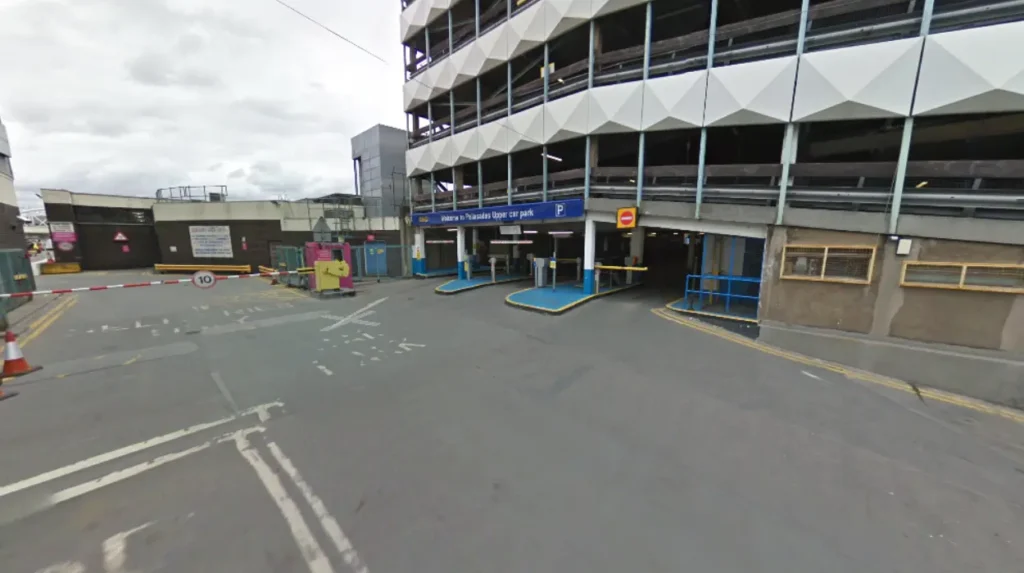
Birmingham New Street Station offers complete step-free access across all 12 platforms via large passenger lifts and escalators. The station features tactile platform edges, wide ticket gates, accessible toilet facilities, induction loops, and a dedicated Passenger Assistance Lounge for travellers.
Birmingham New Street Station underwent a major redevelopment completed in September 2015 to transform overall physical accessibility. The central concourse features flat, seamless floor finishes that allow unobstructed movement between street-level entrances and platform gateways. Main entrance routes from Stephenson Street, Hill Street, and the Bullring incorporate automated wide-aperture doors.
Access to platforms 1 through 12 relies on dedicated, high-capacity passenger lifts capable of accommodating multiple wheelchair users simultaneously. Every platform incorporates continuous tactile paving surfaces positioned set back from the platform edge to warn visually impaired passengers. Platform signage uses high-contrast visual display monitors positioned at standard viewing heights.
The station concourse contains a dedicated Passenger Assistance Lounge located near the main ticket office zone. This facility provides a quiet seating area, accessible registration desks, and direct access to dedicated staff trained in mobility support. Network Rail staff operate mobility buggies to transport passengers with limited endurance across the main concourse floor.
Sanitary infrastructure includes multiple accessible toilets operating via the national RADAR key scheme across the main public concourse. A Changing Places facility operates on the main concourse level, equipped with an electric hoist, adjustable changing bench, and shower unit. Accessible baby changing spaces are integrated adjacent to standard toilet facilities.
Ticket purchase points incorporate low-level counter windows and integrated hearing loop technologies for clear communication. Automatic ticket barriers include extra-wide lanes designed specifically for manual wheelchairs, powered wheelchairs, and luggage carts. Public announcements utilize both clear visual information displays and acoustic public address systems.
Direct step-free links connect the station concourse directly to the Grand Central shopping complex and nearby light rail stops. The West Midlands Metro platform on Stephenson Street provides step-free, level boarding directly onto low-floor tram carriages. Dedicated accessible taxi bays operate immediately outside the main station concourse exits.
Which Cultural Venues in Birmingham Provide Comprehensive Accessibility Infrastructure?
Symphony Hall, Birmingham Museum and Art Gallery, and the Hippodrome Theatre offer step-free access, wheelchair spaces, accessible toilets, and sensory services. Facilities feature infrared hearing assistance, audio-described performances, touch tours, relaxed events, and dedicated seating options for disabled visitors.
Symphony Hall, located within the International Convention Centre complex, provides complete step-free entrance points from Centenary Square. The auditorium features designated wheelchair spaces across multiple seating tiers, accessible via dedicated passenger lifts. Infrared hearing assistance systems transmit amplified audio directly to compatible hearing devices throughout the main hall.
The Hippodrome Theatre on Hurst Street maintains step-free entry to the main foyer via automatic glass doors. Step-free access extends to the stalls level, circle level, and main dining spaces via internal passenger lifts. The venue reserves dedicated wheelchair spaces with adjacent companion seating in prime viewing areas within the auditorium.
Birmingham Museum and Art Gallery on Chamberlain Square offers step-free access via its Edmund Street entrance. Internal ramps and central passenger lifts enable access to historic display galleries, temporary exhibition spaces, and public cafes. Exhibition displays feature lowered display cases, high-contrast text panels, and tactile interpretation elements for selected historical artefacts.
Cultural venues across Birmingham regularly schedule accessible performance formats, including relaxed performances, captioned shows, and audio-described productions. Relaxed performances modify light and sound cues while allowing audiences freedom of movement inside the auditorium. Audio-described shows include pre-show touch tours allowing visually impaired patrons to explore costumes and props physically.
Sanitary facilities within these major cultural institutions feature fully compliant accessible toilets fitted with grab rails and emergency pull cords. Staff members undergo regular disability awareness training to assist patrons with specific physical or communication requirements. Assistance dogs are permitted within all performance auditoriums and gallery display areas across these venues.
Detailed access guides and visual stories are published online prior to events to assist visitors with pre-visit planning. Accessible box office counters feature lowered transaction surfaces and integrated induction loop devices. Reserved accessible parking spaces operate near venue entrances to reduce physical travel distances for disabled visitors.
How Do Healthcare Buildings and Civic Centres in Birmingham Ensure Equal Access?
Queen Elizabeth Hospital and Birmingham Council House ensure access through step-free entrances, automatic doors, wide corridors, tactile signposts, and accessible toilets. Facilities provide height-adjustable equipment, hoist systems, dedicated disabled parking bays, and specialized patient transport drop-off areas.
Queen Elizabeth Hospital Birmingham operates as a modern tertiary healthcare facility built to comprehensive universal design standards. The main hospital entrances incorporate wide automatic sliding doors, level threshold transitions, and broad main circulation corridors. Step-free pathways connect main entrance foyers directly to inpatient wards, outpatient clinics, and diagnostic suites via large bed-capable lifts.
Parking infrastructure at the hospital includes hundreds of designated Blue Badge parking spaces located close to primary clinical entrances. Dedicated drop-off zones permit private vehicles and specialist patient transport ambulances to unload passengers directly at step-free building thresholds. Internal directional signage utilizes color-coded pathway lines on floor surfaces to simplify navigation across expansive clinical zones.
Sanitary spaces across clinical departments include accessible toilets, changing facilities, and specialized hygiene rooms equipped with ceiling track hoists. Patient consultation rooms feature height-adjustable examination tables and accessible weight measurement scales. Visual display screens and acoustic announcement systems notify waiting patients of appointments in clinical waiting areas.
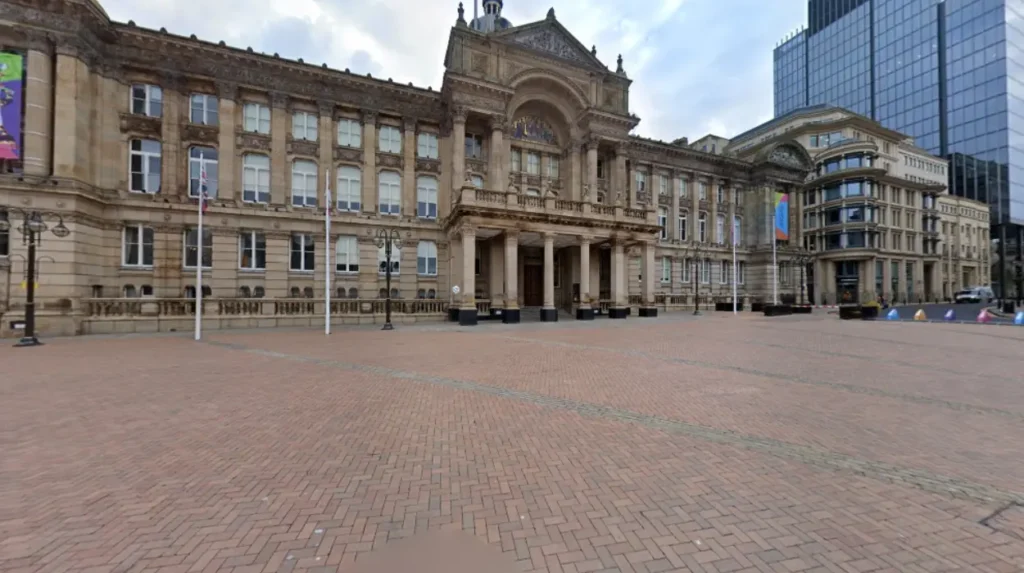
The Council House on Victoria Square represents a historic Grade II listed civic building adapted to meet modern accessibility requirements. Step-free access to the Council House is provided via a dedicated ground-level entrance on Congreve Passage equipped with passenger lifts. Strategic structural adaptations provide physical access to the main council chamber, mayor’s parlour, and public committee rooms.
Historic civic spaces present unique conservation challenges when implementing physical accessibility modifications. Retrofitted installations include platform lifts concealed within historic architecture, automated interior door openers, and removable ramp structures. High-contrast step edge highlighting and supplementary handrails enhance safety on historic stone staircases for ambulatory users.
Civic buildings incorporate induction loops within public meeting rooms and formal assembly halls to support hearing-impaired attendees. Public galleries within governance spaces feature designated wheelchair positions with unobstructed viewing angles. Emergency egress protocols utilize specialised evacuation equipment and trained civic staff to support visitors during building evacuations.
Are Changing Places toilets widely available in Birmingham public venues?
Changing Places facilities are installed in key public hubs, including the Library of Birmingham, Birmingham New Street Station, and major venue complexes like the International Convention Centre. These specialized facilities include ceiling track hoists, height-adjustable changing benches, and adequate space for care assistants.
How do I request passenger assistance at Birmingham New Street Station?
Passenger assistance can be booked in advance via the National Rail Passenger Assist system or requested on-site at the Passenger Assistance Lounge on the main concourse. Dedicated station staff provide support with platform transfers, luggage carrying, and boarding trains.
Do historic public buildings in Birmingham feature step-free access?
Many historic structures, such as the Birmingham Council House and Museum and Art Gallery, have retrofitted step-free access points. Adapting Grade II listed buildings involves installing dedicated platform lifts, ramped side entrances, and automatic door systems alongside historic features.
Are assistance dogs allowed inside cultural and civic venues across Birmingham?
Assistance dogs are permitted inside all public buildings, including libraries, museums, theatres, civic halls, and healthcare facilities. Venues regularly provide water bowls and dedicated relief areas for working assistance dogs upon request.
Where can I park with a Blue Badge near major accessible venues in Birmingham?
Designated Blue Badge parking spaces exist near venue entrances, main city council car parks, and on-street bays around Victoria Square, Centenary Square, and Hurst Street. On-street Blue Badge holders can park free of charge without time limits in designated display bays across the city.