Birmingham operates an integrated public transport ecosystem managed by Transport for West Midlands. The regional network combines extensive bus routes, urban light rail, and suburban commuter rail systems, providing comprehensive movement for over one million residents across the metropolitan area.
- How does the Birmingham bus service network operate?
- What are the features of the West Midlands Metro tram system?
- How does the suburban rail network link regional Birmingham?
- What is the Swift smartcard ticketing system?
- What concessions exist for older and disabled passengers?
- What support is available for jobseekers and low-income workers?
- What discounted travel schemes are provided for young people?
- How accessible is the public transit infrastructure for disabled users?
The West Midlands conurbation relies heavily on coordinated transit infrastructure to support daily economic commuting and regional mobility. Transport for West Midlands oversees network planning, ticketing integration, and infrastructure funding, ensuring single-operator monopolies do not fragment service coverage.
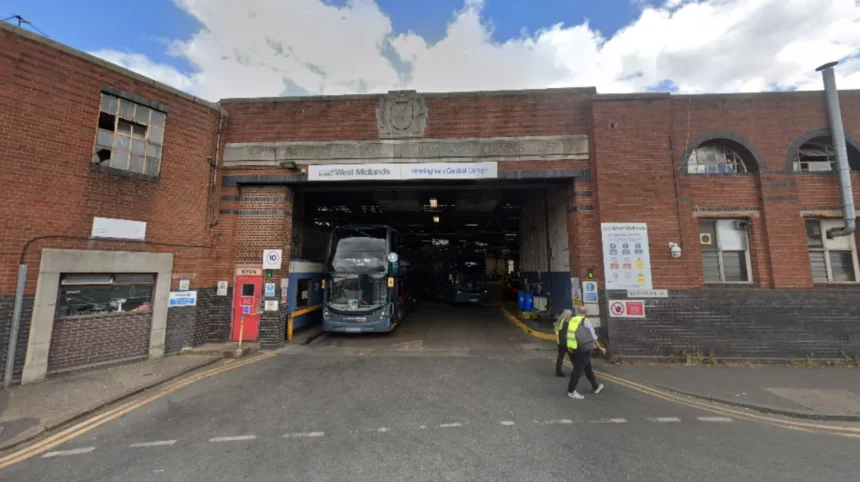
National Express West Midlands forms the backbone of the bus transport fleet, operating hundreds of routes that connect peripheral residential suburbs directly to the city centre.
The West Midlands Metro light rail network complements road transit by offering rapid transport between Grand Central, Wolverhampton, and key intermediate commercial zones.
Local rail travel is anchored by major hubs including Birmingham New Street, Birmingham Moor Street, and Birmingham Snow Hill stations. Suburban railway lines, such as the Cross-City Line, provide high-frequency electric train services connecting north and south Solihull, Redditch, and Bromsgrove.
Integrated transit management relies on unified digital platforms that allow commuters to plan multimodal journeys across various transport companies seamlessly.
How does the Birmingham bus service network operate?
Birmingham bus services operate through private operators, primarily National Express West Midlands, coordinated under the Transport for West Midlands route framework. Services feature high-frequency urban corridors, low-emission vehicle fleets, and comprehensive electronic fare collection interfaces.
The bus network serves as the primary mode of public transit within Birmingham, executing millions of passenger journeys every year. National Express West Midlands operates more than 90 percent of regional bus routes, deploying a fleet of zero-emission electric and low-emission buses.
Bus priority measures, including dedicated express lanes and signal priority junctions, facilitate movement through dense urban corridors such as the A456 Hagley Road and A34 Walsall Road. Smaller independent bus companies run subsidized local routes under contract to Transport for West Midlands, ensuring peripheral rural communities retain mobility access.
Route structures radiate outward from the central shopping and business district, terminating at suburban interchanges like Perry Barr, Selly Oak, and Erdington. Passenger information displays installed at major bus stops present real-time arrival estimates using satellite vehicle tracking data.
Night bus services operate along core arterial roads during weekend hours, catering to shift workers and late-night leisure travel. Vehicle maintenance and schedule compliance are strictly monitored by local transport commissioners to preserve service standards.
What are the features of the West Midlands Metro tram system?
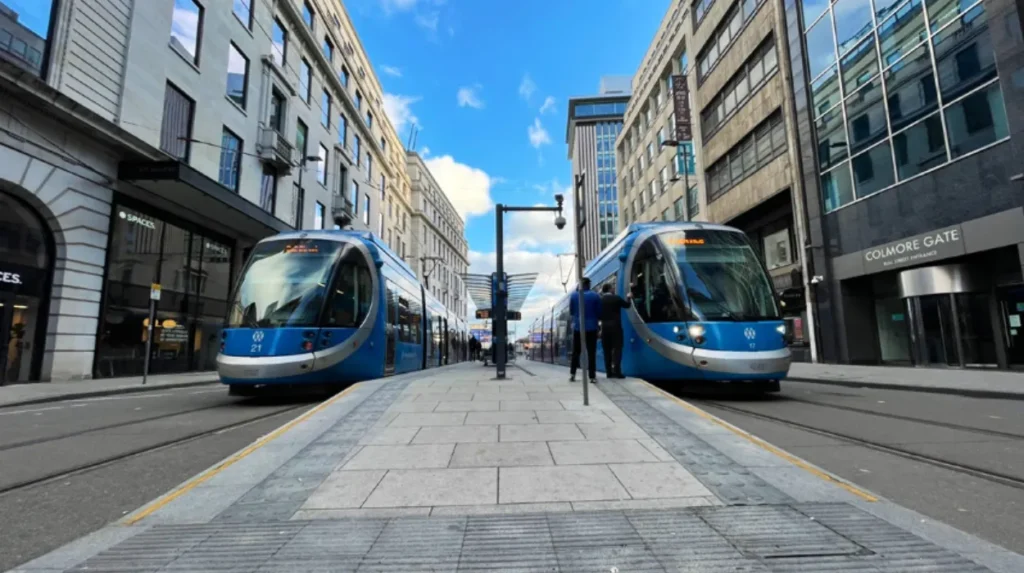
The West Midlands Metro is an electric light rail transit system connecting central Birmingham with Sandwell and Wolverhampton. It features step-free level boarding, overhead line-free battery operation in designated historic zones, and high-frequency city centre stops.
Light rail transit provides a fast and reliable alternative to road-based transport along the busy northwest commuting corridor of the West Midlands conurbation. Operating as a single continuous line, the tram system runs from Edgbaston Village through central Birmingham before traversing West Bromwich and Wednesbury to reach Wolverhampton city centre.
The system utilizes modern low-floor tramcars equipped with onboard energy storage batteries, allowing operation across historical areas like Centenary Square without overhead catenary wires.
Trams run at short intervals of six to eight minutes during peak daytime commuting periods, minimizing passenger waiting times.
Major interchange points link the Metro directly to heavy rail services at Grand Central and suburban bus services at West Bromwich bus station. Continuous track expansions are widening light rail accessibility toward East Birmingham, including planned connections to the High Speed 2 rail terminal at Curzon Street.
Station platforms are designed for full disability accessibility, incorporating tactile paving, emergency help points, and level access to vehicle doors.
How does the suburban rail network link regional Birmingham?
Suburban rail services operate across an expansive heavy rail network centered on Birmingham New Street station. Multiple passenger train operating companies deliver regular commuter routes connecting surrounding West Midlands towns to the urban commercial core.
Suburban train transport forms the high-capacity infrastructure spine for cross-regional commuting in the West Midlands region. West Midlands Railway serves as the primary local train operator, managing suburban routes that extend across the Black Country, Solihull, and Warwickshire.
The Cross-City Line is the busiest suburban rail route, running high-frequency electric trains between Lichfield Trent Valley in the north and Redditch or Bromsgrove in the south.
Additional key commuter lines operate through Birmingham Moor Street and Snow Hill stations, serving communities along the Jewellery Quarter, Smethwick, and Solihull rail corridors.
Intercity passenger services managed by Avanti West Coast, CrossCountry, and Transport for Wales integrate local suburban networks with national destinations. Rail infrastructure upgrades, including station refurbishments and signaling automation, have increased line capacity and improved operational punctuality.
Park-and-ride facilities situated at suburban stations encourage car drivers to transfer to rail travel before entering congested central zones. Electrification projects continue to replace legacy diesel rolling stock with energy-efficient electric train fleets.
What is the Swift smartcard ticketing system?
The Swift smartcard is the official contactless electronic ticketing system used across buses, trams, and trains in the West Midlands. It provides automated fare capping, stored-value pay-as-you-go travel, and digital season ticket management.
Electronic ticketing in Birmingham is standardized around the Swift platform, which simplifies fare payment across different transport operators. Passengers can choose between physical plastic smartcards or virtual cards stored inside smartphone digital wallets for instant contactless scanning.
Swift Pay As You Go allows commuters to upload monetary funds to their account, with automated reader gates calculating the cheapest multi-operator fare. The Swift Go feature automatically applies daily and weekly fare caps, ensuring passengers are never overcharged regardless of the number of journeys taken.
Season tickets for regional buses, West Midlands Metro trams, and local rail zones can be loaded directly onto Swift smartcards via online user portals. Self-service Swift kiosks located across major transport hubs allow users to top up account balances, print ticket passes, or check card transaction histories. The system reduces boarding delays on buses by replacing manual cash transactions with instant card validation.
What concessions exist for older and disabled passengers?
Transport for West Midlands offers free off-peak travel passes for qualifying older residents and individuals with eligible disabilities. These passes provide free travel on local buses, trams, and rail services across the region.
Accessibility policies in the West Midlands ensure that age and physical impairments do not create financial barriers to essential public transit access. The Older Person’s Bus Pass provides free local bus travel after 9:30 AM on weekdays and all day during weekends and public holidays.
Residents reaching the eligible state pension age can apply online or through municipal library hubs by providing proof of age and local residence. The Disabled Person’s Pass grants similar free travel privileges across buses, Metro trams, and local train lines for individuals meeting statutory disability criteria.
Qualifying conditions include permanent physical mobility impairments, severe visual impairments, profound hearing loss, or learning disabilities.
Companion passes are issued to eligible individuals who require active physical assistance during transit journeys, allowing a carer to travel alongside without additional charge. Specialized door-to-door transport schemes, such as Ring and Ride, offer accessible minibus services for residents who cannot access standard scheduled bus stops.
What support is available for jobseekers and low-income workers?
The Workwise scheme provides targeted public transport assistance, including subsidized or free travel passes, for unemployed individuals transitioning into new employment or apprenticeships within the West Midlands region.
Financial barriers often prevent jobseekers from accepting new employment opportunities located far from their places of residence. The Workwise scheme, administered directly by Transport for West Midlands, addresses this economic friction by offering temporary travel support to eligible jobseekers.
Successful applicants receive travel passes covering their initial commuting costs for up to three months after starting a new job. To qualify, individuals must live within the West Midlands metropolitan area, earn under specified low-income thresholds, and demonstrate active benefit status prior to employment.
Additionally, the Jobcentre Plus Travel Discount Card offers a 50 percent reduction on selected train fares for registered unemployed citizens actively seeking work.
Low-income families receiving universal credit can access subsidized child travel passes to lower family transport expenses. Local vocational training providers also coordinate discretionary learner transport funds to cover bus travel costs for adult students pursuing certified skills qualifications.
What discounted travel schemes are provided for young people?
Children, students, and young adults aged 16 to 18 qualify for dedicated fare reductions, including half-price travel passes, subsidized child photocards, and tailored higher-education term tickets.
Youth travel initiatives reduce daily commuting costs for young people attending school, vocational colleges, or regional universities. Children under the age of five travel free of charge across all public transport modes when accompanied by a fare-paying adult.
Children aged 5 to 15 are entitled to child-rate single and day tickets, which cost substantially less than standard adult fares. The 16–18 Photocard scheme enables young residents in education, training, or employment to access child-rate bus, tram, and train tickets across the West Midlands network.
Higher education students attending institutions like the University of Birmingham or Aston University can purchase discounted termly or annual student season tickets.
Special group tickets, such as the Family Daytripper, allow combined adult and child groups to travel economically across multi-operator networks during weekend periods. These youth initiatives cultivate early reliance on sustainable public transport infrastructure while supporting educational attendance.
How accessible is the public transit infrastructure for disabled users?
Birmingham public transport infrastructure incorporates comprehensive physical and digital accessibility measures, including step-free station access, wheel-chair accessible low-floor vehicles, tactile guidance paths, and coordinated passenger assistance schemes.
Public transit accessibility is governed by strict statutory standards designed to ensure equal mobility rights for all passengers. The entire National Express West Midlands bus fleet features low-floor kneeling vehicles equipped with retractable boarding ramps and dedicated wheelchair spaces inside the vehicle cabin.
West Midlands Metro tram stops feature ramped or level platform access matching tram floor levels, allowing independent wheelchair boarding. Major heavy rail stations, including Birmingham New Street, operate step-free lifts, accessible ticket gates, and tactile paving along platform edges.
Passengers needing personal support can utilize the national Passenger Assist service to arrange staff help with station navigation, platform ramps, and luggage transfer across train journeys.
The Hidden Disabilities Sunflower Lanyard scheme is recognized across regional transport networks, alerting staff members that a passenger may require additional time or clear communication support. Visual and audible next-stop announcements are installed across modern buses, trams, and trains to aid visually or hearing-impaired commuters.
How do I apply for a Swift card in Birmingham?
You can apply for a Swift card online through the official Transport for West Midlands website or at designated travel centers located in main transit hubs like Birmingham New Street. Simply select your preferred ticket or pay-as-you-go scheme, upload a valid photo if applying for a photocard, and your card will be posted directly to your address.
Can I use contactless payment on Birmingham buses and trams?
Yes, contactless credit or debit cards, as well as mobile payment apps like Apple Pay and Google Pay, are accepted on almost all buses and trams in Birmingham. You can tap your card or device on the digital reader when boarding to pay for a single fare or take advantage of daily fare capping.
What travel discounts are available for jobseekers in the West Midlands?
Jobseekers can access the Workwise scheme, which provides free travel passes for up to three months when starting a new job. Additionally, the Jobcentre Plus Travel Discount Card offers a 50 percent discount on selected rail travel for eligible unemployed residents.
Are dogs and pets allowed on Birmingham public transport?
Assistance dogs are permitted free of charge across all buses, trams, and local trains at all times. Small domestic pets are generally allowed on buses and trains provided they are kept on a lead or in an enclosed carrier, and do not cause a disturbance to other passengers.
How does the Passenger Assist scheme work at train stations?
Passenger Assist allows disabled travelers or passengers with mobility needs to request advance assistance with station navigation, platform ramps, and luggage handling. Assistance can be booked up to two hours before travel via the Passenger Assistance app or phone, though turn-up-and-go support is also available at staffed stations.