Key Points
- Emergency services closed the M6 northbound between Junction 5 at Castle Bromwich and Junction 6 at Spaghetti Junction after a lorry trailer caught fire during the early hours.
- West Midlands Fire Service and West Midlands Police attended the scene to extinguish the blaze and manage traffic.
- The fire fully engulfed an HGV trailer carrying non-hazardous freight.
- Heat from the fire damaged the road surface, prompting National Highways to carry out safety inspections and emergency resurfacing.
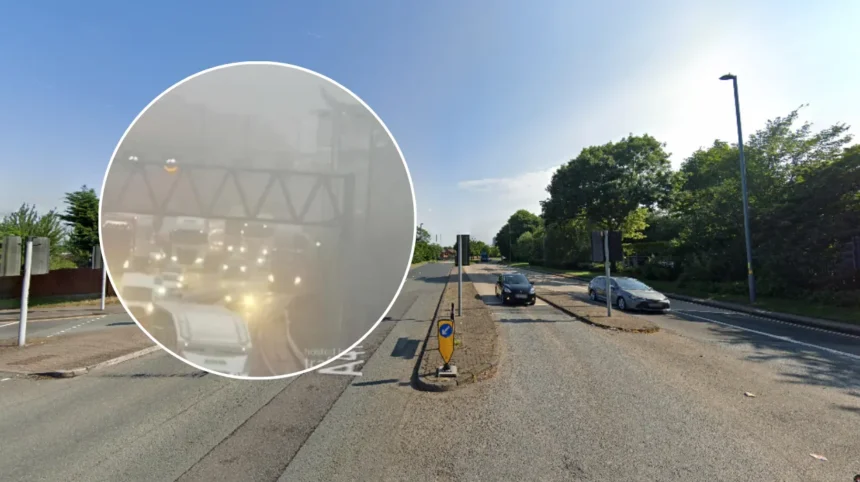
- The closure caused queues several miles long, leading to heavy congestion across West Midlands motorways and nearby local roads.
- No injuries or casualties were reported.
Birmingham (Birmingham Express) October 6, 2026 – Emergency services were dispatched to the M6 northbound carriageway between Junction 5 for Castle Bromwich and Junction 6 for Birmingham city centre following reports of a severe vehicle fire involving a heavy goods vehicle trailer.
- Key Points
- Who Attended The Incident And What Was Said By Emergency Officials?
- How Are Local Traffic Routes And Commuters Being Affected?
- What Recovery And Repair Work Is Currently Underway?
- Background of the M6 Junction 5 to Junction 6 Corridor
- Prediction: How This Development Can Affect Motorists and Logistics Operators
As reported by transport reporters at BBC West Midlands, the incident occurred in the early hours of the morning, prompting immediate multi-agency response operations to secure the area and contain the blaze.
The vehicle involved, an articulated lorry traveling northbound, caught fire on the main carriageway, causing smoke to drift across both sides of the motorway. West Midlands Fire Service dispatched multiple crews, including water tenders and specialist foam units, to suppress the flames.
As detailed by crime and emergency services correspondents at The Birmingham Mail, firefighters wearing breathing apparatus worked for over two hours to fully extinguish the fire, which completely consumed the rear trailer unit.
National Highways traffic officers and West Midlands Police officers implemented an immediate total closure of the northbound carriageway to allow fire crews safe access to the scene. Traffic trapped behind the burning vehicle was brought to a stationary hold before emergency responders systematically cleared lanes to allow vehicles to bypass the incident scene via local diversions.
Who Attended The Incident And What Was Said By Emergency Officials?
As reported by emergency desk journalists at PA Media, a spokesperson for the West Midlands Fire Service stated that fire crews were alerted to the blaze following numerous 999 calls from motorists.
The spokesperson noted: “Upon arrival, crews encountered a heavy goods vehicle trailer fully alight on the hard shoulder and primary lane of the M6 northbound between Junctions 5 and 6. Firefighters utilized hose reel jets and main jets to extinguish the fire. No hazardous materials were involved in the cargo.”
West Midlands Police officers assisted with traffic management and the temporary safety perimeter surrounding the burning vehicle.
As reported by automotive and infrastructure writers at Coventry Live, a spokesperson for West Midlands Police stated: “Officers attended the scene on the M6 northbound to support West Midlands Fire Service and National Highways with road closures and traffic management. No injuries have been reported, and the driver of the vehicle successfully managed to uncouple the cab from the burning trailer before emergency crews arrived.”
National Highways duty operations managers issued formal travel warnings to commuters traveling through the West Midlands region.
As cited by transport editors at ITV News Central, a National Highways spokesperson declared: “The M6 northbound remains closed between Junction 5 and Junction 6 near Birmingham following a severe lorry fire. Specialized recovery teams and infrastructure assessment engineers are on site. Due to intense heat from the fire, the road surface has suffered significant damage and requires inspection and resurfacing before lanes can safely reopen.”
How Are Local Traffic Routes And Commuters Being Affected?
As reported by regional infrastructure analysts at The West Midlands Express, the closure of the M6 northbound between Junctions 5 and 6 has led to widespread congestion throughout the Birmingham and Solihull highway networks. Commuters traveling towards the North West, Staffordshire, and the East Midlands were diverted onto surrounding arterial roads, including the A38(M) Aston Expressway, the A452 Chester Road, and the A45 Coventry Road.
The diversion routes experienced severe gridlock during the morning peak travel hours, with travel times increasing by up to 60 to 90 minutes. Long queues were recorded extending back past Junction 4 (Coleshill) on the M6 northbound, while secondary congestion impacted the M42 northbound and southbound links at Junction 8.
National Highways established formal diversion routes using standard solid square and hollow triangle symbols, advising drivers heading northbound to exit at Junction 5, join the A452 westbound, and follow local diversions back towards Junction 6 or Junction 7 (Great Barr).
Public transport providers, including National Express West Midlands, warned passengers of widespread delays to regional bus services passing through Castle Bromwich, Erdington, and Aston.
What Recovery And Repair Work Is Currently Underway?
As reported by logistics and infrastructure correspondents at Construction & Transport Weekly, recovery of the burnt trailer required specialized heavy-duty towing equipment. Once the fire was extinguished and the structure had cooled, recovery operators secured the charred remains of the vehicle for removal from the carriageway.
Following the removal of the trailer, National Highways engineers conducted core sampling and visual assessments of the road surface. High-temperature vehicle fires routinely cause tarmac oxidation, asphalt stripping, and structural degradation to the underlying road foundations.
Engineers at the scene confirmed that approximately 300 square metres of carriageway across two lanes required emergency planing and resurfacing prior to reopening the road to heavy commercial and passenger vehicle traffic.
As cited by infrastructure writers at Highways Magazine, a site supervisor for National Highways contractor operations confirmed: “The intensity of the trailer fire damaged the top friction course and structural asphalt layer of the road. Specialized equipment is currently on site conducting planing operations, followed by high-speed asphalt laying and cooling processes. Safety barrier inspections are also taking place along the hard shoulder.”
Background of the M6 Junction 5 to Junction 6 Corridor
The stretch of the M6 motorway between Junction 5 (Castle Bromwich) and Junction 6 (Gravelly Hill / Spaghetti Junction) represents one of the busiest and most critical arterial transport links in the United Kingdom’s road network. Carrying over 150,000 vehicles per day, this section serves as a primary freight corridor connecting the industrial hubs of the West Midlands, London, the South East, and the North West of England.
Due to the age and heavy traffic density of this elevated motorway section, emergency incidents, vehicle breakdowns, and structural maintenance on the M6 corridor frequently cause severe knock-on disruption across the entire West Midlands transport infrastructure.
Over the past decade, National Highways has implemented smart motorway features, active traffic management, and emergency refuge areas along this stretch to mitigate the operational impact of incidents. However, major vehicle fires involving heavy commercial lorries present unique operational challenges due to high heat outputs, fuel storage, and intense carriageway degradation.
Prediction: How This Development Can Affect Motorists and Logistics Operators
This unexpected closure and subsequent infrastructure repair work will have short- and medium-term impacts on multiple regional and industrial stakeholders:
- Commercial Freight and Logistics Companies: Fleet operators transporting goods along the main north-south freight spine face significant delays, missed delivery windows, and increased fuel expenditures. Logistics businesses operating out of key hubs near Minworth, Castle Bromwich, and Hams Hall will experience operational backlogs that may take several days to clear fully.
- Daily Regional Commuters: Motorists traveling across Birmingham, Solihull, and Coventry should expect recurring heavy congestion on secondary arterial routes—particularly the A38(M), A452, and surrounding local collector roads—as diverted traffic mixes with local morning and evening commute flows.
- Local Businesses and Supply Chains: Just-in-time manufacturing facilities situated along the West Midlands manufacturing belt, including automotive assembly plants and distribution centers, may face minor operational delays due to supply chain haulage interruptions caused by diverted freight traffic.
- Long-Distance Travelers: Long-distance motorists driving through the West Midlands to reach the M5, M1, or M6 Toll networks are strongly advised to utilize the M6 Toll as an alternative bypass route to avoid severe delay corridors surrounding Central Birmingham until full carriageway capacity is restored.