Key Points
- Former habitual shoplifter Keeley Knowles ran a WhatsApp group of roughly 200 members to take “steal-to-order” requests.
- Group members asked for specific luxury designer items, which were then stolen from shops to fill the orders.
- Organised theft rings increasingly use instant messaging apps to arrange and distribute stolen goods.
- Policing Minister Sarah Jones said the government is introducing measures aimed at prolific shoplifters and retail crime networks.
- The Association of Convenience Stores and the British Retail Consortium reported a rise in high-volume retail theft across the UK.
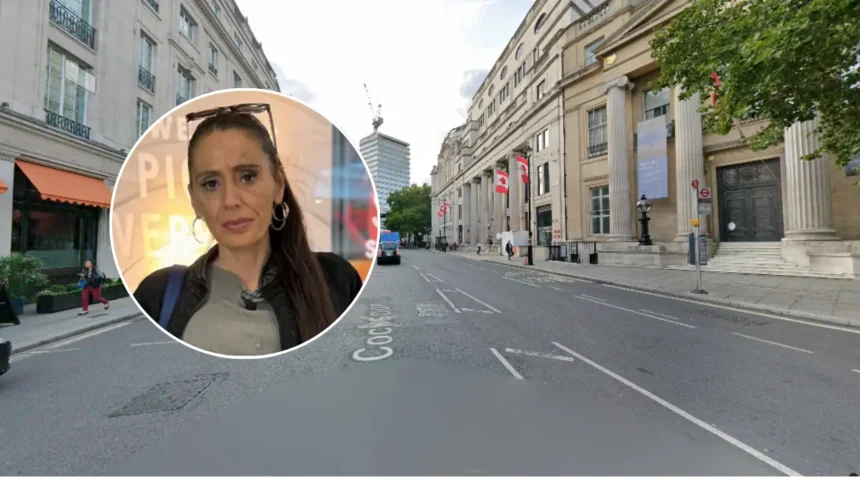
London (Birmingham Express) September 17, 2026 – A former shoplifter has detailed how she operated a sophisticated ‘steal-to-order’ enterprise utilizing a WhatsApp group of roughly 200 members. Keeley Knowles disclosed that the digital network allowed individuals to submit requests for specific luxury and designer merchandise, which she would then steal directly from retail outlets to satisfy the specific orders.
The operation underscores a broader shift in retail crime across the United Kingdom, where digital platforms are increasingly leveraged to facilitate illicit trade. As reported by BBC News, Knowles ran the instant messaging group as a direct hub for solicitations, connecting thieves directly with end buyers seeking discounted luxury goods.
According to reporting from the BBC, the operation targeted specific high-value items based on consumer demand generated within the closed group. Rather than stealing items at random to sell on the street, the order-based model ensured rapid turnover and guaranteed buyers for the stolen property.
Retail representatives have continuously warned about the evolving mechanics of shop theft. As noted by Lawrence Matheson, Ted Hennessey, and PA Media reporting for The Mirror, Chief Executive of the British Independent Retailers Association (BIRA) Andrew Goodacre confirmed that organized networks are increasingly orchestrating shoplifting runs, enhancing their capacity to steal and offload targeted merchandise rapidly.
Further coverage by The Mirror highlights statements from a British Retail Consortium (BRC) spokesperson, who pointed out that illicitly obtained products frequently find their way onto online marketplaces, local communication groups, and informal trading channels. The spokesperson added that organized gangs frequently strike multiple branches of the same business within a single day to fulfill specific volume demands.
Responding to the broader context of persistent shoplifting, Policing Minister Sarah Jones stated via BBC News that targeted government measures are underway to dismantle organized networks and curb the impact of prolific offenders on high streets.
What is the Background to ‘Steal-to-Order’ Retail Crime Networks?
The disclosure of the 200-member WhatsApp group comes amid ongoing national scrutiny regarding retail theft patterns across England and Wales. Over recent years, industry groups such as the Association of Convenience Stores (ACS) have noted a transition from opportunistic theft to structured criminal operations.
Data from police forces and retail organizations indicate that stolen items are frequently resold through social media groups, messaging apps, and third-party online platforms. While high-value items such as designer clothing and electronics remain primary targets for bespoke requests, everyday items like coffee, alcohol, meat, and baby formula are also routinely stolen in bulk for secondary resale.
The implementation of instant messaging platforms like WhatsApp allows operators to act as intermediaries, bridging the gap between stolen-goods consumers and active shoplifters. This online fencing mechanism reduces the physical risk for thieves by securing buyers prior to entering a retail store.
How Will This Development Affect UK Retailers and Consumers?
The proliferation of ‘steal-to-order’ social media networks directly impacts both high-street businesses and the general shopping public.
For retailers, targeted bulk theft leads to significant financial losses, inventory disruptions, and heightened operational costs associated with private security upgrades, CCTV enhancements, and secure display cases. Independent stores and smaller boutiques face particular pressure, as recurring stock losses directly threaten business viability.
For consumers, systemic retail theft ultimately translates into higher shelf prices, as businesses adjust margins to absorb the costs of shrinkage and security infrastructure. Additionally, shoppers face reduced product availability when high-demand items are cleared out systematically by organized thieves.