Key Points
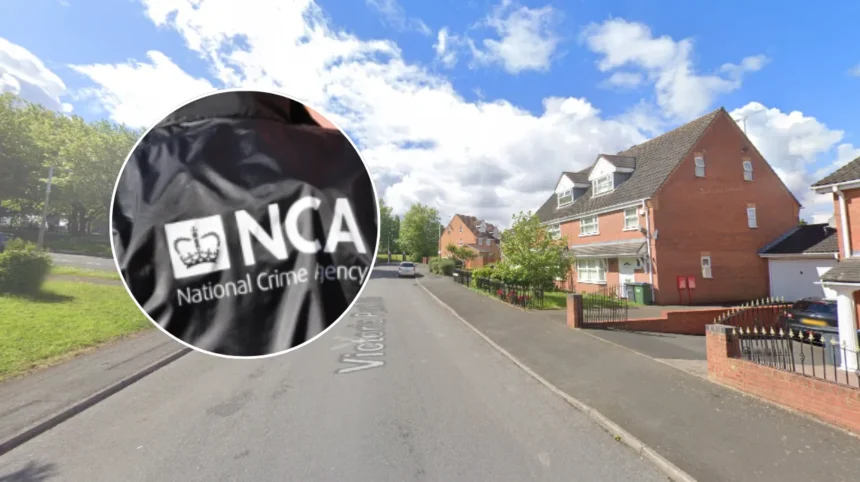
- National Crime Agency officers and West Midlands Police arrested 24-year-old Indian national Hem Raj at a Smethwick address on Tuesday, 15 September 2026, seizing mobile phones at the scene.
- Prosecutors charged Raj with advertising illegal immigration services under Section 17 of the Border Security, Asylum and Immigration Act 2025.
- The case is the first time a suspect has been charged with the advertising offence under the 2025 Act in an NCA investigation.
- Raj also faces a charge of illegally providing immigration advice contrary to the Immigration and Asylum Act 1999.
- Authorities allege Raj used social media platforms to promote unlawful services and offer advice on submitting fraudulent visa and asylum claims.
- Raj was scheduled to appear before Birmingham Magistrates’ Court on Wednesday, 16 September 2026.
Smethwick (Birmingham Express) September 17, 2026 – A 24-year-old man from the West Midlands has been charged with promoting unlawful immigration services across digital platforms, following a joint law enforcement operation led by the National Crime Agency and West Midlands Police. Hem Raj, an Indian national living in Smethwick, was arrested by officers on Tuesday, 15th September 2026. The operation forms part of an ongoing national crackdown targeting online networks accused of facilitating organized immigration criminality.
- Key Points
- What led to the arrest of the suspect in Smethwick?
- What specific charges is Hem Raj facing under British law?
- How are law enforcement authorities responding to digital immigration crime?
- Background of the particular development
- Prediction: How this development can affect social media users and visa applicants
What led to the arrest of the suspect in Smethwick?
According to official operational details released by the National Crime Agency, investigators executed an arrest warrant at a residential address in Smethwick on Tuesday morning. During the entry and search operation, officers confiscated multiple mobile phones and digital storage devices for forensic examination. The enforcement action followed an intelligence-led monitor of online platforms, where investigators discovered posts allegedly advertising illegal routes to remain in the United Kingdom.
As reported by Charlotte Barber of Hits Radio (Black Country & Shropshire), the investigation was initiated after digital monitoring identified social media accounts offering guidance on how to submit fraudulent applications for visas and asylum. Authorities maintain that these online channels were being utilized to market unauthorized services to prospective migrants seeking to exploit legal immigration channels through fraudulent means.
What specific charges is Hem Raj facing under British law?
Following his arrest and subsequent questioning by law enforcement personnel, the Crown Prosecution Service authorized two distinct criminal charges against Hem Raj. The statutory charges brought against the defendant encompass both recently enacted border legislation and longstanding statutory immigration provisions:
- Advertising Illegal Immigration Services: Charged pursuant to Section 17 of the Border Security, Asylum and Immigration Act 2025.
- Unlawful Provision of Immigration Advice: Charged in contravention of the Immigration and Asylum Act 1999.
As reported by the official press office of the National Crime Agency, this enforcement action marks the very first instance in which an individual has been charged with the new advertising offence under the Border Security, Asylum and Immigration Act 2025 within an NCA-led investigation. The accused was remanded in custody ahead of his initial court appearance before Birmingham Magistrates’ Court on Wednesday, 16th September 2026.
How are law enforcement authorities responding to digital immigration crime?
Senior law enforcement officers have highlighted the growing operational focus on digital platforms used to advertise unlawful services. The integration of social media monitoring into traditional immigration enforcement represents an evolving strategy aimed at disrupting facilitators prior to the submission of fraudulent applications.
As stated by NCA Branch Commander Kevin Broadhead in an official agency statement: “Tackling organised immigration crime remains a top priority for the National Crime Agency, and we are doing all we can to disrupt and dismantle those involved. This includes targeting those who facilitate offending using online platforms.”
The National Crime Agency works alongside local police forces, such as West Midlands Police, to intercept digital promotion networks operating within urban centres across the United Kingdom. Authorities emphasized that digital channels are increasingly being monitored to trace the originators of unlawful promotional material.
Background of the particular development
The charge against Hem Raj under the Border Security, Asylum and Immigration Act 2025 comes against a backdrop of legislative reform in the United Kingdom aimed at modernizing border control and immigration enforcement. Over recent years, organized immigration operations have increasingly shifted their marketing strategies from offline word-of-mouth networks to mainstream social media channels, messaging apps, and online forums.
Prior to the introduction of the 2025 Act, law enforcement agencies faced structural hurdles when attempting to prosecute individuals who advertised or facilitated immigration fraud online without directly engaging in physical human smuggling operations. Section 17 of the 2025 legislation was specifically designed to bridge this legislative gap by making it an explicit criminal offence to advertise, market, or promote unauthorized or fraudulent immigration services through any medium, including social media platforms.
Simultaneously, statutory regulatory frameworks governing legal advice—primarily established under the Immigration and Asylum Act 1999—require anyone providing immigration advice or services in the UK to be registered with the Office of the Immigration Services Commissioner (OISC) or be a member of a recognized professional body. The dual charging structure utilized in this case underscores a dual operational approach: prosecuting the modern digital advertising element under 2025 legislation while enforcing established regulatory standards under 1999 law.
Prediction: How this development can affect social media users and visa applicants
This milestone prosecution under the Border Security, Asylum and Immigration Act 2025 is expected to trigger widespread shifts across online platforms, law enforcement practices, and the vulnerable populations seeking legal status in the UK.
- Impact on Social Media Platforms and Online Content: Digital service providers and social media companies will likely face heightened pressure from government agencies and regulators to proactively moderate, flag, and remove posts offering unauthorized immigration or asylum advice. Algorithms used by technology platforms will probably be updated to detect key phrases associated with illegal visa facilitation.
- Impact on Immigrant Communities and Visa Applicants: Prospective migrants and asylum seekers who rely on social media for advice will need to exercise greater caution. As law enforcement steps up prosecutions against unaccredited advisors, migrants who engage services through social media risk having their visa applications rejected on grounds of fraud, alongside potential legal repercussions or deportation for relying on falsified documentation.
- Precedent for Law Enforcement: The prosecution establishes an operational template for the National Crime Agency and regional police forces. Moving forward, investigative units are likely to expand intelligence operations targeting digital promoters, using this case as legal precedent to dismantle online recruitment pipelines before fraudulent claims enter the official immigration system.