Key Points
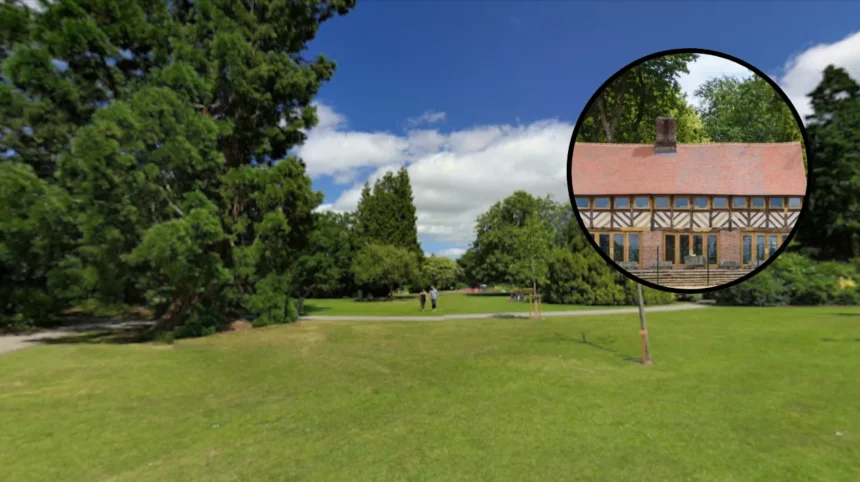
- Scaffolding has officially been removed from the Grade II listed Golden Lion pub in Birmingham’s Cannon Hill Park for the first time in nearly 30 years.
- The timber-framed structure dates back to the 16th century and was originally constructed in Deritend before being physically relocated to Cannon Hill Park in 1911.
- The site was obscured by scaffolding and protective fencing since 1996 following decades of decay and severe disrepair.
- Irene DeBoo from the Birmingham Conservation Trust highlighted that the public can finally see the building unhindered, noting that it reflects normal, historic life in Birmingham.
- Birmingham City Council previously confirmed that essential structural work aims to stabilise the edifice, while ongoing efforts seek further capital funding to secure its long-term future as a valued heritage asset.
Inverted Pyramid Structure
Birmingham (Birmingham Express) July 31, 2026 – Scaffolding has been completely removed from a Grade II listed 16th-century timber-framed pub in Birmingham for the first time in nearly three decades, marking a major milestone in saving one of the city’s oldest architectural treasures. The Golden Lion, which sits in Cannon Hill Park, had fallen into severe structural decay and remained largely hidden behind heavy steel poles and protective boarding since 1996. Emergency stabilization works have now successfully secured the frame, offering the public an unobstructed view of the historic building once again. Local heritage bodies and municipal authorities are continuing to collaborate to source further long-term funding, ensuring the former public house can be completely restored and transformed into a permanent, accessible community heritage asset.
Why Is the Golden Lion Pub So Historic?
The Golden Lion is considered a rare surviving example of post-medieval timber-framed architecture in the West Midlands. Originating in the late 16th century—stylistically dated between 1575 and 1600—the structure initially stood on High Street in Deritend, a bustling arterial route into historic Birmingham.
Over the course of more than four centuries, the venue served a multitude of functions. Local land deeds record that it served as an inn as early as the mid-17th century. In later generations, the building was adapted into six tiny residences, a cutler’s workshop, a scrap merchant’s depot, and eventually dual public houses known as The Star and The Golden Lion.
When urban expansion threatened the building with demolition in 1910, a public campaign led by the Birmingham and Warwickshire Archaeological Society successfully rescued the structure. It was dismantled timber by timber and painstakingly re-erected in Cannon Hill Park in 1911 to serve as a pavilion and refreshment room.
The site suffered dramatic incidents throughout its long lifecycle, including a targeted arson attack by members of the Women’s Social and Political Union (Suffragettes) in March 1914, which left the building severely damaged but standing. By the late 20th century, lack of maintenance caused the structure to deteriorate rapidly, prompting authorities to seal off the premises in 1996 behind a protective metal mantle.
How Did Local Heritage Experts React to the Removal of the Scaffolding?
The removal of the scaffolding has sparked significant excitement among heritage campaigners, conservation officers, and park visitors who have never seen the building completely exposed.
As reported by the regional press corps covering the project, Irene DeBoo, representing the Birmingham Conservation Trust, observed that members of the public had forgotten what was hidden behind the metal framework. DeBoo explained that no one had seen the building properly in 30 years, given that scaffolding had encased the timber structure continuously since 1996.
“People are stopping and pointing, they can’t believe it, because the building was just hidden for so long,”
DeBoo stated during an interview on site. She emphasised the deep social value of the preservation project, adding,
“The Golden Lion reflects a very important bit of Birmingham history [and] how normal people lived.”
To provide context on the technical craftsmanship involved, freelance journalist Damien Walmsley documented a hard-hat tour led by Irene DeBoo and site manager Richard from Reynolds Conservation. As reported by Damien Walmsley on his independent journal platform, site officials demonstrated how carpenters meticulously blended new oak sections into the 400-year-old frame using traditional joinery methods. Walmsley highlighted that the lower sections of timber required delicate structural intervention, while roof timbers were found to be in surprisingly resilient condition beneath damaged traditional dreadnought tiles.
Explore More Local Birmingham News
Bullring Market Stall Slapped with Notice in Birmingham (2026)
New Bins and Strike Chaos in Birmingham 2026
What Role Did the Council and Heritage Organisations Play in Funding?
The urgent works to stabilise the structure were made possible through targeted capital support from historic preservation bodies working Alongside local authorities.
As reported by news correspondents tracking local government briefings, official spokespersons for Birmingham City Council confirmed that the initial conservation interventions were designed specifically to stabilise and protect the core timber frame against collapse. Municipal representatives stated that council officers intended to secure further funding to “support its future use as a valued heritage asset” for the wider city.
The broader funding ecosystem has relied heavily on national grants. As reported in official press releases distributed by the Birmingham Conservation Trust, the project secured a capital grant of £344,265 from Historic England’s Heritage at Risk Capital Works Fund towards an overall initial scheme cost of £398,759. Supplementary contributions were pledged by the W.A. Cadbury Charitable Trust and the Architectural Heritage Fund.
Highlighting the existential nature of the intervention, Sarah Hayes, Museum and Trust Director at the Birmingham Conservation Trust, issued a statement detailing the urgency of the work. As reported in project announcement bulletins, Hayes stated:
“We are thrilled to breathe new life into the Golden Lion. It’s a rare and remarkable survival of a timber-framed building in Birmingham, one that has stood the test of time and survived beyond all odds. Now it is our turn to help this much-loved building, which is in desperate need of repair. In many ways it feels like the last chance for us to act before its condition becomes beyond repair.”
What Are the Next Steps for the Golden Lion?
With the outer scaffolding removed and the structural frame officially stabilized, conservation teams are shifting their focus toward full exterior finishes, window restoration, and internal planning. Specialist conservators have researched period-accurate glass to re-glaze original window apertures and utilized traditional mortar mixes to replace degraded brick infill within the timber panels.
However, the permanent future function of the Golden Lion remains an open question subject to further community consultation and financial backing. While the building acted as a sports pavilion and refreshment venue throughout the mid-20th century, its long-term viability requires a self-sustaining operational model.
Local media outlets, including reports published by regional outlet I Choose Birmingham, note that once initial physical safety works are fully concluded, public discussions will formally commence regarding what the building will become. Proposals previously floated range from community education hubs and heritage tea rooms to functional public gathering venues.
For the time being, local residents, historians, and visitors to Cannon Hill Park can finally appreciate the timber-framed facade without steel obstructions, witnessing a 16th-century survivor stepping back into public view.