Key Points
- West Mercia Police dismissed Special Constable Luke Hodgson after a formal gross misconduct hearing.
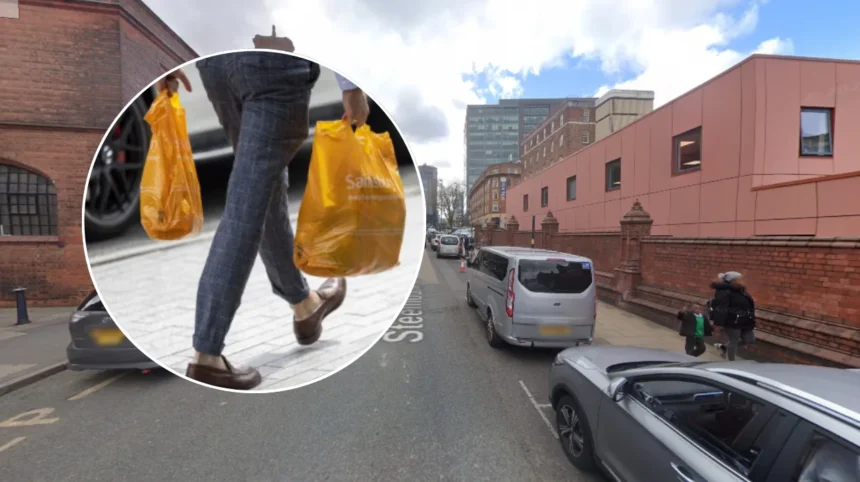
- Hodgson failed to pay for three 40p Sainsbury’s carrier bags on three separate occasions across 12 days, taking £1.20 worth of bags.
- Sainsbury’s fired Hodgson from his job at the store before the police disciplinary process began.
- Chief Constable Kyle Cooper ruled Hodgson acted dishonestly and breached standards of professional integrity.
- Hodgson was added to the College of Policing barred list, banning him from future law enforcement roles.
Worcester (Birmingham Express) October 13, 2026 – A volunteer police officer serving with West Mercia Police has been dismissed from the force after stealing three carrier bags worth a total of £1.20 from a Sainsbury’s supermarket.
- Key Points
- What Led To The Misconduct Investigation Into Luke Hodgson?
- What Were The Findings Of The Police Disciplinary Panel?
- Why Was Dismissal Deemed The Only Appropriate Outcome?
- What Further Sanctions Face The Dismissed Officer?
- Background To Particular Development
- Prediction: How This Development Affects Police Officers And Public Trust
Special Constable Luke Hodgson was subjected to a disciplinary process after taking the 40p plastic bags on three separate occasions within a fortnight without offering payment.
What Led To The Misconduct Investigation Into Luke Hodgson?
As reported by James Cartledge of Birmingham Live, Special Constable Hodgson was initially dismissed from his job at Sainsbury’s after store management identified three separate instances of carrier bag theft over 12 days. Following his termination by the retailer, the matter was referred to West Mercia Police’s professional standards department for internal investigation.
A formal gross misconduct hearing was subsequently convened by West Mercia Police to determine whether Hodgson’s actions breached the standards of professional behaviour expected of serving officers. The misconduct panel reviewed evidence detailing how the volunteer officer repeatedly failed to pay for the bags at the retail outlet.
During the hearing, panel members evaluated whether Hodgson’s actions constituted intentional dishonesty or an administrative oversight while using the supermarket’s checkout systems.
What Were The Findings Of The Police Disciplinary Panel?
As reported by the Worcester News, Chief Constable Kyle Cooper chaired the disciplinary panel and concluded that Hodgson was fully aware payment was required for the items. The panel concluded that on the balance of probabilities, Hodgson intentionally chose not to pay for the carrier bags on all three occasions.
Chief Constable Cooper stated during the proceedings that the volunteer officer bore sole responsibility for the deliberate breaches of honesty and integrity. The misconduct panel concluded that taking the bags without payment constituted theft under law, bringing the police service into disrepute.
The hearing determined that Hodgson’s continued presence in law enforcement would severely impair public trust and confidence in the police service.
“SC Hodgson knowingly took bags belonging to his employer without paying for them on three occasions. This is theft and breaches the standards of behaviour relating to honesty and integrity, and it discredits the service to a level that amounts to gross misconduct.”
— Chief Constable Kyle Cooper, West Mercia Police
Why Was Dismissal Deemed The Only Appropriate Outcome?
Addressing the sanction imposed on the special constable, Chief Constable Cooper emphasized that law enforcement officers must adhere to the highest ethical standards regardless of the monetary value involved.
The disciplinary head observed that committing intentional theft fundamentally undermines an individual’s operational ability to serve as a police officer.
Chief Constable Cooper concluded that public confidence in policing could not be maintained if Hodgson remained within the ranks of the special constabulary. Consequently, immediate dismissal without notice was ordered as the sole proportionate penalty.
“SC Hodgson acted dishonestly and committed theft, which fundamentally undermines his ability to function as a police officer. This is not compatible with the high standards of integrity that are required of the service.”
— Chief Constable Kyle Cooper, West Mercia Police
What Further Sanctions Face The Dismissed Officer?
Following the ruling of gross misconduct, Hodgson was added to the official barred list managed by the College of Policing.
Placement on the national barred list prevents Hodgson from holding any future role in UK policing or public law enforcement bodies.
Background To Particular Development
The regulation of professional standards across UK police forces has faced intense scrutiny in recent years, leading to strict enforcement of zero-tolerance policies regarding officer dishonesty. Under the Police Conduct Regulations, any act involving theft or deliberate deceit is treated as gross misconduct, irrespective of the financial sums involved.
Special Constables hold the same legal powers, uniforms, and responsibilities as regular paid police officers, meaning they are held to identical standards of honesty and integrity. Retail theft cases involving officers—even over low-value items like carrier bags—have consistently resulted in dismissal across UK forces, as integrity is viewed as an indivisible requirement for maintaining law and order.
Prediction: How This Development Affects Police Officers And Public Trust
This disciplinary outcome serves as a firm reminder to all serving police officers and volunteer special constables that integrity rules are absolute and strictly enforced across the UK justice system.
For serving officers, the ruling reinforces that low-value theft or minor acts of dishonesty carry career-ending consequences, offering zero leeway regardless of an officer’s rank or voluntary status.
For the general public, the decisive action taken by West Mercia Police demonstrates a commitment to transparency and accountability, showing that professional misconduct is dealt with strictly to safeguard trust in public policing institutions.