Key Points
- Polish police checked nearly 50,000 schools across the country and detained 76 people following a wave of violent threats and attacks.
- Officers are investigating 231 suspected crime cases involving violent threats, fake bomb scares, and disruptions to school safety.
- Two school attacks took place in northeastern Poland: a 19-year-old student injured nine people at a vocational school in Ostrołęka, and a 15-year-old stabbed a custodian to death in Leszczydół-Nowiny.
- In Sierpc, police arrested a 17-year-old student after he shared plans to carry out an attack at his school.
- Administrators suspended classes at 59 schools after an AI-generated video warning of a “Bloody Friday massacre” circulated online.
- Prime Minister Donald Tusk and Interior Minister Marcin Kierwiński ordered increased police patrols around schools and noted legal limits on monitoring online content.
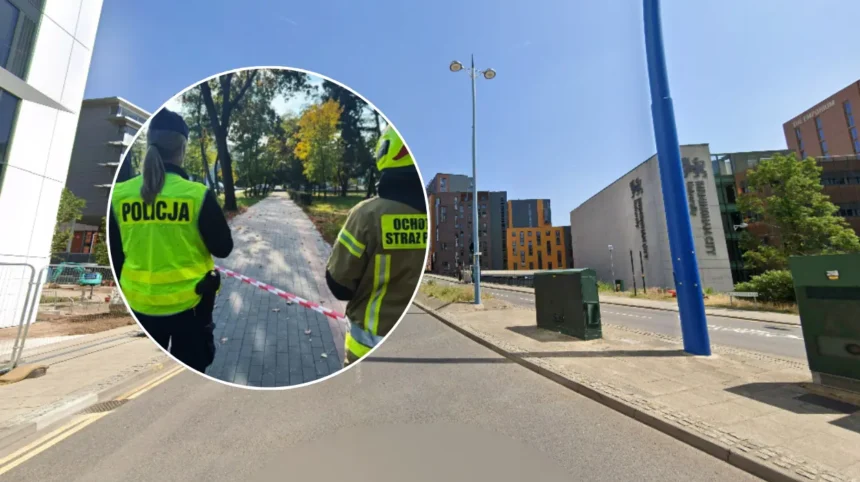
WARSAW (Birmingham Express) October 10, 2026 – Polish law enforcement authorities announced on Saturday that officers have detained 76 people and conducted physical security inspections across nearly 50,000 schools nationwide.
- Key Points
- Why Have Polish Authorities Launched a Nationwide Security Operation Across 50,000 Schools?
- What Happened During the Two Separate Violent Incidents in Northeastern Poland?
- How Did Police Intercept a Third Suspected Plot and Address Online Threats?
- How Have Government Officials and Psychological Experts Responded to the Crisis?
- Background of the Development
- Prediction: How This Development Can Affect Polish Educational Institutions, Parents, and Law Enforcement
The sweeping security operation was launched following two consecutive days of knife violence at educational facilities in northeastern Poland, a foiled third plot, and a surge of online violence threats that prompted widespread closures and heightened public anxiety.
Why Have Polish Authorities Launched a Nationwide Security Operation Across 50,000 Schools?
As reported by staff journalists at TVP World and the Associated Press, Polish police confirmed on their official communication channels that officers had conducted physical sweeps of 49,850 schools and educational institutions by early Saturday morning.
In a statement published on X (formerly Twitter), the Police General Headquarters stated that “police officers are working not only to clarify the above incidents, but are continuing to monitor the internet around the clock and respond to every report”.
As reported by Ed Wight and Tymon Miller of TVP World, Polish authorities were managing 231 separate cases involving suspected criminal activities related to school threats, fake bomb alarms, and incitement by early Saturday. The nationwide police deployment was ordered to restore order and assure safety following a series of violent incidents that resulted in one fatality and left 11 people injured across multiple provinces.
What Happened During the Two Separate Violent Incidents in Northeastern Poland?
As reported by Polskie Radio and TVP World, the wave of violence began on Wednesday at a Vocational School Complex in Ostrołęka, located 120 kilometres northeast of Warsaw. Polish prosecutors confirmed that a 19-year-old student launched an attack with a knife, injuring five fellow students, two teachers, and two bystanders, bringing the total number of injured to nine.
Regional prosecution officials added that the 19-year-old suspect also attempted to detonate an improvised explosive device inside the school building during the assault.
As reported by the Associated Press, a second fatal incident occurred on Thursday at a primary school in Leszczydół-Nowiny, northeast of Warsaw. A 15-year-old former student entered the premises and fatally stabbed a school custodian. The attacker also injured the school principal and a teacher before being restrained. A Polish court subsequently ordered the formal detention of the 15-year-old suspect as homicide investigations proceeded.
How Did Police Intercept a Third Suspected Plot and Address Online Threats?
As reported by Polskie Radio, police officers in the town of Sierpc, located 125 kilometres northwest of Warsaw, successfully intercepted a third potential school attack on Wednesday. Authorities detained a 17-year-old student after classmates reported that he had repeatedly stated an intention to “do something bad at school”.
As reported by Ground News and TVP World, panic spread further on Thursday night as rumors of a “Bloody Friday” challenge circulated among parents and pupils on social media platforms. The heightened anxiety was driven in part by an artificial-intelligence-generated video predicting a mass casualty event at Polish schools.
In response, administrators in 59 schools—primarily located in the Mazovian Voivodeship surrounding Warsaw—preemptively suspended in-person classes on Friday, while police patrols were assigned to monitor facility entrances.
How Have Government Officials and Psychological Experts Responded to the Crisis?
As reported by Ground News and the Associated Press, Polish Interior Minister Marcin Kierwiński emphasized the state’s security priorities during an official briefing, declaring that “the safety of the youth is the most important thing”.
Polish Prime Minister Donald Tusk addressed the situation publicly, stating that while Poland had historically been spared from mass school violence compared to other nations, the recent incidents reflect a worrying trend observed across Europe. Prime Minister Tusk noted that government agencies face legal limitations regarding the preemptive blocking of harmful digital content on foreign-hosted internet platforms.
As reported by Polskie Radio, Justyna Soroka, a clinical psychologist at the Municipal Hospital in Gliwice, offered context on youth behavioural red flags, stating to reporters that “perpetrators of attacks at schools do not always behave aggressively beforehand. They may be withdrawn, have low self-esteem and feel rejected”.
Law enforcement officials reiterated calls for the public to refrain from sharing unverified online claims, warning that making false bomb threats or inciting public alarm carries severe criminal penalties under Polish law.
Background of the Development
Poland has historically maintained low levels of violent crime in public schools, with strict firearms regulations keeping gun-related incidents exceptionally rare across Central Europe. Prior to October 2026, public safety policies in Polish education primarily focused on anti-bullying measures, substance abuse prevention, and basic fire safety drills.
However, the rapid proliferation of encrypted messaging apps, digital forums, and synthetic media tools—such as AI-generated video and audio content—has created new challenges for domestic security agencies monitoring online radicalisation and violent threats among minors.
In recent years, security analysts across Europe have highlighted a rising trend of online subcultures targeting teenagers with violent memes, hoax threat challenges, and digital harassment campaigns.
The events in Ostrołęka, Leszczydół-Nowiny, and Sierpc represent one of the most concentrated clusters of school violence and coordinated online panic in modern Polish history, prompting government ministries to re-evaluate physical security standards, emergency communication channels between schools and police, and digital surveillance frameworks for youth protection.
Prediction: How This Development Can Affect Polish Educational Institutions, Parents, and Law Enforcement
This rapid escalation in school violence and digital threats is expected to lead to lasting operational and policy changes affecting several key stakeholders across Poland:
- For School Administrators and Educators: Schools will likely experience stricter access control protocols, including visitor logging, mandatory locked-door policies during instruction hours, and increased physical presence of security staff or local police patrols during opening and dismissal times.
- For Students and Parents: Families will face increased anxiety and disruptions to daily routines due to elevated police visibility, heightened scrutiny of student behavioural changes, and potential short-term school closures or remote learning shifts whenever online threats surface.
- For Law Enforcement and Digital Regulators: Polish law enforcement agencies will likely allocate greater intelligence resources to monitoring online forums and social media algorithms for synthetic media threats. This development may also prompt Polish lawmakers to introduce new legislation giving state agencies expanded oversight and quicker tools to remove harmful online content and fast-track penalties for hoaxes or false alarms.