Key Points
- West Midlands Police did not attend urgent emergency calls about a psychotic man after being overwhelmed by a high volume of priority incidents.
- Fourteen hours before the crash, Mohammed Ali assaulted two staff members and drove dangerously around a hospital car park.
- A specialized mental health triage unit arrived at Woodbourne Priory Hospital, but the crew withdrew because of Ali’s aggressive behavior.
- Ali reached speeds of 90mph in an Audi A4 on Soho Road before crashing into a parked BMW, killing 32-year-old father Hizar Hanif.
- An investigation by the Independent Office for Police Conduct found the police response was acceptable based on call grading and available staffing.
Birmingham (Birmingham Express) October 28, 2026 — West Midlands Police lacked the necessary operational capacity to detain a psychotic driver 14 hours before he deliberately drove his vehicle at 90mph into a parked car, killing a 32-year-old father, a coroner’s inquest has formally established.
The finding came during proceedings at Birmingham Coroner’s Court, where Coroner Louise Hunt detailed the circumstances leading up to the death of Hizar Hanif.
As reported by reporter Alexander Smith of ITV News Central, Coroner Louise Hunt stated that “in the next two hours he was described as being psychotic, behaving aggressively, sitting in the car with the engine running and recording staff”.
The subject, identified as Mohammed Ali, had previously attended Woodbourne Priory Hospital in Edgbaston at 12:38pm on 17 February 2024. Though he was a former patient at the facility, his erratic and hostile behavior prompted hospital authorities to call emergency services.
Why Did Police Fail to Intervene Prior to the Fatal Soho Road Crash?
The initial emergency call was made to the ambulance service, but paramedics requested urgent police assistance due to Ali’s history of violent behavior. By 3:23pm, hospital staff contacted the police again, reporting that Ali had physically assaulted two workers and was driving dangerously around the car park.
Although officers assigned the call a Priority 1 (P1) status requiring a response within 15 minutes, operational constraints prevented officers from attending the location. A dedicated police mental health car arrived at 3:25pm, but the crew was forced to withdraw due to the extreme danger posed by Ali’s actions.
“The ambulance service were alerted about the incident and asked to attend however they requested police assistance due to the behaviour of the driver and him being known to be violent and aggressive.” — Coroner Louise Hunt, Birmingham Coroner’s Court
Ali subsequently left the facility and was taken home by a friend during the early hours of 18 February. Clinicians advised his family members to hide his car keys to prevent him from driving.
How Did the High-Speed Collision Occur on Soho Road?
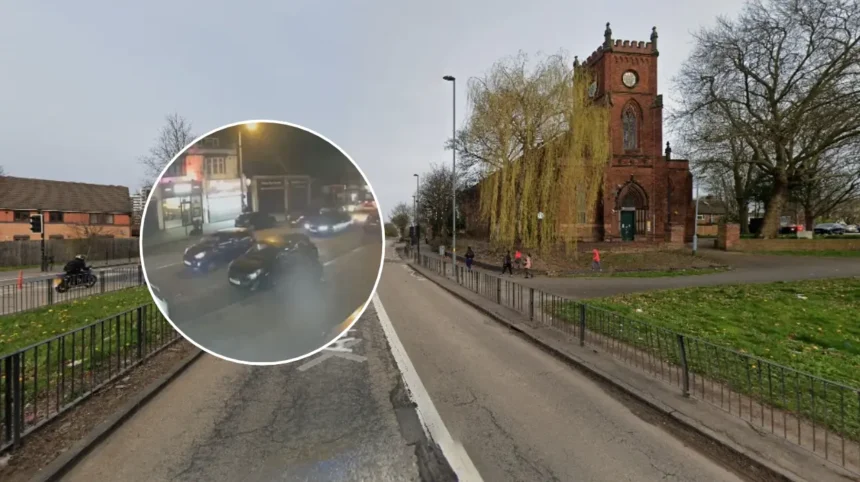
Later that evening, at approximately 8:20pm, Ali took his Audi A4 onto Soho Road in Handsworth. He reached speeds up to 90mph while executing dangerous overtaking maneuvers before crashing directly into the rear of a stationary BMW.
The impact killed 32-year-old Hizar Hanif, who was sitting inside the parked vehicle, and left a female passenger with severe injuries.
Following an extensive internal review, oversight bodies addressed the lack of police presence prior to the incident. As reported by senior crime reporter Nick McCarthy of Birmingham Live, a spokesperson for the Independent Office for Police Conduct (IOPC) stated that “our investigation concluded that the service provided by the police was acceptable”.
The watchdog added: “In our view the calls to them were correctly graded and dealt with appropriately based on the information provided. It was unfortunate that during the same period there were a high number of grade one incidents which required an immediate police response”.
“Evidence showed that although an officer did eventually arrive at the hospital, Mr Ali had already left.” — Independent Office for Police Conduct (IOPC) Official Statement
The IOPC confirmed that all police officers and staff involved were treated as witnesses throughout the investigation, which concluded in August 2024.
Background of the Particular Development
The inquest into the death of Hizar Hanif highlights long-standing systemic strains within emergency service coordination across the West Midlands. Over recent years, public service infrastructure in Birmingham and surrounding regions has faced severe pressure from rising demand for acute mental health crisis response, alongside elevated volumes of emergency 999 calls.
Joint initiatives such as mental health triage units—where police officers and psychiatric specialists deploy together—were introduced to manage complex behavioral health incidents directly on the front line.
However, as demonstrated during the events of February 2024, high operational volumes can swamp local police divisions, leaving specialized units isolated or without sufficient frontline tactical support when dynamic threats escalate.
Prediction: How This Development Affects Emergency Services and Local Communities
This development is likely to accelerate administrative and policy reforms across police forces and NHS mental health trusts in the UK.
For emergency service providers and local healthcare authorities, the inquest findings will increase pressure to establish clearer escalation protocols for high-risk psychiatric patients displaying violent tendencies. Force commanders will face greater scrutiny regarding how Priority 1 emergency calls are queued and resourced during peak demand periods.
For the wider public and local residents in urban areas like Handsworth, the findings underscore ongoing vulnerabilities surrounding public safety and crisis management.
Community groups and road safety advocates may push for stricter safety interlocks and immediate multi-agency intervention policies when psychiatric patients with access to motor vehicles display aggressive behavior.