Key Points
- Pal Mann, owner of the Select and Save store in Harborne, Birmingham, said shoplifters targeting his business range from eight- and nine-year-old children to an 82-year-old woman.
- Mr Mann has operated his convenience store for 21 years, barred more than 200 shoplifters, and said offenders have grown bolder as theft has worsened.
- A BBC investigation into retail crime in England filmed daily, organized looting at a Greggs bakery in nearby Bearwood.
- Retail security workers said shoplifting has shifted from quiet opportunism to aggressive, gang-driven theft of items including meat, baby formula, and energy drinks.
- Policing Minister Sarah Jones called retail theft footage “horrific” and pointed to national funding for investigations into organized retail crime rings alongside an increase in local officers.
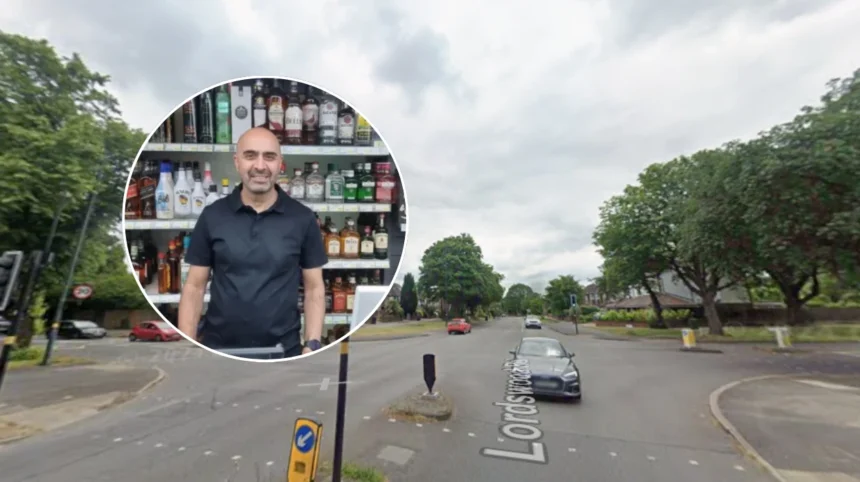
Harborne (Birmingham Express) September 19, 2026 – Independent convenience store owners in the West Midlands are increasingly taking direct action against an escalating wave of retail crime that spans across every demographic boundary. As reported by Susie Rack of the West Midlands desk and Sarah Julian of BBC Radio WM, Pal Mann, the proprietor of the Select and Save store in Harborne, Birmingham, disclosed that the demographic profile of shoplifters targeting his shop ranges from young children to elderly pensioners.
- Key Points
- How do independent traders react compared to major high street retail chains?
- What are the main issues retailers face with local law enforcement responses?
- How has organized crime transformed low-level shoplifting into commercial theft?
- How is the UK government responding to rising retail crime figures?
- Background of the particular development
- Prediction: How this development can affect retail store owners, employees, and local consumers
Having traded at the Harborne location for 21 years, Mr Mann explained that detecting and apprehending shoplifters has become as routine as opening his doors for business. As reported by Susie Rack and Sarah Julian, Mr Mann stated: “We see young kids, from eight or nine years old. The oldest I’ve ever collared was an 82-year-old woman.” Over his two decades of operation, Mr Mann estimates he has issued bans to more than 200 individuals due to persistent theft, remarking that offenders have grown noticeably more brazen over time because “there’s no comeback.”
Highlighting the deceptive tactics employed by thieves, as reported by Susie Rack and Sarah Julian of the BBC, Mr Mann recounted an incident involving a male suspect: “One guy came in… I thought he had a baby in the pusher. By the time I caught up with him there was no baby [there]… He just had a load of baby formula.”
How do independent traders react compared to major high street retail chains?
The contrast in security protocol between large corporate retail chains and independent traders highlights the severe economic pressure placed on small business operators. As detailed in the broader BBC investigation into retail crime across England, reporters recorded footage in Bearwood, near Birmingham, showing individuals equipped with rucksacks methodically stripping refrigeration units of energy drinks at a branch of the bakery chain Greggs. Employees at the outlet reported being subjected to daily thefts and frequent verbal or physical hostility when attempting to intervene.
While major corporate chains explicitly advise employees to remain behind counters to ensure personal safety, independent store owners often feel financially compelled to physically confront offenders.
As reported by Susie Rack and Sarah Julian, Mr Mann explained the financial reality driving independent shopkeepers: “It’s like someone coming into my shop and taking a tenner out of my pocket.”
Regarding the case of the 82-year-old shoplifter, Mr Mann revealed that the elderly woman was a regular customer who systematically took additional items each time she shopped. As reported by Susie Rack and Sarah Julian, Mr Mann stated that “God knows how long she had been doing it for,” adding that while he banned her permanently, he chose not to involve law enforcement. He reflected that “it breaks your heart when you see someone of that age.”
What are the main issues retailers face with local law enforcement responses?
Small business owners have expressed frustration over law enforcement response times and case resolution rates regarding retail offenses. Independent traders note that even when comprehensive evidence is gathered and provided to authorities, formal police follow-ups remain inconsistent.
As reported by Susie Rack and Sarah Julian of the BBC, Mr Mann stated that despite submitting clear closed-circuit television (CCTV) footage equipped with facial recognition capabilities alongside registration numbers of vehicles used by suspects, he rarely receives a follow-up response from police authorities.
Drawing a direct comparison to traffic enforcement, Mr Mann observed: “People can get a speeding ticket delivered to their house within 48 hours if they’re speeding, yet they can’t be picked up for shoplifting.”
Responding to these concerns, a spokesperson for West Midlands Police stated, as reported by the BBC: “We are working hard to tackle shop theft in Birmingham and are committed to targeting prolific offenders. We work closely with store security and business owners to identify those that cause the most harm in our communities.”
How has organized crime transformed low-level shoplifting into commercial theft?
Security sector professionals report that retail theft in the United Kingdom has evolved from isolated opportunistic stealing into structured commercial operations.
As reported by Susie Rack and Sarah Julian, Gary Sahota, a representative from Walsall-based retail security provider Invotech, observed that offending patterns have undergone a fundamental shift. Mr Sahota stated: “Before it was covert. Now we have targeted shoplifting, we have gang-related shoplifting, we have more aggressive shoplifting. And they’re nicking stuff that they weren’t nicking before.”
Mr Sahota further noted that security firms are expanding operations beyond traditional grocery environments to assist opticians, garden centers, and independent convenience stores where high-value commodities such as fresh meat are routinely targeted. He added that existing merchant security measures are frequently undermined by outdated, uncleaned, or incorrectly angled CCTV infrastructure.
How is the UK government responding to rising retail crime figures?
The political response to rising retail crime has focused on shifting police priorities toward persistent offenders and organized criminal syndicates.
As reported by Sarah Julian on BBC Radio WM, UK Policing Minister Sarah Jones described the footage of open retail theft as “horrific,” asserting that “it’s not something we should accept.” Minister Jones stated that shoplifting had historically been treated as a low-level infraction for too long and stressed the necessity of comprehensive crime reporting by business owners.
As reported by Sarah Julian, Minister Jones highlighted that West Midlands Police had deployed an additional 350 neighborhood officers compared to the previous year. Outlining government strategy, Minister Jones stated: “We have to target resources to them, in terms of getting them into treatment so we can tackle the addictions they have.” Furthermore, Minister Jones confirmed dedicated national funding aimed at dismantling organized crime networks, noting that these groups are “driving a lot of this, that are making the real money,” concluding that “this is something that makes you feel unsafe in your own community, it cannot be right that we let it carry on.”
Background of the particular development
The rising frequency of retail theft across the West Midlands mirrors a national surge in shoplifting across the United Kingdom over the past several years. Inflationary pressures, cost-of-living adjustments, and supply chain disruptions have heightened both commercial retail prices and resale margins on black-market goods. Concurrently, criminal networks have increasingly utilized digital platforms—including encrypted messaging apps and social media groups—to run organised “steal-to-order” operations targeting high-value goods like baby formula, meat, alcohol, and cosmetics.
Historically, low-value shoplifting under £200 was frequently categorized as a minor summary offense, leading many small business owners to report a perceived lack of police prioritization or physical attendance. This operational backdrop has led trade associations, independent shopkeepers, and major retail conglomerates to campaign for police reform, leading to expanded neighborhood policing commitments, improved facial recognition deployments, and national task forces dedicated to dismantling organized retail crime syndicates.
Prediction: How this development can affect retail store owners, employees, and local consumers
The ongoing escalation of retail theft and subsequent enforcement strategies will likely impact retail store owners, shop workers, and everyday consumers in several distinct ways:
- For Independent Store Owners: Small business proprietors will face squeezed profit margins as uninsured retail losses compound with rising investments in modern security infrastructure, including AI-driven facial recognition cameras and private security guards. Independent shops operating on thin margins may ultimately face reduced operating hours or closure if loss levels become financially unsustainable.
- For Retail Workers: Frontline employees will continue to face elevated workplace stress and personal safety risks due to frequent confrontations with aggressive or organised shoplifters. While corporate chains maintain non-intervention policies, staff in smaller environments may experience heightened burnout, contributing to higher turnover rates within the retail sector.
- For Local Consumers: Everyday shoppers will absorb the economic fallout through elevated prices, as retail businesses adjust profit margins to account for stock loss and security overheads. Additionally, consumers may experience reduced shopping convenience, characterized by locked display cabinets, reduced shelf stock, restricted entrance access, and heightened surveillance within local community stores.