Key Points
- A Birmingham resident secured a $675,000 (£515,000) settlement in a lawsuit claiming local police officers beat, tased, and used excessive force against him inside his home.
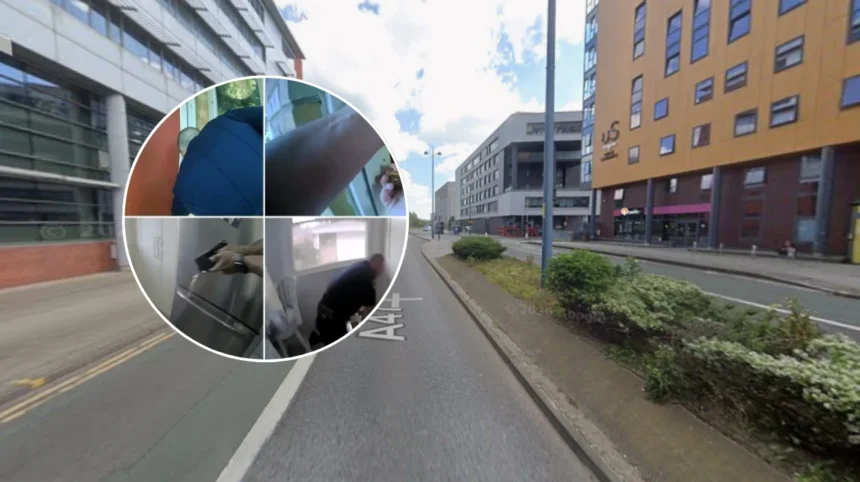
- Body camera and home video footage shows officers entering the man’s home before the altercation took place.
- The resident moved away from Birmingham after the incident, stating he feared for his personal safety.
- City authorities agreed to the payout to settle the civil rights lawsuit outside of court.
BIRMINGHAM (Birmingham Express) September 19, 2026 – As reported by news anchors and investigative reporters at WDIV Local 4 News , the substantial payout was finalized following a detailed examination of video footage recorded during the police entry. The incident involved officers gaining entry into the victim’s private property, where the situation rapidly escalated into physical violence.
During the confrontation, officers beat and tased the homeowner, leading to formal legal claims asserting that his constitutional rights were violated through the use of excessive force.
According to broadcast reporting from WDIV Local 4 News, the victim stated: “I moved out of Birmingham because I was afraid.” The psychological impact of the incident forced the resident to vacate his home and leave the municipality entirely due to ongoing safety concerns involving local law enforcement.
What Documentation and Evidence Were Presented in the Legal Proceedings?
As detailed in the legal filings covered by WDIV Local 4 News, video evidence played a decisive role in establishing the timeline of events. Camera footage corroborated the plaintiff’s assertions that officers entered his dwelling and utilized electroshock weapons and physical blows to subdue him inside the residence.
The agreement effectively resolves the civil rights lawsuit brought against the municipality and the involved officers, avoiding a public federal court trial. The City of Birmingham agreed to the $675,000 sum to cover damages, medical expenses, and legal fees stemming from the misconduct claim.
Background of the Particular Development
Municipal civil rights litigation concerning police use of force in Michigan has increasingly relied upon direct video evidence, such as body-worn cameras and private residential security systems. Over recent years, local government bodies across the region have faced growing scrutiny regarding officer training, entry protocols into private residences, and non-lethal weapon deployment policies, such as Tasers.
Precedent set by regional court settlements demonstrates that municipalities frequently opt for financial resolutions when video evidence presents significant litigation risks in constitutional claims. Settlements of this magnitude are typically funded through municipal liability insurance coverage or municipal legal risk funds, structured to resolve high-liability claims without reaching a formal judicial verdict of wrongdoing against the department or individual officers.
Prediction: How This Development Can Affect the Local Community and Law Enforcement Policy
This development is likely to have immediate and long-term ramifications for both local residents and law enforcement operations within the municipality:
- For Local Residents and Property Owners: The high-profile financial payout reinforces public expectations regarding residential privacy rights and constitutional protections against unreasonable search and seizure under the Fourth Amendment. However, it may also exacerbate public distrust in municipal policing, as evidenced by the victim’s decision to leave the town out of fear. Local advocacy groups are expected to press for increased oversight and independent review mechanisms for officer conduct.
- For Law Enforcement Policy and Oversight: The $675,000 financial cost to the municipality will likely trigger policy reviews regarding warrantless residential entry and mandatory de-escalation training. Police leadership and municipal regulators may face pressure to tighten restrictions on when Tasers can be discharged inside private dwellings, alongside stricter operational audits of body-worn camera compliance to minimize future legal liabilities.
- For Municipal Financial Planning: Substantial legal payouts often impact local taxpayers indirectly through increased municipal insurance premiums or adjustments in annual budget allocations for public safety legal defense funds.