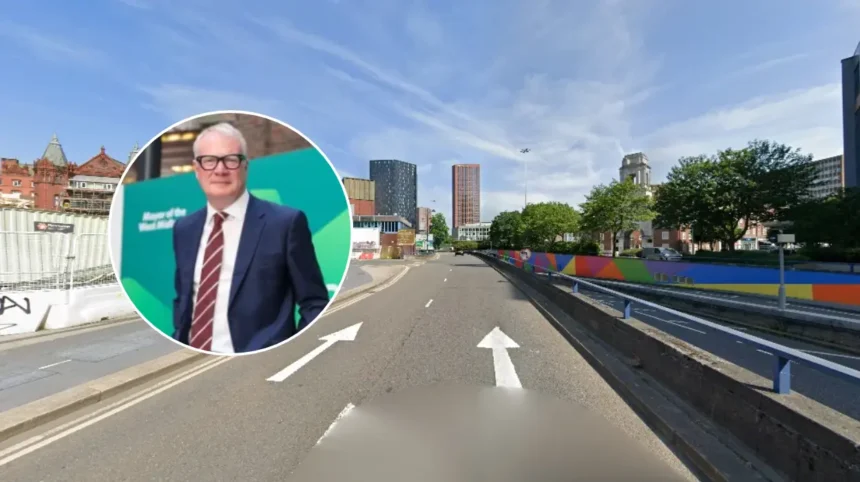
Key Points
- West Midlands Mayor Richard Parker welcomed a £432 million central government package to address homelessness and rough sleeping.
- The allocation takes total government funding for rough sleeping across England to £874 million through 2029, nearly doubling previous commitments.
- Councils across the West Midlands, including Birmingham and Coventry, will receive funds for emergency winter shelters and permanent housing.
- The regional plan targets both immediate winter relief and prevention by building social housing.
- Regional leaders said ending street homelessness requires combining support services with an increase in affordable social rent homes.
West Midlands (Birmingham Express) October 31, 2026 – West Midlands Mayor Richard Parker has officially welcomed a £432 million funding boost announced by central government, designed to significantly scale up support services and secure accommodation for rough sleepers across the region. The substantial financial package almost doubles the national commitment to tackle homelessness, lifting total central investment to £874 million.
The announcement comes as local authorities across the West Midlands prepare their winter emergency responses. Frontline organisations, local councils, and charitable partners in urban centres such as Birmingham, Coventry, and the Black Country are set to deploy the capital towards short-term shelter solutions and targeted support packages.
As reported by reporter Jane Tyler of Birmingham Live, Richard Parker stated that “Today’s funding announcement will build on the Prime Minister’s commitment to offer everyone a safe route off the streets this winter and supports the outstanding work already being done by our local councils, charities and frontline organisations.”
How will the £432 million fund be distributed across local authorities?
The overarching package is designed to provide nationwide backing while injecting critical financial support directly into high-need local authority areas throughout the West Midlands. Under existing regional allocations and upcoming budget disbursements, funds are designated to help vulnerable individuals move from emergency shelters into stable housing environments.
In Coventry, local authority partners have highlighted that £4.4 million of funding will directly target rough sleeping prevention and winter accommodation initiatives. Meanwhile, dedicated allocations across the Black Country—including Sandwell, Wolverhampton, Walsall, and Dudley—alongside Birmingham and Solihull, will sustain multi-agency outreach teams and specialist support workers.
As reported by political correspondent David Maddox of The Independent, Prime Minister Andy Burnham stated that “Rough sleeping isn’t a fact of life — that’s why we’re doubling funding so that people have a safe route off the streets and that same support right through the rest of this Parliament.”
What strategy is the West Midlands Combined Authority adopting for long-term support?
Regional leadership has made clear that emergency winter intervention must be paired with structural solutions to prevent individuals from returning to the streets. The strategy focuses on combining immediate off-the-street placement with tailored health, addiction, and employment advice.
Mayor Parker stressed that while short-term emergency funding rescues individuals from severe weather conditions, permanent homelessness prevention relies on increasing the local supply of social housing. The West Midlands Combined Authority continues to work alongside housing associations to expand affordable residential options.
As reported by housing reporter James Riding of Housing Digital, Mayor Richard Parker stated that “Prevention is always better than crisis. A safe, secure and affordable home gives people the stability they need to thrive and avoid homelessness. We can’t truly tackle homelessness without addressing the shortage of genuinely affordable homes, which is why I’m investing in more social housing.”
Background of the particular development
Rough sleeping and housing stress have posed persistent public policy challenges across the West Midlands for over a decade. Economic pressures, rising private rents, and broader cost-of-living constraints have combined to increase pressure on local authority housing lists and temporary accommodation registers.
Earlier in 2026, the West Midlands Combined Authority approved over £18 million in dedicated funding for supported housing across Birmingham and Coventry to alleviate pressure on emergency council services. In addition, regional authorities delivered over 1,000 social rent homes in the previous operational year to help transition families out of temporary lodgings.
Central government policy has increasingly focused on multi-year funding settlements rather than ad-hoc emergency grants, allowing regional mayors and council leaders to plan long-term outreach programs through to the end of the current parliamentary cycle.
Prediction: How this development can affect rough sleepers and local housing services
The influx of £432 million in funding is anticipated to bring direct operational changes for rough sleepers, local councils, and frontline charitable organisations across the West Midlands.
For individuals experiencing or at risk of street homelessness, the development provides enhanced access to immediate shelter ahead of the cold winter period, coupled with dedicated mental health, addiction, and social support services.
The multi-year commitment through 2029 offers greater stability for frontline support workers and outreach teams, allowing charities to maintain continuous care models rather than facing seasonal funding cuts.
For local councils in Birmingham, Coventry, and the Black Country, the additional resources will ease acute budgetary pressure on temporary accommodation budgets, enabling local authorities to direct capital toward long-term social housing delivery and early prevention work.