Key Points
- The Tree of Life sculpture has been reinstalled next to St Martin’s in the Bull Ring, Birmingham, following restoration work.
- Designed by artist Lorenzo Quinn, the monument honours the 2,241 civilians killed and more than 9,000 injured across 77 air raids during the Birmingham Blitz.
- Workers dismantled and removed the bronze and stone structure in late July 2026 for conservation treatment before returning it to public view in October 2026.
- The memorial stands in a setting beside St Martin’s Church to give visitors a space for reflection.
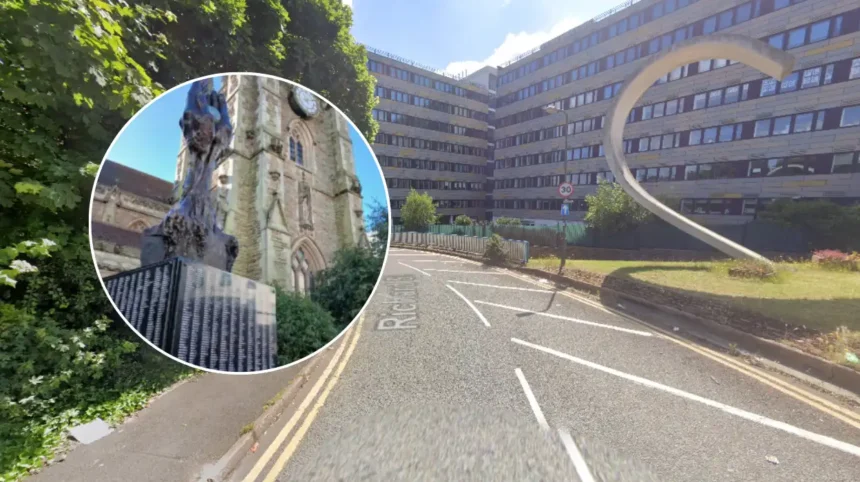
Birmingham (Birmingham Express) October 8, 2026 — Birmingham’s renowned World War II civilian memorial, the Tree of Life sculpture, has officially returned to its prominent position near St Martin’s in the Bull Ring after undergoing planned restoration work.
Why Has the Tree of Life Memorial Returned to the Bullring?
As reported by official council updates from Birmingham City Council, the famous bronze memorial was carefully reinstalled adjacent to St Martin’s in the Bull Ring on Edgbaston Street following a scheduled period of conservation. The sculpture, originally created by international artist Lorenzo Quinn and unveiled in October 2005, was momentarily removed in late July 2026 to undergo specialist cleaning, structural stabilization, and surface preservation treatments.
According to statements released by Birmingham City Council representatives during the initial removal phase, placing the restored artwork in its dedicated location next to St Martin’s in the Bull Ring aims to provide a peaceful setting for visitors, residents, and relatives of Blitz victims to gather, reflect, and pay tribute throughout the year. The physical work was scheduled to ensure that the delicate bronze structure and its detailed concrete and stone plinths remain safeguarded against outdoor weathering and urban environmental exposure.
The monument stands as a permanent tribute to the immense sacrifices borne by the local civilian population during World War II. Between August 1940 and April 1943, Birmingham was subjected to 365 air raid alerts and 77 major air raids by the Luftwaffe, resulting in over 9,000 casualties and claiming the lives of 2,241 civilians.
What Are the Key Design Elements of the Lorenzo Quinn Sculpture?
As recorded in the Imperial War Museums War Memorials Register, the artwork features two outstretched hands emerging from a rugged rock foundation, holding a central sphere containing a sprouting tree. Sculptor Lorenzo Quinn designed the bronze sculpture to symbolize hope, resilience, and humanity’s collective conscience striving toward a peaceful future.
As detailed by Art UK archives, the stone base supporting the tree represents human conscience, while the open hands and sphere illustrate the search for global stability and a better world following the devastation of war. Plinths located beneath the main bronze figure display white engraved inscriptions detailing the historical dates of the bombing campaign, alongside panels featuring the names of thousands of identified civilian victims.
The memorial was originally made possible through dedicated fundraising campaigns led by the Birmingham Air Raid Casualties Association (BARRA) alongside local supporters, with the finished piece presented as a gift to the city via the Halcyon Gallery.
Background of the Particular Development
The creation of the Tree of Life memorial traces back to a sustained campaign by survivors and families of victims who sought a dedicated space to honor civilians lost during the heavy bombardment of Birmingham during the Second World War. As the second most targeted British city after London, Birmingham was a key industrial target due to its widespread manufacturing output of aircraft, munitions, and military transport.
Despite the heavy destruction wrought across the city center, High Street, and surrounding industrial districts, many decades passed without a single centralized memorial recording the individual names of civilian casualties. In the early 2000s, the Birmingham Air Raid Casualties Association (BARRA) spearheaded an effort to address this omission.
Unveiled on October 8, 2005—exactly 21 years prior to its recent restoration reinstallation—by Lord Mayor Councillor John Hood alongside local community members, the sculpture became an immediate cultural landmark within the Bullring district. Over subsequent decades, environmental factors, high pedestrian traffic, and exposure to weather necessitated professional intervention, leading Birmingham City Council to commission full-scale conservation work in mid-2026.
Prediction
The successful return and restoration of the Tree of Life memorial will directly benefit several key groups across the West Midlands:
- Relatives of Blitz Victims and Historical Advocates: Families of those lost in the 1940–1943 air raids will benefit from a fully restored, dignified setting to honor their ancestors. The clear preservation of the inscribed names on the lower plinths ensures that personal family histories remain legible and preserved for future generations.
- Local Residents and General Public: For the wider Birmingham community, the refreshed landmark reinforces civic pride and offers a reflective, quiet space amidst the bustling commercial environment of the Bullring shopping complex.
- Educators, Historians, and Visitors: The restored monument serves as an accessible educational tool for schools, tour groups, and visitors. Its prominent position near St Martin’s Church ensures that the history of wartime resilience remains visible to millions of annual visitors passing through the city center.