Key Points
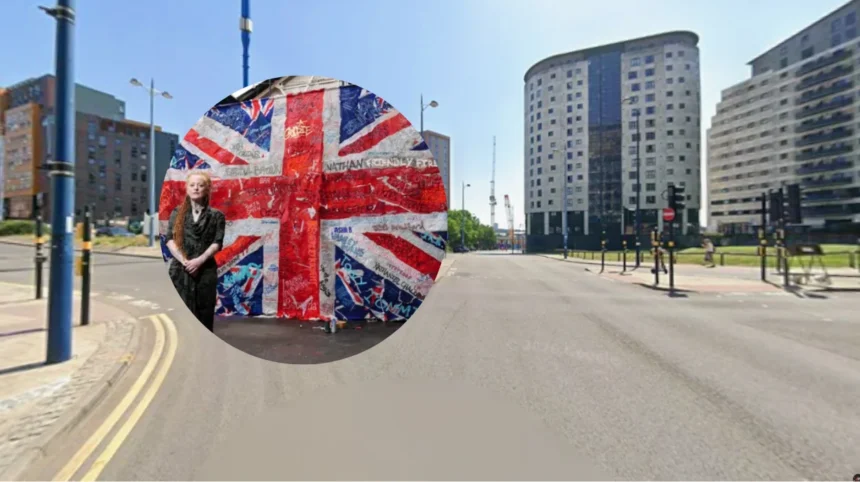
- Textile sculptor Clare Elisabeth and event producer Sam Shipman repurposed dozens of discarded national flags into a four-metre by seven-metre Union flag titled ‘Re-Union Jack’.
- The project was created over three months at community venue The Drop Inn in Digbeth under the collaborative banner ‘Goldship’.
- The flag features researched names and direct signatures of hundreds of West Midlands figures, including a descendant of James Watt and musicians from Steel Pulse and UB40.
- The artwork was displayed publicly at Birmingham Council House during the International Day of Birmingham celebrations.
- The creators made the installation using flags removed from street lampposts following social media discussions about their disposal.
Birmingham (Birmingham Express) September 25, 2026 – As reported by PA News Agency reporter Jacob King, a textile sculptor and a team of community collaborators have repurposed dozens of discarded, worn-out flags—originally hung from street lampposts—into a massive seven-metre Union flag designed to promote regional unity across the West Midlands.
The four-metre by seven-metre installation, titled ‘Re-Union Jack’, was constructed over a three-month period using damaged and weathered polyester flags that had been taken down from public street infrastructure. Spearheaded by Birmingham-based artist Clare Elisabeth in partnership with event producer Sam Shipman, the project converted the contested street items into a collective canvas inscribed with the names of hundreds of historical and contemporary figures from the West Midlands.
The completed artwork was presented to the public for the first time at Birmingham’s Council House during the International Day of Birmingham celebrations.
What Inspired The Creation Of The ‘Re-Union Jack’ Project?
As detailed by PA News Agency coverage, the project originated following social media discussions regarding the fate of flags removed from local lampposts after unauthorized displays caused friction within local neighborhoods.
Speaking to the PA News Agency, textile artist Clare Elisabeth explained the origin of the initiative: “Someone put up a social media post a while back to ask if anyone could do anything with the flags that had been taken off the lampposts. And I thought rather than throw them away, there’s got to be a way that I can repurpose them into something more positive – because they have been causing a lot of division.”
Ms Elisabeth noted that following conversations with co-creator Sam Shipman, the decision was made to assemble the discarded materials under the banner of ‘Goldship’—their joint artistic venture—and construct a giant Union flag designed to emphasize shared cultural heritage.
Ms Elisabeth added: “So, after a conversation with my friend Sam, we thought about creating a huge Union Jack… and calling it Re-Union Jack to bring more togetherness. We’ve covered it with the names of people from the Midlands who have inspired people. We have had dozens and dozens of people join in the project so it’s much more than just ours. It’s covered in the names of influential people in the Midlands who mean a lot to people and who make the Midlands this magical melting pot that we have.”
Who Are The Notable Figures Inscribed Upon The Artwork?
As reported by the PA News Agency, the surface of the giant flag incorporates hundreds of names researched by the artistic team, celebrating the historical, scientific, and cultural achievements of the West Midlands.
In addition to researched historical names, several prominent individuals visited the workshop to sign the fabric directly. Recorded signatories include a direct descendant of the Scottish engineer and Industrial Revolution pioneer James Watt, as well as members of the renowned Birmingham-founded reggae groups Steel Pulse and UB40.
The physical construction was hosted at The Drop Inn, a community venue and creative space located in the Digbeth district of Birmingham. Working primarily with worn polyester fabric cut from salvaged flags, Ms Elisabeth—who typically works with vintage textiles—led a small team using sewing and adhesion techniques to secure the structure.
As reported by the PA News Agency, Sam Shipman, director of The Drop Inn and co-creator of the project, stated: “It’s a shared value of the whole team here to provide as accessible a platform as possible for people to express themselves creatively without prejudice in a safe and inclusive space. We strongly believe success comes from a unified community approach. Re-Union Jack embodies this belief; a collective effort that is owned and shaped by all.”
What Is The Background To The Street Flag Displays Across The UK?
The emergence of the ‘Re-Union Jack’ artwork follows widespread national attention surrounding unauthorized displays of Union flags and St George’s Crosses on public infrastructure across Great Britain.
Beginning in mid-2025, coordinated campaign efforts led to flags being tied to lampposts, streetlights, and telegraph poles in numerous towns and cities. While organizers of these displays claimed the initiative was a public expression of national pride, civic bodies, anti-racism groups, and local councils raised concerns regarding municipal licensing, maintenance overheads, and the potential for public installations to generate community tension or mark territorial boundaries.
As local authorities moved to clear unlicensed attachments from streetlights due to safety regulations and weather-induced wear, large quantities of synthetic flag material were slated for disposal. The initiative at Digbeth’s Drop Inn represents one of the primary organized efforts to intercept this waste stream and convert contested street artifacts into a permanent civic artwork.
What Is The Prediction For How This Development Will Affect Local Communities And Public Art Initiatives?
The unveiling of the ‘Re-Union Jack’ at Birmingham Council House is expected to influence local authorities, community arts organizations, and West Midlands residents in several distinct ways:
- Impact on Local Councils and Municipal Strategy: Local authorities faced with removing unlicensed items from public infrastructure are likely to explore similar partnerships with arts organizations. Repurposing discarded street textiles into sanctioned civic displays offers councils a creative alternative to landfill disposal while softening local conflicts surrounding public space management.
- Impact on Community Engagement and Arts Groups: The project provides a scalable template for grass-roots creative groups. By engaging local residents, historical figures, and regional icons in the fabrication process, similar initiatives are predicted to emerge across other UK regions that have experienced public space debates regarding street flagging.
- Impact on Public Perception in the West Midlands: For residents of Birmingham and the broader region, the display offers an inclusive reference point that synthesizes diverse cultural identities—spanning industrial heritage to modern music cultures—under a single, shared regional narrative.