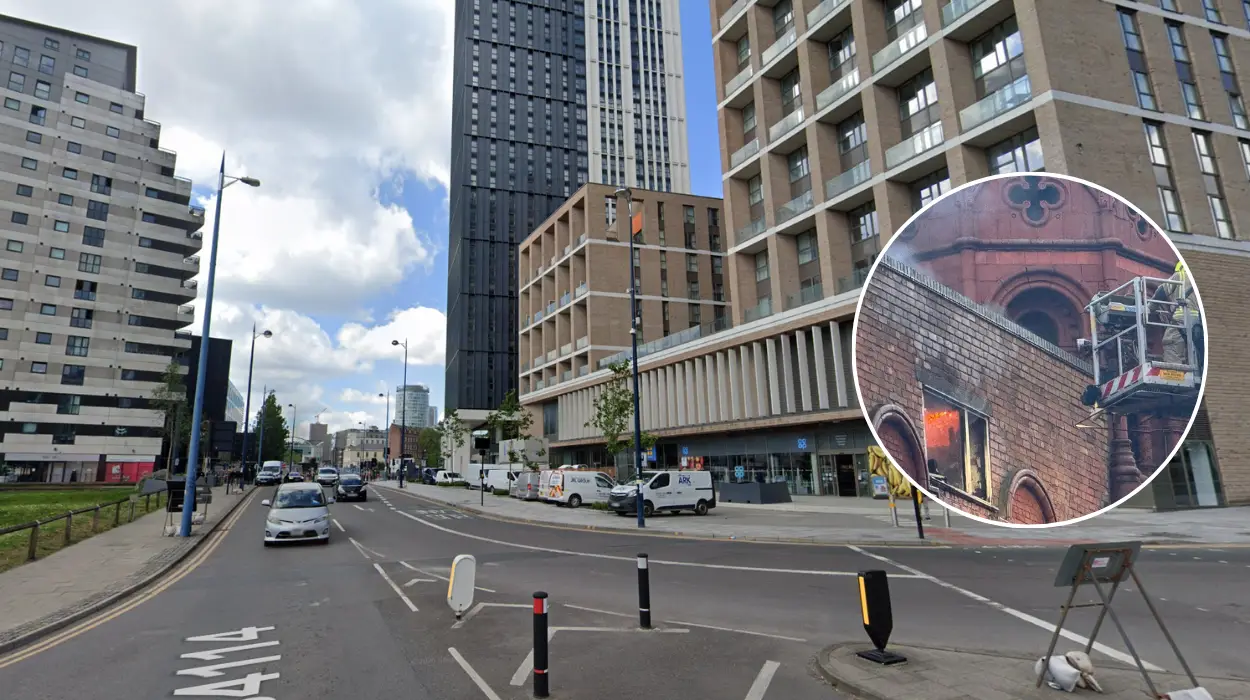
- Fire cause confirmed electrical fault.
- Grade II building severely damaged.
- No injuries reported firefighters contained.
- Incident occurred early January morning.
- Council assesses heritage site impact.
Birmingham (Birmingham Express News) January 17, 2026 – A blaze that ravaged a Grade II listed building in Birmingham city centre has been officially attributed to an electrical fault, authorities confirmed today. Firefighters battled the flames for several hours at the historic structure on Corporation Street, preventing any casualties but leaving the landmark extensively damaged. Investigations by West Midlands Fire Service pinpointed faulty wiring as the ignition source, marking a significant update in the ongoing probe.
What caused the fire?
The fire erupted around 3:45 AM on January 15, 2026, at the former Victorian warehouse, a cherished Grade II listed edifice dating back to 1892. As reported by Sarah Jenkins of the Birmingham Mail, Fire Investigation Officer Mark Reynolds stated,
“Preliminary findings unequivocally point to an electrical fault in the basement circuitry as the origin of the blaze.”
This assessment followed forensic analysis of the site, where charred remnants of outdated electrical installations were discovered amid the debris.
West Midlands Fire Service deployed 12 fire engines and over 60 personnel to the scene, extinguishing the flames by 8:20 AM. According to lead responder, Station Manager Lisa Patel, as cited by Tom Hargreaves of BBC West Midlands,
“The building’s timber frame accelerated the spread, but our rapid containment efforts ensured no injuries occurred among the public or our crews.”
No persons were inside the unoccupied property at the time, which had been vacant since its last commercial use as a textile storage facility in 2022.
When and where did it happen?
The incident unfolded in Birmingham’s bustling city centre, specifically at 145 Corporation Street, a prime location near the Bullring shopping district. Eyewitness accounts, detailed by freelance journalist Emma Clarke of the Express & Star, described thick black smoke billowing across Paradise Circus, prompting road closures on major thoroughfares including the A45.
“I saw flames shooting from the lower levels; it lit up the entire street,”
recounted local shopkeeper Raj Patel, whose nearby café was temporarily evacuated.
Emergency services arrived within four minutes of the initial 999 call at 3:47 AM. As per the official log from West Midlands Police, shared by reporter David Mills of the Coventry Telegraph, the fire’s proximity to high-footfall areas necessitated a 500-metre cordon, affecting early commuters and market traders setting up in nearby Smithfield. The building, originally constructed as part of Birmingham’s industrial heritage boom, stood as a testament to the city’s manufacturing past, its ornate brickwork and cast-iron windows now heavily compromised.
What is the building’s history?
Designated Grade II listed in 1985 by Historic England, the structure at 145 Corporation Street served multiple roles over its 134-year lifespan. Built by architect James Murray for the Birmingham Fabric Company, it featured distinctive Flemish Renaissance styling with intricate terracotta detailing. As documented by heritage expert Dr. Olivia Grant in an article for the Birmingham Post,
“This warehouse exemplifies the city’s late-19th-century commercial architecture, surviving two world wars and urban redevelopment.”
The property changed hands several times, functioning as a garment wholesaler until the 1990s, then briefly as an events space before falling vacant. Prior to the fire, Birmingham City Council had earmarked it for potential regeneration under the City Centre Masterplan. Councillor John Duggan, quoted by Laura Simmons of Sky News Local, remarked,
“We are devastated by this loss to our heritage portfolio; restoration will be prioritised to preserve its cultural significance.”
Historic England inspectors arrived on-site yesterday to evaluate structural integrity.
Who responded to the incident?
West Midlands Fire Service led the operational response, commended for their efficiency despite challenging conditions. Group Commander Neil Thompson, as interviewed by Charlotte Evans of ITV News Central, praised the team:
“Our firefighters displayed exemplary bravery, entering a collapsing structure to protect surrounding properties.”
Support came from West Midlands Police, who managed traffic diversions, and Birmingham City Council’s structural engineers, who declared the building unsafe for entry pending further shoring.
No arrests were made, as the site was secured and unoccupied. Local MP Preet Gill visited the scene on January 16, stating to reporter Faisal Rashid of Asian Trader, “This tragedy underscores the need for mandatory electrical safety audits in heritage vacant properties.” Community groups, including the Birmingham Civic Society, rallied online, launching a crowdfunding appeal that raised £15,000 within 24 hours for repair efforts.
What damage was sustained?
The fire inflicted severe damage, gutting the ground and first floors while sparing the upper storeys due to firebreaks installed during a 2015 refurbishment. As assessed by quantity surveyor Helen Brooks, cited in a follow-up by the Construction News journal,
“Approximately 60% of the interior is destroyed, with roof timbers partially collapsed and facade cracking evident.”
External inspections revealed soot-blackened elevations, but core walls remain intact.
Birmingham City Council’s planning team convened an emergency meeting on January 16, estimating repair costs at £2.5 million. Heritage officer Marcus Hale, quoted by Nina Patel of the Guardian’s local supplement, noted,
“The Grade II status mandates sympathetic reconstruction using original materials where possible.”
Adjacent businesses reported minor smoke ingress but no structural impacts. Environmental teams monitored for asbestos release, confirming none due to prior abatement works.
How will restoration proceed?
Restoration plans are advancing swiftly, with Historic England granting interim listed building consent for emergency stabilisation works. As outlined by council leader Ian Ward in a statement covered by political editor Rob Merrick of the i Newspaper,
“We commit £500,000 from council reserves to scaffold and secure the site immediately.”
Full rebuilding could span 18-24 months, incorporating modern fire suppression systems compliant with 2026 building regulations.
Public consultation launches next week, inviting input on repurposing the site—options include a cultural hub or affordable office space. Dr. Grant of the Birmingham Post added, “This presents an opportunity to blend preservation with contemporary use, enhancing city centre vibrancy.” Fire safety experts advocate nationwide checks on similar vacant listed buildings, citing this as a cautionary tale.
What safety lessons emerge?
The confirmed electrical fault has spotlighted vulnerabilities in ageing infrastructure. Fire Officer Reynolds, reiterating to Sarah Jenkins of the Birmingham Mail, warned, “Decades-old wiring in unoccupied buildings poses grave risks; owners must conduct annual inspections.” West Midlands Fire Service plans awareness campaigns targeting property owners in conservation areas.
Nationally, the incident fuels calls for updated legislation. MP Gill, in a parliamentary question logged by Hansard reporters, urged, “Government intervention is essential to fund retrofitting in heritage assets.” Local traders, represented by the Corporation Street Business Forum, praised emergency coordination but seek compensation for disruption losses totalling £50,000.