Key Points
- The Medicines and Healthcare products Regulatory Agency (MHRA) and West Midlands Police seized £2 million worth of illegal weight-loss medicines.
- Officers found more than 12,000 illicit retatrutide and tirzepatide pens during a raid on an industrial unit in Birmingham.
- Authorities recovered packaging materials designed to assemble and distribute a further 30,000 units.
- Enforcement officials described the Birmingham location as a “filthy warehouse.”
- Retatrutide is not authorized for human consumption or clinical supply in the United Kingdom outside of approved clinical trials.
- Officials warned that unregulated injections lack proper cold-chain storage and quality control, creating risks of contamination, dosing errors, and serious adverse reactions.
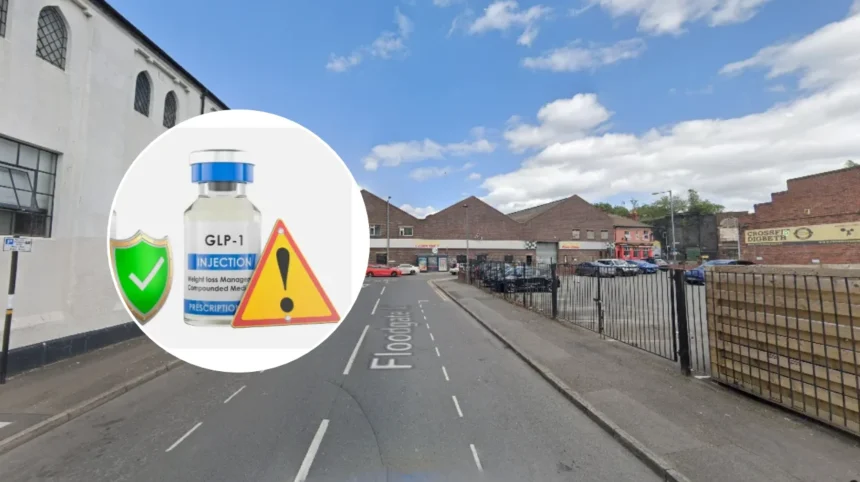
Birmingham (Birmingham Express) October 16, 2026 – As reported by Shajil Kumar of Pharmacy Business, officers from the MHRA’s Criminal Enforcement Unit and West Midlands Police raided an industrial unit in Birmingham on the evening of October 14, 2026. During the operation, officers uncovered more than 12,000 counterfeit retatrutide and tirzepatide pens.
As noted by Jerome Smail of Nursing in Practice, the raiding party also seized commercial packaging materials designed to assemble and distribute a further 30,000 illicit weight-loss devices. The finished units and raw materials seized represent tens of thousands of potential doses intended for illicit sale across the United Kingdom.
“We are tackling the organised criminal gangs whose illegal trade in unauthorised medicines puts people at risk of serious harm. Our officers seized around £2 million worth of fake weight loss medicines from a filthy warehouse on an industrial estate. These products have not been assessed for safety, quality or effectiveness, and there is no guarantee of what they contain or whether they have been contaminated with harmful substances.”
— Tim Duffield, Head of Intelligence at the MHRA Criminal Enforcement Unit
Why Are Unauthorised Retatrutide and Tirzepatide Pens So Dangerous?
As highlighted by Manufacturing Chemist reporting, retatrutide has not received regulatory authorization for medical use or public sale within the United Kingdom. Consequently, any commercial distribution or possession of retatrutide outside of approved scientific clinical trials remains completely illegal under British law.
As detailed in official reporting from the MHRA News Centre, legitimate GLP-1 receptor agonist treatments require strict cold-chain refrigeration throughout their transit and storage to remain safe and stable.
Counterfeit products manufactured or held in unregulated facilities lack essential temperature controls, raising severe concerns regarding bacterial contamination, chemical degradation, incorrect dosage strengths, and unknown side effects.
To protect consumers, health authorities have urged anyone purchasing medicines online to verify suppliers using official regulatory guidance and report any adverse events or suspected side effects through the government’s Yellow Card scheme.
“These products have not been assessed for safety, quality or effectiveness, and there is no guarantee of what they contain or whether they have been contaminated.”
— Tim Duffield, Head of Intelligence at the MHRA Criminal Enforcement Unit
Background of the Particular Development
The demand for GLP-1 class weight-loss treatments has led to an increase in illicit manufacturing and underground distribution networks across the United Kingdom. Organised criminal enterprises have increasingly targeted individuals seeking rapid weight-loss solutions outside established NHS or private clinical pathways.
The Birmingham raid represents the latest in a series of major enforcement operations carried out by the MHRA’s Criminal Enforcement Unit:
- October 2025: The MHRA dismantled the first known illicit weight-loss drug manufacturing facility discovered in the UK. Authorities seized 5,000 unauthorised retatrutide and tirzepatide pens, thousands of unassembled empty pens, and chemical ingredients.
- February 2026: Officers intercepted approximately 2,000 unauthorized weight-loss doses awaiting dispatch, alongside specialized manufacturing equipment, raw pharmaceutical ingredients, branded packaging, and commercial vehicles.
- May 2026: Law enforcement arrested two individuals following a raid on a rural estate used to manufacture, assemble, and distribute unlicensed weight-loss drugs, recovering 12,000 doses.
Prediction: How This Development Can Affect Consumers and Healthcare Providers
This £2 million seizure in Birmingham signals a permanent shift toward aggressive, multi-agency enforcement targeting the illegal trade of weight-loss drugs in the UK.
Impact on Consumers
Consumers purchasing weight-loss injections from social media, messaging apps, or non-accredited online outlets face heightened exposure to fraudulent, contaminated, or unvetted substances.
As law enforcement shuts down major illicit warehouses, illegal supply lines will face severe disruptions, leading to unpredictable dosage formulations on the black market and increasing the potential for medical emergencies.
Public awareness campaigns around counterfeit medications will likely intensify, pushing consumers toward licensed general practitioners and registered pharmacies.
Impact on Healthcare Providers and Regulators
NHS clinicians, community pharmacists, and emergency healthcare staff will likely experience an increase in patients seeking advice or requiring treatment due to adverse reactions from fake injections.
Regulatory authorities like the MHRA, alongside local police forces, will probably increase surveillance on international shipping hubs, illegal domestic laboratories, and digital marketplaces to prevent unauthorized GLP-1 analogs from reaching the public.