Key Points
- Warwick Crown Court jailed 23-year-old Dolars Aleksanders for nine years and four months for causing the death of 12-year-old Keaton Slater by dangerous driving.
- On 14 June 2024, Aleksanders drove a black BMW at more than 70mph in a 30mph zone on Radford Road, Coventry, hitting Keaton as the boy walked home from Cardinal Newman Catholic School.
- Aleksanders left the scene after the crash, abandoned the car on Frederick Road, and flew out of the UK to his native Latvia.
- West Midlands Police, the Crown Prosecution Service, Europol, and Latvian authorities tracked him down, leading to his extradition to Britain on 5 August 2026 and a guilty plea the following month.
- The court also banned Aleksanders from driving for 16 years and one month.
- In a victim impact statement, Keaton’s mother, Louise Slater, said she will never understand how someone could hit a child and leave him behind.
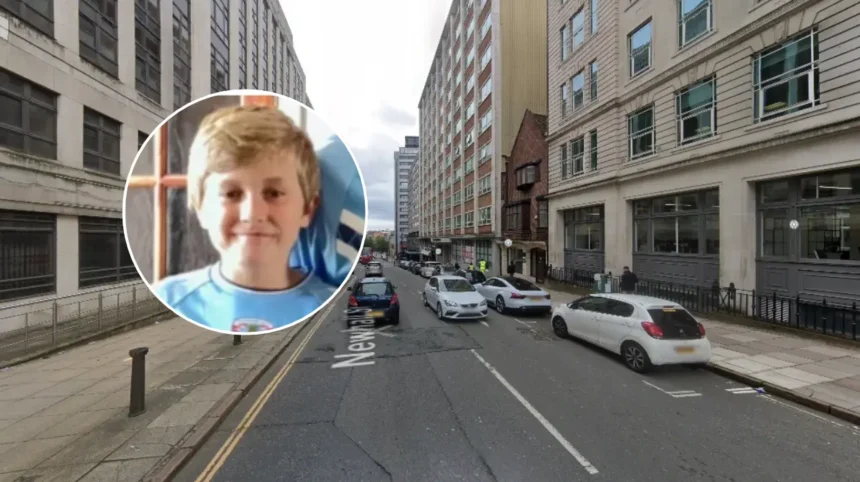
Coventry (Birmingham Express) November 13, 2026 – A 23-year-old hit-and-run driver who fled to Latvia after striking and killing 12-year-old schoolboy Keaton Slater at more than 70mph in Coventry has been sentenced to nine years and four months in prison at Warwick Crown Court.
- Key Points
- What did Keaton Slater’s mother say at Warwick Crown Court?
- How did the fatal collision and subsequent escape unfold?
- How was Dolars Aleksanders brought back to the United Kingdom?
- What did police and justice officials say after the sentencing?
- Background of the Case
- Prediction: How This Development Could Affect Motorists, Families, and Cross-Border Justice
Dolars Aleksanders, who had previously pleaded guilty to causing death by dangerous driving, was also handed a driving ban lasting 16 years and one month during the sentencing hearing on Friday, 13 November 2026.
The court heard that Aleksanders was travelling at speeds exceeding 70mph in a 30mph zone along Radford Road in Coventry shortly after 4.30pm on 14 June 2024 when his black BMW struck Keaton.
Keaton, who was walking home from Cardinal Newman Catholic School at the time, suffered catastrophic injuries and died at the scene.
What did Keaton Slater’s mother say at Warwick Crown Court?
During the sentencing hearing, the court heard a victim impact statement from Keaton’s mother, Louise Slater, who described the lasting devastation caused by the loss of her son and the driver’s decision to flee.
As reported by Birmingham Live, Louise Slater stated that “Keaton was our world. He was funny, caring, loving and full of life. He had the biggest smile and a heart full of kindness”.
She explained to the court that the family’s grief had been compounded by the knowledge that the motorist failed to stop and render assistance after the impact.
“Knowing that the person responsible did not stop to help our son is something we will never understand. Keaton was left behind. I cannot understand how anyone could leave a child who had just been struck and not stop to help him,” Louise Slater told the court.
She added that Keaton was her “best friend” and her “little mini me,” noting that his death had robbed him of future milestones, including seeing his beloved football club, Coventry City, reach the Premier League.
Earlier in the week, as reported by ITV News Central, Louise Slater had urged Aleksanders to attend his sentencing hearing in person rather than refusing to leave prison custody.
As reported by ITV News Central, Louise Slater stated that “it just shows if he’s not there he’s a coward again. He done a runner for two years. He’s gotta stop being a coward and face up to what he’s done”.
How did the fatal collision and subsequent escape unfold?
According to court proceedings and police accounts, the fatal collision occurred on Radford Road, Coventry, on the afternoon of 14 June 2024 as Keaton attempted to cross the road.
As reported by Jaspreet Kaur of Coventry Live, the black BMW driven by Aleksanders was travelling at more than 70mph when it hit the 12-year-old schoolboy.
Rather than remaining at the location to assist the injured child or speak with emergency services, Aleksanders drove away from Radford Road.
Police officers located the abandoned BMW approximately 20 minutes later in Frederick Road, Coventry, more than six miles away from the site of the crash.
Detectives from West Midlands Police’s Serious Collision Investigation Unit quickly identified Aleksanders as the prime suspect and launched a public wanted appeal.
However, by the time the appeal was issued, Aleksanders had already left the United Kingdom and travelled to his native Latvia.
How was Dolars Aleksanders brought back to the United Kingdom?
Bringing Aleksanders before a British court required a coordinated international law enforcement operation spanning more than two years.
As reported by Sian Roche of Hits Radio, West Midlands Police worked alongside Europol, the National Crime Agency, the Crown Prosecution Service, and Latvian authorities to trace and detain the suspect.
Following the establishment of a new extradition agreement between the United Kingdom and Latvia, Aleksanders was arrested and extradited back to Britain, arriving at Gatwick Airport on 5 August 2026.
Upon his return to the West Midlands, Crown Prosecution Service spokesman Ben Samples confirmed in a statement that Aleksanders had been formally charged with one count of causing death by dangerous driving.
As reported by The Independent, Ben Samples stated that “CPS West Midlands has worked closely with West Midlands Police, Home Office, the Latvian authorities, Europol, the Joint International Crime Centre, CPS International and our Extradition Unit to bring Mr Aleksanders back to face proceedings in a UK court for an alleged crime that took place here”.
On 3 September 2026, appearing via videolink from HMP Dovegate before Warwick Crown Court, Aleksanders pleaded guilty to causing death by dangerous driving.
At that hearing, Judge Matthew Walsh adjourned sentencing until November and warned the defendant that the custodial term imposed would be a very long one.
What did police and justice officials say after the sentencing?
Following the conclusion of the sentencing hearing on 13 November 2026, senior investigating officers commended the resilience of the Slater family throughout the two-year pursuit of justice.
Detective Chief Inspector Sam Lewis of West Midlands Police, who led the investigation, noted that Keaton should have been able to walk home from school safely.
“The driver was travelling at excessive speed and rather than stop and help Keaton he just left and tried to avoid capture. This was an extremely complex case given it spanned across borders and involved different legislation,” Detective Chief Inspector Sam Lewis said.
Detective Chief Inspector Lewis thanked members of the Coventry community who came forward with vital information during the initial inquiry, as well as the international agencies that facilitated the extradition.
As reported by The Independent, the court also confirmed that Aleksanders must serve two-thirds of his nine-year-and-four-month custodial sentence before becoming eligible for release on licence.
Background of the Case
Keaton Slater was a 12-year-old pupil at Cardinal Newman Catholic School in Coventry and a devoted supporter of Coventry City Football Club. His death on 14 June 2024 prompted widespread grief across the city.
In July 2024, hundreds of mourners attended his funeral at Coventry Cathedral, where attendees wore sky blue in tribute to his passion for Coventry City.
During the two years following the collision, Keaton’s parents, Louise and Clint Slater, alongside his brothers and wider family, campaigned publicly for the suspect to be located and returned to the United Kingdom.
The case also unfolded amid wider legislative reforms in the United Kingdom aimed at compelling convicted offenders to attend their sentencing hearings in person, introducing penalties of up to two years’ additional imprisonment for defendants who refuse to enter the dock.
Prediction: How This Development Could Affect Motorists, Families, and Cross-Border Justice
The sentencing of Dolars Aleksanders underscores the willingness of British courts and law enforcement agencies to pursue international extradition for severe road traffic offences, signalling to motorists that fleeing the jurisdiction will not prevent prosecution in the United Kingdom.
For bereaved families in the West Midlands and across Britain, the outcome demonstrates that cross-border cooperation between police forces, the Crown Prosecution Service, and European judicial bodies can secure convictions even when suspects leave the country immediately after a collision.
Additionally, the imposition of a lengthy custodial sentence alongside a 16-year driving disqualification reinforces judicial deterrence against extreme speeding in residential and school-route areas, which may prompt continued local scrutiny over road safety measures along busy urban corridors such as Radford Road in Coventry.